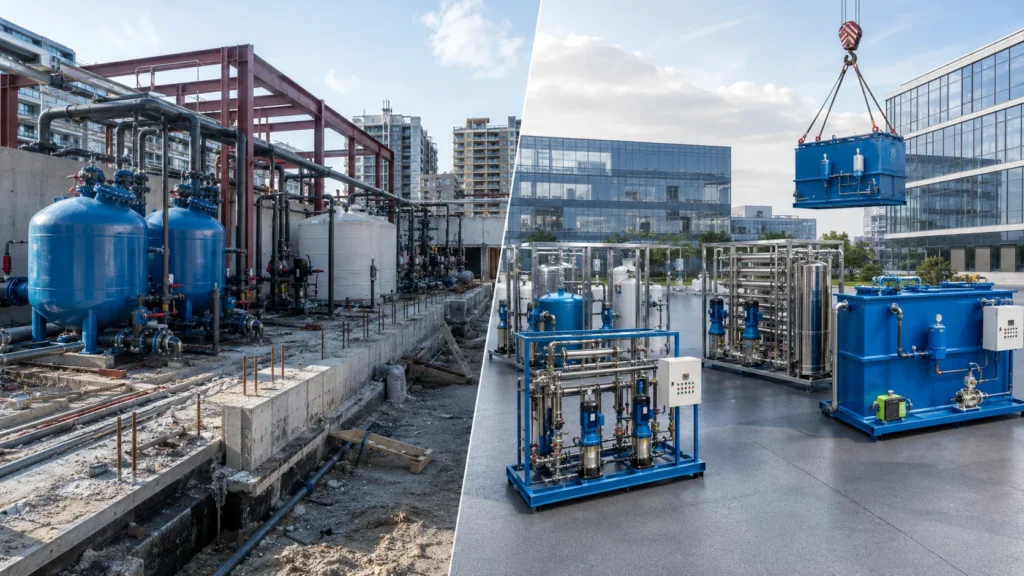
Engineering teams often default to building treatment plants from scratch, committing to long civil construction schedules and inflexible, centralized infrastructure. Modular water treatment system design breaks that pattern by delivering factory-built, scalable capacity that can be operational in weeks instead of months. This guide compares modular configurations, outlines core treatment technologies, and maps them to real-world B2B applications so you can determine whether a decentralized approach fits your next project.
For developers, industrial site managers, and remote camp operators facing tight timelines or variable demand, shifting from traditional stick-built plants to pre-engineered modules directly affects capital efficiency and time-to-revenue. The sections that follow walk through what you need to verify, what trade-offs to expect, and how to align system selection with your project’s real constraints.
Modular vs. Traditional Stick-Built Treatment Plants
Modular systems typically cut deployment time by 30–50% and require far less site preparation than traditional civil-heavy projects. The fundamental difference is between factory-controlled assembly and extensive on-site construction — a contrast we covered in more detail when examining modular skid-mounted water systems.
Before locking in a design, industrial water system design best practices recommend evaluating both approaches against your project’s schedule, land constraints, and future expansion needs.
Side-by-side, the two approaches split on several critical factors:
- Lead time: Factory-built modules ship in weeks; traditional plants can take 12–24 months or more depending on civil works.
- Site preparation: Minimal grading and a simple foundation pad for modular units; extensive excavation, concrete work, and multi-trade coordination for stick-built facilities.
- Labor demand: Low on-site labor — most assembly happens at the factory; traditional projects depend heavily on local skilled labor availability.
- Quality control: Factory welding, pipe fitting, and control wiring happen under controlled conditions; field-built plants risk construction variability.
- Permitting path: Pre-engineered packages often align with faster permitting for decentralized discharge, though local codes still apply.
For a deeper look at life-cycle trade-offs, our comparison of modular vs traditional water treatment options addresses how these choices affect long-term operational cost and water recycling capability.
Core Technologies in Modular Treatment Architectures
Most modular systems rely on Membrane Bioreactor (MBR), Reverse Osmosis (RO), ultrafiltration (UF), or advanced media filtration depending on the influent quality and the required effluent standard. The right technology selection hinges on whether you need reuse-grade water, stream discharge compliance, or simple solids removal.
The table below provides a technical reference for the primary modular technologies you will encounter. Values are typical for comparative purposes; request engineered spec sheets for your specific duty cycle.
| Technology Type | Primary Use Case | Typical Footprint | Power Intensity (kWh/m³) |
|---|---|---|---|
| Membrane Bioreactor (MBR) | High-quality effluent for reuse or sensitive discharge | Compact — fits containerized or skid-mounted layouts | 0.5 – 1.2 |
| Reverse Osmosis (RO) | Desalination, potable polishing, ultrapure process water | Moderate — requires pretreatment and post-treatment stages | 2.0 – 4.0 |
| Ultrafiltration (UF) | Pre-treatment, particle and pathogen removal | Compact — often paired with RO or MBR | 0.2 – 0.5 |
| Media Filtration | Bulk solids and suspended solids reduction ahead of finer treatment | Larger linear footprint | 0.05 – 0.2 |
Power intensity values are typical ranges for fully integrated containerized systems at design flow. Actual consumption depends on feed water characteristics, recovery rate, and ambient temperature. Always verify with the manufacturer.
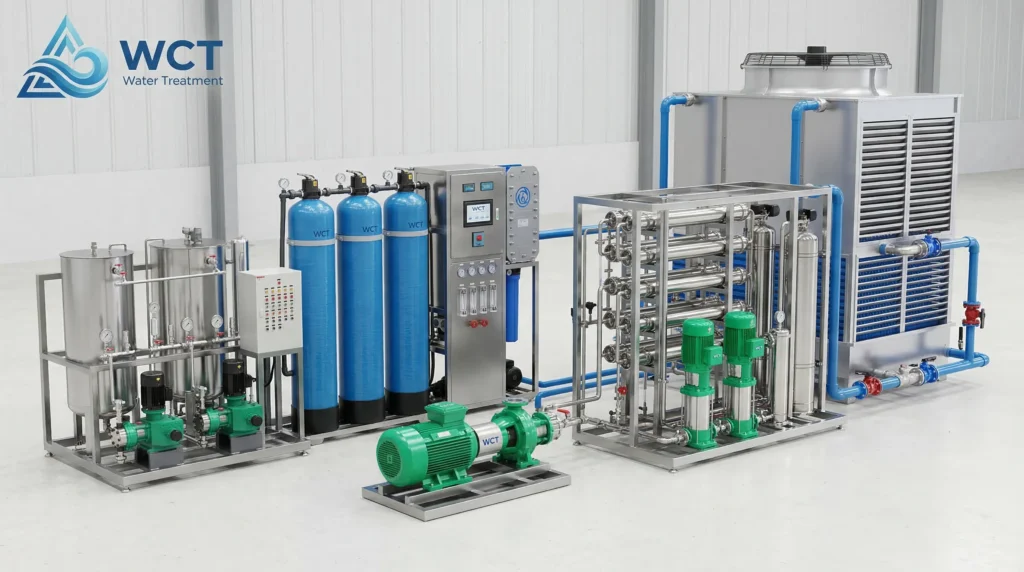
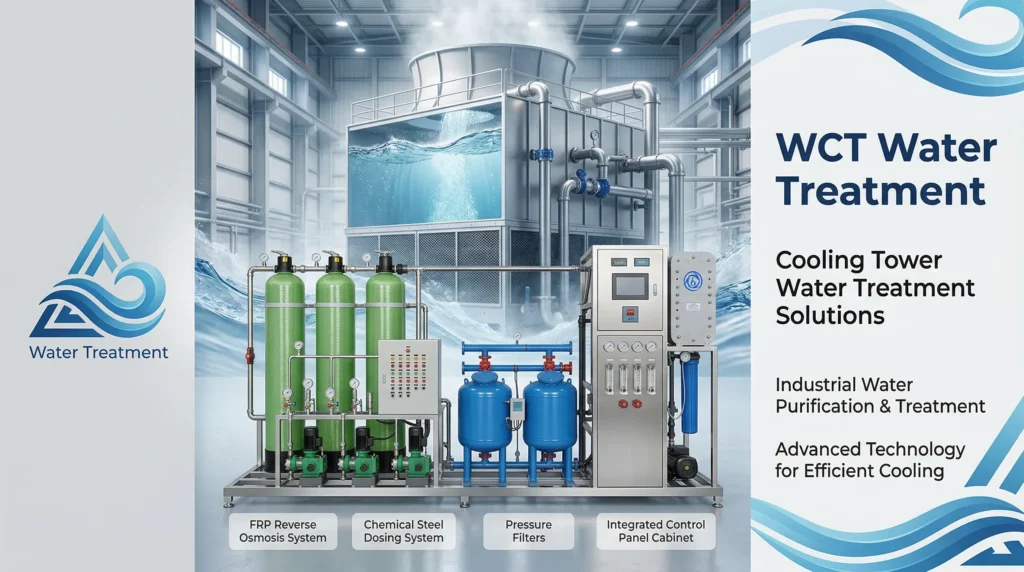
Today’s modular architectures often integrate these technologies with pre-engineered package plants that include PLC-based SCADA controls, chemical dosing skids, and remote monitoring. This plug-and-play integration reduces on-site commissioning risk and lets operators manage the system from a single HMI.
Strategic Applications for Decentralized Infrastructure
Modular systems are the go-to choice where central sewer access is unavailable, expansion must happen incrementally, or regulatory pressure demands site-level treatment. Decentralized wastewater treatment using containerized modules removes the dependency on large collection networks and delays that often stall project timelines.
The matrix below matches common B2B application scenarios with the primary challenge and a typical recommended configuration. Every site is different, but these pairings reflect field experience across hundreds of deployments.
| Industry | Primary Challenge | Recommended Configuration |
|---|---|---|
| Real Estate Development | Phased occupancy and uncertain build-out pace | MBR-based modular trains with greywater recycling; expand capacity by adding parallel modules as each phase comes online |
| Remote Camps & Workforce Housing | No municipal sewer connection, short project lifecycle | Containerized MBR or extended aeration biological systems; on-site water treatment with disinfection for washdown and potable supply |
| Industrial Pretreatment | High-strength, variable waste streams requiring pretreatment before sewer discharge or reuse | DAF + MBR or RO polishing units; for complex effluents, industrial effluent treatment modules tailored to site-specific chemistry |
| Municipal / Satellite Plants | Peak load handling and aging centralized infrastructure | Modular MBR clusters that can be repositioned as neighborhoods grow; modular equipment for wastewater helps utilities avoid capital-intensive plant expansions |
Configurations are situational. WCT engineers typically run a feed-water analysis and site-readiness assessment before finalizing the technology train. Contact our team for a configuration that matches your actual daily flow and effluent targets.
A core financial advantage is incremental capacity. Developers can start with a single module sized for Phase 1 and add identical units later — avoiding the stranded investment of a huge underutilized plant early in the project. The ability to pay for treatment capacity as revenue comes in is one of the strongest drivers for choosing a scalable capacity modular approach.
Engineering Advantages: Footprint, Scalability, and Mobility
Modularity’s primary engineering benefit is the decoupling of treatment capacity from permanent land-use constraints. A standard containerized unit can be placed on a compact concrete pad, eliminating large basin construction and freeing up real estate for revenue-generating uses.
- Compact footprint: Containerized and skid-mounted systems slash the land area required compared to conventional concrete tanks. A 100,000 GPD MBR plant can fit within a 40‑ft ISO container footprint.
- Scalability — “pay-as-you-grow”: Capacity can be added in parallel modules, matching treatment demand to population or production growth without over-building.
- Portability: Entire treatment units can be relocated when a project ends, redeployed to temporary camps during disaster relief, or sold as assets — an option traditional civil plants cannot match.
- Factory-controlled quality: All piping, equipment skids, controls, and wireways are assembled and tested at the factory, reducing field construction errors, leaks, and commissioning surprises.
For fast-track projects, rapid deployment is not just about shipping time. It also means fewer on-site trades, simplified permitting reviews, and earlier start of revenue operations.
Compliance and Regulatory Verification Factors
Pre-engineered hardware does not exempt a system from site-specific discharge or potable water permits. Whether you face NPDES limits, state health codes, or international standards, the treatment process inside the container still must meet the letter of the permit.
Before signing a purchase order, use this checklist to avoid common regulatory pitfalls:
- Effluent quality targets: Verify the system can reliably meet your required BOD, TSS, nitrogen, and phosphorus limits. Request pilot data or third-party validation reports rather than theoretical removal rates.
- Local permitting for decentralized discharge: Confirm that the health authority or environmental agency accepts containerized on-site discharge. Some jurisdictions still default to central sewer connection unless a study demonstrates no adverse impact.
- Redundancy requirements: If public health is at stake, check whether the jurisdiction requires N+1 equipment sparing. Modular systems allow you to add a standby train easily, but the requirement itself is a permit condition you must know in advance.
- Long-term O&M support: Regulators may require a certified operator or service contract. Confirm that remote monitoring and local service capability are part of your support plan. Modular units can simplify compliance reporting through integrated data logging.
Always engage a qualified engineer familiar with the local code early in the design phase, because the hardware’s conformity to NSF/ANSI or ISO standards does not automatically constitute site approval.
Cost Drivers and ROI Considerations
Lower civil CAPEX is the headline, but the true return comes from accelerated time-to-revenue. Developers who can deliver water and sewer capacity six months earlier capture occupancy fees sooner, while industrial sites avoid fines or production delays tied to treatment plant construction.
Key cost variables to model into your lifecycle analysis:
- Shipping and logistics: Containerized units can be trucked to site, but oversized modules may require permits and crane services. Confirm delivery route feasibility early.
- Power availability: Membrane-based systems (especially RO) draw more power than passive media filters. If your site runs on generator power, fuel consumption becomes a significant operational line item.
- Operator requirements: Automated controls reduce daily oversight, but periodic certified operator visits remain necessary for membrane cleaning, calibration, and compliance sampling. Labor costs vary widely by region.
- Equipment specification: Selecting proven, well-supported integrated sewage treatment equipment reduces the risk of unforeseen O&M expense compared to one-off, highly customized builds.
Buyer note: While modular systems usually reduce total installed cost versus stick-built equivalents, the upfront equipment price can be higher per gallon of installed capacity because of the precision manufacturing. The payback comes from avoided civil scope, reduced schedule risk, and the ability to match capacity to actual demand.
Consulting with a Modular System Engineer
Selecting a modular system starts with a detailed water analysis and a site-readiness assessment. Anticipate questions about daily flow range, peak concentrations, seasonal temperature swings, and future expansion plans.
WCT’s engineering team can prepare a technical specification sheet matched to your project’s hydraulic profile. Whether you need a single containerized MBR for a remote camp or a multi-module RO train for industrial reuse, we work from your influent chemistry to deliver a custom modular water treatment package that aligns with your permitting and operational targets.
Reach out to discuss your treatment goals, request a preliminary system layout, or schedule a consultation with one of our application engineers.
Frequently Asked Questions
How long does a modular water system take to install?
Once the module arrives on site, a typical containerized system can be mechanically complete and ready for wet testing in as little as a few days to two weeks, depending on utility connections and local permitting. Compare this to months of civil construction for an equivalent stick-built plant.
Can modular systems be expanded later?
Yes. Most modular designs use a “train” concept where additional units are connected in parallel. A plant initially built with two MBR modules can grow to four or six as demand increases, provided the feed infrastructure and control system are prepared for that expansion.
Do these systems require specialized operators?
Automated PLC and SCADA controls handle most routine operation, but certified oversight is still required for membrane integrity testing, chemical cleaning, and regulatory reporting. Modular packages designed for remote monitoring can reduce the frequency of on-site visits.
Are modular systems suitable for cold climates?
Yes. Containerized units are commonly supplied with insulated walls, internal heating, and heat-tracing on exposed pipe runs. Engineering for freeze protection is standard practice for deployments in arctic mining camps and high-altitude developments. Specify your minimum ambient temperature during the design phase so the supplier can integrate the appropriate cold-weather package.