
Industrial Wastewater Treatment Train: Core Equipment & Systems
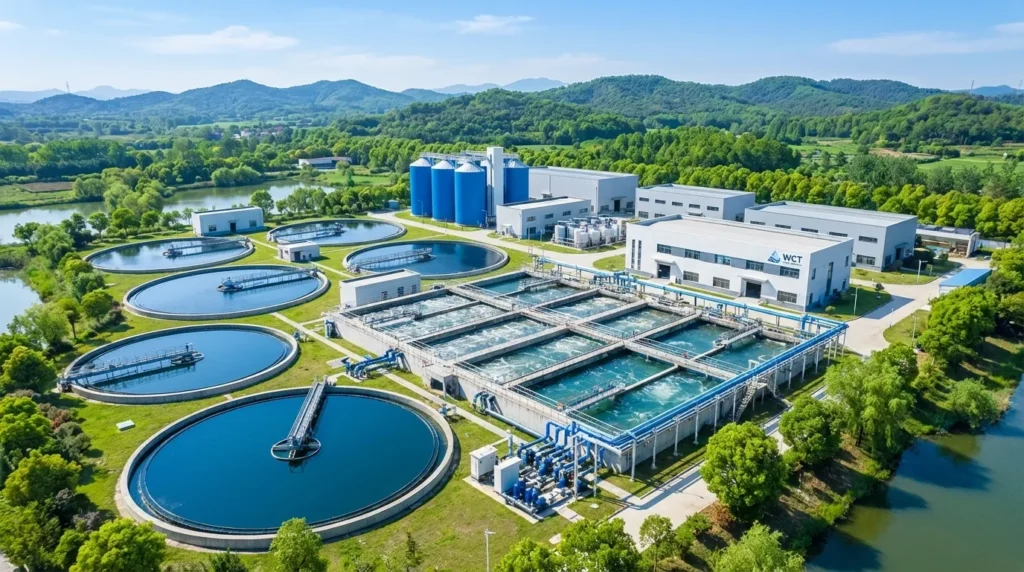
Managing industrial effluent requires a multi-stage approach. We engineer and manufacture complete industrial integrated wastewater treatment equipment solutions that break down complex waste streams into manageable, compliant, and reusable water. By decoupling the treatment train into primary, secondary, and tertiary phases, we protect your capital investment and maximize operational efficiency.
Preliminary & Primary Treatment: Protecting Downstream Infrastructure
Primary treatment focuses on removing physical hazards—like large solids, heavy grit, fats, oils, and grease (FOG)—before they can damage sensitive downstream membranes and biological systems.
- Mechanical Screening & Grit Removal: The first line of defense. High-efficiency screens and grit chambers capture large debris, preventing abrasive wear on pumps and piping.
- Clarifiers and Oil-Water Separators: Essential for separating free oil, hydrocarbons, and suspended solids. We design these units to reduce the baseline physical loading on the rest of the effluent treatment plant (ETP).
- Dissolved Air Flotation (DAF) System: Our dissolved air flotation (DAF) system utilizes micro-bubbles to attach to emulsified oils and fine suspended solids, lifting them to the surface for mechanical skimming.
[Image of dissolved air flotation system]
| Equipment Type | Primary Target | Key Benefit |
|---|---|---|
| Mechanical Screens | Large debris, rags, plastics | Prevents downstream pump clogging |
| Oil-Water Separators | Free oils, grease, hydrocarbons | Protects biological treatment stages |
| DAF Systems | Emulsified FOG, fine colloidal solids | High-clarity effluent prior to secondary treatment |
Secondary Treatment: Biological Degradation of Organic Contaminants
Once physical debris is removed, dissolved organic pollutants must be broken down. Our secondary treatment modules leverage targeted biological processes to strip out Biochemical Oxygen Demand (BOD) and Chemical Oxygen Demand (COD).
- Aeration Basins & Activated Sludge Systems: High-efficiency aeration introduces dissolved oxygen to sustain massive microbial populations, rapidly consuming organic waste.
- Membrane Bioreactor (MBR) Plant: A premium, space-saving solution. By pairing activated sludge with advanced membrane filtration, a membrane bioreactor (MBR) plant replaces traditional clarifiers and delivers an exceptionally clean effluent.
- Moving Bed Biofilm Reactors (MBBR): Utilizing specialized floating media, MBBR systems maximize the active biomass surface area within a compact footprint, easily handling high-strength industrial shocks.
Tertiary Treatment & Advanced Purification: Reaching Reuse Standards
To meet strict environmental regulations or achieve true industrial process water purification for in-house reuse, water must undergo polishing. This stage strips out micro-pollutants, dissolved salts, and pathogens.
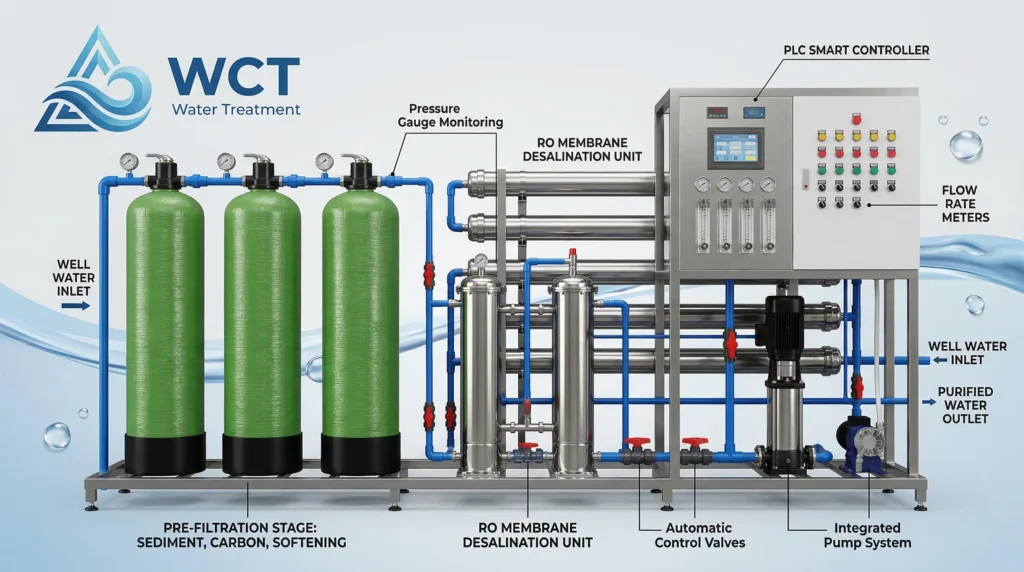
- Reverse Osmosis Water Filtration & Nanofiltration (NF): High-pressure reverse osmosis water filtration systems force water through semi-permeable membranes, rejecting up to 99% of dissolved salts, heavy metals, and silica.
- Ion Exchange (IX) Deionization Systems: Tailored for targeted heavy metal removal systems and ultra-pure water production. IX beds swap unwanted ionic contaminants for harmless ions.
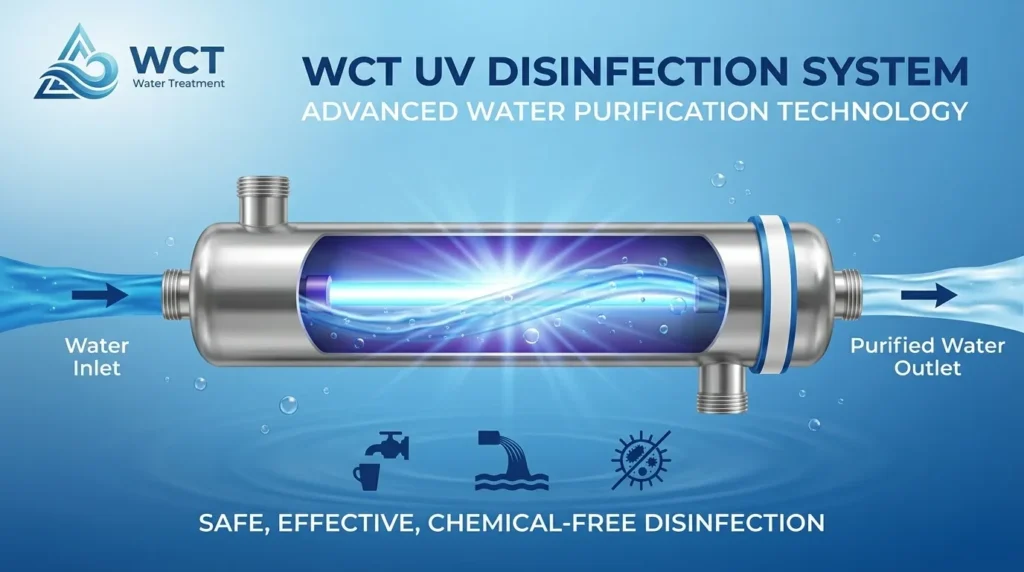
- Disinfection Modules: The final safety barrier. Utilizing ozone, UV radiation, or precise chemical dosing, these modules eliminate pathogens without leaving harmful residual byproducts, preparing the treated water for direct discharge or production loop recycling.

Specialized Equipment for High-Performance Industrial Demands
Standard filtration often falls short when dealing with highly concentrated, complex process streams. For the most demanding environments, we engineer specialized industrial wastewater equipment designed to handle heavy contaminant loads, maximize water recovery, and isolate valuable byproducts.
Industrial Wastewater Evaporation Equipment & Crystallization
When chemical precipitation and membrane separation reach their physical limits, thermal separation is the definitive solution. Our industrial wastewater evaporation equipment utilizes mechanical vapor recompression (MVR) and multi-effect evaporation technologies to boil off water from heavily fouled streams, leaving behind a highly concentrated slurry.
Following evaporation, our crystallization systems push the remaining concentrate past its saturation point. This forces dissolved salts and compounds to form solid crystals, allowing for easy mechanical separation and disposal.
Achieving Zero Liquid Discharge (ZLD)
Implementing a zero liquid discharge (ZLD) system completely eliminates liquid waste from your facility. By pairing advanced membrane pre-treatment with thermal evaporators and crystallizers, our closed-loop ZLD systems reclaim up to 98% of your wastewater. The recovered high-purity distillate is immediately routed back into your facility production lines, drastically lowering municipal water intake fees and erasing environmental discharge liabilities.
Solids Handling & Sludge Dewatering Systems
Efficient liquid-solid separation is essential to control hauling and disposal costs. Our heavy-duty sludge dewatering equipment transforms loose, high-water-content sludges into manageable, dry cakes.
Raw Sludge Slurry —> Dewatering Equipment —> Dry Sludge Cake (Low Volume)
—> Clear Filtrate (Recycled)
- Filter Presses (Plate & Frame): Ideal for achieving maximum cake dryness. These systems use high-pressure hydraulic ram assemblies to squeeze water out of slurry through cloth-lined plates, leaving behind highly compacted solid cakes.
- Rotary Vacuum Drum Filters (RVDF) & Screw Presses: Engineered for continuous, automated operations. Screw presses excel at processing oily or fibrous sludges with minimal operator intervention, while RVDF systems handle high-solids slurries continuously using an internal vacuum matrix.
Boiler Feed Water Treatment Integration
Reclaiming industrial process water is only half the battle; ensuring that water is safe for high-pressure thermal equipment is just as critical. Our boiler feed water treatment packages remove residual silica, hardness, and dissolved gases from recycled effluent. If your facility utilizes UV systems alongside thermal loops, maintaining precise dosing and pristine water quality is vital to prevent scaling. Using genuine OEM dosing spare parts ensures accurate chemical delivery, protecting your boilers and turbines from catastrophic pitting, scale buildup, and unscheduled downtime.
Closing the Loop
Integrating these specialized systems allows your plant to achieve true circularity. By linking dewatering units, thermal evaporators, and targeted water purification modules, you transform highly regulated hazardous waste streams into stable, stackable solids and ultra-pure process water. This internal recycling loop secures your operations against tightening local discharge limits and fluctuating water utility costs.
Matching Industrial Wastewater Equipment to Industry: Tailored Architectural Solutions
Different industries face entirely unique effluent challenges. A one-size-fits-all approach never works. We engineer tailored industrial wastewater equipment setups designed specifically for your sector\’s distinct waste streams, ensuring strict compliance and efficient resource recovery.
Food & Beverage
High organic loads, fats, oils, grease (FOG), and fluctuating pH levels characterize food and beverage effluent.
- Core Systems: We deploy high-efficiency dissolved air flotation (DAF) systems to rapidly shear off floating solids and grease.
- Biological Treatment: For deep organic breakdown, our advanced MBR membrane bioreactor integrated equipment combines biological degradation with membrane filtration, allowing facilities to safely reuse process water.
Chemical & Pharmaceutical Processing
This sector deals with complex, toxic, and often non-biodegradable chemical compounds that require heavy-duty stabilization.
- Advanced Oxidation & Separation: We utilize specialized industrial process water purification steps alongside robust circular clarifier water treatment systems to handle chemical precipitation and primary solids separation.
- Concentration: For highly toxic streams, our industrial wastewater evaporation equipment concentrates hazardous mass, drastically reducing disposal costs.
Metal Finishing & Semiconductor Manufacturing
Electronics and metal plating facilities generate wastewater loaded with regulated heavy metals, acids, and rinsing toxins.
- Targeted Removal: We integrate specialized heavy metal removal systems using precise pH adjustment and chemical precipitation.
- Ultra-Pure Reuse: Ion exchange deionization paired with reverse osmosis water filtration loops back high-purity water directly into the production line, cutting down raw water intake and hitting zero-variance discharge targets.
Strategic Evaluation Factors for Capital Equipment Acquisition
Investing in industrial wastewater equipment requires a balance of short-term capital expenditure and long-term operational viability. As an OEM and manufacturer, we focus on engineering systems that prevent compliance failures, minimize downtime, and lower the total cost of ownership.
Before selecting an effluent treatment plant (ETP) or individual components, several critical engineering and operational factors must be evaluated.
Effluent Characterization & Treatability Studies
A successful wastewater project is built on accurate data, not guesswork. Raw wastewater streams vary wildly across industries.
- Comprehensive Testing: We analyze total suspended solids (TSS), chemical oxygen demand (COD), biochemical oxygen demand (BOD), heavy metals, pH fluctuations, and specific chemical compounds.
- Treatability Studies: Running bench-scale or pilot tests using the actual process water ensures the chosen chemical, biological, or physical separation methods work effectively before fabrication begins. To understand how these components fit into a complete system design, it is highly beneficial to review the foundational waste water treatment process.
- Predictive Modeling: This step eliminates under-designing (which causes compliance fines) or over-designing (which wastes capital).
Hydraulic and Organic Load Flexibility
Industrial production is rarely static. Seasonal shifts, product changeovers, and plant expansions alter both the volume and concentration of wastewater.
| Loading Factor | Operational Risk | Engineering Solution |
|---|---|---|
| Hydraulic Surges | Overwhelms clarifiers, washes out biological biomass. | Equalization tanks with automated flow control to stabilize feed rates. |
| Organic Spikes (High COD/BOD) | Smothers biological systems, causes dissolved air flotation (DAF) carryover. | Flexible aeration control and multi-stage treatment configurations. |
| Chemical Volatility | Inhibits biology, damages filtration membranes. | Automated pH adjustment and inline sensing loops. |
Automation, SCADA, and IoT Integration
Modern industrial wastewater equipment must operate reliably without requiring constant manual intervention. Smart automation reduces labor costs and guarantees consistent effluent quality.
- SCADA Controls: Programmable Logic Controllers (PLCs) paired with SCADA systems offer real-time visualization, historical data logging, and immediate fault diagnostics.
- IoT & Remote Monitoring: Our systems incorporate remote telemetry, allowing plant operators and our engineering teams to monitor system health, track membrane performance, and predict maintenance needs before a breakdown occurs.
- Chemical Auto-Dosing: Sensors continuously read parameters like pH, turbidity, and oxidation-reduction potential (ORP), adjusting chemical feeds instantly to save on consumables.
Redundancy Planning
System downtime in a production facility can force a complete factory shutdown if wastewater storage capacity runs out. We build strategic redundancy directly into the system architecture to guarantee continuous operation.
- Duty/Standby Pump Configurations: Critical feed, sludge, and chemical pumps are configured in pairs. If one pump requires service, the backup automatically kicks in.
- Modular Treatment Trains: Utilizing multiple smaller treatment lines rather than one massive single train allows for partial shutdown during maintenance without stopping total plant throughput.
- Critical Spare Parts Inventory: We identify and supply high-wear components—such as specialized seals, sensors, and valves—ensuring they are on-site for immediate replacement.
Why Partner with a True Manufacturer & OEM: The WCT Advantage
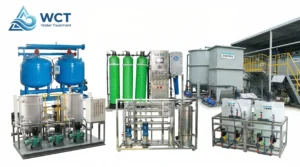
Choosing the right industrial wastewater equipment requires more than browsing a product catalog. As a direct designer and manufacturer, WCT delivers engineered infrastructure built for heavy industrial demands. Working with an OEM eliminates middleman markups, streamlines communication, and ensures your systems are built to exact facility specifications.
Engineering-First Approach
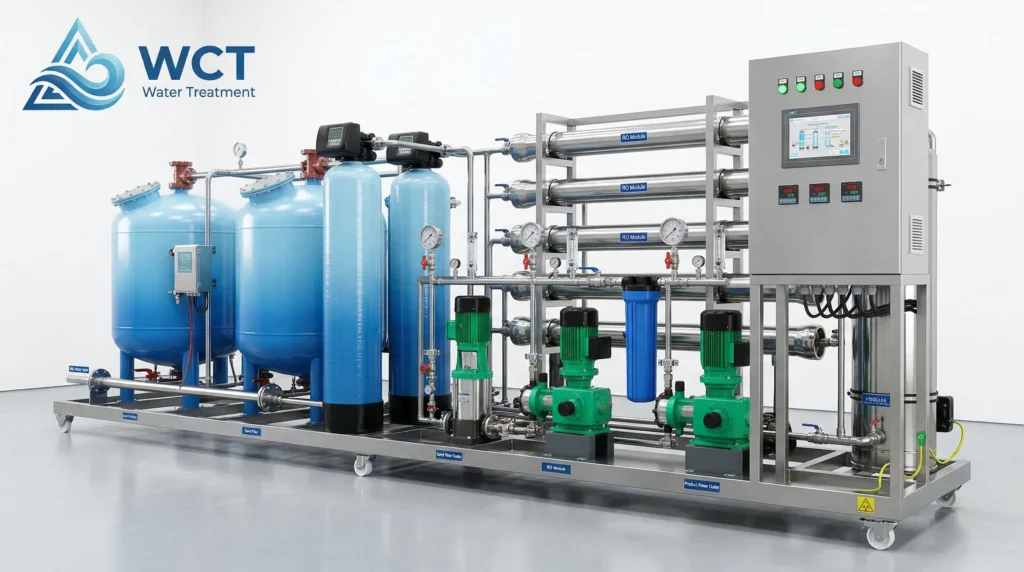
We do not just assemble parts; we engineer complete water treatment plant design architectures. Our engineering team analyzes your specific influent characteristics to build custom configurations, ensuring every piece of industrial wastewater treatment plant equipment integrates seamlessly into your existing facility footprint.
Comprehensive Product Portfolio
From initial grit removal to final purification, our manufacturing capabilities cover the entire lifecycle of industrial water management:
- Primary Systems: Advanced clarifiers and oil-water separators.
- Secondary Systems: High-efficiency membrane bioreactor (MBR) plants.
- Advanced Treatment: Zero liquid discharge (ZLD) systems and industrial reverse osmosis units.
- Sludge Management: High-pressure filter presses and dewatering equipment.
Long-Term Reliability
Industrial operations cannot afford unexpected downtime. By manufacturing our own systems, we enforce strict quality control over every weld, membrane, and control panel. Partnering with WCT means securing rugged, automated equipment designed for 24/7 continuous operation, backed by direct factory technical support and readily available OEM spare parts.
Frequently Asked Questions (FAQs)
What is the difference between a DAF system and a clarifier?
While both remove suspended solids from an effluent treatment plant (ETP), they use opposite physical principles. A dissolved air flotation (DAF) system introduces micro-bubbles to attach to contaminants like oils, grease, and light solids, forcing them to float to the surface for skimming. Conversely, a gravity clarifier relies on natural sedimentation to sink heavier particles to the bottom. DAF systems excel with light, greasy materials and offer a much smaller footprint, whereas clarifiers are ideal for high-volume, heavy-grit streams.
How does a Zero Liquid Discharge (ZLD) system save money?
An industrial wastewater evaporation equipment setup eliminates municipal discharge fees entirely. By pushing the treatment train to achieve zero liquid discharge, you reclaim up to 95% of your process water for immediate reuse. This slashes raw water procurement costs, eliminates compliance penalty risks, and allows you to recover valuable byproducts from the crystallized solids.
Why is boiler feed water treatment necessary for reclaimed wastewater?
Reclaimed wastewater still contains trace dissolved solids, silica, and hardness minerals. If introduced directly into a boiler without proper boiler feed water treatment, these impurities cause rapid scaling, corrosion, and catastrophic tube failures. Integrating targeted purification modules ensures the water meets strict high-pressure boiler specs, protecting your thermal assets and maximizing energy efficiency.
What are the key EPA compliance factors for industrial effluent?
Regulatory bodies strictly monitor several core metrics before any discharge hits municipal sewers or waterways:
- Total Suspended Solids (TSS) & Turbidity: General clarity and particle counts.
- Biochemical Oxygen Demand (BOD) & COD: Organic loading levels that deplete oxygen in water bodies.
- pH and Temperature: Staying within neutral, safe ranges to prevent ecosystem shock.
- Heavy Metals & Specific Toxins: Strict parts-per-million limits on contaminants like chrome, nickel, or lead.
Deploying the right industrial wastewater equipment guarantees these metrics stay safely below legal thresholds, protecting your operation from costly fines.