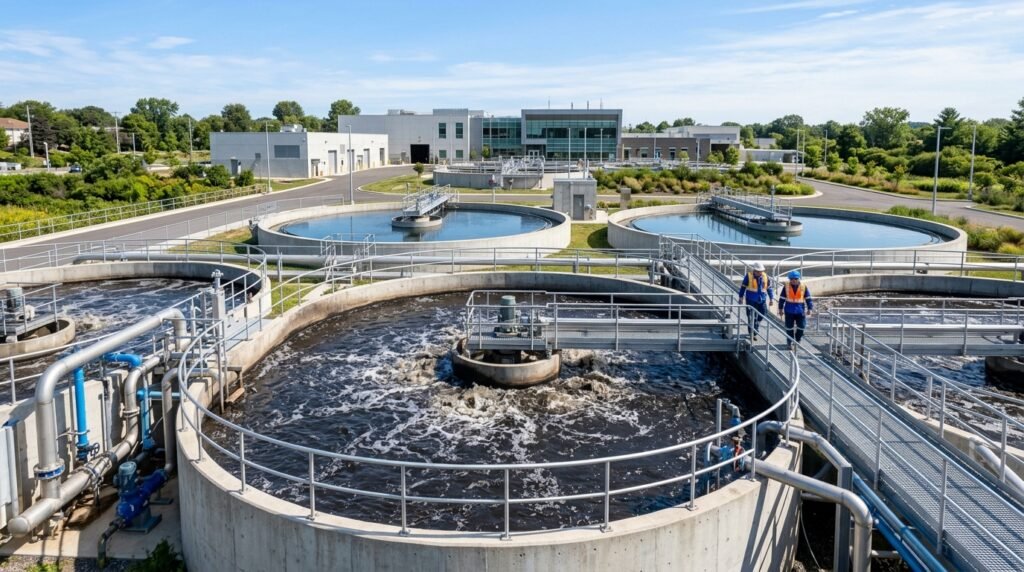
You might already know that a highly efficient waste water treatment process is the backbone of modern environmental and public health…
But how exactly does a modern facility turn hazardous sewage into clean, safe water?
Well, you\’re in for a treat because I\’ve put together a complete, step-by-step breakdown.
In this guide, you\’re going to learn exactly how municipal, industrial, and agricultural plants operate from start to finish. We\’ll cover everything from preliminary grit removal and biological activated sludge processes to advanced UV disinfection and sustainable biosolids management.
So if you want a complete, insider\’s understanding of how these facilities work—and the future of water conservation—this guide is for you.
Let\’s dive right in.
Understanding the Wastewater Treatment Process
As a dedicated water treatment products supplier and manufacturer, we know that an efficient waste water treatment process is the absolute backbone of modern sanitation and industrial sustainability. It is not just a regulatory requirement; it is a systematic, multi-stage engineering solution designed to aggressively remove contaminants from water. By separating hazardous solids, breaking down organic matter, and neutralizing pathogens, this process ensures that water can be safely returned to the environment or effectively repurposed for industrial use.
Common Sources of Wastewater
Wastewater originates from diverse human, commercial, and industrial activities. Accurately identifying the source is the critical first step in deploying the correct chemical and mechanical interventions.
- Domestic Sewage: Graywater and blackwater from daily residential activities, including bathing, flushing toilets, and washing laundry.
- Industrial Effluent: Highly complex runoff and processing water generated by manufacturing plants, chemical refineries, and heavy mining operations.
- Commercial Facilities: High-volume waste streams from restaurants, hospitals, and large-scale office complexes.
- Agricultural Runoff: Surface water carrying concentrated fertilizers, pesticides, and animal waste directly from farming operations.
- Urban Stormwater: Rainwater and snowmelt carrying street-level pollutants, motor oils, and heavy metals into municipal drainage systems.
Environmental and Public Health Impacts
Failing to implement a rigorous waste water treatment process leads to catastrophic consequences for both local ecosystems and global public health. Unmanaged wastewater is a direct threat to global stability.
- Waterborne Diseases: Untreated sewage introduces aggressive pathogens into public water supplies, causing widespread outbreaks of cholera, dysentery, and typhoid.
- Ecosystem Disruption: Excessive nitrogen and phosphorus from untreated runoff trigger toxic algal blooms. This depletes aquatic oxygen, creating massive aquatic \”dead zones\” that destroy local fisheries.
- Soil and Crop Contamination: Unfiltered industrial toxins, forever chemicals (PFAS), and heavy metals easily seep into agricultural lands, directly entering the human food chain.
- Freshwater Scarcity: Polluting natural aquifers and surface reservoirs permanently degrades existing clean water sources, drastically accelerating the global freshwater shortage.
Types of Wastewater Treatment Plants
When managing the waste water treatment process, it is never a one-size-fits-all situation. As a reliable water treatment products supplier and manufacturer, we know that different water sources require completely different setups. Here is a look at the three main types of facilities operating globally today.
Municipal Sewage Treatment Plants
These plants handle the daily sewage flowing from homes, offices, and local businesses. The primary goal is removing organic waste and everyday household chemicals so the water can safely return to local rivers or lakes.
- Main Sources: Toilets, sinks, and storm drains.
- Core Focus: Biological breakdown of organic matter.
- System Scale: Large, city-wide water plant treatment networks designed to handle massive daily volumes.
Industrial Wastewater Facilities
Factories produce wastewater that is far harsher than standard city sewage. This water often holds heavy metals, oils, and chemical runoff that standard municipal plants simply cannot process.
Common Industrial Water Challenges:
| Pollutant Type | Source | Treatment Solution |
|---|---|---|
| Heavy Metals | Manufacturing, Mining | Chemical precipitation |
| Oils & Grease | Food processing, Refineries | Skimming and dissolved air flotation |
| Harsh Chemicals | Paper mills, Textile plants | Neutralization and advanced filtration |
Every factory requires a unique, custom waste water treatment process tailored strictly to its specific manufacturing output.
Agricultural Treatment Plants
Farms consume massive amounts of water, and the resulting runoff is full of pesticides, fertilizers, and animal waste. If this water enters rivers directly, it causes severe environmental damage, such as toxic algae blooms.
- Top Pollutants: Nitrogen, phosphorus, and pesticide residue.
- The Solution: Implementing targeted water treatment for agriculture helps capture these harmful nutrients before they pollute local groundwater.
- End Goal: Safe water recovery and reuse for crop irrigation.

Preliminary and Primary Treatment Stages
As a trusted water treatment products supplier and manufacturer, I understand that an efficient waste water treatment process depends on getting the first steps right. The preliminary and primary stages are strictly focused on physical separation to protect the rest of the facility from damage and overload.
Bar Screening and Pumping
This is the immediate first line of defense for any incoming wastewater flow.
- Large Debris Removal: Wastewater first passes through heavy metal grates called bar screens. These catch large, solid objects like plastics, rags, branches, and trash.
- Pump Stations: After the initial screening, heavy-duty pumps lift the water to a higher elevation so that gravity can push it naturally through the remainder of the plant.
Grit Removal
Once the large trash is gone, we must remove the smaller, abrasive materials that can ruin machinery.
- Controlled Flow: The water enters a grit chamber where the flow velocity is carefully slowed down.
- Heavy Settling: This specific speed allows heavy particles like sand, gravel, and coffee grounds to drop to the bottom while the organic matter stays suspended.
- System Protection: Extracting this grit early prevents severe wear and tear on downstream pumps and avoids pipe blockages.
Primary Clarifiers and Settling
The water next moves into massive holding tanks known as primary clarifiers. Here, the physical separation process scales up.
- Gravity at Work: The water flow becomes incredibly slow, allowing heavy suspended solids to sink to the bottom as primary sludge. Meanwhile, lighter materials like grease, oils, and plastics float to the surface where mechanical skimmers remove them.
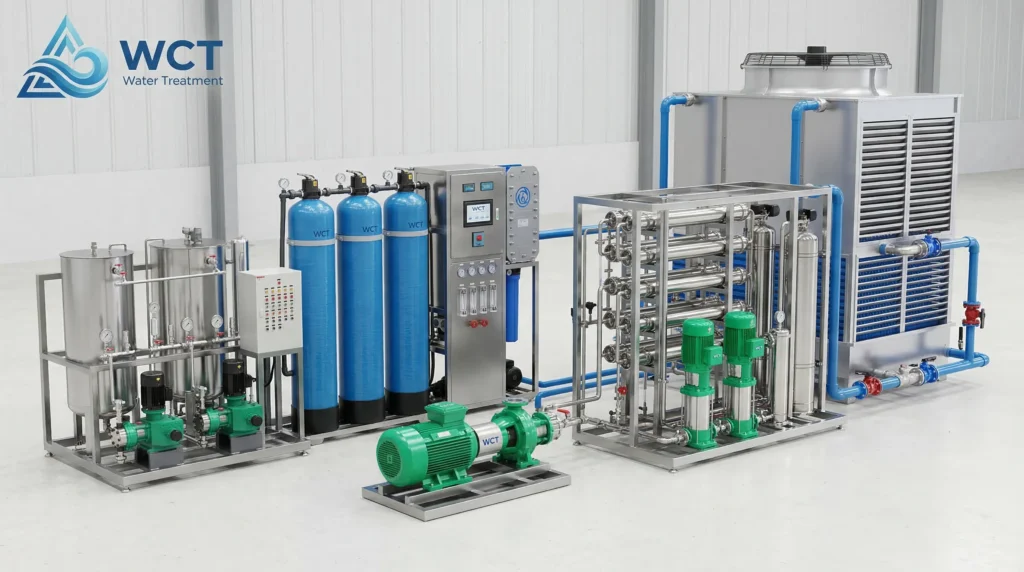
- Chemical Integration: To help smaller particles clump together and settle faster, plants often inject coagulants. For this step, utilizing robust chemical dosing tanks ensures precise and consistent chemical delivery, optimizing the settling rate.
- Efficiency Boost: By the end of this settling phase, roughly 50% to 60% of the suspended solids are successfully removed from the water, priming it perfectly for the next phases of the waste water treatment process.
Biological Processes in the Waste Water Treatment Process
As a dedicated water treatment products supplier and manufacturer, we see the secondary stage as the true engine of the facility. This phase relies entirely on biological actions to break down the invisible organic matter that survives the primary screening stages.
Aeration and Oxygen Uptake
Good bacteria need oxygen to survive and do their job. In this step, we pump massive amounts of air directly into the wastewater tanks.
- Bubble diffusers: Push fine air bubbles from the tank floor to maximize water contact.
- Surface aerators: Churn the water at the top to aggressively mix in ambient air.
- Microbial growth: The added oxygen speeds up the bacteria\’s ability to consume dissolved organic waste.
The Activated Sludge Process
This is the most widely used method globally for secondary treatment. We introduce \”activated sludge\”—a thick mixture rich with hungry, naturally occurring microorganisms—into the aerated water.
- Fast breakdown: The microorganisms rapidly eat the suspended organic solids.
- Flocculation: The bacteria clump together as they feed, forming larger, heavier particles known as \”flocs.\”
- Continuous cycle: A portion of this active sludge is constantly recycled back into the system to keep the bacterial workforce strong and ready for new wastewater.
Secondary Settling and Clarification
After the bacteria have eaten their fill, the water flows into large circular tanks called secondary clarifiers. The water flow slows down dramatically here to let nature finish the job.
- Gravity takes over: The heavy bacterial flocs settle to the bottom as sludge.
- Clear effluent: The treated, highly clarified water rises to the top and spills over the edges.
- Versatile applications: While municipal plants use massive concrete clarifiers, localized sites might manage similar biological settling through a compact 1320-gallon ribbed septic tank system, proving that gravity and biology work effectively at any scale.
The entire waste water treatment process relies heavily on these natural biological steps to ensure the water is clean and stable enough for the final disinfection stages.
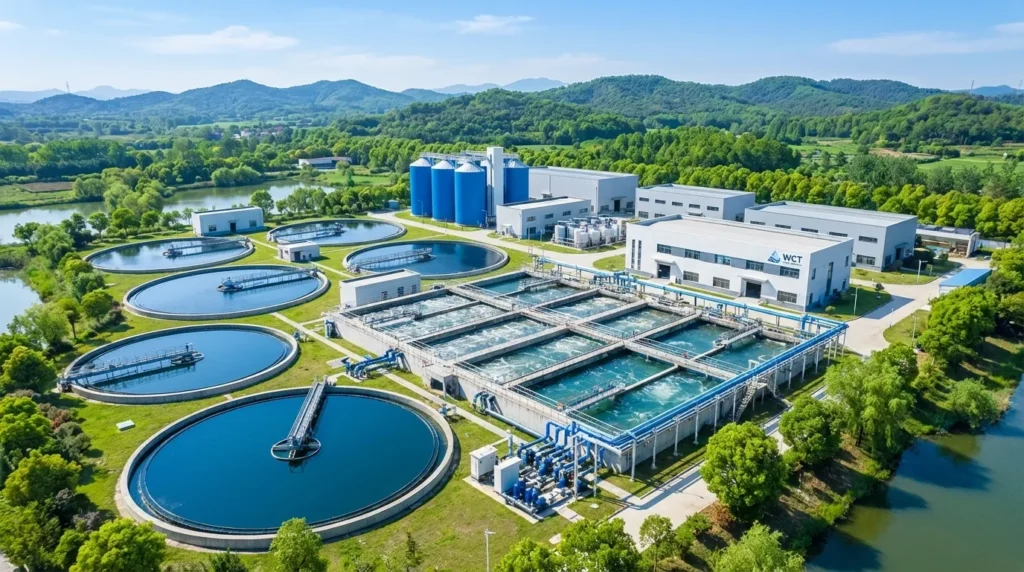
Advanced Treatment and Disinfection (Tertiary Stage)
As a dedicated water treatment products supplier and manufacturer, we know that standard treatment isn\’t always enough for modern environmental standards. The tertiary stage of the waste water treatment process is where we push the water quality to its absolute peak. This advanced phase removes the final, microscopic impurities before the water is safely returned to the environment.
Filtration and Polishing
Think of this step as the final scrub. Even after the biological stages, tiny suspended particles can remain. We use advanced filtration to catch these last stragglers and \”polish\” the water.
- Sand and Multimedia Filters: These systems physically trap remaining suspended solids as the water trickles through.
- Carbon Filters: Excellent for removing lingering odors, colors, and dissolved organic compounds.
- Membrane Technology: Implementing advanced MBR membrane bioreactors provides a physical barrier against microscopic contaminants, ensuring high-efficiency polishing and crystal-clear results.
Chlorination and UV Disinfection
Once the water is clear, we must neutralize any surviving harmful bacteria, viruses, and pathogens. We typically deploy one of two highly effective methods:
- Chlorination: The traditional, reliable method of adding precise amounts of chlorine to the water to destroy pathogens. Any residual chlorine is often neutralized before the water is released.
- UV Disinfection: A modern, chemical-free approach. We blast the flowing water with intense ultraviolet light, which instantly scrambles the DNA of microorganisms so they cannot reproduce or cause harm.
Effluent Water Analysis and Safe Disposal
We never guess that the water is safe—we prove it. Before a single drop leaves the facility, the final effluent undergoes rigorous, continuous testing.
- Real-time Monitoring: Checking pH balances, dissolved oxygen levels, and final clarity.
- Regulatory Compliance: Ensuring the water meets or exceeds strict local and global environmental standards.
- Safe Release: Discharging the clean water safely back into rivers, lakes, or oceans.
Our comprehensive water treatment solutions guarantee that the final discharge is continuously monitored and consistently hits every regulatory benchmark, protecting our global waterways and public health.
Sludge Treatment and Biosolids Management
Because we are a water treatment products supplier and manufacturer, we know that cleaning the water is only half the job. A complete waste water treatment process must also handle the leftover solid waste, known as sludge, safely and efficiently.
Sludge Digestion and Processing
Before disposal, the raw sludge needs to be stabilized. We move the collected solids into large, heated tanks where microorganisms break down the organic matter without oxygen. This biological digestion phase accomplishes three important goals:
- Reduces Volume: It significantly shrinks the total amount of solid waste.
- Destroys Pathogens: It kills off harmful bacteria and viruses to make the material safer to handle.
- Controls Odors: It prevents the raw sludge from rotting and emitting foul smells.
Waste-to-Energy Recovery
As the bacteria break down the sludge in the digesters, they naturally produce biogas, which is primarily methane. Modern treatment plants do not just vent this gas; they capture it. By burning this recovered biogas, facilities can generate their own heat and electricity. This powers the plant\’s internal operations, drastically cutting down energy costs and making the entire system much more sustainable.
Biosolids End-of-Life and Disposal
Once digestion and dewatering are complete, the treated sludge becomes a stable, earth-like material called biosolids. Managing these final solids depends heavily on the specific industrial water treatment process used and the environmental quality of the output. Safe disposal and reuse methods include:
- Soil Amendment: High-quality biosolids are spread on agricultural fields to act as a nutrient-rich fertilizer.
- Landfill Containment: Biosolids that do not meet strict agricultural standards are safely buried in designated municipal landfills.
- Incineration: In locations with limited land space, the remaining solids are burned at high temperatures, reducing them to a fraction of their original volume as ash.
The Future of Sustainable Wastewater Management
As a dedicated water treatment products supplier and manufacturer, we recognize that the future of the industry relies on smarter, greener solutions. The modern waste water treatment process is evolving rapidly, shifting from simple waste disposal to a complete resource recovery system.
Technology Improvements and System Design
Facility upgrades are happening faster than ever. We are moving toward compact, high-efficiency systems that require less energy and space to operate.
- Smart Sensors: Real-time data tracking to monitor water quality instantly.
- Automated Controls: AI-driven software that adjusts treatment stages automatically.
- Advanced Equipment: Upgrading physical infrastructure to handle higher capacities. For facilities scaling up, mastering the process of water treatment industrial systems is essential for designing future-proof setups.
Water Reuse and Conservation Strategies
Treating water is only the first step; reusing it is the ultimate goal. We focus on transforming wastewater into a valuable, reusable asset for global industries and agriculture.
- Closed-Loop Systems: Recycling treated water within the same plant to drastically cut fresh water consumption.
- Industrial Cooling: Supplying safe, treated effluent to manufacturing cooling towers.
- Agricultural Irrigation: Diverting nutrient-rich, clean water to farm fields to conserve drinking water supplies.
Reducing Environmental Life Cycle Impacts
Every stage of the waste water treatment process has an environmental footprint. Our primary objective is to shrink it by targeting emissions and chemical waste directly.
- Energy Neutrality: Designing plants that generate their own power using captured biogas.
- Green Alternatives: Phasing out harsh traditional chemicals in favor of safer, biodegradable options.
- Minimal Waste: Optimizing sludge breakdown so less solid waste ends up in local landfills.