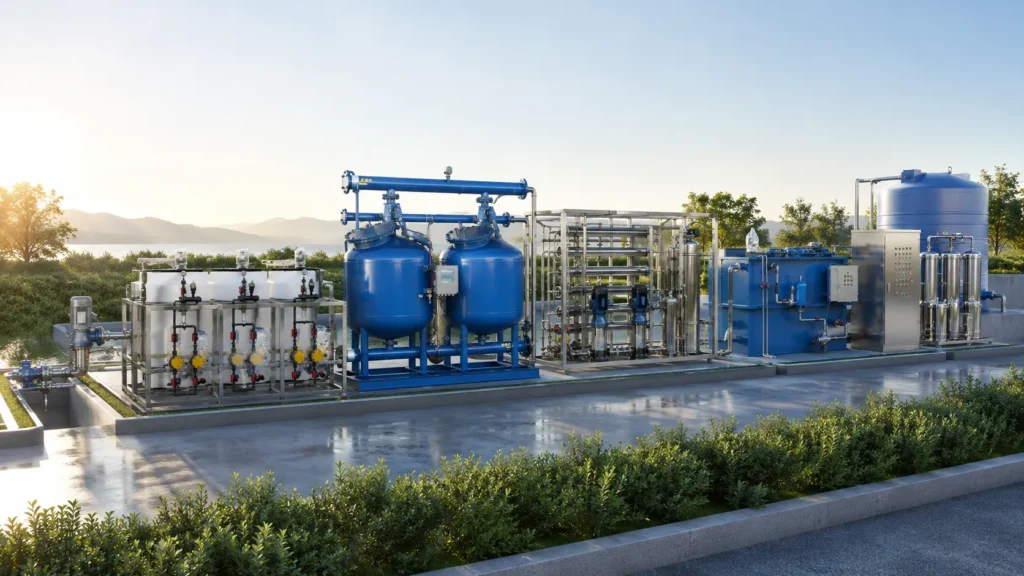
Meeting a regulatory deadline while keeping production up is what makes a turnkey water treatment system worth a close look. Instead of juggling separate component vendors, a design-build approach puts one team on the hook for the entire facility—from process design to commissioning and compliance. For plant managers and municipal engineers who can’t afford offline treatment trains or permit violations, that shifts risk back to the provider and shrinks projects from months to weeks.
The Turnkey Advantage: Design-Build vs. Component Sourcing
Turnkey systems consolidate engineering, procurement, and construction (EPC) into one contract. A single team takes responsibility for integrated design, commissioning and startup, and final compliance.
- Faster deployment: Pre-designed and often pre-assembled, these systems cut on-site construction and coordination between trades. Critical when replacing a treatment train under penalty pressure.
- Simplified procurement: One purchase order and one warranty replace separate negotiations for filtration skids, chemical dosing, and controls integration.
- Compliance assurance: The turnkey provider guarantees that the finished system meets specified discharge limits—for TSS, FOG, or PFAS removal—so you aren’t left troubleshooting performance gaps between components.
- Lower engineering overhead: In-house process design matches hydraulic profiles, chemical injection points, and control logic before fabrication, reducing field rework during startup.
For mid-sized industrial plants without a dedicated water treatment engineering team, this integrated model often costs less over the system life than trying to design, source, and commission each unit operation separately. See how that compares to piecemeal sourcing in our range of turnkey water treatment systems.
Comparing Turnkey Architectures: Mobile, Modular, and Fixed
The right physical configuration depends on project duration, available footprint, and deployment urgency. A mobile water treatment unit can be on site in weeks; a fixed facility may take months but can be optimized for long-term operating cost.
| Criterion | Mobile Skids | Modular Containers | Fixed Facilities |
|---|---|---|---|
| Typical lead time | 3–6 weeks | 8–14 weeks | 16+ weeks |
| Site preparation | Minimal; needs flat pad and utilities | Concrete pad or compacted gravel | Full civil works, foundation, and building |
| CAPEX profile | Low upfront cost; often available as rental or lease | Moderate; can be purchased in capacity increments | High initial investment; lowest long-term cost per treated gallon |
| Customization | Limited to pre-engineered options | Moderate; processes can be re-sequenced | Fully customized to site constraints and waste stream |
| Scalability | Add more skids in parallel | Add containers or expand via interconnects | Designed for future expansion from the start |
Lead times and costs vary by model, technology, and regional regulations. Ask for a site-specific proposal.
Mobile units suit emergency wastewater remediation, seasonal discharge peaks, or PFAS pilot programs where you need fast-track effluent compliance without permanent infrastructure. Leased mobile units also bridge the gap while a permanent system is built.
Modular containerized systems fit semi-permanent capacity expansions or phased upgrades that spread budget across fiscal years. Prefabricated modules reduce on-site labor and can be relocated if the production line moves. Our modular turnkey water treatment solutions arrive pre-wired and pre-plumbed for plug-and-play operation.
Fixed facilities make sense for municipal drinking water plants, large-scale industrial complexes, or any site operating 15+ years. The civil investment pays off with greater energy efficiency and larger chemical storage and sludge handling areas.
Critical Components of an Industrial Turnkey System
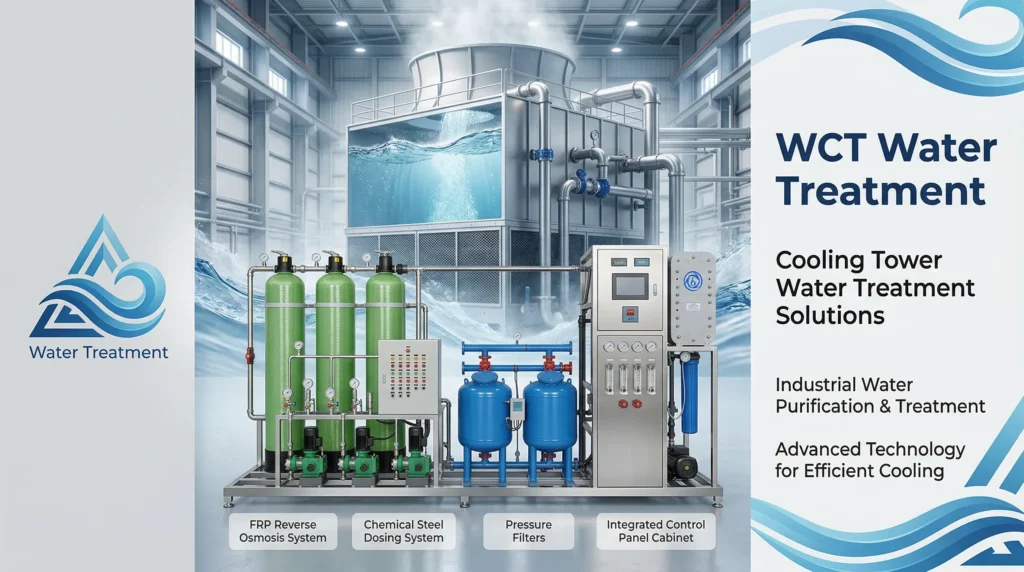
A properly specified system handles every step from influent conditioning to final solids disposal. When you evaluate a proposal, verify that the following sub-systems are included as standard, not priced as optional add-ons.
Primary Treatment & Filtration
The front-end treatment train must match the physical and chemical load of the waste stream. Confirm that the vendor integrates these elements into a single control sequence rather than supplying loose equipment.
- Equalization tanks with mixing to dampen flow and load spikes
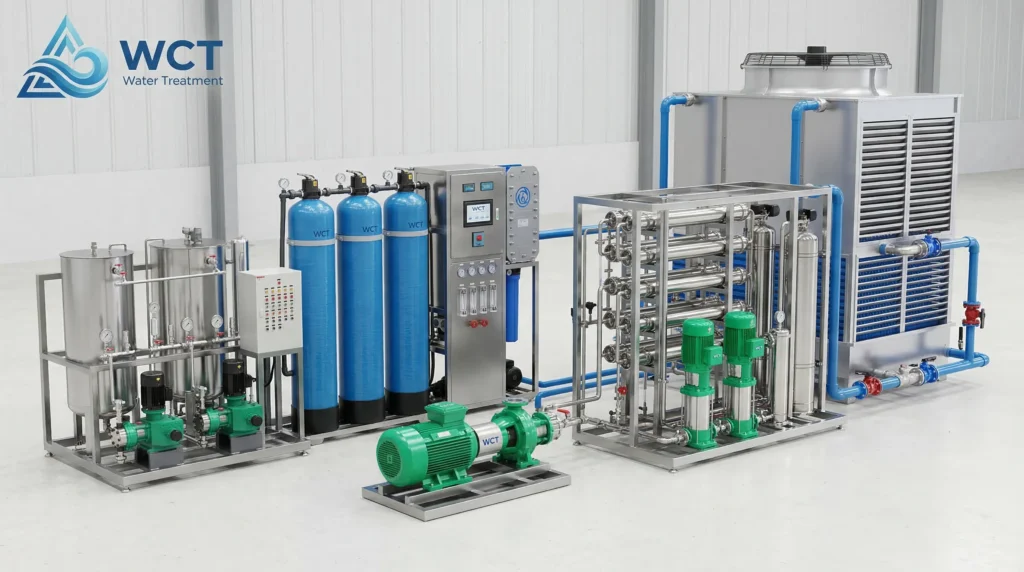
- Chemical dosing skids for pH adjustment, coagulation, and flocculation
- Multi-media or self-cleaning filtration skids for suspended solids reduction before downstream membrane or polishing steps
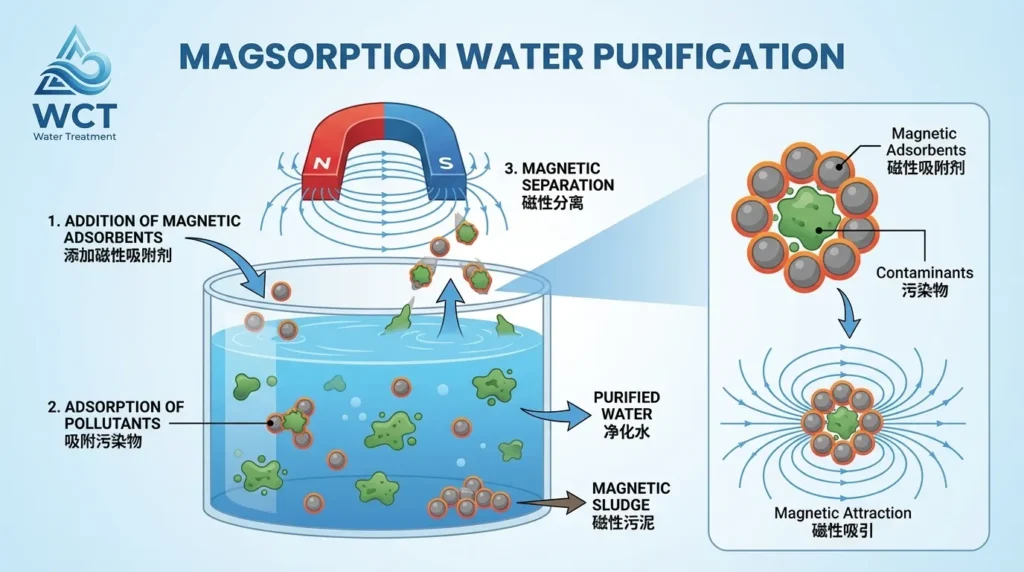
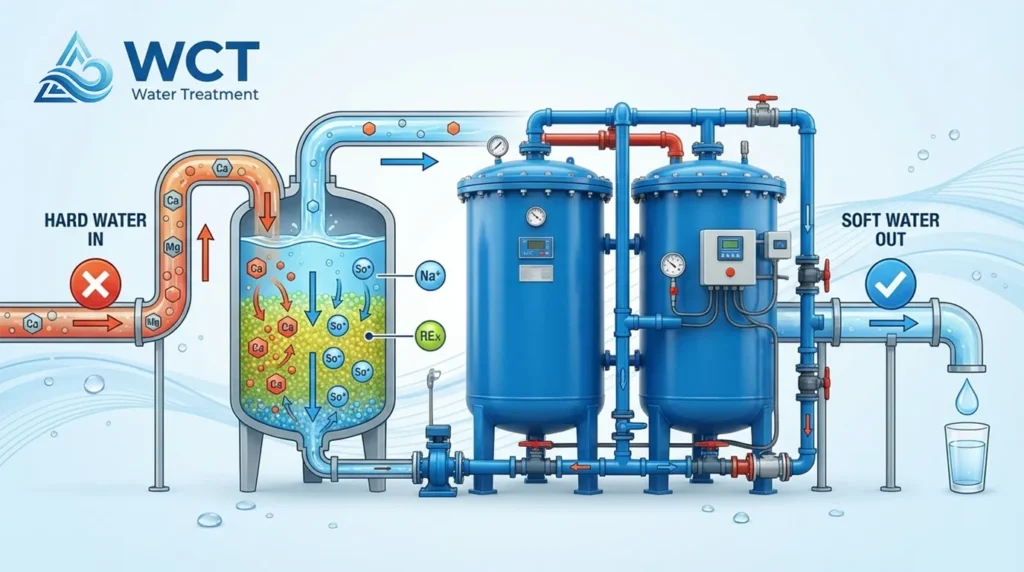
- Activated carbon or ion exchange vessels for dissolved contaminants like PFAS or heavy metals
- PLC-based control panel with remote monitoring capability
Automation matters. Pre-programmed logic that adjusts chemical dosing based on real-time turbidity or conductivity sensors reduces operator intervention and helps maintain consistent effluent quality.
Solids Separation & Sludge Management
Water treatment projects often see cost and trouble migrate from liquid treatment to solids handling. A turnkey scope that stops at clarified water but leaves wet sludge to be handled manually will create a bottleneck.
- Clarifiers and filter presses sized for the maximum daily solids loading, not just average flow
- Sludge thickening tanks and polymer make-down units to condition solids before dewatering
- Conveyor or screw press discharge into bins or roll-off containers for off-site disposal
- Optional thermal drying if disposal costs or haulage distances demand low moisture content
For high solids filtration (TSS), clarifier and filter press must be a matched pair; an undersized press limits throughput even if the clarifier is generously sized. Verify the vendor provides a mass balance diagram showing the handling capacity of each unit.
Technical Selection Criteria for Waste Streams
The waste stream drives the process design. Start with a detailed water analysis that quantifies TSS, oil and grease (FOG), heavy metals, and any emerging contaminants such as PFAS.
| Contaminant Type | Recommended Treatment Technology | Capacity Consideration |
|---|---|---|
| High TSS (>1,000 ppm) | Chemical coagulation + lamella clarifier + filter press | Clarifier surface area determines peak hydraulic load; filter press plate count determines dry solids handling rate |
| FOG (free oil and grease) | DAF (Dissolved Air Flotation) or corrugated plate interceptor + polishing filtration | DAF unit whitewater generation must match flow; verify oil-water separation efficiency at maximum temperature |
| Dissolved heavy metals | Precipitation pH adjustment + flocculation + clarification + media filtration | Multiple pH stages may be needed if metals have different solubility curves; confirm pH probes are temperature-compensated |
| PFAS (ng/L levels) | Granular activated carbon (GAC), ion exchange resin, or foam fractionation + polishing | Empty bed contact time (EBCT) governs carbon usage rate; request pilot data for your specific PFAS chain length |
| Ultra-fine solids (sub-micron) | Ultrafiltration (UF) membranes or ceramic filters | Crossflow velocity and backwash frequency define sustainable flux; verify membrane warranty terms |
Values are typical targets. Actual performance depends on water chemistry, temperature, and system configuration. Always request a treatability study or pilot test before final sizing.
A common sizing trap: a system built for average daily flow can fail during peak hours or seasonal surges. Confirm the treatment train handles your maximum hydraulic and mass loading, not just the average. Flow rate variability directly affects clarifier overflow rate, filter flux, and contact time—and that changes effluent quality.
When PFAS removal is the primary driver, the technology choice must be backed by real-world data on adsorption capacity and media replacement frequency. Don’t accept a generic PFAS removal guarantee without seeing breakthrough curves for your specific influent concentration and for co-contaminants that can foul the media. For a challenging stream, our industrial water treatment solutions group can review your lab analysis and recommend the most cost-effective process combination.
Speed of Deployment: The “Fast-Track” Turnkey Process
Leading providers can have a mobile treatment unit operational in as little as 3 to 4 weeks when a standard pre-engineered design matches the application. Even modular containerized systems can be fabricated and wet-tested at the factory before shipping to reduce on-site commissioning time.
The fast-track sequence typically follows four steps:
- 1. Site and flow assessment: Review existing piping, utilities, and discharge points. A one-day site visit often confirms tie-in locations.
- 2. Bench or pilot testing: For unfamiliar waste streams, a jar test or small pilot skid validates chemical dosing and removal rates. This can run concurrently with site preparation.
- 3. Skid fabrication and factory acceptance testing: Pre-wired and pre-plumbed modular systems are built indoors under controlled conditions. Wet testing at the factory catches leaks and PLC errors before they delay startup.
- 4. Delivery, hookup, and startup: Pre-configured connections cut on-site labor to utility tie-ins and commissioning verification. Many systems reach steady-state within 24–48 hours of arrival.
The real time savings come from eliminating iterative back-and-forth between a design engineer, a fabricator, and an electrical contractor. One team owning the whole scope means interface points are resolved before construction begins—vital when daily fines are piling up during emergency wastewater compliance.
Evaluating Turnkey Providers: A Procurement Checklist
Verify that the provider offers in-house engineering, not just a catalog of assembled third-party equipment. The difference shows up during commissioning: a design integrator can diagnose and fix a problem on site, while a reseller must call the original manufacturer.
- In-house process engineering: Does the firm design chemical treatment sequences, hydraulic profiles, and control logic internally? Look for evidence of site-specific modifications, not a single standard design.
- Compliance track record: Request case studies that show meeting discharge limits under your state or provincial regulations. For PFAS or heavy metals, ask for data from a similar industrial sector.
- Mechanical integration: Confirm that filtration skids, clarifiers, and chemical feed systems are assembled and tested together before shipment—not delivered as loose components for site assembly.
- O&M support: After startup, who provides operational support and spare parts? An in-house service team with remote PLC access can often troubleshoot without a site visit.
- Scalability: If your plant may expand in three to five years, verify that the current system can accept additional treatment trains without a complete controls rebuild. Modular design with spare I/O points and expansion flanges is a good sign.
- Turnkey price transparency: Ask what is excluded (civil works, building, power supply) so you can budget complete installed cost, not just equipment price.
When you narrow the field, request a performance guarantee tied to specific effluent limits and a defined commissioning timeline. The contract should clearly state what happens if the system fails startup testing. For a deeper look, see our design best practices for turnkey systems and the benefits of skid-mounted turnkey systems.
Consult with an Engineer on Your Water Treatment Requirements
Most turnkey projects need a preliminary water analysis to select the right treatment chemistry and size the equipment correctly. Generic flow-rate assumptions often lead to overspending on capacity you don’t need, or under-sizing that fails discharge limits during peak production.
If you have current lab data—TSS, FOG, pH, metals, and any PFAS results—our engineering team can review it and propose one or two process architectures that fit your site and compliance deadline. We start with a technical consultation, not a sales pitch, because the wrong configuration wastes both time and budget. Learn more about water treatment or contact us directly to discuss a site assessment and receive a preliminary scope and timeline.
Frequently Asked Questions
What is included in a “turnkey” price?
It typically covers process design, equipment fabrication, controls programming, factory testing, delivery, and on-site startup assistance. Concrete pads, foundation work, and building construction are often excluded, so clarify your civil scope before comparing quotes.
Can turnkey systems handle high solids (TSS > 15,000 ppm)?
Yes, but the design must center on solids handling. Specialized high-rate clarifiers, heavy-duty filter presses, and automated sludge pumping are typical. Confirm that the vendor has direct experience with >15,000 ppm TSS and request a mass balance for the solids train specifically.
Are these systems available for rent or lease?
Many providers offer mobile water treatment for rent or lease-to-own. This can be an effective way to manage CAPEX and test a process configuration before committing to a permanent installation. Rental agreements often include O&M, giving you predictable monthly costs and immediate compliance support.