Matching daily water production volume against manufacturer capability determines whether you need a consumer direct-to-door brand or an industrial process engineering partner.
Sourcing a qualified RO system supplier requires looking beyond initial price tags to evaluate membrane salt rejection, pre-treatment requirements, and long-term replacement component supply.
Residential vs. Commercial Suppliers: Identifying Your Capacity Needs
System sizing in Gallons Per Day (GPD) dictates supplier selection more than any other variable. Residential manufacturers build standardized, high-volume direct-to-consumer filtration units, whereas an industrial reverse osmosis manufacturer builds custom water systems designed for variable raw water quality and continuous operation.
Home and Light-Commercial Applications (50-400 GPD)
Residential water filters focus on point-of-use drinking water, typically producing 50 to 150 GPD under municipal tap pressure. These compact units sit under kitchen sinks or mount onto countertops to reduce dissolved solids, lead, microplastics, and chlorine taste.
Light-commercial systems scale up output to 200-800 GPD for small restaurants, coffee shops, dental offices, and hydroponic setups. They often pair small booster pumps with twin membrane housings to increase flow while maintaining a compact footprint.
Industrial and High-Flow Systems (1,000-10,000+ GPD)
High-flow RO systems serving factories, commercial laundries, boiler feed loops, and food processing plants operate under fundamentally different pressures. These industrial water purification systems range from 1,000 to over 50,000 GPD and require robust frame assemblies, automated membrane flushing, and multi-stage pre-treatment.
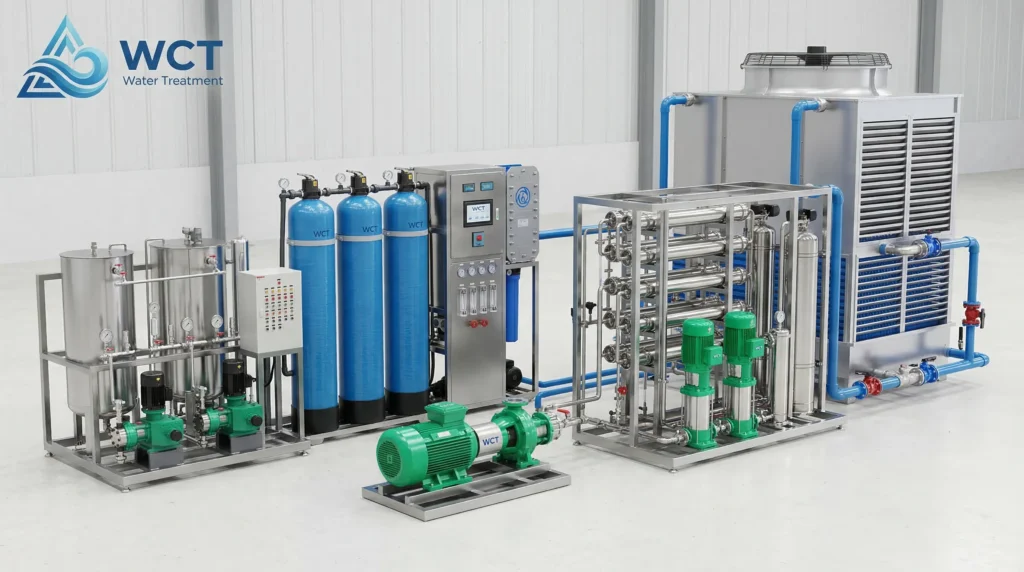
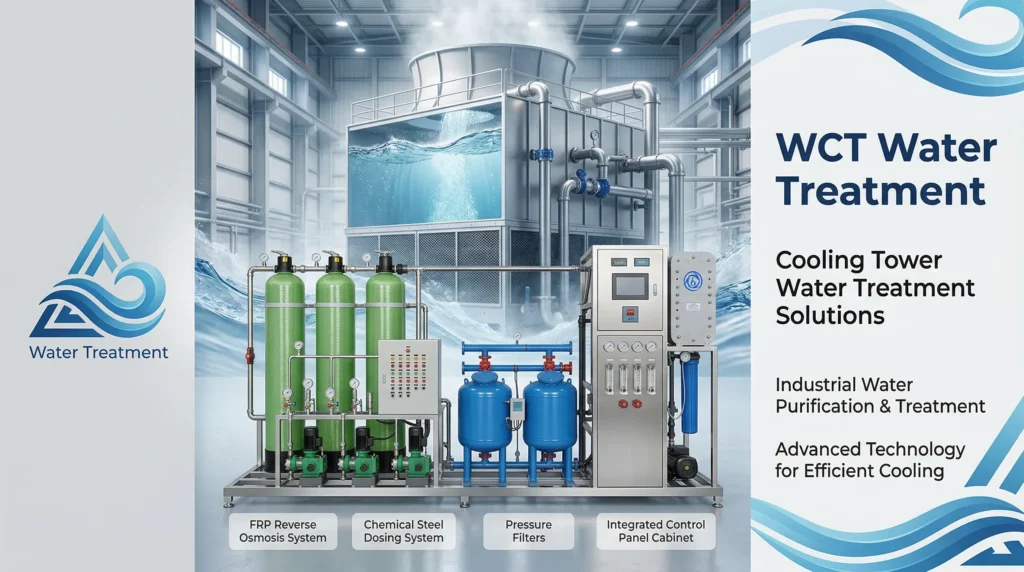
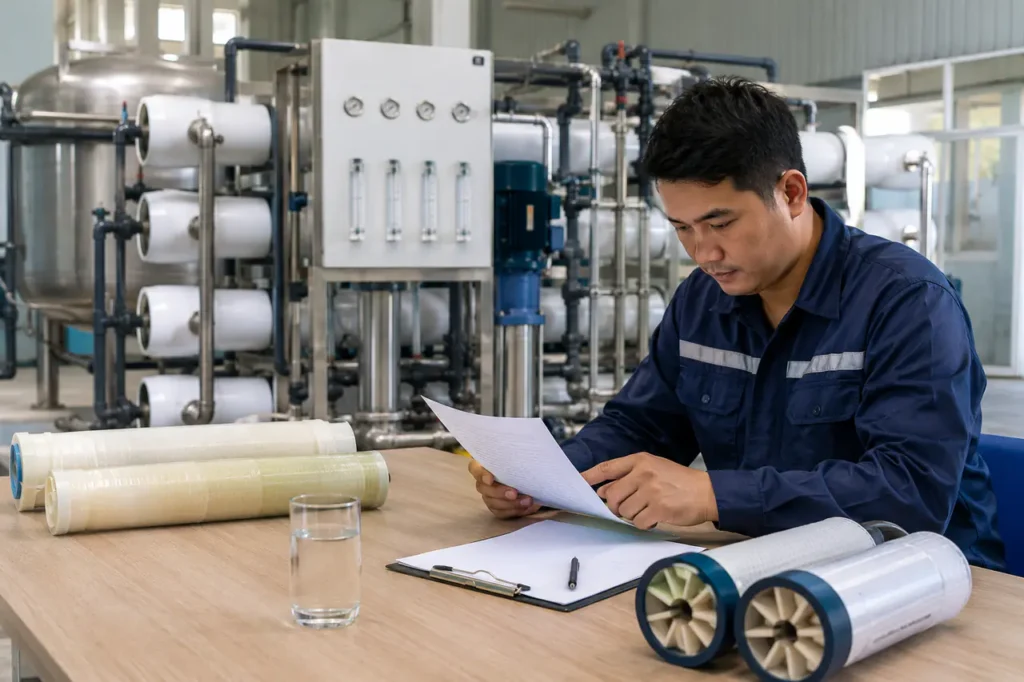
For industrial facilities, equipment is typically engineered onto a structural frame. A specialized manufacturer will deliver a skid-mounted water treatment system that integrates pre-filtration pumps, pressure vessels, instrumentation, and centralized electrical controls on a single, factory-tested frame.
In applications involving continuous effluent reuse or heavy washdown processes, specialized equipment such as a custom 1,000 GPD RO system for wastewater recovery helps lower fresh water intake while maintaining high permeate purity.
| System Tier | Typical Flow Rate (GPD) | Core Applications | Typical Footprint / Mounting |
|---|---|---|---|
| Residential Under-Sink | 50-150 GPD | Home drinking water, ice makers, small offices | Under-cabinet bracket or enclosed housing |
| Light Commercial | 200-800 GPD | Restaurants, espresso bars, labs, hydroponics | Wall-mounted panel or floor stand frame |
| Industrial High-Flow | 1,000-10,000+ GPD | Factory processing, boiler feed, wastewater reuse | Skid-mounted structural steel or stainless frame |
Before selecting a tier, verify these operating conditions:
- Peak hourly flow rate, not just total daily GPD.
- Raw water pressure and temperature swing ranges.
- Available drain capacity for concentrate water discharge.
- Floor or cabinet space for frame, storage tank, and valve access.
Selecting a system solely based on daily GPD output without checking peak hourly flow rate is a common mistake. Commercial applications require adequate buffer storage tanks or boosted high-flow delivery pumps to prevent low-pressure shutoffs during peak demand windows.
Key Specifications to Expect from a Top-Tier Manufacturer
Evaluating technical specifications helps distinguish true equipment manufacturers from white-label assemblers. A dependable supplier publishes detailed engineering tolerances, operating limits, and performance curves across variable feed temperatures.
Pre-Treatment and Filtration Stages
Reverse osmosis membranes feature microscopic pores down to 0.0001 microns. Feed water entering the membrane must be properly pre-filtered to prevent irreversible surface fouling, mineral scaling, or chemical degradation from oxidizers like chlorine.
A complete pre-treatment train typically includes:
- Sediment filtration to remove suspended solids and protect downstream media.
- Activated carbon block filtration to adsorb free chlorine and organic taste.
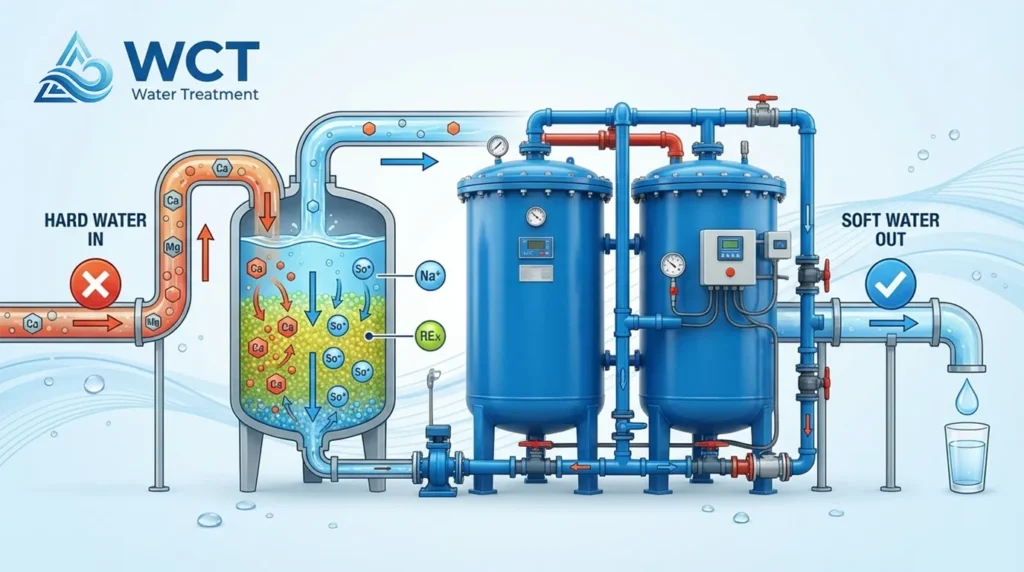
- Antiscalant dosing or water softening for hard water scaling control.
- Optional oxidation or UV disinfection for biological or iron control.
When treating surface water or high-turbidity sources, upstream chemical oxidation using a commercial ozone water treatment system breaks down complex organics and iron compounds before fine filtration.
For biological control without chemical residual risk, industrial buyers frequently specify an inline commercial UV water treatment system ahead of the RO membranes to disinfect feed lines and protect bio-sensitive process loops.
Membrane Quality and Water Recovery Ratios
The semipermeable membrane remains the core working component of any RO assembly. Leading suppliers work directly with an established RO membrane supplier to supply high-rejection Thin Film Composite (TFC) elements capable of removing 95% to 99.5% of total dissolved solids (TDS).
Ask the supplier for these membrane performance points:
- Membrane manufacturer and part number, not just a private label name.
- Salt rejection rate at your expected operating pressure and temperature.
- Recovery ratio under your feed TDS, not only under ideal municipal water.
- Warranty coverage for fouling, scaling, and chlorine damage exclusions.
Wastewater recovery ratio defines how efficiently a system converts feed water into purified water. Older residential models often discharged 3 to 4 gallons of concentrate water for every 1 gallon of purified water produced.
Modern commercial water treatment solutions utilize automatic concentrate recirculation and pressure energy recovery to achieve 1:1 or better recovery ratios. Evaluating a supplier’s water recovery efficiency reveals how well their hydraulic design balances membrane life against ongoing sewer and water utility expenses.
The Post-Sale Ecosystem: Filter Availability and Technical Support
Hardware acquisition represents only a portion of total system ownership cost. Over a ten-year operating life, routine filter cartridge replacements, membrane cleanings, and field service support constitute the bulk of working expenditure.
Standardized Components vs. Proprietary Lock-In
A major procurement risk is buying an RO framework that utilizes proprietary twist-and-lock filter cartridges available from only one vendor. If that manufacturer discontinues the line or increases consumable pricing, the entire system becomes obsolete.
Watch for these proprietary lock-in red flags:
- Unique cartridge shapes or fittings not shared by other brands.
- Discontinued product lines with no drop-in replacement part numbers.
- Frequent price increases on captive consumables after system purchase.
- Limited supply outside the original equipment manufacturer.
Prioritize suppliers that design systems using standard 10-inch or 20-inch drop-in filter housings for lower flow rates, and standard 4040 or 8040 pressure vessels for industrial systems. This standard structural design allows facilities to source competitive replacement filters and membranes on the open market.
Service Level Agreements and Field Support
Industrial plants cannot afford unscheduled water production stops. Evaluate whether your system vendor provides field commissioning, technical troubleshooting, and spare parts guarantees.
Review the support package for these operational safeguards:
- Field commissioning and operator training during startup.
- Remote monitoring or scheduled preventive maintenance visits.
- Emergency temporary supply fleet availability for planned or unplanned downtime.
- Spare parts inventory and guaranteed response times for critical components.
For critical operational sites, inquire whether the supplier maintains an emergency temporary supply fleet, such as a self-contained mobile water treatment system deployed on a trailer for rapid site support during planned maintenance overhauls.
If an unexpected feed water crisis or severe municipal supply failure occurs, accessing a quick-deploy emergency water treatment system protects plant uptime while technicians inspect primary filtration infrastructure.
Facilities requiring ultra-low conductivity water for microelectronics or pharmaceutical manufacturing often pair primary RO skids with secondary polishing equipment. In these sensitive environments, specifying an integrated ultrapure water treatment system ensures electrical resistivity targets are consistently met.
Supplier Evaluation Checklist: How to Vet an RO Manufacturer
Validating factory capability and quality management standards reduces equipment failure risks prior to issuing a purchase order. Requesting verified test reports ensures performance figures reflect real-world operating conditions rather than theoretical calculations.
Certifications and Independent Testing
Verify whether the supplier holds recognized industry standard certifications. For home and drinking water systems, look for NSF/ANSI certified RO equipment certified under Standard 58 for material safety and contaminant reduction claims like lead, PFAS, and nitrates.
Commercial and industrial systems should comply with NSF/ANSI 61 and 372 for lead-free component construction, with electrical control panels built to UL 508A or CE standards for facility electrical safety.
Factory QC and Engineering Depth
Examine the vendor’s internal manufacturing process. High-tier suppliers perform complete hydraulic pressure testing and factory acceptance testing (FAT) on every assembled frame before crate packing.
When managing complex municipal or industrial discharge requirements, working with an experienced wastewater treatment system integrator ensures your reverse osmosis units align smoothly with upstream softening and downstream zero liquid discharge (ZLD) process stages.
Red Flags During Supplier Document Review
Treat these signs as reasons to pause or request more evidence:
- Vendor refuses to provide independent lab test reports or mill certificates.
- Certification claims reference only a component, not the complete assembled system.
- No factory acceptance test procedure is available before shipment.
- Quote lacks specific membrane part numbers, pressure vessel ratings, or warranty terms.
| Evaluation Criterion | Home & Light Commercial Expectation | Industrial & High-Flow Expectation |
|---|---|---|
| Testing & Compliance | NSF/ANSI 58 certified system or components | NSF 61/372, UL 508A panel, ISO 9001 factory QC |
| Customization Scope | Standard manifold with optional remineralization | Custom PLC code, dosing loops, 316L SS pipe options |
| Factory QC Verification | Hydrostatic leak test and batch QA approval | Full Factory Acceptance Test (FAT) with wet trial |
| Warranty & Support | 1 to 3 year limited system replacement warranty | 1 to 5 year skid warranty, field commissioning SLA |
Request copy documentation of factory certifications and pressure vessel mill test reports during the preliminary quote evaluation phase. Unwillingness to provide independent verification reports usually indicates a reseller lacking direct control over manufacturing quality.
Final Procurement Steps Before Final Selection
Before finalizing an order or submitting a formal Request for Quotation (RFQ), compiling accurate site data prevents expensive retrofit changes during equipment installation.
What to Verify Before Submitting an RFQ
Providing comprehensive raw water parameters allows process engineers to select the correct membrane chemistry, pump pressure rating, and pre-filtration matrix on the first attempt.
- Complete water analysis report including TDS, pH, hardness, iron, manganese, silica, and free chlorine levels.
- Required peak continuous flow rate (GPM) and total daily volume needs (GPD).
- Available raw water inlet line pressure and pipe dimensions at the installation site.
- Permissible concentrate water drain output limits and local environmental compliance guidelines.
- On-site utility specifications, including available electrical voltage, phase, and physical floor space limits.
Choosing Your Next Step
- Home or light commercial: select modular equipment built around standard replacement filter cartridge footprints to streamline ongoing routine maintenance.
- Industrial or commercial: compile your site raw water analysis report and request a tailored engineering consultation from WCT to receive a custom skid design and performance proposal.
A complete site data package shortens engineering turnaround and reduces the back-and-forth before final system release.