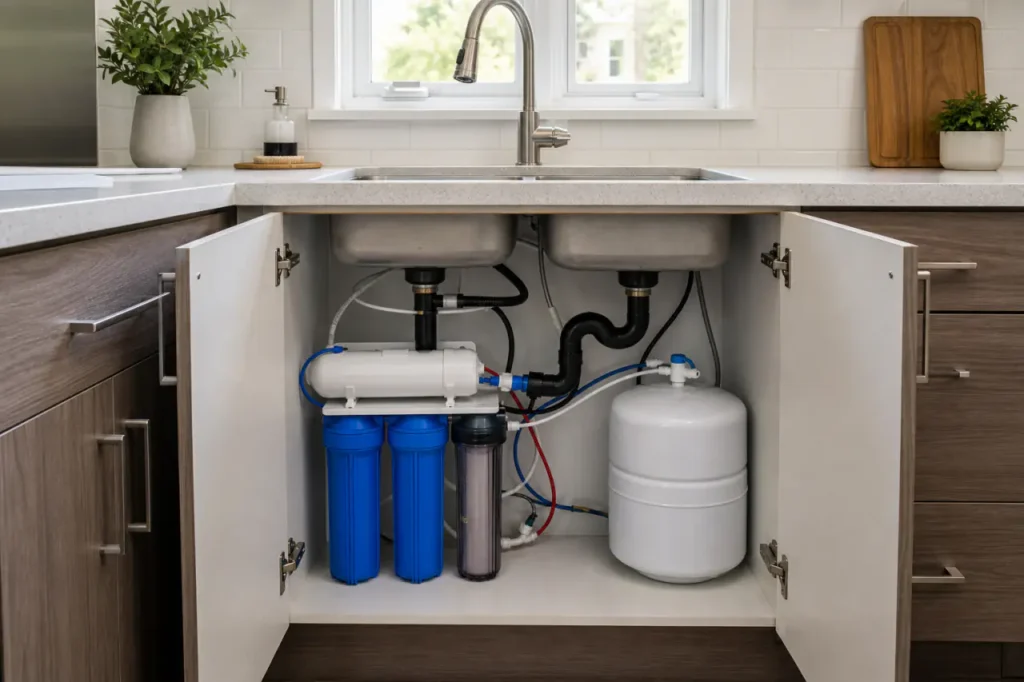
How Custom Water Treatment Systems Are Designed
Every effective custom water treatment equipment project starts the same way: with an accurate water analysis, not a guess. Treating assumed water quality leads to premature media exhaustion, membrane scaling, and under-sized plumbing.
A certified test gives the design team the exact hardness, iron, manganese, pH, TDS, chlorine, and heavy metal concentrations to engineer the treatment train.
Once the water chemistry is known, two additional factors shape the hardware. Peak flow rate determines pipe sizing, vessel dimensions, and pump head.
Available floor space decides whether equipment is spread across a floor or consolidated onto a compact skid. Together, these three inputs inform every piece of the custom system.
What a Water Test Must Cover
- Hardness (grains per gallon or mg/L) and total dissolved solids
- Iron, manganese, and hydrogen sulfide concentrations
- Chlorine or chloramine residuals and pH range
- Heavy metals such as lead, arsenic, and chromium
- Turbidity and suspended solids for pre-filtration design
- Specialty parameters: silica, nitrates, or microbiological counts if process purity demands it
Residential Customization: Sizing for Home & Household Use
Residential custom systems are primarily sized for peak flow rate demand. Ignoring peak usage leads to pressure drops when multiple showers and appliances run simultaneously. The number of bathrooms, rather than total square footage, is the most reliable starting point.
Why Peak Flow Rate Matters More Than Total Gallons
A family may use 100 gallons per hour on average, yet demand 12 gallons per minute for twenty minutes during a busy morning.
A system sized only for average daily volume will choke at the worst time. Always base the treatment system on peak instantaneous flow, not just total daily consumption.
Table 1 maps typical household sizes to recommended minimum flow rates and common plumbing line sizes.
| Household Size / Bathrooms | Recommended Minimum Flow Rate (GPM) | Typical Pipe Size |
|---|---|---|
| 1-2 bathrooms (small home, condo) | 7-10 GPM | ¾” |
| 3-4 bathrooms (average single-family) | 10-17 GPM | 1″ |
| 5+ bathrooms (large residence, estate) | 17-25+ GPM | 1.25″-1.5″ |
For whole home water filtration, also consider the home’s pipe material. Older galvanized pipes may restrict flow and add corrosion byproducts, requiring a larger bypass or additional pre-filtration. A custom system designed around correct pipe size avoids retroactive plumbing fixes later.
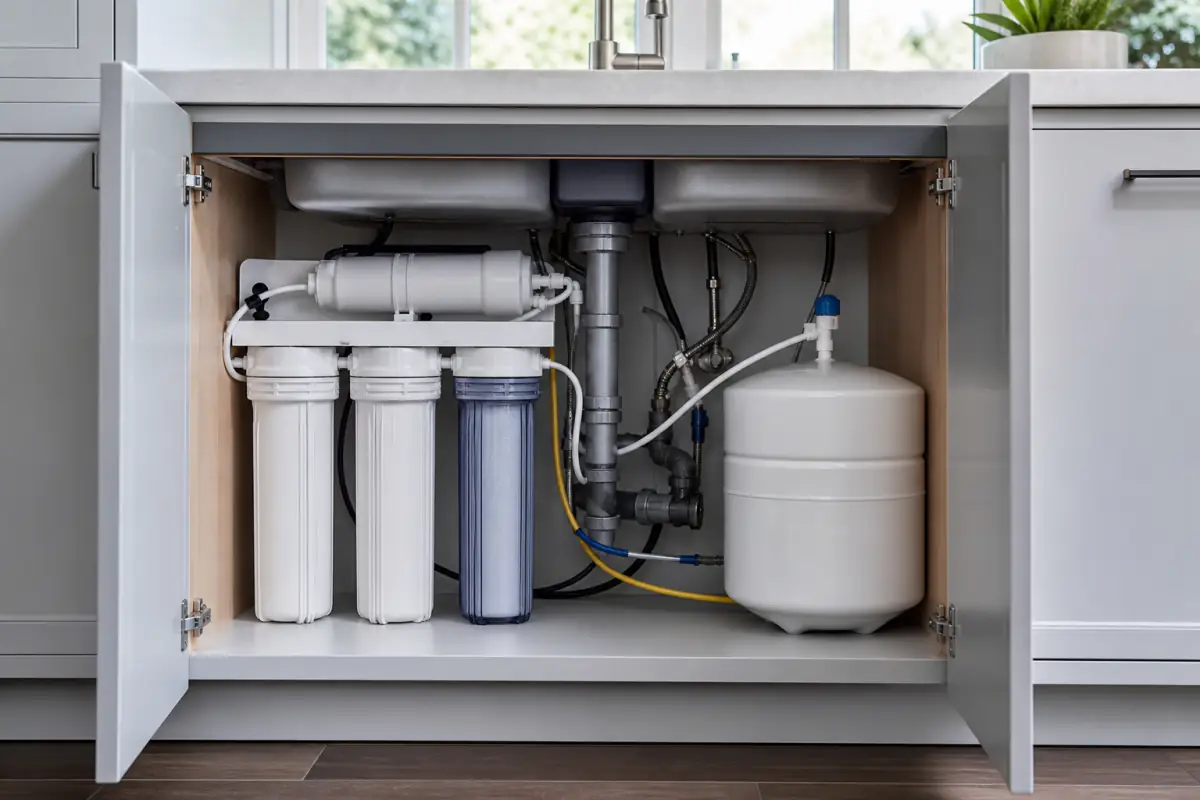
Commercial & Industrial Customization: Sizing for Facilities
Commercial equipment customization shifts the calculation from peak-demand buffering to continuous operational uptime. An hour of downtime in a medical clinic or food processing line is far costlier than a brief pressure drop in a home.
Redundancy-duplex tanks, backup pumps, and off-line polishing units-becomes a core design feature.
Three Numbers That Shape the Specification
- Daily throughput volume: Does the facility need 5,000 gallons per day or 500,000? This drives media vessel size and backwash frequency.
- Required purity target: Deionized water for lab glassware demands a resistivity of 18.2 MΩ·cm. Boiler feed water may need less than 0.1 ppm hardness. Know the exact specification before selecting a technology.
- Available footprint and material constraints: Many industrial water purification environments require stainless steel over PVC for chemical resistance, or explosion-proof controls for volatile areas.
Facility buyers also evaluate whether the system will run continuously in a process loop or batch-fill a storage tank.
Batch systems often benefit from larger storage and a smaller treatment skid, reducing capital cost but adding tank management. The right choice depends on peak shift demands and water usage patterns.
Pre-Quote Verification Questions
Before requesting proposals, confirm these details to get apples-to-apples quotes:
- Actual peak flow rate (GPM) and daily volume (gallons or m³/d)
- Recent water analysis with the exact contaminants and concentrations your process must treat
- Target purity requirement (e.g., 18.2 MΩ·cm for DI water, <0.1 ppm hardness for boiler feed)
- Available floor space and ceiling height, plus any door or access constraints
- Electrical supply voltage and phase, and any hazardous area classifications
A clear specification reduces rework and prevents surprise change orders after the purchase.
Technology Selection: Matching Filtration Types to Water Quality
The heart of a custom system is its treatment train-the sequence of technologies that remove specific contaminants step by step. A single media tank rarely solves a complex water profile.
Instead, a well-designed train might pair a multi-media sediment filter with catalytic carbon, followed by reverse osmosis and ultraviolet polishing.
Building a Treatment Train: Sequence Matters
Placing a softener before a carbon filter wastes capacity if iron fouls the resin. Sequencing matters. Pre-filtration removes suspended solids. Primary treatment handles dissolved contaminants and hardness.
Post-treatment polishes the water for final taste, clarity, or microbial safety. Table 2 compares the core technologies often used in custom trains.
| Technology | Best Application Fit | Contaminant Removal Efficiency |
|---|---|---|
| Media Filtration (multi-media, greensand) | Sediment, iron, manganese, turbidity reduction | High for suspended solids; moderate for dissolved iron |
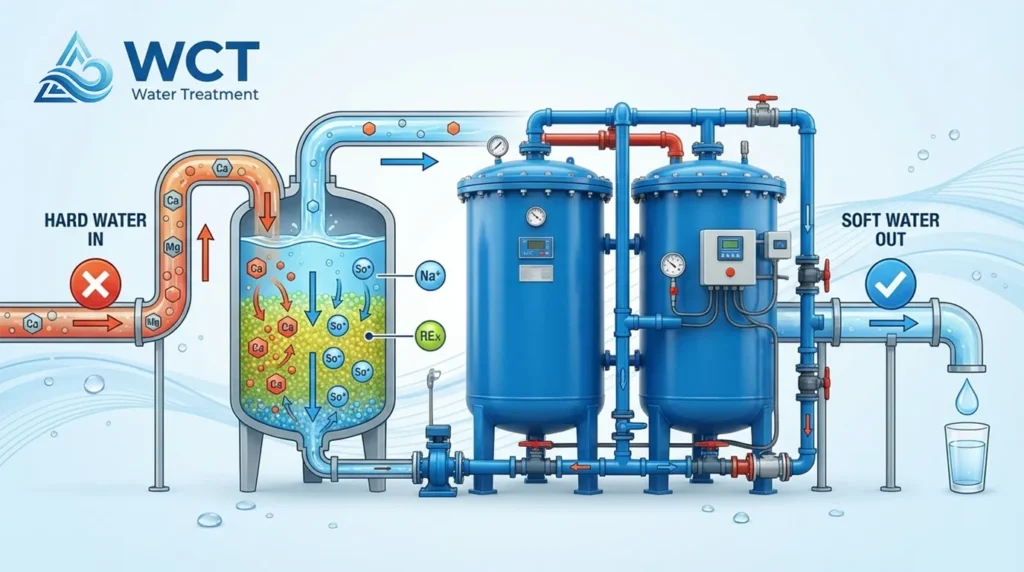
| Water Softening (ion exchange) | Hardness removal for homes, commercial kitchens, laundries | Very high for calcium, magnesium; limited for TDS |
| Reverse osmosis commercial systems | High TDS reduction, boiler feed, pharmaceutical and food processing | Up to 98-99% rejection of dissolved salts, silica, and most organics |
| Deionization (mixed-bed, separate-bed) | High-purity water for labs, electronics, and critical rinsing | Produces <1 µS/cm conductivity water; excellent for ionic contaminants |
| UV Sterilization | Final microbial barrier for bottled water, facilities on private wells | Destroys 99.9% of bacteria and viruses when pre-filtered |
Selecting the right combination is where the art of custom engineering meets practical chemistry. An ultrapure water treatment line, for instance, often layers softeners, carbon, reverse osmosis, and deionization in series to achieve tight resistivity requirements.
Common Sequencing Pitfalls to Avoid
- Placing a water softener after an RO unit, causing premature membrane scaling
- Assuming carbon filtration will remove iron without an upstream oxidation step
- Skipping prefiltration before UV treatment, leaving pathogens shielded by particles
- Ignoring temperature or pH limitations of reverse osmosis membranes
Always verify the chemical compatibility of each step with the next to prevent costly early replacement.
Pre-Engineered Modular Units vs. Fully Custom Engineered Skids
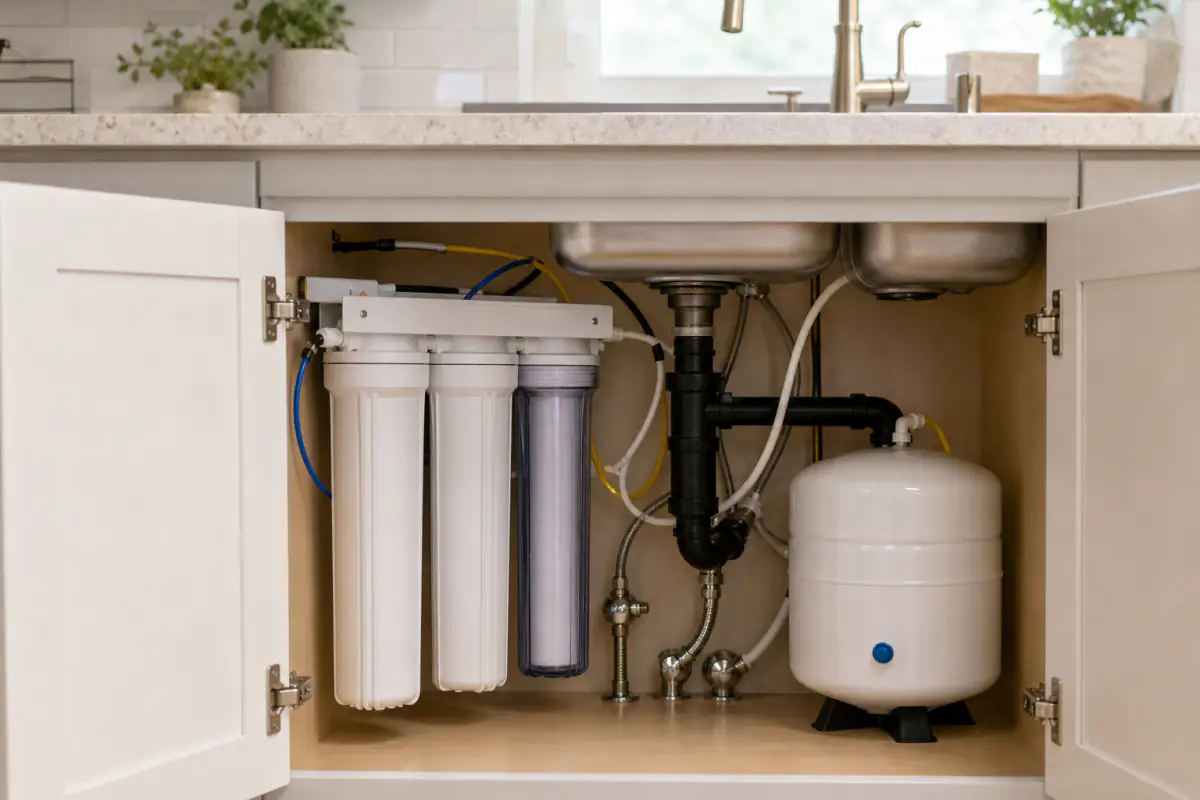
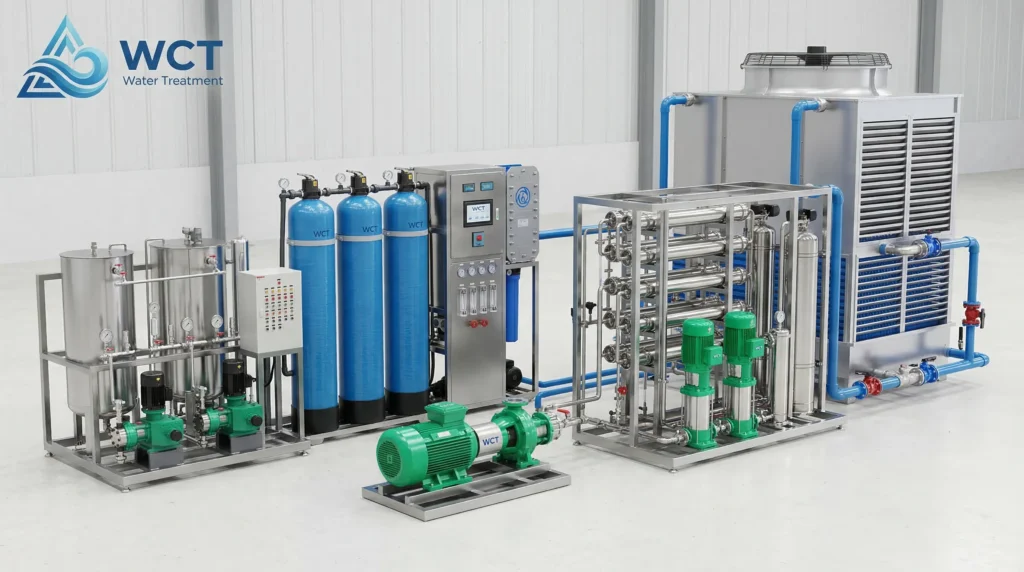
Buyers at the quoting stage face a key procurement decision: order a flexible set of modular water treatment systems or commission a fully custom, factory-assembled skid. The right path depends on lead time tolerance, expansion plans, and the complexity of the process.
When Pre-Engineered Modular Units Make Sense
- Standard water issues: high hardness, chlorine taste, low levels of iron, or moderate TDS in a known range.
- Light-commercial or large residential applications where flow rates fall under 30-50 GPM.
- Sites where future growth is likely; modular systems let you add a second softener or another reverse osmosis membrane bank without re-plumbing the entire facility.
- Shorter lead times: many skid mounted packaged treatment systems using pre-engineered modules ship in 2-4 weeks.
When Custom Engineered Skids Are the Right Choice
- Complex water chemistry requiring multiple treatment stages, chemical injection, and advanced automation.
- Industrial flow rates above 50 GPM or high-purity loops where every component, from pipe grade to valve body, must meet strict material specs.
- Harsh operating environments demanding 304 or 316 stainless steel frames, hazardous-duty electricals, or weatherproof enclosures.
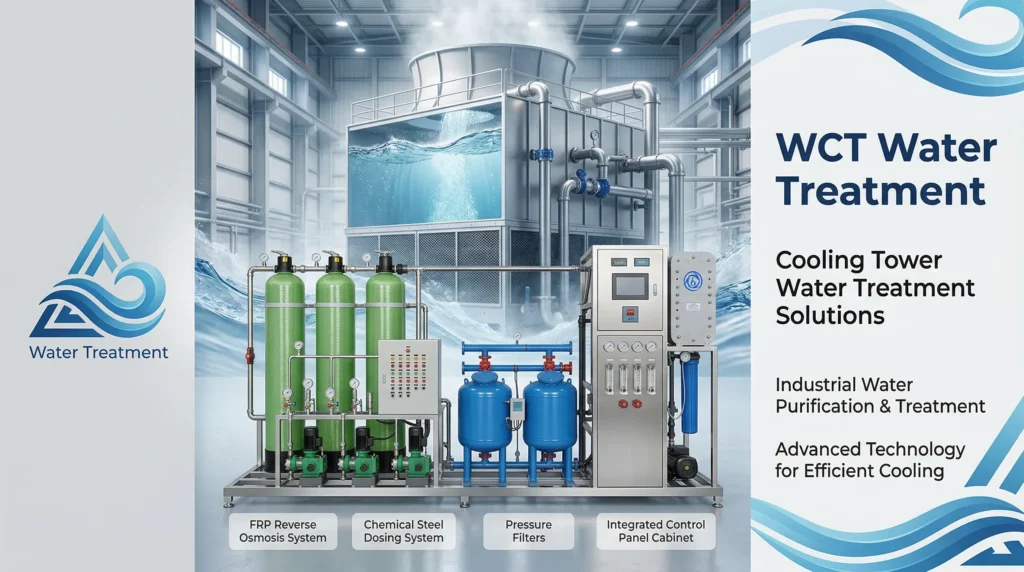
- Sites that want true plug-and-play installation: a single skid with all tanks, pumps, controls, and connections pre-piped and tested before shipping.
These fully engineered skids are built with custom fabrication services for industrial equipment that weld and wire the entire system to match the facility’s exact footprint. While lead times stretch to 8-16 weeks, the field installation time often drops to a day or two.
To get an accurate quote, have these three data points ready:
- A recent water quality test report
- Peak flow rate demand in GPM
- Target water quality specification (e.g., hardness ceiling, TDS limit, or required resistivity)
Whether you’re evaluating a whole-home tailored solution or an industrial benefits of skid mounted packaged treatment systems, the first step is knowing your water.
Start with a certified water quality test and accurate flow rate data.
With those in hand, an experienced team can map the right treatment train and walk you through a detailed quote for the hardware that fits your real operating conditions.
Frequently Asked Questions
How long does it take to manufacture custom water treatment equipment?
Residential or light-commercial modular systems often ship within 2-4 weeks from approved drawings. Larger industrial skids with custom engineering, special alloys, and centralized controls typically require 8-16 weeks, depending on complexity and current fabrication queues.
Can I upgrade a pre-engineered water system later?
Yes, that is a primary advantage of modular design. You can add extra media tanks, membrane housings, or UV stages as demand grows or water quality changes. The original manifold and controls are often designed with expansion ports to accommodate future capacity increases.
What is the most important factor when requesting a custom system quote?
A recent, comprehensive water quality test report combined with accurate peak flow rate measurements. Without these, quotes are based on assumptions that can lead to undersized equipment or cost padding. Provide test data and the maximum GPM your facility or home actually draws.