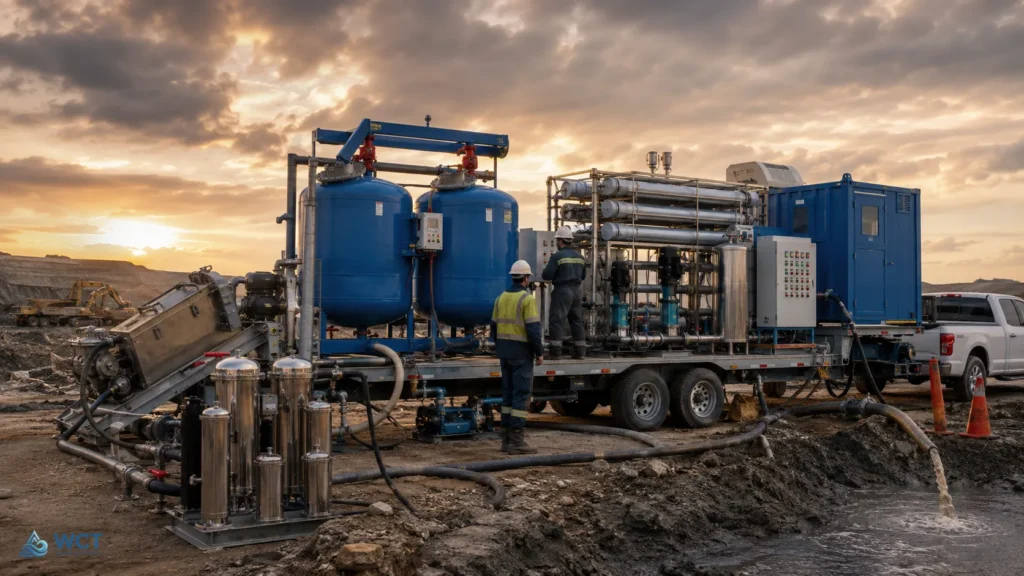
When a clarifier fails at a power plant or a refinery hits a sudden discharge limit, the fastest way to restore water capacity is a mobile water treatment system. It’s the difference between a contained outage and an escalating compliance event.
These trailer- or container-mounted plants plug into your existing infrastructure and deliver immediate, spec-grade treatment. The challenge is matching the right technology and configuration to the problem in front of you-and doing it before downtime spreads.
When to Deploy a Temporary Water Solution
Mobile units are typically deployed for three main reasons: emergency rescue, planned maintenance, or supplemental capacity. The scenario determines how fast you need to move and what performance guarantees matter most. Getting the call right means understanding the trade-offs between speed, footprint, and the level of operator support required.
Emergency Outage and Compliance Recovery
Equipment failure or a sudden raw water upset can push your discharge over permit limits within hours. An emergency water treatment system that ships within 24-48 hours prevents fines that often run into the tens of thousands per day.
Priority goes to units that can treat the specific contaminant spike-high turbidity, oil, or dissolved metals-with minimal site preparation.
You’ll also want to confirm that the vendor carries a pre-commissioned trailer that matches your water chemistry, not one that needs a full media reload.
Bridge-to-Permanent and Planned Turnarounds
When you’re building a new permanent plant or taking a clarifier offline for a planned rebuild, mobile units bridge the gap for months, not days. This is where industrial water rental services shift from time-and-materials panic to predictable monthly contracts.
You keep production running while the permanent solution moves forward. For these projects, also verify that the rental supplier has enough redundancy built in-one skid going down shouldn’t put you back into emergency mode.
Seasonal Capacity Expansion
Some industrial sites face predictable seasonal peaks: spring melt turbidity, summer cooling demand, or wet-weather stormwater. A temporary mobile water treatment system handles that surge, then returns to the fleet. It’s capacity on-demand without the capital cost of an underutilized fixed asset.
Typical seasonal users include food processors ramping up for harvest, power plants facing warmer cooling water, and mining sites managing spring runoff.
Core Treatment Technologies Available in Mobile Units
Mobile fleets carry modular versions of the same technologies you’d find in a permanent plant. That means you don’t compromise on treatment quality-you just package it differently. The table below matches each technology to the problem it solves, but remember that mobile packaging adds weight, height, and utility constraints you’ll need to validate on site.
| Technology | Target Contaminants | Typical Flow Rate | Best Use Case |
|---|---|---|---|
| Reverse Osmosis (RO) | Dissolved salts, TDS, silica, trace metals | 50-300 GPM per trailer | Boiler feed water, high-purity rinse, desalination |
| Ultrafiltration (UF) | Suspended solids, bacteria, turbidity, oil droplets | 100-500 GPM | Pretreatment for RO, surface water clarification, produced water |
| Clarification / DAF | Heavy suspended solids, oil & grease, algae | 200-1,000 GPM | Stormwater runoff, mining tailings, refinery wastewater |
| Ion Exchange (IX) | Hardness, heavy metals, nitrate, specific ions | 20-200 GPM | Demineralization, condensate polishing, metal finishing rinse |
Membrane Filtration (RO and UF)
A containerized reverse osmosis system packs high-rejection membranes into a weatherproof box that drops onto a concrete pad. For surface water pretreatment, a mobile ultrafiltration system removes turbidity and bacteria before RO, protecting downstream membranes and reducing chemical cleanings.
When evaluating a mobile RO, check concentrate disposal options-high TDS reject can’t simply go to a plant drain without a permit review.
Mobile Clarification and DAF
When you’re dealing with high solids loads-think mine water or refinery slop-a mobile clarifier or dissolved air flotation unit is the first step.
These self-contained trailers can settle or float contaminants out in minutes, producing a clear effluent that often discharges directly or polishes through filtration.
Be prepared to manage the sludge: a mobile DAF generates a float layer that needs a decant tank or dewatering box staged nearby.
Demineralization and Ion Exchange
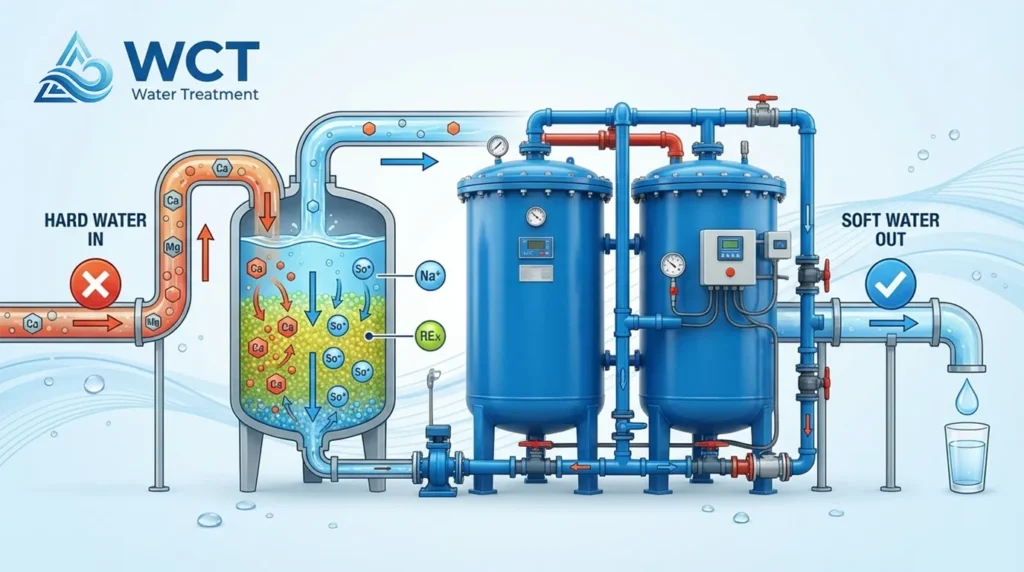
For power plants or microelectronics that need ultra-low conductivity water, modular water treatment system trailers loaded with resin vessels deliver bed volumes on demand. Temporary demineralization avoids the downtime of regenerating an existing permanent IX plant during peak season.
The logistics question is chemical supply: regeneration chemicals must be stored safely, and spent regenerant disposal needs to be locked down before the trailer arrives.
System Configurations: Trailer-Mounted vs. Containerized
The physical footprint of your site and the expected rental duration dictate whether you need a mobile water treatment system on wheels or in a shipping container. Both deliver treatment, but they fit different site realities. Make your choice based on access, weather, and how long you’ll need the capacity.
When to Choose Trailer-Mounted Systems
- Rapid deployment: park, level, and connect in a few hours.
- Ideal for short-term projects-weeks to a couple of months.
- Road-legal mobility without crane or heavy lift.
- Tight plant access: trailers can often squeeze near the process line.
- Best for sites with existing bollards, curbs, or narrow turn radii that prevent container placement.
When to Choose Containerized Modules
- Better weatherization for harsh climates or long-term placement.
- Stackable for multi-technology trains (e.g., UF + RO in two containers).
- Standard ISO frame simplifies ocean freight for remote project sites.
- Works well when site power and drainage are already pad-ready.
- Preferred if site security requires lockable, weatherproof housing and continuous 24/7 unattended operation.
In practice, many bridge-to-permanent projects start with a trailer for speed, then swap to a containerized setup once the pad is poured. The modular vs mobile water treatment decision often comes down to whether you need highway mobility or secured long-term housing. Also consider weight: a fully loaded 40-foot container can exceed road limits and require a lowboy trailer anyway.
Industry-Specific Applications and Challenges
Different industrial sectors face distinct water challenges, and the recommended mobile setup shifts accordingly. The table below maps common scenarios to technologies that work in the field. But beyond the table, each industry has its own failure modes to anticipate.
| Industry | Common Challenge | Recommended Mobile Solution |
|---|---|---|
| Power Generation | Boiler feed water purity during maintenance | Mobile RO + demineralization trailers |
| Refinery / Petrochemical | High-oil wastewater during turnaround | DAF + UF + RO multi-trailer train |
| Mining | Heavy metals and suspended solids in runoff | Clarifier + chemical feed skids |
| Food & Beverage | Seasonal production surge, organic load | UF for pretreatment, temporary bioreactor |
| Steel / Metals | Acid rinse water, zinc, chrome | Ion exchange or chemical precipitation skids |
Power Generation and Boiler Feed Water
Turbines don’t tolerate silica or conductivity excursions. When a demineralizer goes down, a mobile ion exchange trailer and a backup reverse osmosis system restore <0.1 µS/cm water fast. We've seen these units deployed within a weekend to avoid a unit trip.
For seasonal reassessments, ask the vendor for a staged approach: start with RO, then add polishing IX only if the RO permeate isn’t tight enough.
Refinery and Petrochemical Turnarounds
During a turnaround, wash water and process drains spike in oil and chemical load. A mobile DAF unit followed by UF protects the downstream biological plant or allows direct discharge while the main plant is offline.
A wastewater treatment system integrator can link these mobile components into your existing pipe rack.
The biggest risk in turnarounds is oily emulsion breakthrough; specify a DAF with chemical coagulant dosing and verify that the emulsion breaker is compatible with your specific crude.
Mining and Heavy Metals Removal
Runoff from tailings or heap leach pads often carries suspended solids and low-pH metals. Mobile clarification with lime or coagulant dosing pulls solids out, and mobile ion exchange polishes the dissolved metals. The setup stays only as long as the wet season demands it. For acid rock drainage, test for scaling potential-elevated calcium can blind membranes fast if not pre-precipitated.
What to Verify Before Requesting a Mobile System
To get a mobile water treatment system on site and operational within days, have this data ready before you contact an engineer. It cuts proposal time from a week to a single call and prevents specifying the wrong equipment.
- Recent water analysis (influent quality, target effluent specs).
- Required flow rate in GPM or m³/hour (peak and average).
- Available footprint: length, width, weight restrictions.
- Power supply: voltage, phase, amps, and distance to the pad.
- Discharge point: sewer, surface water, reuse – and its permit limits.
- Drains, chemical containment, and accessibility for service trucks.
- Expected rental duration: weeks, months, or bridge-to-permanent.
- Waste stream handling: where will concentrate, spent resin, or sludge go?
- Operator availability: will your staff run daily checks or do you need full vendor operation?
If you have a lab report and a sketch of the pad location, our application engineers can model a turnkey water treatment system configuration that fits the constraints, not just the chemistry. Before submitting a request, also check your site’s noise and odor restrictions-diesel-powered trailers or hydrogen sulfide off-gassing can cause neighbor complaints if not planned for.
Common oversights that delay deployment:
- Assuming a 480 V supply is available when the trailer needs 240 V.
- Underestimating concentrate brine disposal-high TDS reject streams often require a separate holding tank.
- Missing the need for an air-gap break between the mobile unit’s discharge and the plant sewer to prevent back-siphonage.
Mobilizing Your Temporary Water Solution
Once the right technology and footprint are confirmed, deployment doesn’t wait. Most emergency requests ship within 24-48 hours, with a technician on the ground to supervise commissioning. For planned projects, we coordinate logistics, crane lifts, and utility tie-ins so you don’t divert your maintenance crew. Here’s a typical sequence:
- Engineering team reviews water analysis and matches treatment train.
- Site survey confirms utility connections, pad geometry, and safety perimeters.
- Pre-commissioned trailer ships with media already loaded and tested.
- On-site setup includes modular hose connections, electrical tie-in, and control panel startup.
- Initial performance test runs for 24 hours while operator training occurs concurrently.
- Remote telemetry goes live, and the unit enters full production mode.
Every temporary installation includes integrated PLC controls and remote monitoring options. That means you see real-time water quality data and compliance status without babysitting the skid. If the system ever drifts, on-call support adjusts chemistry or swaps media vessels before you hit a limit.
This isn’t just renting hardware. It’s borrowing capacity with a guaranteed output spec. When the project ends, we handle demobilization. No stranded asset left on your pad.
To discuss your water challenge and get a preliminary configuration, contact our mobile solutions team. Whether it’s a midnight clarifier failure or a planned turnaround next quarter, the conversation starts with your water profile. We’ll take it from there.
Frequently Asked Questions
How fast can a mobile water treatment system be deployed?
For emergencies, pre-configured trailers can dispatch within 24-48 hours. Commissioning on site typically takes a few days once utilities are connected. Planned projects can align delivery with your shutdown schedule down to a specific day, provided the pad and power are ready beforehand.
Who operates the mobile treatment equipment on site?
Most providers offer flexible operational models. For short-term emergency response, a vendor technician often stays on site around the clock. For longer rentals, we can train your plant operators on daily checks and let remote telemetry handle fine-tuning. You choose the level of support.
How is compliance monitored during a temporary deployment?
Mobile units ship with integrated PLCs, continuous online analyzers, and cellular telemetry. That data feeds a dashboard you can access 24/7, and alarms trigger immediate support calls. It’s the same monitoring rigor you’d expect from a permanent plant, packed into a temporary footprint. Discharge logs are archived for compliance reporting, and you can export data directly into your permit-tracking system.