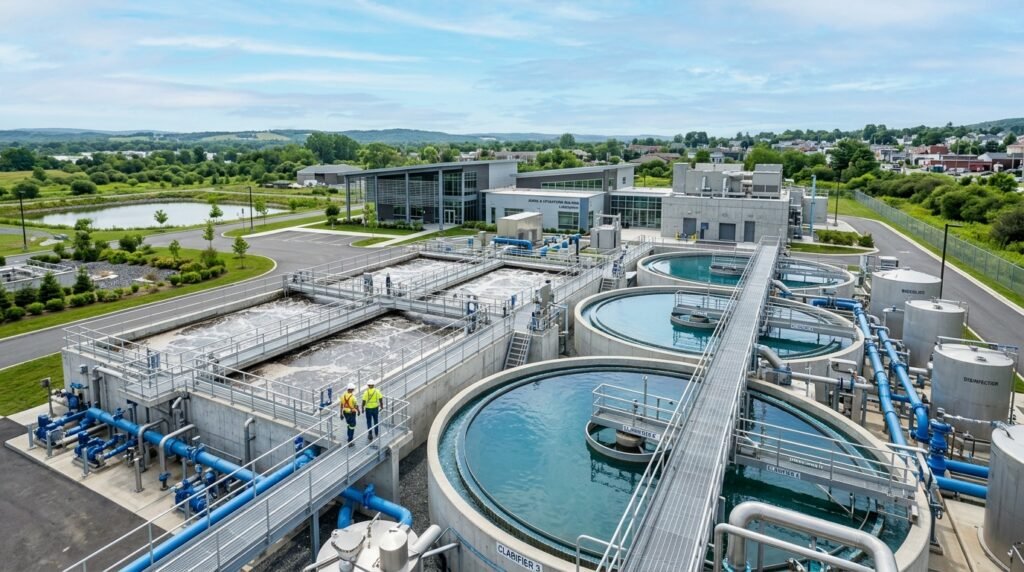
Are you struggling to balance strict regulatory compliance with the rising costs of infrastructure? Designing a facility that is both efficient and future-proof requires more than just standard engineering—it requires a strategic blueprint.
In this guide, you’re going to learn the exact framework for successful waste water treatment plant design, from initial wastewater characterization to the integration of smart technology. I’ve distilled years of industry expertise into a step-by-step approach covering secondary biological treatment solutions, resource recovery, and sludge management.
If you want to build a high-performance system that maximizes hydraulic capacity while minimizing environmental impact, this guide is for you.
Let’s dive right in.
Fundamentals of Wastewater Treatment Plant Design
Effective waste water treatment plant design is the cornerstone of sustainable water management and environmental protection. As a leading septic tank supplier and manufacturer, we understand that building a robust, efficient, and scalable treatment facility requires a deep understanding of core engineering principles. A successful project relies on precision from the very first blueprint, ensuring that the facility can handle current demands while adapting to future environmental challenges.
Defining Design Criteria and Treatment Objectives
The first step in any waste water treatment plant design is establishing clear, measurable objectives. Every facility must be engineered to meet specific operational goals based on the municipal or industrial site it serves.
- Flow Capacity: Calculating average daily flows and peak wet-weather flows to size tanks and piping accurately.
- Effluent Quality Targets: Defining the exact purity levels required for discharged water to protect receiving ecosystems.
- Operational Lifespan: Specifying durable materials and infrastructure built to withstand harsh, corrosive conditions for decades.
- Resource Recovery: Integrating initial blueprints for potential water reuse, sludge utilization, or biogas generation.
Compliance with Environmental and Safety Regulations
Navigating the complex landscape of environmental law is non-negotiable. A compliant waste water treatment plant design protects public health and shields facility operators from costly legal liabilities. We prioritize strict adherence to both local and international environmental frameworks.
Key regulatory focus areas include strict limits on nutrient discharge (specifically nitrogen and phosphorus), rigorous odor and noise control mandates, and comprehensive worker safety protocols. Designing with compliance at the forefront ensures seamless permitting, avoids regulatory fines, and guarantees long-term operational security.
Wastewater Characterization and Laboratory Studies
You cannot effectively treat what you do not thoroughly understand. Comprehensive wastewater characterization is a critical diagnostic tool in the early design phase. Before finalizing any structural or biological engineering plans, extensive laboratory studies must be conducted on the raw influent to capture its unique chemical and biological profile.
- BOD and COD: Measuring Biochemical and Chemical Oxygen Demand to determine the exact organic load the plant must process.
- Total Suspended Solids (TSS): Evaluating the volume of physical particulate matter requiring primary removal.
- pH and Temperature Profiles: Understanding the chemical baseline to select the most effective biological and chemical treatment methods.
- Toxicity Analysis: Identifying heavy metals, volatile organic compounds, or industrial chemicals that could inhibit sensitive biological treatment processes.
By relying on accurate empirical data rather than assumptions, the resulting waste water treatment plant design is highly optimized for energy efficiency, cost-effectiveness, and reliable daily performance.
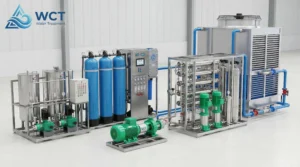
Key Factors Influencing the Design Process
Site Selection and Spatial Layout Planning
Choosing the right location is the first critical step in waste water treatment plant design. We prioritize sites that leverage natural topography to allow for gravity flow, which significantly cuts down on long-term pumping costs. The spatial layout must be tight enough to save on land use but spacious enough to allow maintenance crews and heavy machinery to move freely. As an experienced septic tank manufacturer, we focus on compact footprints that do not compromise the accessibility of internal components.
Hydraulic Capacity and Scalability for Future Growth
A facility is only as good as its ability to handle peak loads. We calculate hydraulic capacity based on current flow data while building in a buffer for heavy rainfall and future population increases.
* **Peak Flow Management:** Ensuring the system handles surges without overflowing.
* **Modular Design:** Building sections that can be easily expanded or mirrored.
* **Future-Proofing:** Leaving physical space for additional tanks or advanced filtration stages.
Capital Costs and Operational Budget Considerations
We believe a successful design must be financially sustainable. This means finding the \”sweet spot\” between initial construction costs and the daily price of keeping the lights on. Our approach to municipal water treatment systems emphasizes high-quality materials that resist corrosion, reducing the frequency of expensive repairs. We analyze the following to protect your budget:
* **Energy Consumption:** Selecting motors and blowers with high-efficiency ratings.
* **Chemical Usage:** Optimizing dosing systems to prevent waste.
* **Labor Requirements:** Using automation to reduce the need for constant manual intervention.
Core Components of a Modern Treatment Facility
A robust waste water treatment plant design relies on a multi-stage process to ensure water is cleaned thoroughly before being released or reused. We focus on a logical flow that handles everything from heavy debris to microscopic nutrients, ensuring the system remains efficient and compliant.
Primary Treatment and Solids Removal
This is the first line of defense in our facilities. We use mechanical processes to remove large objects and heavy solids that could damage pumps or clog downstream pipes.
- Screening: Removes rags, plastics, and large debris.
- Grit Removal: Settles out sand, gravel, and heavy inorganic materials.
- Primary Clarification: Uses gravity to allow organic solids to settle at the bottom, forming primary sludge.
Secondary Biological Treatment Solutions
The heart of the process is the biological stage, where we use microorganisms to consume dissolved organic matter. We tailor these systems based on the specific waste profile of the site. For decentralized projects or initial solids separation, partnering with a professional septic tank company provides the necessary pre-treatment foundation before the water reaches advanced biological reactors.
- Activated Sludge: Uses aeration to keep bacteria suspended and active.
- Biofilm Processes: Employs media for bacteria to grow on, increasing treatment surface area.
- Efficiency: High-rate removal of Biochemical Oxygen Demand (BOD) and Chemical Oxygen Demand (COD).
Tertiary Treatment and Nutrient Removal
To meet strict environmental standards, we implement tertiary polishing. This stage is critical for removing remaining suspended solids and nutrients like nitrogen and phosphorus that can harm local ecosystems. For facilities dealing with complex chemical loads, our industrial water treatment solutions include advanced filtration and disinfection technologies.
- Filtration: Sand or disc filters remove fine particles.
- Disinfection: UV radiation or chlorination kills remaining pathogens.
- Nutrient Removal: Chemical precipitation or biological stages to strip phosphorus and nitrogen.
Sludge Treatment and Management Systems
What remains after treatment is sludge, and managing it correctly is vital for a sustainable waste water treatment plant design. We integrate systems that reduce sludge volume and stabilize it for safe disposal or reuse.
- Thickening and Dewatering: Uses belt presses or centrifuges to remove water and create a solid \”cake.\”
- Digestion: Anaerobic processes break down organic matter, often producing biogas that can be used as a renewable energy source.
- Stabilization: Ensures the final byproduct is safe for land application or landfilling.
Common Biological Treatment Design Technologies
Biological processes are the engine of any modern facility. When executing a successful waste water treatment plant design, choosing the right biological technology dictates the system\’s efficiency, physical footprint, and daily operational costs. Because we are a septic tank supplier and manufacturer, we understand firsthand that every project requires a tailored approach to breaking down organic matter effectively.
Activated Sludge and Extended Aeration Systems
The activated sludge process is the most widely used biological treatment method globally. It relies on a suspended culture of microorganisms to consume organic pollutants. Extended aeration is a variation of this process that provides a longer retention time, allowing the bacteria to digest the waste more thoroughly and reducing the total amount of sludge produced.
To keep these microorganisms alive and active, the system requires a constant and efficient supply of oxygen. Utilizing a highly efficient disc diffuser for water treatment ensures optimal oxygen transfer into the aeration tanks, keeping energy costs down while maintaining a healthy biological environment.
Membrane Bioreactors (MBR) and Biofilm Processes (MBBR)
When space is tight or effluent quality requirements are exceptionally high, advanced biological systems step in.
- Membrane Bioreactors (MBR): This technology combines traditional biological treatment with advanced membrane filtration. It eliminates the need for secondary clarifiers, saving massive amounts of space while producing ultra-clean, reusable water.
- Moving Bed Biofilm Reactors (MBBR): This process uses thousands of small plastic carriers suspended in the tank. These carriers provide a large surface area for beneficial bacteria to grow. It is highly scalable and excellent for upgrading existing plants without expanding the tank size.
Sequencing Batch Reactors (SBR) and Facultative Lagoons
Different site conditions call for different operational strategies. SBRs and lagoons offer two distinct approaches to biological treatment:
- Sequencing Batch Reactors (SBR): Instead of moving water through multiple tanks, an SBR handles all treatment steps—fill, react, settle, and decant—in a single tank on a timed cycle. This time-based approach is highly flexible and ideal for facilities with varying flow rates.
- Facultative Lagoons: For projects with plenty of available land and a need for low operating costs, natural lagoon systems are highly effective. These large ponds use a combination of aerobic and anaerobic zones to naturally break down waste over a longer period, requiring minimal mechanical equipment and maintenance.
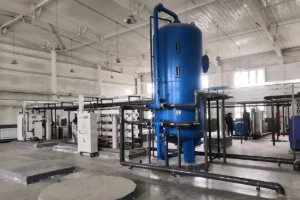
Sustainability and Resource Recovery in Design
Modern waste water treatment plant design is no longer just about disposal; it is about resource management. We focus on transforming treatment facilities into \”resource recovery centers\” that minimize waste and maximize the value of every drop processed. By integrating sustainable practices, we help operators lower their environmental footprint while significantly reducing long-term overhead.
Energy-Efficient Equipment and Aeration Optimization
Aeration typically accounts for the largest portion of energy consumption in a treatment facility. To combat this, we prioritize the installation of high-efficiency blowers and fine-bubble diffusers controlled by smart sensors.
- Variable Frequency Drives (VFDs): These adjust motor speeds based on real-time oxygen demand, preventing energy waste during low-flow periods.
- Automated Dissolved Oxygen (DO) Control: Precise monitoring ensures microorganisms stay healthy without over-aerating the tanks.
- High-Efficiency Pumps: Reducing friction loss and optimizing hydraulic flow paths to save electricity.
Implementing Renewable Energy and Carbon Reduction
We aim for carbon neutrality by incorporating renewable energy sources directly into the site layout. This transition not only protects the environment but also provides a hedge against rising utility costs.
- Solar Array Integration: Utilizing available land or tank covers for photovoltaic panels to power onsite operations.
- Biogas Recovery: Capturing methane from anaerobic digestion to generate heat or electricity via combined heat and power (CHP) units.
- Carbon Sequestration: Implementing green buffers and specialized vegetation around the facility to offset operational emissions.
Water Reuse, Recycling, and Circular Economy Integration
The circular economy is at the heart of our design philosophy. Instead of discharging treated effluent into local waterways, we design systems that prepare water for high-value reuse. For projects requiring the highest purity levels, we integrate advanced RO membranes for reverse osmosis to ensure the water is suitable for industrial cooling or agricultural irrigation.
As a dedicated manufacturer, we also provide decentralized solutions, such as our 10-ton HDPE septic tanks, which allow for localized primary treatment and easier water management in remote areas. By focusing on recycling, we turn \”waste\” into a reliable source of process water, reducing the strain on local freshwater supplies.
Automation and Smart Technology Integration
We believe that a modern waste water treatment plant design isn\’t complete without a digital brain. Automation is no longer just a luxury; it is the standard we use to ensure facilities run at peak performance without constant manual oversight. By integrating smart tech, we help operators reduce human error and optimize every drop of energy used.
SCADA Systems and Real-Time Performance Monitoring
We integrate SCADA (Supervisory Control and Data Acquisition) to give you a bird’s-eye view of the entire operation. This allows us to monitor dissolved oxygen, pH levels, and flow rates in real-time. To ensure the system reacts instantly to water quality changes, we often incorporate high-precision electromagnetic diaphragm metering pumps that sync directly with the control system, ensuring chemical dosing is always spot-on.
Remote Control and Distributed Control Systems (DCS)
Our approach to waste water treatment plant design focuses on decentralizing control for better reliability. With a DCS, if one section of the plant faces a glitch, the rest of the facility continues to operate normally. We prioritize:
- Remote Access: Manage and troubleshoot the plant from a tablet or central office.
- Automated Dosing: Using mechanical diaphragm metering pumps to maintain steady chemical flow without manual intervention.
- Instant Alerts: Receive mobile notifications the moment a parameter falls out of range.
Predictive Maintenance Using AI and Machine Learning
We are shifting the industry from reactive repairs to proactive management. By using AI, our systems analyze vibration and heat data from motors and blowers to predict failures before they happen. This \”smart\” layer in our waste water treatment plant design saves thousands in emergency repair costs and prevents unplanned downtime, keeping your facility compliant and efficient 24/7.
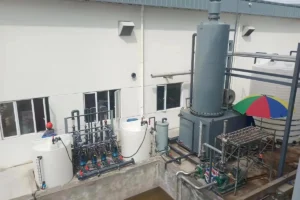
Steps for Planning and Detailed Engineering
Successful waste water treatment plant design is a journey from raw data to a fully operational facility. We follow a rigorous engineering process to ensure every component handles the specific load of the site while maintaining cost-efficiency.
Initial Needs Assessment and Data Collection
We begin by gathering precise data on the influent. This isn\’t just about how much water is coming in, but exactly what is inside it. We analyze:
- Average and Peak Flow Rates: Essential for sizing tanks and hydraulic piping correctly.
- Chemical Composition: Measuring BOD, COD, nitrogen, phosphorus, and total suspended solids.
- Site Constraints: Evaluating soil conditions, topography, and available footprint.
- Future Projections: Planning for population growth or industrial expansion over the next 10 to 20 years.
Pilot Studies and Bench-Scale Testing
For non-standard waste streams or complex industrial effluents, we don\’t guess—we test. Pilot studies allow us to simulate the treatment process on a smaller scale to verify that the chosen technology hits the required discharge limits. This step minimizes financial risk and optimizes chemical dosing or aeration requirements before the full-scale build. As a leading septic tank supplier and manufacturer, we understand that even smaller decentralized systems benefit from this level of technical scrutiny to ensure long-term performance. You can explore more about these technical requirements and engineering standards in our industry knowledge section.
Construction, Commissioning, and Facility Start-up
The transition from design to operation requires extreme precision. Our engineering team oversees the entire lifecycle of the build to ensure the waste water treatment plant design is executed perfectly on-site.
| Phase | Key Activities |
|---|---|
| Construction | Structural concrete work, piping installation, and electrical wiring. |
| Equipment Integration | Installing high-efficiency pumps, blowers, and specialized filtration units. |
| Commissioning | Conducting \”dry runs\” and \”wet runs\” to calibrate sensors and automation logic. |
| Start-up | Seeding biological reactors and stabilizing the process until effluent meets standards. |
We focus on a seamless hand-off, providing comprehensive documentation and operator training so the facility runs at peak performance from day one.
Challenges and Long-Term Operational Planning
Managing the lifecycle of a facility requires more than just a good initial build. We focus on long-term viability by anticipating how a waste water treatment plant design will perform ten or twenty years down the line. Operational planning must account for shifting environmental conditions, urban expansion, and the inevitable wear and tear on mechanical components.
Retrofitting Aging Infrastructure and Upgrading Systems
Many existing facilities struggle with outdated technology that cannot meet modern efficiency standards. We specialize in retrofitting these sites to improve performance without requiring a total teardown. By integrating modular components and high-quality parts from a trusted septic tank mold manufacturer, we help plants expand their capacity and improve effluent quality within their current physical footprint.
Addressing New and Emerging Contaminant Regulations
Environmental laws are becoming stricter regarding \”forever chemicals,\” microplastics, and pharmaceutical residues. A forward-thinking waste water treatment plant design must be flexible enough to incorporate advanced oxidation or specialized filtration stages as these regulations evolve. Staying ahead of compliance prevents costly emergency upgrades and ensures the facility remains a community asset rather than a liability.
Designing for Reliability and Ongoing Maintenance
Reliability is built during the drafting phase, not as an afterthought. We prioritize layouts that allow for easy equipment access and redundant systems to prevent downtime during repairs.
- Redundancy: Ensuring backup pumps and blowers are always ready.
- Durability: Using corrosion-resistant materials for all submerged components.
- Accessibility: Designing clear pathways for technicians to service water plant treatment hardware safely.
- Standardization: Using common parts to simplify inventory and reduce lead times for replacements.