Importance of High-Purity Water in Pharmaceutical Manufacturing
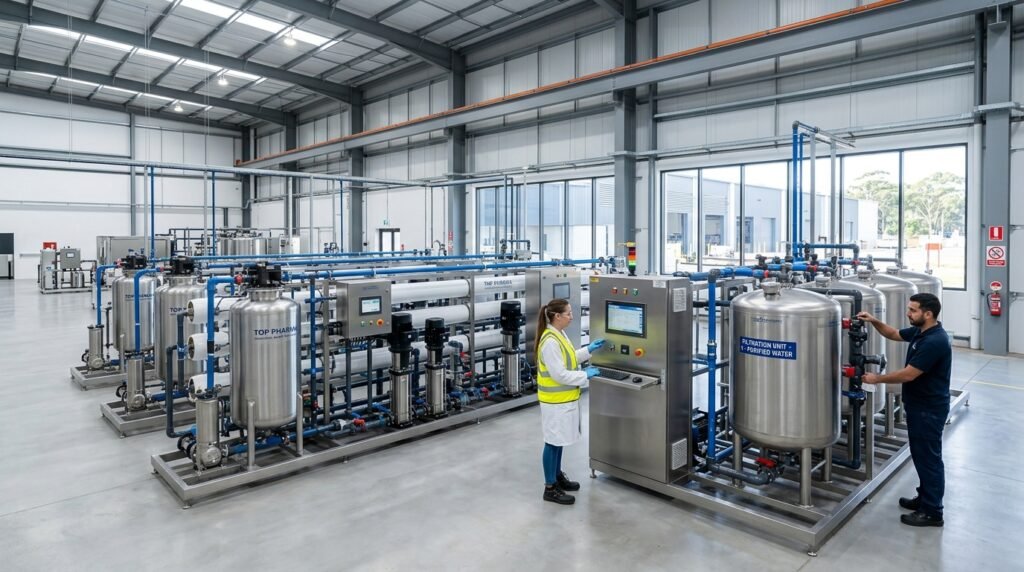
In the pharmaceutical industry, water is the most widely used substance, serving as a raw material, a cleaning agent, and a primary solvent. Because water quality directly impacts the efficacy and safety of life-saving medications, selecting the best industrial water treatment company for pharmaceutical manufacturing is a critical strategic decision. High-purity water systems must eliminate microbial contaminants, endotoxins, and chemical impurities to ensure that every batch meets global health standards.
Meeting Stringent Regulatory Standards (GMP, USP, and GAMP)
Compliance is non-negotiable in pharmaceutical production. Our water treatment solutions are engineered to align with the most rigorous international frameworks:
- Good Manufacturing Practice (GMP): Ensuring consistent production quality and risk mitigation.
- United States Pharmacopeia (USP) & Ph. Eur.: Adhering to specific chemical and bacterial conductivity limits.
- GAMP 5: Implementing a risk-based approach to compliant GxP computerized systems for automated water treatment.
Types of Pharmaceutical Water: PW, WFI, and Pure Steam
Different applications require specific grades of water, each necessitating specialized purification technologies:
| Water Type | Application | Key Requirements |
|---|---|---|
| Purified Water (PW) | Non-sterile compounding, cleaning, and laboratory use. | Low conductivity and Total Organic Carbon (TOC). |
| Water for Injection (WFI) | Solvent for parenteral (injectable) drugs. | Ultra-low endotoxin levels and high biological purity. |
| Pure Steam | Sterilization of equipment and distribution systems (SIP). | Produced from PW or WFI; must be dry and non-pyrogenic. |
Ensuring Process Continuity and Product Safety
A robust water treatment system is the backbone of a pharmaceutical facility. Beyond meeting regulatory benchmarks, these systems are designed for uninterrupted process continuity. Even a minor deviation in water quality can lead to costly batch rejections, regulatory fines, or facility shutdowns. By integrating advanced filtration, continuous deionization, and real-time monitoring, we protect the integrity of the manufacturing lifecycle, ensuring that product safety is never compromised from the research lab to the final packaging line.
Top-Rated Industrial Water Treatment Companies for Pharma
Finding the best industrial water treatment company for pharmaceutical manufacturing comes down to proven reliability, strict regulatory compliance, and advanced technology. While we are septic tank supplier and manufacturer handling broader industrial wastewater needs, we know that pharmaceutical production requires highly specialized, ultra-pure water systems.
Here is a look at the top global leaders setting the standard in pharmaceutical water treatment.
Veolia Water Technologies: End-to-End High-Purity Solutions
Veolia dominates the market with comprehensive, turnkey solutions. They manage the entire water cycle, ensuring that facilities meet strict global pharmacopeia standards without missing a beat.
- Standardized Systems: Their flagship Orion™ units combine reverse osmosis and electrodeionization for consistent purified water.
- Full Lifecycle Support: From initial design to validation and long-term maintenance.
- Energy Recovery: Built-in technologies to reduce overall utility consumption.
Suez Water Technologies & Solutions: Specialized Treatment Systems
Suez is highly regarded for tackling complex water challenges with custom-engineered systems. Their approach to the water treatment process ensures maximum efficiency and safety for critical drug manufacturing lines.
- Advanced Analytics: Real-time digital monitoring to guarantee continuous compliance.
- Process Optimization: Tailored designs that integrate seamlessly into existing plant infrastructure.
- Resource Recovery: Innovative methods to reclaim and reuse process water safely.
Evoqua Water Technologies: Innovation in Ultrapure Water
Evoqua stands out for its relentless focus on ultrapure water reliability. Pharmaceutical plants rely on their systems to maintain continuous production and avoid catastrophic downtime.
- High-Efficiency RO: Advanced reverse osmosis systems that maximize water yield.
- Rapid Response Service: A massive global service network ensuring fast maintenance and minimal disruptions.
- Modular Designs: Scalable equipment that grows alongside your manufacturing capacity.
Aquatech International: Leading Sustainable Water Stewardship
Aquatech proves that high-purity water production can align with aggressive environmental goals. They lead the charge in sustainable water management for the pharma sector.
- Zero Liquid Discharge (ZLD): Industry-leading technology to eliminate wastewater discharge.
- Water Footprint Reduction: High-recovery systems that drastically cut raw water intake.
- Cost Efficiency: Engineering focused on lowering long-term operational and energy costs.
Core Technologies for Pharmaceutical Water Purification
As the best industrial water treatment company for pharmaceutical manufacturing, we rely on advanced, proven technologies to deliver uncompromising water quality. The pharmaceutical sector demands absolute precision, and our purification systems are engineered to meet those exact standards consistently.
Reverse Osmosis (RO) and Electrodeionization (EDI)
The combination of RO and EDI serves as the backbone of modern purified water generation.
- Reverse Osmosis: Pushes water through a semi-permeable membrane to strip away up to 99% of dissolved salts, organics, and bacteria. Integrating a high-efficiency RO system for waste water treatment ensures reliable pre-treatment and optimal water recovery.
- Electrodeionization: Acts as the critical polishing step. It uses electrical current to continuously regenerate ion exchange resins, removing residual impurities without requiring hazardous chemical handling.
Multi-Effect Distillation for Water for Injection (WFI)
When producing Water for Injection (WFI), distillation remains the gold standard. Multi-Effect Distillation (MED) systems operate through a series of boiling and condensation stages at decreasing pressures and temperatures. This thermal method guarantees the absolute removal of endotoxins and microbes, ensuring the final water is perfectly safe for parenteral drugs and critical compounding.
Ultrafiltration and Membrane Bioreactors (MBR)
Advanced filtration technology is vital for both product safety and facility environmental compliance.
- Ultrafiltration (UF): Acts as a strict physical barrier against pyrogens, viruses, and large organic molecules.
- Membrane Bioreactors (MBR): Combines biological treatment with microfiltration for superior wastewater management. While we are a septic tank supplier and manufacturer, our primary expertise as the best industrial water treatment company for pharmaceutical manufacturing allows us to design robust waste water treatment tanks that safely process complex pharma effluent.
Pure Steam Generation and Ozone Disinfection
Maintaining a sterile production environment is non-negotiable in this industry.
- Pure Steam Generators: Produce pyrogen-free, dry steam essential for Sterilization-in-Place (SIP) processes, autoclaves, and equipment cleaning.
- Ozone Disinfection: Provides a highly effective, chemical-free sanitization method for water storage and distribution loops. Ozone rapidly destroys microbes and safely reverts back to oxygen, leaving zero harmful residues behind.
Key Applications Across the Pharmaceutical Lifecycle
Water touches every single phase of drug production. As a trusted septic tank supplier and manufacturer, and widely recognized as the best industrial water treatment company for pharmaceutical manufacturing, we deliver targeted solutions for every stage of your facility\’s lifecycle. We focus on keeping your operations compliant, efficient, and safe.
Ingredient and Process Water Production (Aqua Purificata)
Purified water is the most heavily used raw material in pharmaceutical manufacturing. It serves as a core excipient, a solvent for active ingredients, and a base for bulk drug production.
- Consistent Quality: We engineer systems that continuously output Aqua Purificata meeting strict global pharmacopeia standards.
- Microbial Control: By integrating advanced UV treatment for water, we ensure absolute microbial destruction without adding chemical residues to your process water.
- Scalability: Our skids are built to scale alongside your production demands.
Laboratory and Research-Grade Water Systems
Before a drug ever reaches the production floor, it starts in the lab. Research facilities require ultrapure water (Type I, II, and III) for sensitive applications like high-performance liquid chromatography (HPLC), cell cultures, and rigorous quality control testing. We provide compact, high-precision point-of-use systems that guarantee the exact water specifications your scientists need to ensure accurate, reproducible results.
Equipment Cleaning and Sterilization (CIP/SIP)
Preventing cross-contamination between drug batches is critical. Clean-in-Place (CIP) and Sterilize-in-Place (SIP) protocols rely heavily on high-purity water and pure steam.
- Final Rinses: We supply systems generating Water for Injection (WFI) for the final, critical rinse of manufacturing vessels.
- Pure Steam: Our generators produce dry, saturated pure steam to sterilize reactors, pipework, and filling lines safely and effectively.
- Rapid Turnaround: Optimized water delivery speeds up cleaning cycles, maximizing your facility\’s uptime.
Sustainable Wastewater Treatment and Zero Liquid Discharge (ZLD)
Pharmaceutical effluent is tough to treat. It contains active pharmaceutical ingredients (APIs), heavy metals, and complex organic compounds. You need a robust backend system to handle this safely.
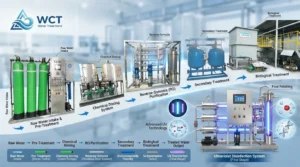
We design comprehensive wastewater plants that utilize effective sedimentation water treatment alongside advanced biological and membrane processes. For facilities aiming for maximum sustainability, we implement Zero Liquid Discharge (ZLD) technologies. This allows you to recover and reuse up to 95% of your wastewater, drastically reducing your environmental footprint and cutting disposal costs.
Critical Factors When Choosing a Water Treatment Partner
Selecting the best industrial water treatment company for pharmaceutical manufacturing requires more than just comparing equipment prices. You need a partner that understands the high stakes of drug safety and the complexity of pharmaceutical grade water. We focus on delivering systems that eliminate the risk of contamination while maximizing uptime.
Proven Technical Expertise and Engineering Excellence
Experience in the pharma sector is non-negotiable. A reliable partner must demonstrate a deep understanding of fluid dynamics, microbiology, and material science. Our engineering teams prioritize sanitary designs that prevent biofilm growth and ensure consistent water quality. We integrate advanced components like high-accuracy electromagnetic diaphragm metering pumps to ensure precise chemical dosing, which is vital for maintaining system stability and protecting sensitive membranes.
Customization, Design, and Manufacturing Capabilities
No two pharmaceutical facilities are identical. Whether you are dealing with limited floor space or specific source water challenges, customization is key. We provide end-to-end manufacturing, from initial 3D modeling to the final skid assembly.
| Feature | Requirement for Pharma | Our Solution |
|---|---|---|
| Material Quality | 316L Stainless Steel | Orbital welding & Ra < 0.5 µm finish |
| System Footprint | Compact & Modular | Skid-mounted \”Plug & Play\” designs |
| Control Systems | Automated & Integrated | PLC-based monitoring with data logging |
Compliance Documentation and Validation Support
In the regulated world of pharma, if it isn\’t documented, it didn\’t happen. The right partner provides a comprehensive validation package to simplify your path to compliance. We assist with the entire IQ/OQ/PQ (Installation, Operational, and Performance Qualification) process, ensuring your system meets USP and EP standards from day one. This includes detailed FAT (Factory Acceptance Testing) and SAT (Site Acceptance Testing) protocols to guarantee that every valve and sensor performs exactly as specified.
Global Service Reach and Aftermarket Maintenance
A water system is a long-term investment that requires proactive care. Choosing a partner with a global service footprint ensures you have access to spare parts and expert technicians when you need them most. Our aftermarket support includes:
- Preventative Maintenance: Scheduled inspections to prevent costly emergency shutdowns.
- Consumable Management: Rapid delivery of membranes, resins, and filters.
- Remote Diagnostics: Real-time troubleshooting to resolve issues before they impact production.
- System Upgrades: Retrofitting older units with modern sensors and more efficient filtration media.
Operational Efficiency and Sustainable Water Management
Efficiency in pharmaceutical water systems is no longer optional; it is a core requirement for staying competitive. We focus on maximizing output while minimizing the resources required to produce high-purity water.
Reducing Water Footprint and Energy Consumption
Sustainability starts with smart design. We implement high-recovery Reverse Osmosis (RO) systems and variable frequency drives on pumps to drastically lower energy use. By reclaiming reject water for non-critical utilities, we help facilities achieve their environmental goals without compromising on quality. Our commitment to resource management is why we are considered the best industrial water treatment company for pharmaceutical manufacturing by clients focused on green initiatives.
Digital Monitoring, Telemetry, and Remote Support
Manual data logging is a risk in a high-stakes environment. Our systems feature integrated digital monitoring and telemetry that provide a 24/7 view of your water quality.
- Instant Alerts: Automated notifications for any deviation in TOC or conductivity levels.
- Data Integrity: Electronic record-keeping that simplifies compliance with 21 CFR Part 11.
- Predictive Maintenance: Using trend analysis to replace consumables before they fail, preventing unplanned downtime.
Life-Cycle Cost Reduction and Process Optimization
We focus on the total cost of ownership by selecting components that last. Utilizing a high-grade water treatment tank ensures structural integrity and chemical resistance over decades of use. Furthermore, optimizing the dosage in polymer water treatment stages prevents membrane fouling, which extends the life of expensive RO elements. This holistic approach reduces the frequency of system retrofits and ensures your operational budget is spent on production, not constant repairs.
Frequently Asked Questions About Pharma Water Solutions
Navigating the complexities of high-purity water systems is a major part of being the best industrial water treatment company for pharmaceutical manufacturing. We address the most common technical concerns to help you maintain a compliant facility.
What are the quality requirements for pharmaceutical water?
Pharmaceutical water must meet strict pharmacopeia standards, such as those set by the USP, EP, and JP. The primary metrics we monitor include:
- Conductivity: Measures the ionic concentration (typically <1.3 µS/cm at 25°C for Purified Water).
- Total Organic Carbon (TOC): Must be below 500 ppb to prevent microbial growth.
- Microbial Count: Limits vary by water type, but generally require less than 100 CFU/ml for Purified Water.
- Endotoxins: Specifically for WFI, levels must be below 0.25 EU/ml.
How does a WFI system differ from standard purified water?
While both are highly filtered, Water for Injection (WFI) undergoes more rigorous processing to ensure it is pyrogen-free. Purified Water (PW) is used for cleaning and as a solvent in non-sterile products. WFI is mandatory for parenteral (injectable) drugs. Our systems often utilize multi-effect distillation or advanced membrane-based \”Cold WFI\” processes to meet these ultra-low endotoxin requirements. For a deeper look at system designs, you can check our water treatment guide for technical insights.
Why is TOC monitoring essential in pharmaceutical manufacturing?
Total Organic Carbon (TOC) is a \”canary in the coal mine\” for water systems. High TOC levels indicate the presence of organic matter, which serves as a nutrient source for bacteria and can lead to biofilm formation. Continuous TOC monitoring ensures that any breach in the purification chain—such as exhausted carbon beds or failing RO membranes—is detected before it contaminates the final product.
How often do industrial water systems require validation and retrofitting?
Validation is not a one-time event; it is a continuous lifecycle. We recommend:
- Daily/Weekly Monitoring: For conductivity, TOC, and temperature.
- Annual Performance Qualification (PQ): To verify the system still operates within its validated state.
- Retrofitting: Components like the wct automatic multiport valve for water pure system or UV lamps should be replaced based on run-hours or performance degradation to prevent unplanned downtime.
Maintaining these systems requires precision and high-quality components to ensure the safety of the end consumer and the longevity of your manufacturing equipment.