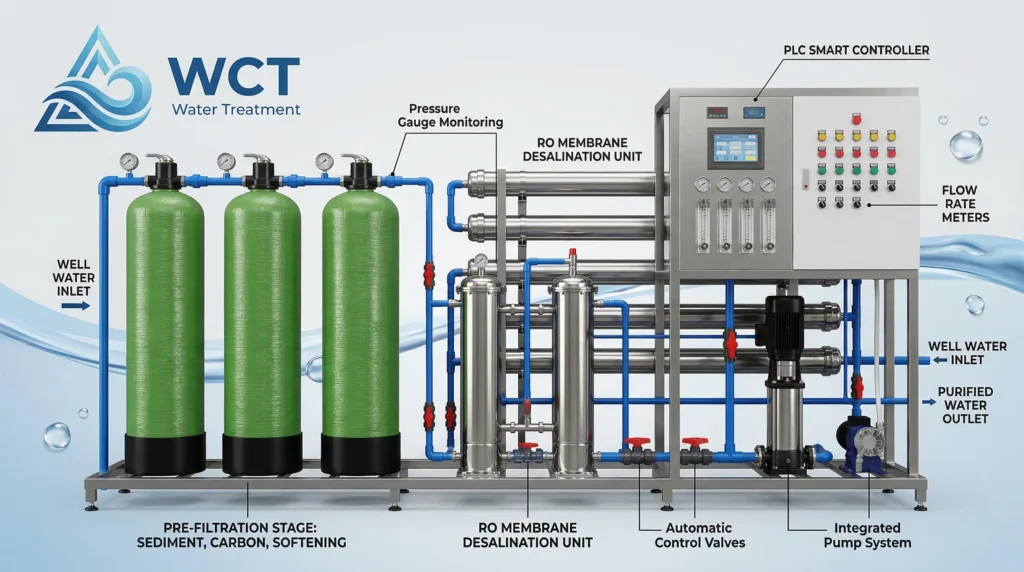
Comprehensive Well Water Testing
Designing an effective well water treatment system begins with precise data. Groundwater conditions fluctuate heavily based on geography, aquifer depth, and localized runoff. Visual inspections and basic taste tests are insufficient for detecting harmful pathogens or dissolved heavy metals. While a standard well water testing kit offers preliminary baseline data, certified laboratory testing is the only reliable method to engineer a permanent, effective solution. Designing a system without exact chemical and biological metrics leads to undersized equipment, rapid filter degradation, and unsafe water output.
Essential Water Quality Parameters
To specify the correct well water treatment process, a comprehensive laboratory analysis must evaluate the following critical parameters:
- Total Dissolved Solids (TDS): Measures the combined content of all inorganic and organic substances. High TDS levels typically require reverse osmosis filtration.
- pH Levels: Indicates water acidity or alkalinity. Acidic water (low pH) causes severe pipe corrosion, while highly alkaline water reduces the efficacy of specific chemical treatments.
- Hardness (Calcium & Magnesium): The primary catalyst for scale buildup in plumbing and industrial equipment. Precise hardness metrics dictate the resin volume required for water softeners.
- Iron & Manganese: Dissolved metals responsible for aggressive red, brown, or black staining on fixtures, as well as a distinct metallic taste.
- Hydrogen Sulfide: A corrosive gas produced by sulfur-reducing bacteria, easily identified by a strong rotten egg odor.
- Nitrates: Invisible chemical contaminants often introduced through agricultural fertilizer runoff, posing severe health risks.
- Coliform Bacteria: Biological indicator organisms, including E. coli, that signal the presence of pathogenic microorganisms requiring immediate UV light or chemical disinfection.
Common Well Water Problems and Symptoms
We regularly evaluate private wells worldwide, and even crystal-clear water can hide serious issues. If you rely on groundwater, identifying the warning signs early is the smartest way to determine exactly what your well water treatment system needs to target.
Here are the most frequent water quality issues we encounter and their direct symptoms:
- Hard Water: Excess calcium and magnesium cause stubborn white scale buildup on your plumbing fixtures and leave your skin feeling dry after a shower. Implementing effective hard water treatment is essential to protect your plumbing and extend the lifespan of your household appliances.
- High Iron & Manganese: If you are constantly scrubbing red, orange, or dark black stains off your sinks and dealing with a bitter metallic taste, dissolved minerals are present. A dedicated iron filter for well water will catch these before they ruin your laundry and pipes.
- Hydrogen Sulfide: That unmistakable rotten egg smell from well water is caused by sulfur-reducing bacteria in the ground. This gas is highly corrosive and makes daily water use incredibly unpleasant without the right oxidation process.
- Microbiological Contaminants: The most dangerous hazards are entirely invisible. E. coli and coliform bacteria are directly linked to severe stomach illnesses. Because you cannot see, smell, or taste these pathogens, a comprehensive home well water treatment system is your only true line of defense.
Core Technologies in a Well Water Treatment System
A reliable well water treatment system relies on a sequence of proven technologies. Building the right setup means combining the exact components needed to target your specific water issues. Here are the core technologies we use to deliver clean, safe water.
Mechanical Filtration
This is the first line of defense. We use precision filters and spin-down sediment filters to separate solids from liquids, physically removing debris like sand, silt, and rust. Installing a durable well water sediment filter is essential because it stops dirt from clogging up the rest of your system.
Water Softening & Conditioning
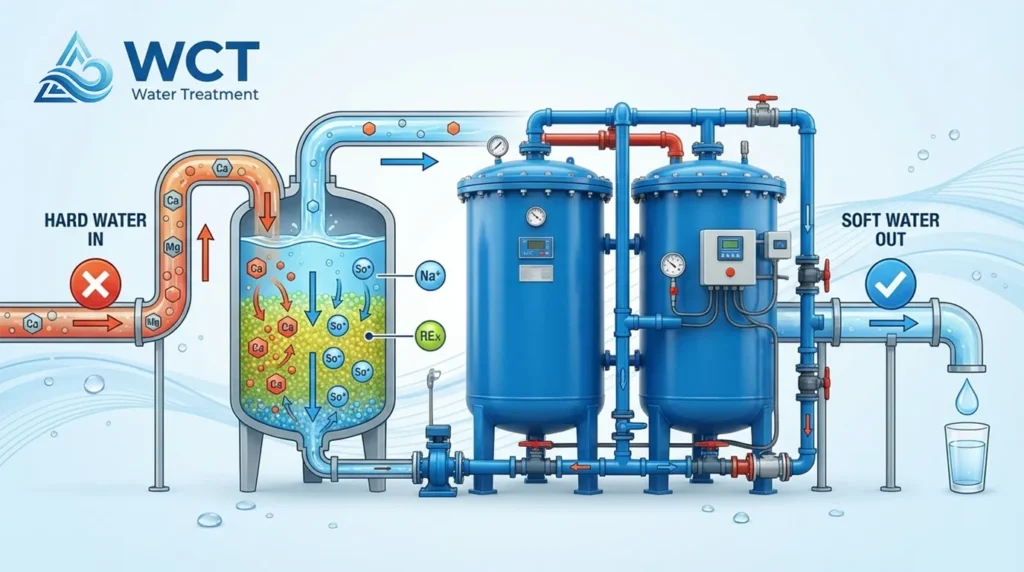
Hard water ruins plumbing fixtures and dries out your skin. To fix this, we rely on the ion exchange process. This strips out the calcium and magnesium that create hard water scale. WCT’s specific expertise in water conditioning ensures these softening systems handle tough well water profiles efficiently, extending the life of your appliances.
Reverse Osmosis (RO)
For absolute purity, a reverse osmosis well water system is the standard. It pushes water through a specialized membrane to block dissolved solids and microscopic contaminants. Whether you need a point-of-use drinking setup or a whole-house application, we build systems that fit. For domestic or light commercial properties, our reliable WCT 1000 GPD RO systems provide a compact, high-performance solution.
UV Purification & Chemical Dosing
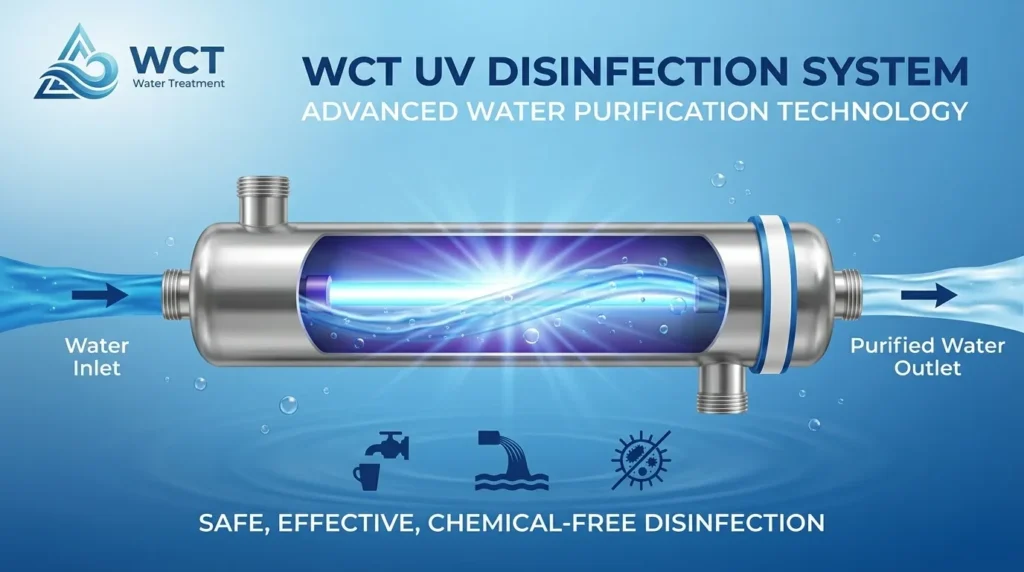
When bacteria or stubborn chemical imbalances are present, we step up the treatment. A UV water purifier for well water acts as a final safeguard, using ultraviolet light to neutralize bacteria and viruses without altering the water\’s taste. For more complex well water profiles, we use automated chlorine or hydrogen peroxide dosing. Our precision WCT liquid dosing systems, paired with heavy-duty PE304 tanks, ensure that the exact amount of treatment is applied automatically, keeping your water consistently safe.
The Correct Well Water Treatment Process & Installation Order
Setting up your well water treatment system correctly comes down to the installation order. If you install components out of sequence—like putting a UV light before a sediment filter—dirt will block the light and make it completely useless. We rely on a sequential multi-stage treatment train to ensure your water is thoroughly purified and your equipment is protected.
Here is the exact well water treatment process we use to deliver clean, safe water:
- Step 1: Pre-filtration (Sediment)
First, we remove the physical debris. A heavy-duty sediment filter acts as the frontline defense, trapping sand, dirt, and rust before they can clog or damage the downstream equipment. - Step 2: Oxidation & Removal (Iron/Sulfur)
Next, we target the problem minerals. We use specialized filtration media to oxidize and filter out iron, manganese, and hydrogen sulfide, eliminating red stains and that harsh rotten egg smell. - Step 3: Softening (Hardness)
With the iron gone, a water softener removes calcium and magnesium. This prevents hard water scale from destroying your plumbing fixtures, water heater, and household appliances. - Step 4: Primary Purification (RO System)
For high-purity drinking water, the flow moves to reverse osmosis. Integrating reliable core tech, like our 500 LPH RO system, strips out stubborn dissolved solids, heavy metals, and chemical impurities for domestic or commercial use. - Step 5: Post-treatment & Disinfection (UV Light)
The final step is microbiological control. The water flows through a UV purifier to neutralize any remaining bacteria, viruses, or pathogens without adding chemicals to your water supply.
Installing your water well treatment system in this exact order guarantees maximum filtration efficiency, lowers maintenance costs, and extends the lifespan of the entire setup.
Sizing Your Well Water Treatment System and Cost Expectations
Getting the specifications right is just as important as choosing the right filtration technology. An undersized system leads to pressure drops and incomplete treatment, while an oversized system wastes money and space.
Calculating Flow Rate (GPM)
The critical metric for sizing a well water treatment system is the Peak Flow Rate, measured in Gallons Per Minute (GPM). This isn\’t about your total monthly usage; it is about how much water your facility or home demands at a single moment.
To avoid pressure loss during peak hours, we calculate the demand based on the number of fixtures (showers, faucets, appliances) running simultaneously. For systems requiring robust delivery, we often integrate CDLF+CDH high-pressure pumps to maintain consistent pressure across multi-stage filtration trains.
Understanding Cost Factors
Pricing for a custom solution varies significantly based on the complexity of the water chemistry and the required automation level.
- Technology Complexity: A simple sediment filter or softener is an entry-level investment. However, treating complex contaminants like bacteria or heavy metals often requires a multi-stage approach, including Reverse Osmosis (RO) or advanced oxidation.
- Automation Level: Manual systems are cost-effective but labor-intensive. Fully automated systems, featuring precise chemical dosing equipment and self-cleaning cycles, have a higher upfront cost but significantly lower operational overhead.
- Scale: We design everything from compact 1000 GPD units for domestic use to large-scale industrial recycling skids. The physical footprint and material requirements (like PE304 stainless steel tanks) directly influence the final quote.
Why Choose WCT for Your Well Water Treatment System
When investing in a home well water treatment system, you need reliability, safety, and performance. At WCT, we do not just assemble parts; we engineer complete setups. Our focus is on delivering the best well water treatment system tailored to your specific water profile, whether for standard domestic use or specialized light commercial applications.
Here is what sets our manufacturing and technology apart:
Our Engineering Heritage
We back our products with serious engineering muscle. Our team includes over 20 dedicated R&D engineers who constantly innovate and refine our water well treatment system designs. We operate under strict ISO9001 certification, ensuring that every single component leaving our facility meets rigorous global quality standards. You get consistent, dependable results every time you turn on the tap.
Proven Water Treatment Technology
We rely on proven science, not guesswork. Our commitment to effective, long-lasting water purification has earned us over 30 patents and more than 15 industry awards. We know what works, and we build systems designed to handle the toughest well water environments without constant breakdowns.
Tailored Skids and Custom Systems
No two wells are identical, which means cookie-cutter setups often fail. We provide one-stop customized water treatment solutions designed specifically for your space and capacity requirements. Whether you need a compact domestic reverse osmosis unit or fully containerized, skid-mounted equipment, we build it to fit seamlessly into your property.
The WCT Advantage
| Core Strength | What It Means For You |
|---|---|
| 20+ R&D Engineers | High-performance systems designed by top-tier water experts. |
| ISO9001 Certified | Strict quality control for reliable, long-lasting equipment. |
| 30+ Patents | Cutting-edge technology built to tackle stubborn well water problems. |
| Custom Skids | One-stop, tailored systems built exactly to your specifications and flow rates. |
We stand firmly behind our engineering. Choosing WCT means choosing a trusted, professional partner dedicated to delivering clean, safe water through advanced and hassle-free systems.
Frequently Asked Questions About Well Water Treatment Systems
How do I know if my well water needs treatment?
Look for obvious signs: a metallic taste, cloudy water, a rotten egg smell, or rust stains on your sinks. However, since many contaminants are invisible, the only guaranteed way to know is through a comprehensive laboratory water test.
What contaminants are most common in private wells?
You will typically encounter hard water minerals (calcium and magnesium), high levels of iron, manganese, hydrogen sulfide, and microbiological threats like coliform bacteria.
Can I install a home well water treatment system myself?
While you might handle a basic spin-down filter, we strongly advise hiring a professional for a complete well water treatment system. Proper installation guarantees the correct plumbing order, prevents pressure drops, and ensures the equipment functions exactly as designed.
What maintenance is required?
Routine maintenance for a reliable water well treatment system generally includes:
- Swapping out sediment filter cartridges
- Topping off salt in water softeners
- Replacing UV purifier lamps annually
- Refilling dosing chemicals
How much does a typical system cost?
The total investment depends entirely on the specific well water treatment process you need. Costs range from affordable standalone water softeners to comprehensive, skid-mounted reverse osmosis and dosing setups designed for heavy contamination.
What technologies remove iron and hydrogen sulfide best?
Aeration, oxidation filters, and automated chemical dosing are the proven methods to strip out dissolved iron and completely remove that foul rotten egg smell from your water.
How do I properly size my equipment?
We determine the size of the best well water treatment system for your property by calculating your peak Gallons Per Minute (GPM) flow rate and overall daily demand. This precise math ensures your home or facility never experiences a sudden drop in water pressure.
What certifications matter when choosing a provider?
You want equipment built to last. Look for an ISO9001 certified manufacturer with a proven engineering background and industry patents. This guarantees you are getting the best water treatment system for well water available on the market.
How often should I test my well water after installation?
We recommend testing your water at least once a year to verify your system is performing perfectly and to catch any new shifts in ground water quality.
Are there environmental considerations for chemical dosing?
Absolutely. Safe containment and exact measurements are crucial to protect the surrounding environment. Storing your purification agents in a durable chemical dosing tank with PE304 stainless steel guarantees zero leaks, safe handling, and highly precise, eco-conscious chemical delivery.