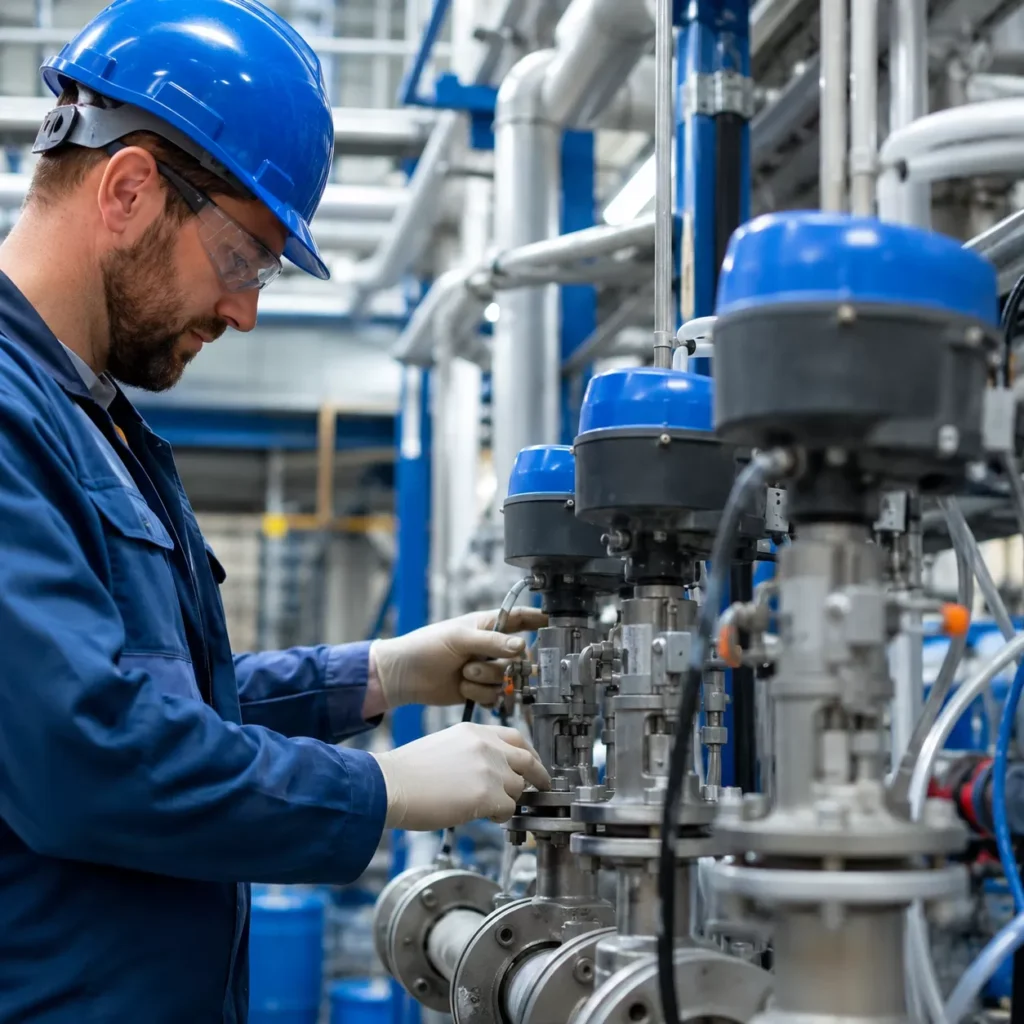
In 2026, \”efficiency\” isn\’t just a metric—it’s your license to operate.
If your industrial dosing equipment is still running on manual guesswork, you’re losing money on every stroke. I’ve seen firsthand how chemical waste and unexpected downtime can cripple a facility\’s bottom line.
That’s why I’ve put together this strategic blueprint. You’re going to learn exactly how to master chemical metering accuracy, eliminate cavitation, and leverage IIoT-enabled dosing to turn your equipment into a high-precision asset.
Let’s dive right in.
The Core Pillars of Dosing Performance
In my experience, optimizing Industrial Dosing Equipment starts with a fundamental shift in perspective: it is not just about moving chemicals, but about controlling them with surgical precision. To achieve a high Turndown Ratio Efficiency, you must master the balance between raw accuracy and the long-term reliability of your equipment.
Accuracy vs. Repeatability: Why Consistency Wins
While initial accuracy is the goal during commissioning, repeatability is what saves your budget in the long run. An accurate pump hits the setpoint once; a repeatable pump hits it 24/7, regardless of environmental fluctuations.
- Chemical Metering Accuracy: Ensures you meet strict regulatory limits without over-dosing.
- Process Stability: High repeatability prevents the \”see-saw\” effect in water chemistry, reducing wear on downstream sensors.
- Waste Reduction: Eliminating dosing spikes directly lowers your annual chemical expenditure.
Solenoid-Driven Pumps for High-Speed Precision
For applications requiring rapid response and low-volume precision, Solenoid-driven pumps remain an industry standard. These units excel in Stroke Frequency Optimization, allowing for immediate adjustments to flow rates.
- Fast Pulsation: Ideal for systems where chemicals must be injected into high-velocity streams.
- Simplified Mechanics: Fewer moving parts mean less mechanical failure and easier field maintenance.
- High-Speed Control: Direct electromagnetic drive allows for nearly instantaneous changes in dosing volume.
Digital Dosing Technology and Stepper Motor Control
The shift toward Digital Dosing Technology has redefined what we expect from a metering pump. By utilizing stepper motor drives instead of traditional synchronous motors, we eliminate the uneven discharge common in older designs.
| Feature | Traditional Manual Pumps | Stepper Motor Digital Dosing |
|---|---|---|
| Discharge Stroke | Intermittent/Pulsating | Continuous and Smooth |
| Adjustment Type | Physical stroke length | Digital software control |
| Turndown Ratio | Limited (often 10:1) | Superior (up to 1000:1) |
| Suction Phase | Fixed speed | Controllable (prevents cavitation) |
By utilizing a stepper motor, the pump maintains a full stroke length even at low flow rates, ensuring that Chemical Metering Accuracy is never sacrificed for a lower output. This level of control is essential for modern facilities moving toward fully automated, high-precision operations.
Solving \”Invisible\” Performance Killers in Dosing Systems
Even the most advanced setup can fail if you don\’t account for the physical behavior of chemicals. To truly succeed in optimizing industrial dosing equipment performance, we focus on eliminating the three main disruptors that compromise chemical metering accuracy.
Managing Chemical Off-Gassing
Volatile chemicals like sodium hypochlorite or hydrogen peroxide tend to release gas, creating air locks that stop flow entirely. We solve this by utilizing automated deaeration through integrated degassing valves. These components ensure that gas is vented continuously without interrupting the liquid stream. When managing high-volume disinfection in municipal water treatment facilities, this integration is the difference between consistent chlorination and total system failure.
Overcoming Cavitation and Viscosity
Cavitation prevention is critical when dealing with high suction lifts or viscous fluids. If the pressure at the pump inlet drops too low, vapor bubbles form and implode, damaging the diaphragm and causing erratic flow.
- For High Viscosity: We recommend slowing the stroke frequency to allow the liquid end to fill completely.
- For Suction Lift: Keeping suction lines short and diameters wide minimizes friction loss.
Pressure Management and Regulation
Without proper resistance, a pump cannot maintain precision. We use back-pressure regulation to provide a constant load against the pump, preventing \”over-pumping\” or siphoning when the discharge point is at a lower pressure than the source.
| Performance Killer | Root Cause | Engineering Solution |
|---|---|---|
| Air Locks | Fluid Off-Gassing | Integrated Degassing Valves |
| Erratic Flow | Low Discharge Pressure | Back-Pressure Valves |
| Diaphragm Damage | Cavitation/Vapor Lock | Optimized Suction Geometry |
| Inaccuracy | System Pulsation | Pulsation Dampeners |
By addressing these \”invisible\” factors, we ensure that your industrial dosing equipment operates at peak efficiency, maintaining a steady flow regardless of chemical temperature or concentration shifts.

Digital Integration for Optimizing Industrial Dosing Equipment Performance
We have moved beyond simple pumping into the era of intelligent chemical management. By prioritizing IIoT-Enabled Dosing and SCADA integration, we ensure our systems provide the transparency needed for high-stakes industrial environments. This connectivity transforms our equipment from a stand-alone tool into a data-driven asset that communicates directly with your plant’s brain.
Remote Monitoring and Safety
Our digital systems act as a 24/7 watchdog for your facility. Through smart sensors, we provide instant notifications for critical issues, preventing minor glitches from becoming major spills:
- Flow loss detection to prevent dry running and process interruptions.
- Diaphragm rupture alerts for immediate leak containment and safety.
- Real-time performance dashboards accessible via mobile or desktop for total oversight.
Data-Driven Closed-Loop Feedback
Efficiency is maintained through closed-loop feedback systems that make real-time flow monitoring adjustments without human intervention. This automation is vital for complex processes, such as managing wct-mbr membrane bioreactor integrated equipment for waste water treatment, where chemical precision directly impacts the longevity of the system. By linking dosing frequency to actual demand sensors, we eliminate chemical waste and ensure constant compliance.
| Digital Feature | Industrial Advantage |
|---|---|
| SCADA Integration | Centralized control and localized data visibility |
| IIoT Connectivity | Predictive maintenance and remote troubleshooting |
| Closed-Loop Feedback | Automated chemical metering accuracy |
Maintenance Strategies for Optimizing Industrial Dosing Equipment Performance
In 2026, the goal is zero unplanned downtime. We’ve shifted from reactive repairs to a proactive system that keeps your operations running smoothly. My focus is on clear, data-driven maintenance that protects your bottom line.
Maximizing Diaphragm Longevity
The diaphragm is the heart of the system. Waiting for it to fail is a costly mistake that leads to chemical spills and production stops. I recommend a replacement cycle based on stroke count and environmental stress.
- Proactive Swaps: Change wear parts before they hit their fatigue limit.
- Material Integrity: Regularly verify that your pump materials still match your chemical profile.
- Reliable Components: Our AD-Z series mechanical diaphragm metering pump is engineered for easy access, making these routine swaps fast and foolproof.
Predictive Maintenance Sensors & Monitoring
We use predictive maintenance sensors to catch \”silent\” killers like bearing wear or motor overheating. By using vibration monitoring, we can identify issues long before they are visible to the naked eye.
- Vibration Analysis: Identifies internal friction or mounting issues instantly.
- Heat Tracking: Alerts you to motor strain caused by high-viscosity fluids or clogged lines.
Calibration Columns for Flow Verification
Digital readouts are great, but physical verification is non-negotiable for high-stakes applications. I always include calibration columns in our setups to ensure chemical metering accuracy.
- Draw-Down Testing: Use a graduated cylinder to measure the exact volume being pumped over a specific time.
- System Validation: This physical check confirms that your real-time flow monitoring software is correctly calibrated against actual pipe conditions.
2026 Maintenance Checklist
| Maintenance Task | Frequency | Core Benefit |
|---|---|---|
| Vibration Check | Continuous (Sensor-based) | Prevents catastrophic motor failure |
| Physical Calibration | Monthly | Guarantees precise turndown ratio efficiency |
| Diaphragm Inspection | Every 5 million strokes | Ensures maximum diaphragm longevity |
| Seal & O-ring Check | Quarterly | Prevents leaks and chemical off-gassing issues |
By sticking to these strategies, we ensure your industrial dosing equipment stays accurate, efficient, and reliable for the long haul.
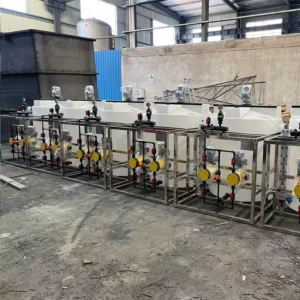
Case Study: Optimizing Industrial Dosing Equipment Performance
Scaling Municipal Disinfection
In a recent large-scale project, a municipal partner needed to upgrade their disinfection system to handle increased peak demands. The goal was to maintain strict chemical metering accuracy while operating at much higher flow volumes. We implemented a solution centered on high-efficiency solenoid-driven pumps and automated proportional control systems to ensure consistent chemical delivery regardless of flow fluctuations.
The WCT Advantage: Custom-Engineered Dosing Skids
As a dedicated manufacturer, we provide custom-engineered dosing skids that serve as the backbone of industrial and municipal operations. These skids are pre-configured, plug-and-play units designed to eliminate the risks of improper field assembly.
- Fully Integrated Systems: Our skids include built-in back-pressure regulation and pulsation dampening to ensure a smooth, continuous chemical feed.
- Advanced Monitoring: Every unit features real-time flow monitoring and closed-loop feedback to catch deviations before they impact water safety.
- Proven Reliability: This modular approach is ideal for heavy-duty applications, including specialized sulfur water treatment and large-scale disinfection where 24/7 uptime is critical.
- Durable Design: We use NEMA 4X enclosures to protect sensitive electronics, ensuring diaphragm longevity and overall system resilience in harsh chemical environments.
By switching to our modular skid-based approach, the facility reduced installation time by 40% and achieved a significantly higher turndown ratio efficiency. We focus on delivering a system where digital dosing technology works in perfect harmony with the physical piping, ensuring that optimizing industrial dosing equipment performance is handled from the ground up.
FAQ: Optimizing Industrial Dosing Equipment Performance
I regularly consult with operators who struggle with system inconsistencies. These are the most common questions we address to ensure peak Optimizing Industrial Dosing Equipment Performance.
How do I prevent air locks in my dosing pump?
Air locks are typically caused by chemical off-gassing or improper suction plumbing. To eliminate them:
- Use pumps with integrated degassing valves to vent gases automatically.
- Keep suction lines as short and straight as possible to assist with cavitation prevention.
- Ensure the pump head is flooded; gravity-fed suction is always preferred for volatile chemicals.
What is the ideal turndown ratio for chemical metering accuracy?
For maximum turndown ratio efficiency, you need a system that doesn\’t lose precision at the lower end of its range. While standard pumps often fail below a 10:1 ratio, our digital dosing technology allows for ratios up to 1000:1. This ensures high-speed precision and chemical metering accuracy even when your flow requirements drop significantly.
How often should I calibrate my IIoT-enabled dosing system?
Even with IIoT-enabled dosing providing real-time feedback, physical verification remains a cornerstone of maintenance.
- Routine Systems: Every 3 to 6 months.
- Critical Applications: Monthly, or whenever you change chemical batches.
- Pro Tip: Use calibration columns to verify that the digital flow rate matches the actual volume delivered in your water treatment plant design.
Can I automate deaeration for volatile chemicals?
Absolutely. Manually bleeding pumps is a thing of the past. By utilizing automated deaeration features in modern solenoid-driven pumps, the system can detect gas pockets and purge them without operator intervention. This not only protects the pump from losing prime but also significantly extends diaphragm longevity by preventing dry-running cycles.