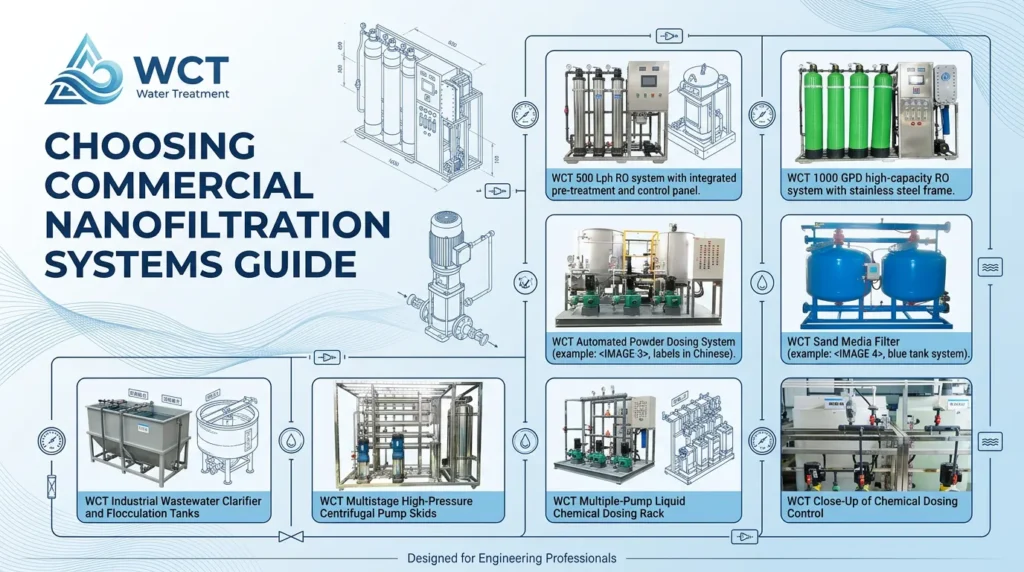
Looking to choose the right commercial nanofiltration system? You\’re in the right place. Picking the perfect nanofiltration system can transform your water treatment process, save costs, and ensure high-quality results. But with so many options out there—from standard models to custom solutions—how do you know which one fits your needs? In this guide, you\’ll discover what nanofiltration technology really is, how it stacks up against reverse osmosis, and the key features to look for. Whether you\’re in food processing, groundwater treatment, or industrial applications, understanding these essentials will help you make an informed decision and optimize your water treatment today. Let\’s dive in!
What is a Commercial Nanofiltration System?
Commercial nanofiltration systems are advanced, membrane-based water treatment solutions designed to bridge the gap between ultrafiltration and reverse osmosis. Operating at a molecular level, these systems selectively remove multivalent ions, organics, and microscopic contaminants while allowing essential monovalent salts to pass through. For global businesses seeking a precise, energy-efficient filtration method, a commercial nanofiltration system serves as an ideal solution for targeted water purification and resource recovery.
Understanding Nanofiltration Technology
Nanofiltration (NF) technology relies on a semi-permeable membrane with a microscopic pore size ranging from 1 to 10 nanometers. The separation process is driven by hydrostatic pressure, forcing water through the membrane while rejecting specific solutes based on size and molecular charge.
- Pore Size Spectrum: Operates in the nanometer range, isolating particles with a molecular weight cut-off (MWCO) of 200 to 1,000 Daltons.
- Divalent Ion Rejection: Highly effective at blocking multi-charged ions such as calcium, magnesium, and sulfates.
- Monovalent Pass-Through: Allows single-charged ions like sodium and chloride to pass, preventing total demineralization.
How Nanofiltration Differs from Reverse Osmosis
While both methods utilize membrane separation, NF membrane filtration offers distinct advantages over Reverse Osmosis (RO) regarding operating pressure, energy consumption, and mineral retention.
| Feature | Nanofiltration (NF) | Reverse Osmosis (RO) |
|---|---|---|
| Pore Size | ~1 to 10 nm | <1 nm (Virtually non-porous) |
| Operating Pressure | Low to Medium (50–200 PSI) | High (200–400+ PSI) |
| Mineral Retention | Retains beneficial monovalent salts | Removes virtually all minerals (TDS) |
| Primary Target | Divalent ions, organics, color, viruses | Total Dissolved Solids (TDS), desalination |
| Energy Efficiency | High (Lower operational costs) | Standard |
Key Components and Specifications
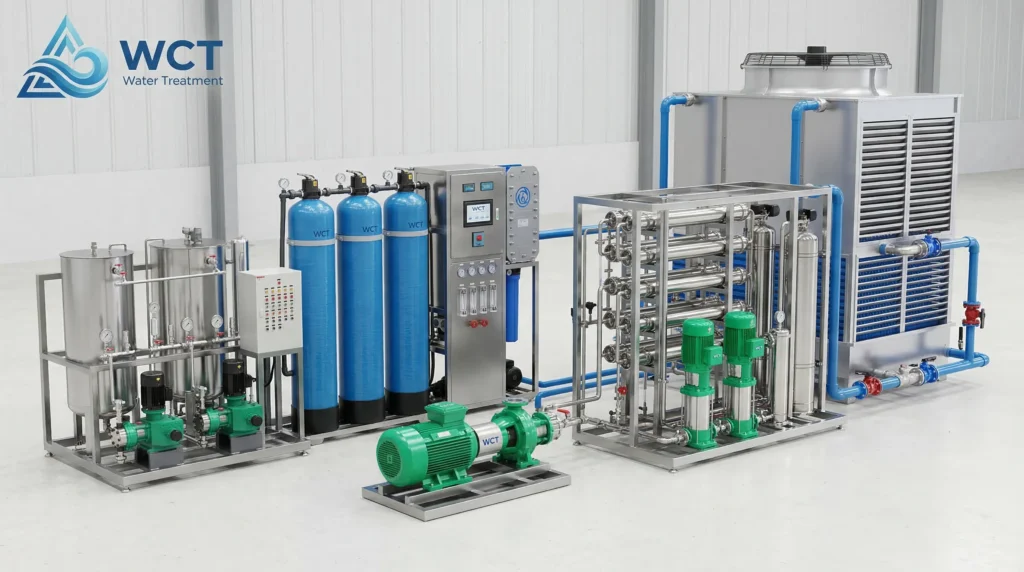
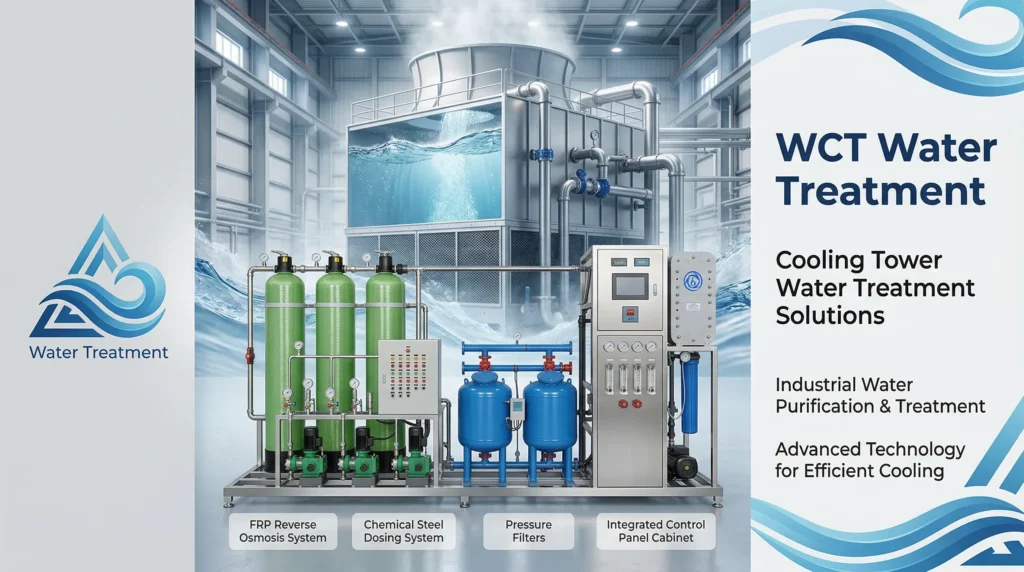
As a leading water treatment products supplier and manufacturer, we engineer our industrial water purification equipment using premium, heavy-duty components to ensure maximum uptime and consistent permeate quality.
- High-Pressure Pump: Energy-efficient stainless steel centrifugal pumps deliver the precise pressure required for optimal flux rates.
- NF Membrane Elements: Multi-bore or spiral-wound thin-film composite (TFC) membranes tailored to specific feed water profiles.
- Pressure Vessels: Heavy-duty fiberglass reinforced plastic (FRP) housings built to withstand continuous industrial operations.
- Integrated Instrumentation: Built-in flow meters, pressure gauges, and digital conductivity monitors provide real-time performance tracking.

Key Benefits of Commercial Nanofiltration
As a leading water treatment products supplier and manufacturer, we design our Commercial Nanofiltration Systems to solve tough water quality issues while keeping your bottom line in mind. Nanofiltration offers a sweet spot between standard filtration and total demineralization, making it an ideal choice for businesses looking for efficient, sustainable water treatment.
Efficient Water Softening and Radium Removal
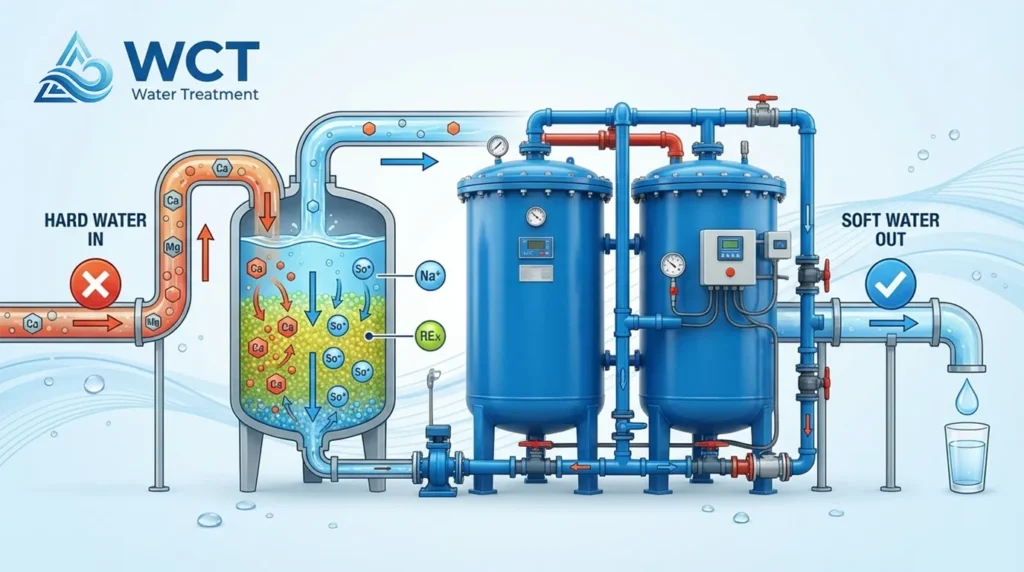
Our NF membrane filtration technology targets multivalent ions, making these systems excellent water softening alternatives. They reliably remove hardness (calcium and magnesium) and dangerous contaminants like radium without the constant need for salt regeneration.
- Targeted Removal: Extracts divalent ions while letting helpful monovalent minerals pass through.
- Heavy Metal Defense: High rejection rates for radium, uranium, and other heavy metals.
- No Chemical Scaling: Lowers the risk of scale buildup in downstream equipment without harsh chemicals.
Low Operating Costs and Low Pressure Requirements
Compared to traditional reverse osmosis, nanofitration operates at a fraction of the pressure. This directly translates to massive energy savings and lower wear and tear on your equipment.
| Operational Metric | Standard Reverse Osmosis | Our Commercial NF Systems |
|---|---|---|
| Operating Pressure | High ($150text{–}400text{ psi}$) | Low ($50text{–}150text{ psi}$) |
| Energy Consumption | High | 30% to 50% Lower |
| Pump Maintenance | Frequent | Minimal |
High Capacity and High Flow Rates
Our industrial-grade systems ensure your business never runs out of treated water. Engineered for high-volume output, these point-of-entry NF units maintain steady flow rates even during peak operational hours.
- Continuous Flow: Designed for 24/7 commercial demands.
- High Permeate Flux: More clean water produced per square foot of membrane.
- Compact Footprint: High-capacity output without taking up your entire utility room.
Environmentally Friendly Wastewater Reduction
Sustainability is at the core of our manufacturing. Traditional treatment setups waste an incredible amount of water, but our nanofiltration systems focus on high recovery rates to protect both the environment and your wallet.
- Reduced Wastewater: Lower concentrate volumes mean less water goes down the drain.
- Eco-Friendly Footprint: Helps facilities meet strict local environmental and discharge regulations.
- System Synergy: Works perfectly alongside a chemical dosing system for water treatment to further optimize recovery rates and prolong membrane life.
Standard Features and Technical Options
Choosing commercial nanofiltration systems means selecting a setup built for long-term reliability and easy operation. We design our NF membrane filtration units with high-tier components that keep your operations running smoothly with minimal downtime.
Automated Control Systems and Monitors
Modern water treatment demands precision. Our systems feature advanced digital controllers and real-time monitoring tools to track performance metrics instantly.
- PLC Touchscreen Interfaces: Easy system management and quick setting adjustments.
- Real-Time Sensors: Continuous tracking of flow rates, pressure levels, and Total Dissolved Solids (TDS).
- Automatic Flush Cycles: Programmed membrane cleaning to prevent scaling and extend element life.
Portable and Non-Electric System Upgrades
For remote sites or facilities looking to cut energy use, we offer specialized non-electric and portable upgrades. These point-of-entry NF units deliver reliable purification without relying heavily on a constant grid connection, making them ideal for field operations, temporary sites, or emergency backups.
Custom Skids and Containerized Configurations
Every facility has unique space and environmental constraints. We engineer custom configurations to match your exact footprint and installation requirements.
| Configuration Type | Best Used For | Key Advantage |
|---|---|---|
| Open-Frame Skids | Indoor facilities, factories, and dedicated utility rooms | Easy maintenance access and compact footprint |
| Containerized Units | Outdoor sites, remote locations, and harsh environments | Climate-controlled, fully secure, and plug-and-play setup |
Replacement Cartridges and Maintenance Accessories
Keeping your system at peak performance requires the right support components. We supply a complete line of maintenance accessories designed for quick replacement. While our nanofiltration setups handle heavy dissolved solids, pairing them with a commercial UV water treatment system ensures complete biological protection. We stock high-rejection replacement elements, sediment pre-filters, and targeted chemical dosing pumps to keep your water quality consistent year-round.
Common Applications and Industry Scenarios
Every industry faces unique water quality challenges, and choosing commercial nanofiltration systems allows businesses to target specific contaminants without the high energy costs of total desalinization. Here is how different sectors deploy NF membrane filtration to optimize their operations.
Food and Beverage Processing
In food and beverage production, maintaining taste consistency and product safety is non-negotiable. Nanofiltration is widely used for:
- De-coloration and purification of liquid ingredients.
- Concentration of dairy products and juices by removing water while retaining valuable proteins and sugars.
- Water softening alternatives that eliminate hardness without adding high levels of sodium, preserving the natural flavor profile of beverages.
Pharmaceutical-Grade Purification
The pharmaceutical sector demands strict separation processes. Nanofiltration units serve as a reliable method for:
- Separating low-molecular-weight organics from fermentation broths.
- Desalting antibiotic solutions to increase purity levels.
- Removing viruses and organic macromolecules to ensure process water meets stringent industry standards before entering final purification stages.
Groundwater and Well Water Treatment
For facilities relying on municipal or underground sources, point-of-entry NF units offer a comprehensive cleanup solution. They excel at:
- Radium and heavy metal removal to comply with local environmental and health regulations.
- Reducing total dissolved solids (TDS) to prevent scale buildup in piping and downstream machinery.
- Eliminating organic color and tannins, turning brackish or discolored well water into clear, usable process water.
Agriculture and Irrigation Solutions
Modern agricultural operations require precise water chemistry to maximize crop yields and protect sensitive irrigation hardware. Nanofiltration helps by:
- Filtering out harmful salts while leaving behind beneficial trace minerals that plants need to thrive.
- Preventing nozzle clogging in drip irrigation systems by removing microscopic suspended solids and scale-forming minerals.
- Managing runoff water to allow for safe recycling and sustainable water management practices.
Pre-Treatment for Advanced Filtration
Nanofiltration is an excellent safeguard for more sensitive downstream equipment. Implementing NF as a pre-treatment step provides massive operational advantages:
| Downstream Benefit | How Nanofiltration Helps |
|---|---|
| RO Membrane Protection | Removes multi-valent ions and organic foulants before they reach reverse osmosis systems. |
| Extended Equipment Life | Drastically reduces scaling on thermal evaporators and deionizer beds. |
| Lower Maintenance Costs | Minimizes the frequency of chemical cleanings and expensive cartridge replacements. |
Using nanofiltration as a core component in industrial water purification setups ensures a reliable, continuous supply of high-purity water, scaling efficiently alongside your business growth.
Choosing the Right Nanofiltration Model
Selecting the ideal setup requires a clear understanding of your daily water demands and specific contamination challenges. As a dedicated water treatment products supplier and manufacturer, we build systems tailored to match your precise operational scale.
Assessing Your Daily Water Capacity Needs
Before investing in a system, calculating your peak and total daily water consumption is critical. Commercial Nanofiltration Systems are rated by gallons per day (GPD) or cubic meters per hour. Undersizing a system leads to continuous runtime and premature membrane wear, while oversizing unnecessarily inflates your initial capital investment.
- Peak Flow Rate: Determine the maximum water volume required during high-demand production hours.
- Daily Volume: Total up your overall water needs for rinsing, processing, or boiler feed utilities.
- Storage Integration: Pair your unit with a heavy-duty water treatment tank to buffer peak demands and reduce constant system cycling.
Standard Commercial vs. Industrial-Grade Systems
The choice between a standard commercial unit and an industrial-grade system comes down to your operating environment and feed water quality.
| Feature | Standard Commercial NF | Industrial-Grade NF |
|---|---|---|
| Frame Construction | Powder-coated steel or aluminum | Heavy-duty 304/316 stainless steel |
| Daily Capacity | Up to 10,000 GPD | 10,000 to 500,000+ GPD |
| Operation Hours | Intermittent or 12-16 hours/day | Continuous 24/7 heavy utility |
| Control Automation | Basic PLC with digital monitors | Advanced PLC with remote SCADA integration |
Standard commercial models fit perfectly in restaurants, laboratories, and light manufacturing plants. Industrial-grade systems feature rugged components designed to handle harsh feed water conditions, high TDS levels, and continuous chemical cleaning cycles without performance drops.
Custom Water Treatment Problem Solving
No two water sources are identical. Off-the-shelf units often fail when dealing with complex groundwater chemistry or specific industrial wastewater streams. True efficiency lies in custom-engineered setups.
We specialize in designing targeted NF membrane filtration systems that address your unique water pain points. Whether you need to isolate specific multivalent ions, remove color and organic matter, or implement eco-friendly water softening alternatives, we modify the system design to fit your exact footprint and flow requirements. From custom valve configurations to multi-stage filtration loops, we deliver point-of-entry NF units engineered to solve your toughest water quality challenges.