Recognizing the Signs of Hard Water in Your Home
Hard water isn’t subtle once you know what to look for. The telltale signature is mineral scale—calcium and magnesium buildup—that appears wherever water evaporates. At the same time, soap refuses to lather properly, leaving a sticky residue behind.
- Spots on glassware and shower doors. A cloudy film that doesn’t rinse away with plain water is a direct indicator of dissolved minerals.
- Crusty white buildup on faucets and showerheads. This limescale crust narrows flow openings and becomes harder to remove the longer it sits.
- Stiff, dingy laundry. Minerals become trapped in fabric fibers, making clothes feel scratchy and graying whites over time.
- Dry, itchy skin and flat hair. The leftover soap-mineral scum clings to skin and hair, stripping moisture and reducing shine.
Tier 1: Immediate DIY Solutions for Targeted Problems
Before investing in equipment, you can tackle isolated spots of scale with items already in your kitchen. These quick fixes work as maintenance, but they won’t stop new deposits from forming inside your pipes or water heater. For a broader look, contrast these with longer-term technologies in our hard water treatment overview.
The Power of Distilled White Vinegar
Distilled white vinegar is the cheapest descaling tool you have. Its acetic acid dissolves calcium carbonate on contact.
For faucet aerators, soak a paper towel in vinegar, wrap it around the tip, and wait 30 minutes. You’ll loosen deposits that no amount of scrubbing could touch.
Rinse thoroughly with water afterward—vinegar left on metal can dull the finish. Repeat this monthly on showerheads and sink spouts to keep flow steady.
Lowering Your Water Heater Temperature
Lowering the water heater temperature below 120°F can slow scale buildup if that’s your main complaint. High heat accelerates mineral precipitation; even a 10°F drop makes a noticeable difference.
Don’t go below 120°F if your showers already run lukewarm, because bacterial risk rises. This tweak stretches the time between descaling flushes, but it won’t stop minerals from entering the appliance. Check your water heater manual, as some models have a vacation mode that safely reduces standby heat without compromising safety.
Utilizing Rinse Aids and Dishwasher Cleaners
A few dollars spent on rinse aid prevents hours of glass polishing. Rinse aids lower water surface tension, so droplets sheet off instead of drying into spots.
Run a dedicated dishwasher cleaner on an empty cycle to remove mineral residues from heating elements.
Check the rinse aid compartment monthly. If your hardness exceeds 10 grains per gallon, these surface fixes won’t keep internal components scale-free—you’ll need more than surface help.
Tier 2: Comparing Professional Technology Solutions
When surface cleaning turns into a weekly battle, a dedicated system becomes the smarter path. The four technologies below target mineral deposits differently: some remove the hardness ions entirely, while others alter their behavior. Choosing the wrong one for your water chemistry wastes money and leaves scale behind.
| Technology Name | Primary Action | Maintenance Level | Key Benefit | Ideal Use Case |
|---|---|---|---|---|
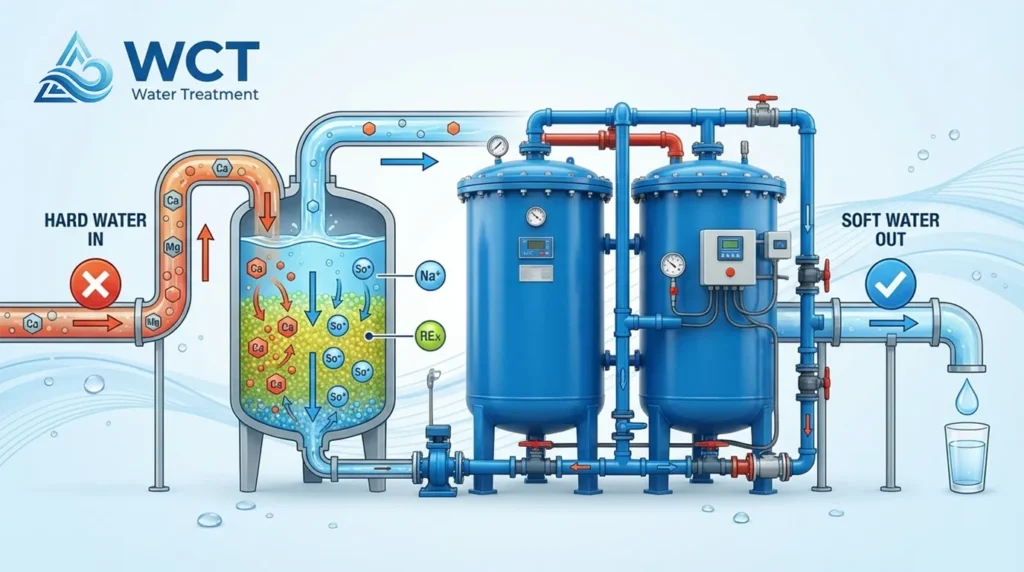
| Ion Exchange (Salt-Based) | Removes calcium and magnesium ions, replacing them with sodium | Refill salt tank monthly; periodic resin cleaning | Completely eliminates scale throughout the home; silky water feel | Homes above 7 GPG requiring full limescale prevention and skin/hair relief |
| Salt-Free Conditioner (TAC/Scale TAC Technology) | Transforms dissolved minerals into inactive micro-crystals that won’t stick to surfaces | Replace media cartridge every 3–5 years; no salt needed | Protects pipes and appliances without adding sodium; no backwash water | Moderate hardness (3–7 GPG) where plumbing longevity matters more than the “slick” water sensation |
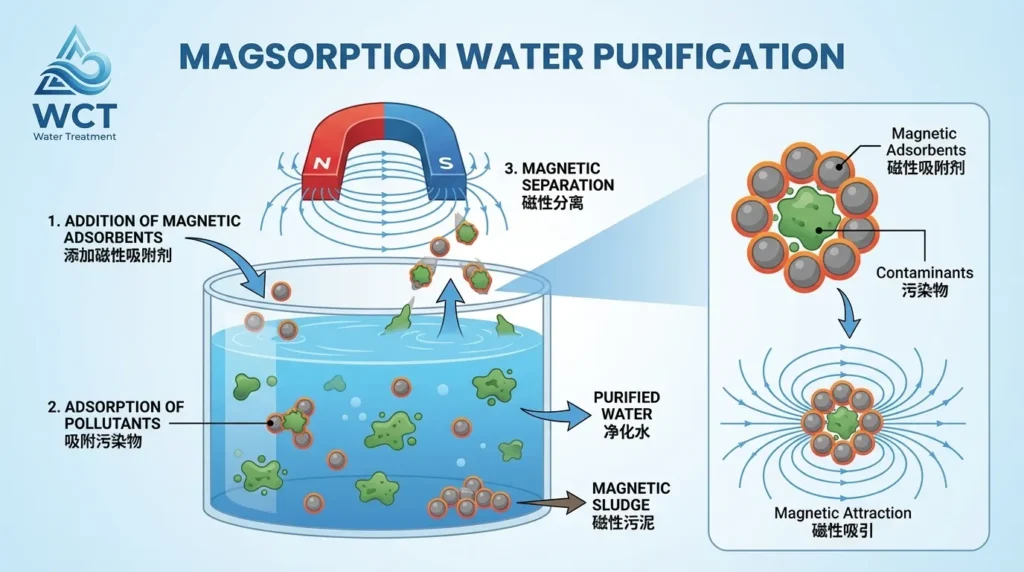
| Magnetic/Electronic Descaler | Generates electromagnetic fields to suspend minerals, reducing adhesion in pipes | None beyond initial installation | Low cost; easy clamp-on installation | Rental units or single-appliance protection; mixed real-world effectiveness |
| Polyphosphate Feeder | Doses water with food-grade phosphate to coat minerals and prevent scale formation | Replace cartridge every 3–6 months | Simple installed unit; affordable upfront | Point-of-use protection for water heaters or washing machines; not for drinking water lines |
Before you lock onto one technology, step back and ask three clarifying questions. Your honest answers will eliminate at least two of the four options above.
- Do you want the mineral stripping and silky feel of softened water, or is preventing pipe damage enough? Salt-based softeners deliver a sensory change that many people love; conditioners only protect infrastructure.
- Can you commit to monthly maintenance? A softener’s salt bin is an ongoing chore. If you travel often or can’t lift heavy bags, a salt-free conditioner or magnetic unit might be more realistic.
- Does your municipality or well system restrict salt brine discharge? Environmental rules are tightening in many regions, making salt-free a requirement, not a preference.
Salt-Based Softeners vs. Salt-Free Conditioners: Which is Right?
This is the decision that trips up most homeowners. The core difference: a softener extracts minerals entirely, while a conditioner keeps them from forming harmful deposits. Your choice hinges on whether you want the sensory change or just equipment protection.
When to Choose an Ion Exchange Softener
Choose an ion exchange softener when you want the “slippery” feel of soft water and zero scale anywhere. The resin tank swapping calcium for sodium dramatically reduces soap scum, brightens laundry, and protects tankless water heaters from scale damage.
Before you commit, verify your water’s grain per gallon level is above 7 GPG and check local restrictions on salt brine discharge. If your well system is a challenge, well water hard water treatment often leans toward this proven method.
In our experience, homes above 7 GPG see the most dramatic improvement with salt-based softeners. The monthly salt ritual becomes routine once you notice how much less time you spend scrubbing.
When a Salt-Free Conditioner is Sufficient
A salt-free conditioner is the right call when you can’t (or won’t) manage salt but still need to safeguard plumbing and appliances. Template-assisted crystallization (TAC) transforms dissolved hardness into inactive particles, so they flow out without sticking—no chloride discharge, no power, and no change to dietary mineral intake.
Just test after installation, because conditioners can struggle above 10 GPG. Keep in mind: water will still feel hard to the touch. The minerals remain, so that squeaky-clean skin sensation won’t be there, but scale won’t form on pipes. Most TAC media lasts about 5 years, making it a low-intervention choice for vacation homes or moderate hardness.
The Tipping Point: When DIY Hacks Aren’t Enough
The moment to stop scrubbing and start installing arrives when scale damage crosses from cosmetic annoyance to financial drain. If you’re replacing a water heater element twice in five years or burning through twice the laundry detergent, the “cost of nothing” is already higher than a system’s monthly payback. The signs aren’t subtle—they add up in your monthly bills and appliance lifespans.
The Hidden Cost of Doing Nothing
- Appliance failure clock. A water heater in hard water country loses 20–30% of its efficiency after just a few seasons of scale buildup, cutting years off its lifespan. The energy penalty alone can add $200–$400 per year to electric bills.
- Soap and energy bleed. Hardness forces you to use more detergent and hotter wash temperatures to achieve the same clean, directly adding to grocery and utility bills. HE washers and dishwashers are particularly sensitive—manufacturers often void warranties when scale damage is found.
- Plumbing choke points. Scale narrows pipe diameter, reducing flow and increasing pressure. For a residential hard water solution that protects the entire layout, a whole-house system becomes the only reliable answer.
- Time cost. When you spend part of every weekend descaling showerheads and polishing glass racks, the labour alone justifies an upgrade.
Key Considerations Before Choosing a System
Three numbers must line up before you pick any technology. Miss one and you’ll either undersize the unit or overspend on capacity you don’t need. Treat these as non-negotiable prerequisites, not suggestions.
Nail Down the Grain per Gallon (GPG) Number
A precise hardness reading is the starting point that determines system size. Guessing based on regional averages often leads to undersized equipment that leaves scale behind, or oversized units that waste salt and water. Test your specific tap; a water test is the one step we never skip. If your reading is borderline—say, 3–5 GPG—you can weigh a small softener versus a whole-house conditioner without overpaying.
Calculate the Peak Flow Rate Your Home Demands
If your unit can’t keep up during morning showers and laundry cycles, raw hard water will blow right through. Estimate the maximum gallons per minute (GPM) you need by counting all fixtures that could run simultaneously. A typical three‑bathroom home needs at least 12 GPM; smaller units choke and let hardness pass untreated. Check the manufacturer’s flow graph against your count—not the advertised “nominal” rate.
Match Maintenance to Your Lifestyle
Salt-based systems demand regular salt refills and occasional resin bed cleaning. Salt-free conditioners trade salt hauling for a cartridge swap every few years. Magnetic and electronic units need almost nothing, but their long‑term performance is less predictable. Choose the workload you’ll realistically maintain; a neglected softener turns into a breeding ground for bacteria and lets hardness through exactly when you needed it most.
How to Test Your Water Quality at Home
You can’t price a solution until you know your water’s actual hardness. Test strips from a hardware store give a quick ballpark grain per gallon reading, but if you’re on well water or torn between salt-free and salt-based systems, a professional lab analysis removes all doubt.
DIY Test Strips vs. Professional Laboratory Analysis
Off‑the‑shelf strips are acceptable for confirming you have a problem, not for specifying equipment. They indicate total hardness as calcium carbonate within a wide band but miss secondary villains like iron and pH that can skew sizing. If your strip shows 5 GPG but actual dissolved iron is high, you’ll undersize the softener and still see staining.
A certified lab report gives you GPG, iron, manganese, pH, and total dissolved solids—every number a system designer needs. Many labs email results within a few days, and some water treatment companies include the sampling kit with the consultation.
What a Professional Test Tells You That Strips Can’t
Beyond hardness, iron and pH drive system choices. Iron above 0.3 ppm fouls ion‑exchange resin and calls for a pre‑filter. Acidic water (pH below 7) corrodes copper pipes before scale has a chance to form. A pro‑grade analysis ensures you’re not solving one problem only to create another.
Working with a water specialist ensures you interpret those numbers correctly and pick a system sized for your water chemistry, not a generic guess. Many offer a free in‑home consultation to draw a water sample and walk you through what they’d recommend.
Frequently Asked Questions
Can I drink water from a salt-based softener?
The amount of sodium added during ion exchange is minimal—typically less than 12.5 milligrams per 8-ounce glass for 10-grain hard water. Most healthy adults won’t notice an impact. If you follow a strict low-sodium diet, install a bypass line to a separate kitchen faucet for drinking and cooking, or add a reverse osmosis system to strip sodium after softening.
Is hard water harmful to my health?
No. Hard water contains calcium and magnesium, which are essential dietary minerals. It doesn’t pose a toxicity risk if consumed. The concerns are strictly nuisance-based: dry skin, brittle hair, reduced appliance efficiency, and soap scum that demands extra scrubbing.
How long do whole-home hard water systems last?
A salt-based softener with a quality resin tank typically lasts 10 to 15 years, with the resin bed itself potentially needing replacement around the 8-year mark depending on water chemistry and chlorine exposure. Salt-free conditioners using scale TAC technology often reach 5 to 10 years before the media loses effectiveness. Both categories depend heavily on proper sizing and minimal iron fouling.