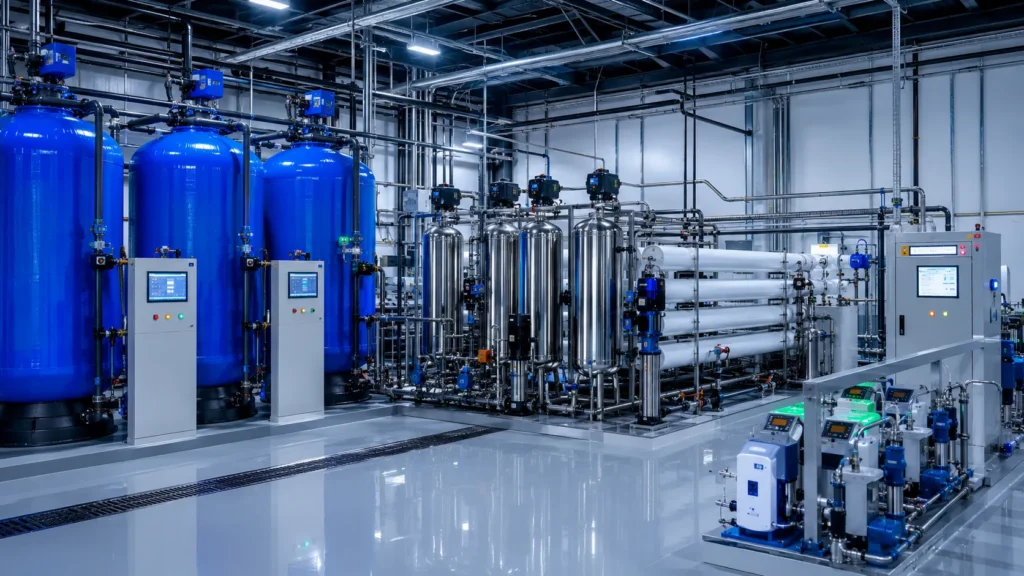
You dread the countdown. Another month, another dripping faucet filter cartridge to replace, another clunky pitcher taking up fridge space. If your morning routine involves scrubbing white crust off the kettle or cringing at dry skin after a shower, you’ve already felt the limits of basic drinking-water filters. The real upgrade is a permanent, whole-house solution that handles the chore for you. An automatic water treatment system sits at your main water line, cleans every drop entering your home, and handles its own maintenance cycles — so you don’t have to.
What Exactly Is an “Automatic” Water Treatment System?
You’ve probably swapped enough under-sink cartridges to know the routine. An automatic system breaks that cycle by cleaning its own media through a timed backwash or regeneration. A control valve, often electronic or mechanical, initiates a reverse flow of water at set intervals. This flushes trapped sediment, chlorine, or hardness minerals out of the media bed and down a drain line. The process is called backwashing or regeneration, and it restores the system’s performance without any manual effort.
Without this self-cleaning feature, a point-of-entry (POE) system—which treats all water where it enters your home—would clog quickly under daily household use. The automation preserves consistent water pressure, prevents channels from forming in the filter bed, and pushes decades-old technology into “set-and-forget” territory. It’s the difference between a weekend project you need to babysit and a permanent appliance you check once or twice a year.
The Benefits of Upgrading to a Whole-House (POE) System
If tight skin after a shower or etched glasses from the dishwasher sound familiar, the problem isn’t your soap or detergent—it’s the untreated water running through every pipe. A whole-house system changes that, and the benefits reach far beyond a single tap.
- Better taste and odor everywhere. A carbon-based whole house filtration system removes chlorine and its byproducts at the entry point, so the kitchen sink, shower, and ice maker all deliver fresh-tasting water.
- Healthier skin and hair. Chlorine and dissolved minerals strip natural oils. Removing them at the point-of-entry means every shower is a rinse in gentler water — less itch, less dryness, and less need for heavy moisturizers.
- Appliance protection. Hard water scale is a silent killer for water heaters, dishwashers, and washing machines. A system that addresses scale prevention can add years to those appliances and keep them running efficiently.
- Long-term savings. Stop buying bottled water cases, descaling solutions, and replacement cartridges every few weeks. A single upfront installation often pays for itself over time by eliminating those recurring costs and reducing plumbing repair bills.
For households that have already spotted chalky residue or noticed a pool-like smell from the tap, whole house filtration systems solve the problem at the source rather than chasing symptoms at individual faucets.
Choosing the Right Technology: Filter vs. Softener vs. UV
The water complaint you notice first—a chlorine smell, white scale, or a boil-water advisory—points to the treatment technology you’ll need. Automatic is the convenience layer; the core job of removing specific contaminants depends on the media inside. Most homes need one of three approaches, sometimes two or three paired together for complete coverage.
Automatic Carbon Filtration (For Taste and Contaminants)
Activated carbon is the workhorse of whole-house filters. As water passes through a tank filled with carbon media, chemicals like chlorine, volatile organic compounds, and certain pesticides stick to the surface. An automatic carbon system backwashes the media regularly, lifting and re-bedding the granules to prevent channeling, so it stays effective for years. The result is water that tastes and smells clean, without the chemical bite. Many carbon systems also tackle contaminant removal targets like lead and PFOA when built with catalytic or specialty carbon blends — verify the specific media type if those are concerns.
Automatic Water Softeners (For Hard Water and Scale)
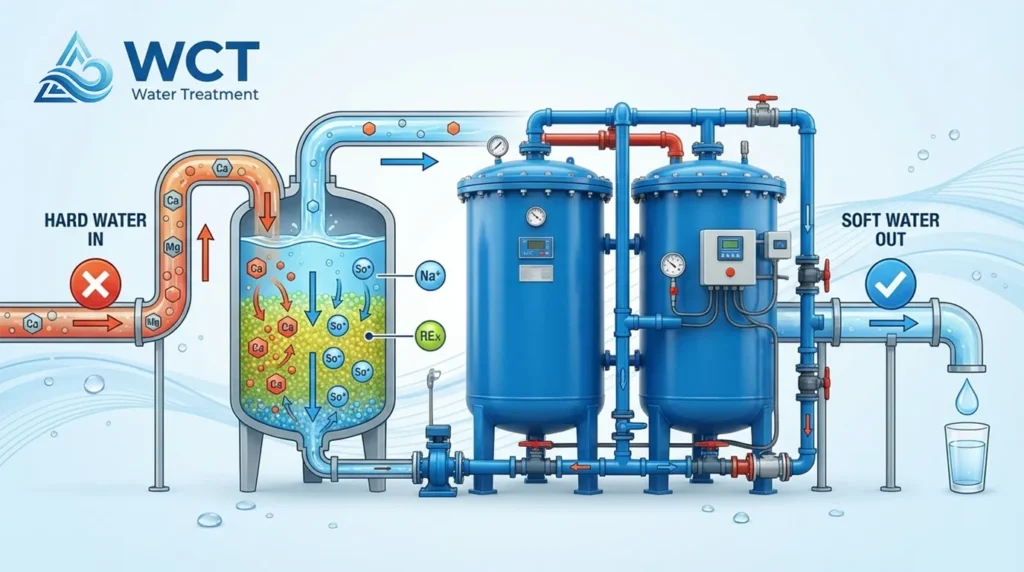
Hard water isn’t a health risk, but it’s a daily nuisance. Calcium and magnesium create that stubborn white buildup on fixtures, reduce soap lather, and bake onto heating elements inside your water heater. An automatic water softener uses a resin bed that attracts these minerals and exchanges them for sodium or potassium ions. The magic is the regeneration cycle: a brine tank flushes the resin, scrubbing away the collected hardness and restoring the softener’s capacity. The system then returns to service — without a single manual step from you. This is one of the most popular hard water solutions because it directly stops scale at the source.
UV Purification Add-ons (For Bacteria and Viruses)
If your water comes from a private well or you’re concerned about microbiological safety, filtration and softening won’t touch bacteria. A UV water purifier adds a final defensive layer. Inside a stainless steel chamber, a UV lamp emits light at a specific wavelength that disrupts the DNA of viruses, coliform, and cysts so they can’t reproduce. The system requires no chemicals and adds nothing to the water. The automation here is simply constant treatment — the lamp stays on, and the water passes through. The only hands-on job is replacing the UV lamp once a year, which is a small trade-off for guaranteed disinfection. More details on how UV fits into a whole-home setup are covered in our UV water treatment guide.
Comparison: Which Automatic System Fits Your Home?
Most buyers start with one main complaint, then build from there. The right system type matches the symptom you notice every day.
| System Type | Primary Goal | Maintenance Level | Best For |
|---|---|---|---|
| Automatic Carbon Filter | Remove chlorine, chemicals, improve taste/odor | Low (media lasts 5–8 years) | Municipal water with chemical smell; homes with suspected PFAS filtration needs |
| Traditional Water Softener | Remove hardness minerals (calcium, magnesium) | Moderate (keep salt tank filled) | Homes with visible scale buildup, dry skin, appliance damage |
| Salt-Free Conditioner | Prevent scale from sticking (no sodium added) | Very low | Those who want scale protection without salt or wastewater |
| UV Sterilizer | Kill bacteria, viruses, cysts | Low (annual lamp swap) | Well water; anyone with boil-water advisories or coliform concerns |
Maintenance level estimates depend on household water usage and local water quality. Always confirm expected media life, lamp lifespan, and salt usage with the manufacturer for your specific model.
Before you buy, verify your home’s flow rate (GPM). A system must handle peak demand when multiple taps are open without a pressure drop. In most average-sized homes, 7-10 GPM works; larger properties may need more capacity.
The “Set-and-Forget” Factor: What Maintenance Still Remains?
Automatic doesn’t mean zero interaction. It means you’ve swapped weekly filter swaps for occasional check-ups that keep the system healthy.
- Salt replenishment (softeners only). The brine tank doesn’t fill itself. Check the salt level monthly and top it off before it runs dry. An empty brine tank means hard water slips through.
- UV lamp replacement. Even if the light still glows, UV intensity fades after about 9,000 hours of continuous use. Replacing the lamp annually guarantees disinfection performance.
- Bypass valve check. Most systems have a bypass valve that lets you isolate the unit during servicing. Confirm it’s in the “service” position; a partially open bypass sends untreated water into the house.
- Professional inspection. Even the best automatic valve or media bed benefits from a quick pro check every 1–2 years. A technician can adjust backwash frequency, inspect seals, and catch small issues before they become water-quality problems.
Selection Checklist: Before You Buy
Narrowing down options before comparing models prevents the most common mistake: buying a system that addresses the wrong water issue. Skipping any of these steps often leads to mismatched equipment.
- Get a professional water test first. Guessing at contaminants leads to buying the wrong technology. A lab test reveals exactly what’s in your water — hardness level, chlorine, iron, bacteria, or lead.
- Match the system’s capacity to your household. Count bathrooms and occupants. A 1-3 bathroom home typically needs a 1.0 cubic foot softener or equivalent carbon tank, but always confirm the rated flow rate (GPM).
- Look for recognized certifications. NSF/ANSI Standard 42 (aesthetic effects like chlorine taste) and Standard 53 (health contaminants like lead and cysts) are not marketing badges — they’re independent verification that the manufacturer’s claims hold up. Ask for the certification listing number.
- Plan for power, drain, and space. Most automatic backwashing units need a nearby 110V outlet and a drain line or standpipe. Measure the installation area; a carbon tank and brine tank can take up a 3×3 foot footprint next to the water main.
For anyone on a private well, these checks are even more critical. Iron, sediment, and bacteria often appear together, and a point-of-entry (POE) system designed for one contaminant won’t fix the others. The water test tells you what combination of filtration, softening, and UV you actually need.
Ready to Transform Your Home’s Water?
The research phase ends when you know what’s in your water and which technology matches. From there, it’s about finding a system built to handle that job with minimal daily attention.
Spend a few minutes browsing our selection of whole house filtration systems and automated softeners to compare configurations for your home size. If you’d rather skip the guesswork, book a water consultation — our team helps match your local water report to the exact system type and capacity you need.
Frequently Asked Questions
Do automatic water filters waste a lot of water?
They use some. During a backwash cycle, the system sends a burst of water — often 20–50 gallons depending on tank size — down the drain to flush out trapped debris. Compared to the thousands of gallons a household uses between cycles, that volume is small. The trade-off is a filter media that stays effective for years, not months.
Can I install an automatic system myself?
Some homeowners with plumbing experience do handle the physical installation, but we still recommend a professional. Correctly tying into the main water line, connecting a drain, and setting up the control valve affects both performance and warranty coverage. A pro also knows local code requirements for air gaps and backflow prevention, which most DIY guides skip.
How long do these systems typically last?
With basic care, the tank and valve body often last 10–15 years. The media inside — carbon granules or resin beads — has a shorter service life, usually 5–8 years for carbon and 8–12 years for water softener resin depending on chlorine exposure and water quality. Re-bedding the tank at that point gives the system a second life without replacing the entire unit.