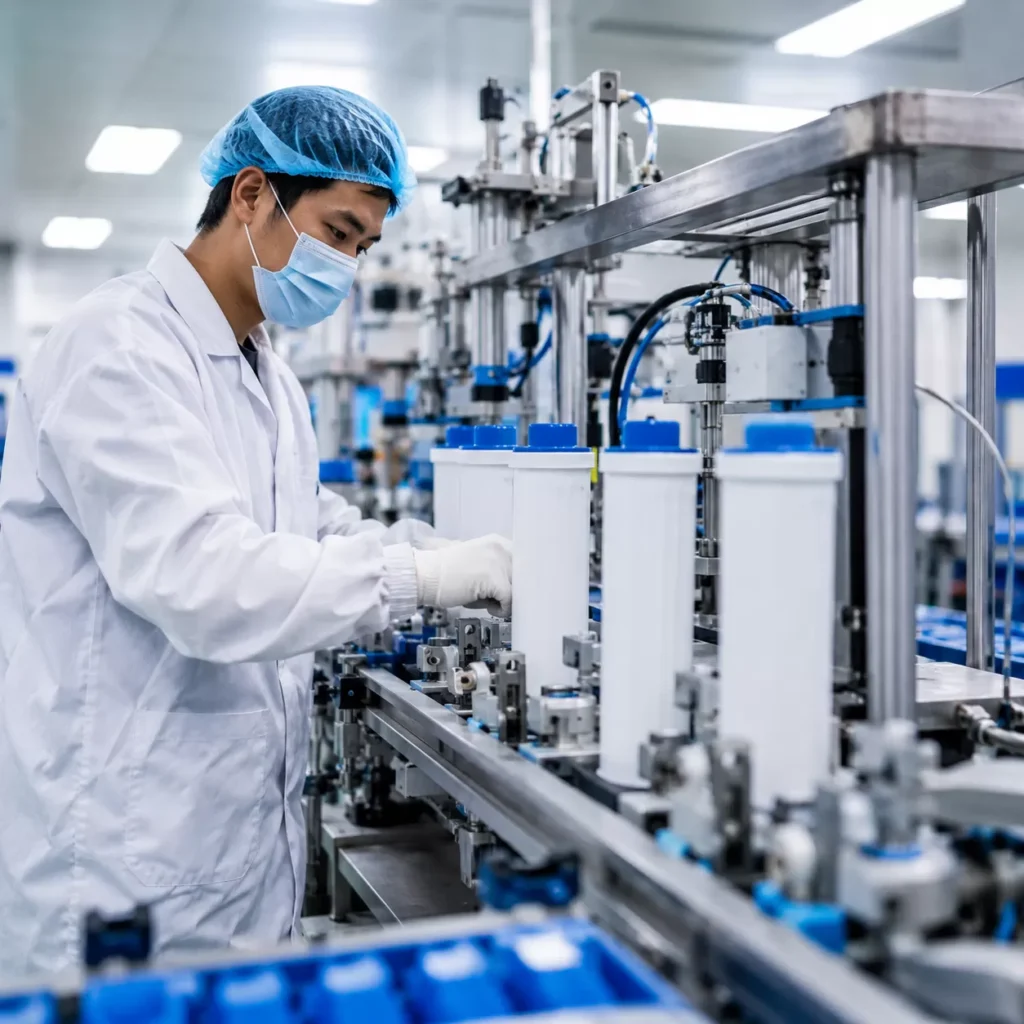
What is OEM Water Filter Manufacturing?
Are you looking to launch your own line of filtration products without building a factory from scratch? Partnering with an OEM water filter manufacturer is the most effective way to scale your brand. By leveraging established production lines, you can focus on marketing and sales while we handle the technical heavy lifting.
OEM vs. ODM: Choosing Your Path
Understanding the difference between these two models is vital for your product roadmap.
| Feature | OEM (Original Equipment Manufacturer) | ODM (Original Design Manufacturer) |
|---|---|---|
| Design | You provide the blueprints/specs | We provide existing designs |
| Customization | High (Built to your exact needs) | Moderate (Based on our templates) |
| Speed | Longer development time | Faster time-to-market |
| Ownership | You own the IP/Design | We own the design IP |
Benefits of Private Labeling
Choosing a private label water filter manufacturer offers significant advantages for growing businesses:
- Accelerated Speed to Market: Skip the years of R&D and facility setup. Use our existing infrastructure to get your products on shelves in months, not years.
- Cost Efficiency: Avoid massive capital expenditure on machinery and labor. Benefit from our economies of scale to lower your per-unit cost.
- Brand Focus: By outsourcing contract manufacturing for water filters, you free up your team to focus on building your brand identity and customer acquisition strategies.
- Quality Assurance: Reputable manufacturers bring established QC protocols, ensuring your products meet international standards from the very first batch.
Critical Criteria for Evaluating an OEM Water Filter Manufacture Partner
Choosing the right OEM water filter manufacture partner determines whether a brand thrives or fails in the global market. A supplier must be vetted across four foundational pillars: technical expertise, production scalability, strict quality control, and supply chain transparency.
Evaluating a private label water filter manufacturer requires looking past basic sales pitches to audit their actual factory floor capabilities.
Core Evaluation Pillars
| Evaluation Criteria | Key Requirements | Impact on Your Brand |
|---|---|---|
| Technical Expertise & R&D | Advanced laboratories, custom engineering, and strict adherence to NSF/ANSI certification standards. | Ensures high-performance contaminant removal and regulatory compliance. |
| Scalability & Capacity | Seamless transition from low-volume pilot runs to high-volume mass production. | Prevents stockouts during sudden market demand surges. |
| Quality Control (QC) | Multi-stage testing protocols spanning incoming materials to final product pressure tests. | Eliminates defective batches and reduces expensive product returns. |
| Supply Chain Transparency | Verifiable sourcing for raw filter media, carbon blocks, water filter housing OEM parts, and membranes. | Guarantees consistent product safety and prevents material substitution. |
Technical Expertise and Certification Compliance
A reliable partner must do more than assemble parts; they must drive water purification product development. Top-tier manufacturers employ dedicated R&D teams capable of optimizing flow rates, pressure drops, and chemical reduction capacities.
The factory must design products that align with international compliance benchmarks, specifically NSF certified water filter manufacturer standards (such as NSF 42 for aesthetics and NSF 53 for health effects). For complex setups, review their structural engineering capabilities by inspecting their water treatment guide to ensure their filtration logic matches local water quality challenges.
Scalable Production and Rigorous Quality Control
A contract manufacturer must support a brand\’s entire growth lifecycle. This means possessing the operational flexibility to handle small-batch pilot testing without exorbitant costs, while maintaining the infrastructure for high-speed automated mass assembly.
Quality assurance cannot be an afterthought. A premium factory implements a multi-tiered QC protocol:
- IQC (Incoming Quality Control): Testing raw carbon, membranes, and plastics before production begins.
- IPQC (In-Process Quality Control): Continuous monitoring of sonic welding, housing seals, and O-ring placements.
- FQC ( Quality Control): Burst pressure testing and air-leakage checks on completed batches to ensure zero-defect shipping.
Supply Chain Traceability
A high-performing filter is only as good as its component parts. True transparency means the supplier openly shares the origins of their filter media supply chain, from coconut shell activated carbon to specialized ion-exchange resins. Hidden material substitutions lower costs but ruin product performance, making verifiable sourcing non-negotiable for global brand protection.
The Factory Audit Checklist: What to Look For
Conducting a thorough factory audit is the most effective way to verify that your OEM water filter manufacturer can meet your quality expectations. Before committing to a partnership, you must evaluate the physical facility, documentation, and operational transparency.
Physical Facility Standards and Hygiene Protocols
A professional water treatment factory must maintain a clean, organized, and controlled environment. During an audit, inspect the following:
- Production Environment: Ensure the assembly lines are free of dust and contaminants, as water filtration components require high levels of hygiene.
- Storage Conditions: Check that raw materials, such as filter media and housings, are stored in dry, temperature-controlled areas to prevent degradation.
- Workflow Efficiency: Observe the layout of the facility to ensure there is a logical flow from raw material intake to final packaging, which minimizes the risk of cross-contamination.
Crucial Industry Certifications
Certifications serve as the baseline for quality assurance. A reliable partner should provide verifiable proof of the following:
- ISO 9001: This confirms that the manufacturer follows a standardized quality management system.
- WQA (Water Quality Association) Standards: Essential for ensuring that products meet global safety and performance benchmarks.
- NSF/ANSI Compliance: Look for documentation that proves the factory has the capability to produce components that meet specific health and safety standards for water plant treatment applications.
Communication Channels and Project Management
Technical capability is only half the battle; reliable project management is what keeps your supply chain moving. Evaluate the manufacturer based on these operational criteria:
- Responsiveness: Assess how quickly they provide technical documentation, test reports, and updates on production timelines.
- Transparency: A trustworthy partner will be open about their sub-suppliers and provide clear visibility into the sourcing of critical components.
- Accountability: Ensure there is a dedicated project manager assigned to your account who can bridge the gap between your design requirements and the factory floor.
By focusing on these three pillars—facility hygiene, certified standards, and clear communication—you can mitigate risks and ensure a long-term, successful collaboration with your OEM water filter manufacturer.
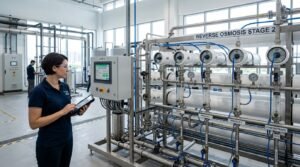
Why Partner with WCT for Your Water Filtration Needs?
Choosing the right OEM water filter manufacture partner determines how fast and successfully your brand scales. At WCT, we combine engineering expertise with high-volume production to deliver market-ready water purification solutions.
From Household Filtration to Industrial Systems
We do not offer a one-size-fits-all solution. Our manufacturing capabilities span multiple tiers to fit your exact market segment:
- Residential & Commercial: Under-sink systems, countertop filters, and RO units.
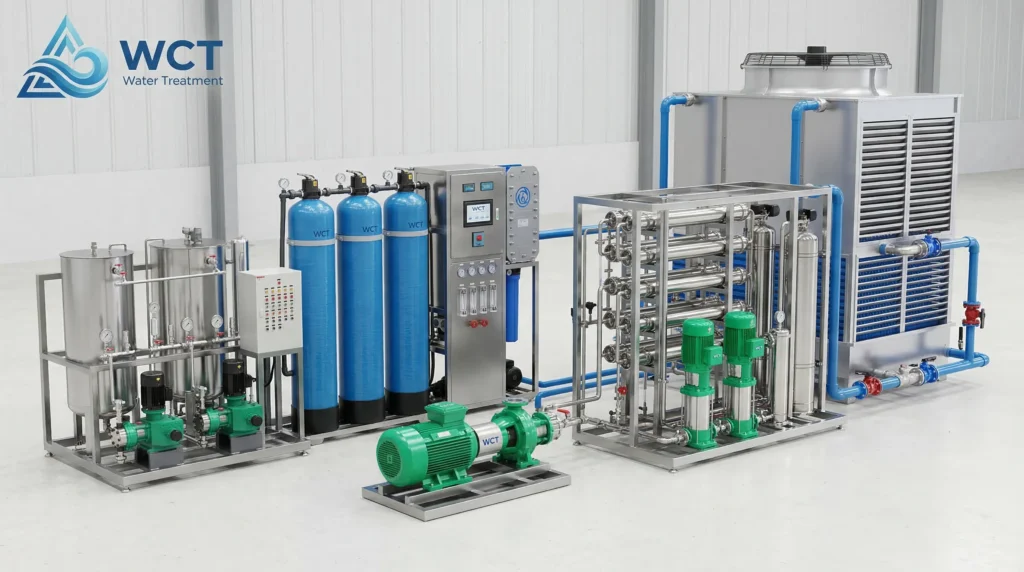
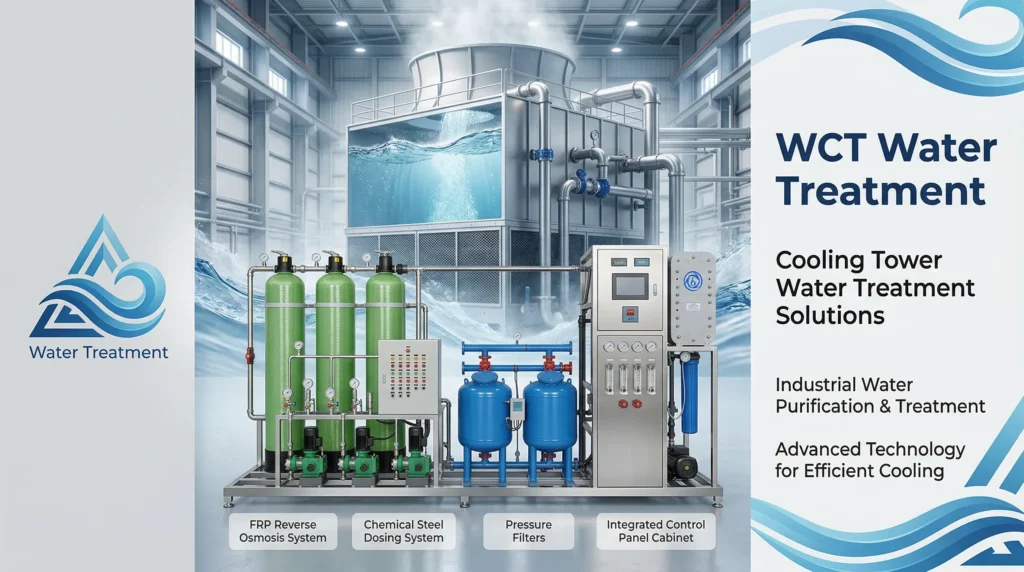
- Industrial Water Treatment: Large-scale purification setups, including heavy-duty components and specialized industrial liquid mixers for chemical water treatment.
Advanced Customization Capabilities
As a full-service private label water filter manufacturer, we give you complete control over your product roadmap. You define the specifications, and we build it:
- Custom Water Filter Design: Tailored filter housings, dimensions, and connection types to fit your existing product ecosystem.
- Filter Media Engineering: Custom-blended carbon blocks, sediment layers, and specialized membranes targeting specific regional water contaminants.
- Bespoke Branding: White-label and private-label options featuring your logos, custom colorways, and retail-ready packaging.
| Feature | WCT Capabilities | Benefit to Your Brand |
|---|---|---|
| Media Selection | Carbon, RO, UF, Ceramic, Ion Exchange | Target specific local water issues |
| Scalability | Small-batch pilot runs to mass production | Low risk testing with easy scaling |
| Compliance | Built to NSF/ANSI and ISO standards | Faster entry into global markets |
Strict Compliance & International Standards
We eliminate the regulatory guesswork for your business. Our production lines follow rigid quality management protocols, ensuring every batch of OEM water filtration systems meets global safety, material extraction, and structural integrity standards. When you partner with WCT, you get reliable performance that protects your brand\’s reputation.
The Step-by-Step Process: From Concept to Market
Bringing a water filtration product to market requires a structured approach to ensure quality and compliance. We follow a streamlined water filter manufacturing process to take your vision from an initial idea to a shelf-ready product.
Phase 1: Consultation and Brand Requirements
We begin by defining your specific market needs. This phase involves identifying the target water quality issues, selecting appropriate filtration technologies, and aligning the technical specifications with your brand’s value proposition.
Phase 2: Prototyping and Performance Testing
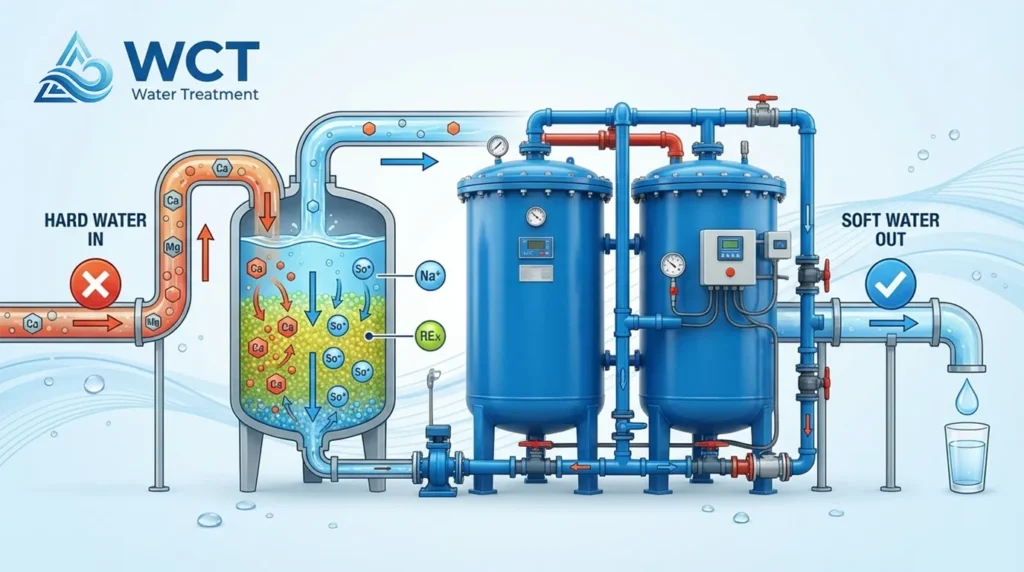
Before moving to full-scale production, we develop prototypes to validate design and functionality. This stage includes rigorous testing to ensure the filter meets performance benchmarks and safety standards. We also integrate advanced water treatment process diagrams to ensure the internal flow and filtration stages are optimized for maximum efficiency.
Phase 3: Branding and Custom Packaging
Once the prototype is approved, we focus on the visual identity. This includes custom housing designs, laser-etched logos, and retail-ready packaging that resonates with your target audience. Our goal is to ensure your product stands out while maintaining the integrity of the filtration system.
Phase 4: Bulk Manufacturing and Quality Assurance
We transition to mass production using high-precision equipment. Throughout this phase, our team enforces strict quality assurance protocols. Every batch undergoes inspection to ensure consistency in filter media density, housing durability, and overall assembly quality.
Phase 5: Logistics and After-Sales Support
The final phase covers the secure packaging, palletizing, and global shipping of your products. We manage the logistics to ensure timely delivery and provide ongoing after-sales support to address any technical questions or maintenance needs, ensuring your brand maintains a reputation for reliability in the water treatment industry.

Common Pitfalls to Avoid in OEM Partnerships
Partnering with an OEM water filter manufacture setup can scale your business rapidly, but a few missteps can derail your entire product launch. When navigating private label water treatment agreements, avoiding these three critical pitfalls will protect your brand reputation and your bottom line.
Over-Reliance on Low-Cost, Low-Quality Suppliers
Chasing the lowest price per unit is a fast track to high defect rates and compromised filtration performance. In the water purification industry, cutting corners means failing compliance tests and losing customer trust.
- The Risk: Cheap filter media degrades quickly, leading to bypass leaks or poor contaminant removal.
- The Solution: Prioritize value and long-term reliability over the lowest bid. Ensure your partner uses high-grade materials, such as premium coconut shell activated carbon or reliable specialized systems like a wct precision filter for water treatment, to guarantee consistent output.
Ignoring Intellectual Property (IP) Protection and Compliance
Failing to secure your proprietary designs or ignoring local regulatory standards can stall your business before it even starts.
- IP Protection: Always sign comprehensive Non-Disclosure Agreements (NDAs) before sharing custom molding or proprietary filtration tech designs.
- Compliance Overlook: Never assume a factory\’s standard build automatically meets your target market\’s legal requirements. Verify that the bulk water filter supplier builds specifically to meet NSF/ANSI or CE standards from day one.
Lack of Clear Communication on Lead Times and Shipping Logistics
Misaligned expectations regarding production timelines and shipping schedules create costly inventory bottlenecks.
- Production Delays: A complete water filter manufacturing process involves material sourcing, molding, assembly, and QC. Without strict timeline tracking, initial estimates can slip by weeks.
- Logistics Gaps: Ensure your contract explicitly states who handles customs clearance, freight forwarding, and local port delivery to prevent unexpected storage fees and stockouts.
FAQs About OEM Water Filter Manufacturing
What is the average lead time for custom water filter manufacturing?
Lead times typically range from 4 to 8 weeks, depending on the complexity of your custom water filter design and our current production schedule. Initial prototyping and tool development usually take 3 to 4 weeks, while mass manufacturing and bulk water filter supplier assembly take another 3 to 4 weeks. We always provide a firm timeline during our initial supplier qualification phase to ensure your product roadmap stays on track.
Can I get custom branding and packaging for my water filtration products?
Yes. As a full-service OEM water filter manufacture, we offer complete private label water treatment customization. This includes custom molding for your water filter housing OEM specifications, color matching, laser engraving your logo directly onto the filter media housings, and custom retail packaging design to ensure your brand stands out in the global marketplace.
What certifications should a reliable water filter factory hold?
A reputable contract manufacturing for water filters partner must hold both facility and product-specific credentials. At a minimum, look for an ISO 9001 certified water treatment factory audit rating to ensure strict quality management systems. Furthermore, the products themselves should comply with NSF/ANSI standards (such as NSF 42 and 53) and hold WQA or CE certifications to guarantee filtration efficiency and safety for international distribution.