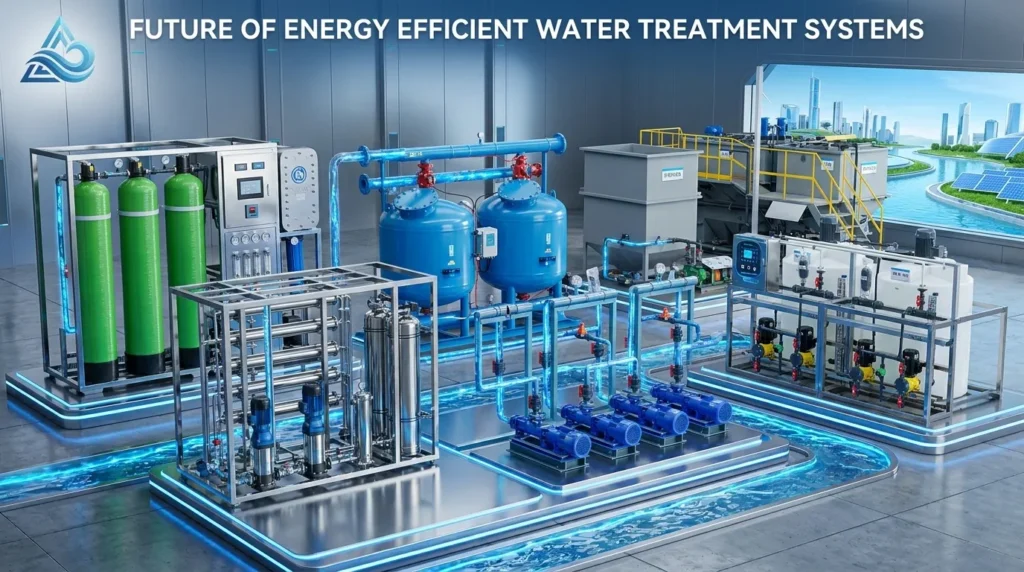
What is Driving the Demand for Energy-Efficient Water Treatment?
Are escalating operational expenses cutting into your bottom line? You are not alone. As a manufacturer and supplier of sustainable water purification tech, we constantly speak with plant managers and engineers facing the exact same pressure. The Future of Energy Efficient Water Treatment Systems is no longer a distant concept; it is an immediate necessity driven by three massive shifts in the global market.
The Impact of Rising Global Energy Costs
Water treatment is notoriously energy-intensive. With fluctuating power prices, relying on outdated equipment directly inflates your plant\’s Operating Expenses (OPEX). Every kilowatt-hour saved through optimized processes translates directly into protected profit margins and significantly lower utility bills.
Strict Environmental Regulations
Governments worldwide are tightening the leash on industrial emissions. We are seeing strict mandates specifically targeting carbon footprint reduction in water facilities. Staying compliant means upgrading infrastructure to energy-efficient models before hefty fines or operational restrictions take effect.
Corporate Sustainability Goals (ESG)
The push for greener industrial processing and municipal water management is now a top priority in the boardroom. Meeting Environmental, Social, and Governance (ESG) targets requires measurable, data-backed action. Integrating energy-efficient water systems proves a definitive commitment to sustainability while satisfying investor and stakeholder demands.
Key Market Drivers:
- OPEX Protection: Shielding operations from volatile, ever-increasing energy markets.
- Mandatory Compliance: Meeting aggressive government carbon-reduction mandates without disrupting output.
- ESG Milestones: Fulfilling corporate pledges for sustainable, forward-thinking water management.
Core Technologies Redefining Energy Efficiency
We are seeing a fundamental shift in how modern facilities manage their power consumption. The future of energy efficient water treatment systems relies heavily on replacing outdated, power-hungry equipment with intelligent, adaptive technologies. Here is the \”how-to\” behind this operational transformation.
Ultra-Low Pressure Reverse Osmosis
Standard reverse osmosis setups consume immense amounts of power. To combat this, we utilize low-energy RO membranes. This evolution to ultra-low pressure reverse osmosis ensures facilities maintain high permeate water quality while drastically cutting electrical demand.
VFD Pump Integration
Traditional fixed-speed pumps waste energy by constantly running at full capacity regardless of actual system needs. We solve this through intelligent fluid management using VFD pump integration. By incorporating Variable Frequency Drives (VFDs), the system automatically matches motor output to real-time demand. Pairing VFD technology with highly accurate equipment like our mechanical diaphragm metering pumps guarantees precise dosing while eliminating wasted electricity.
Advanced Aeration Efficiency
Aeration typically accounts for the largest energy draw in biological treatment. We are moving away from inefficient conventional surface aerators. Instead, implementing fine-bubble diffusers paired with smart-control blowers optimizes oxygen transfer, resulting in advanced aeration efficiency that strictly targets biological oxygen demand.
Wastewater Heat Recovery Systems
Thermal energy in municipal and industrial effluent is often wasted. By installing wastewater heat recovery systems, we transform wastewater from a liability into an energy asset. These systems extract latent thermal energy to heat surrounding facilities or pre-heat incoming industrial processes, creating a closed-loop energy cycle.
Digitalization and Smart Water Management
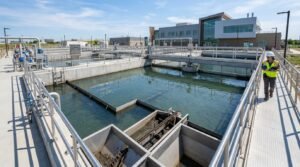
The Future of Energy Efficient Water Treatment Systems relies heavily on digitalization. We are moving past manual checks and adopting smart technologies that allow our facilities to operate proactively. By integrating advanced software with our hardware, we cut down on wasted power and streamline daily operations.
Key Digital Upgrades
- IoT Sensors and Real-Time Monitoring: We utilize smart water management IoT devices across the entire plant. These sensors gather actionable data 24/7, allowing us to spot inefficiencies immediately and prevent costly energy spikes. When engineering custom water treatment solutions, this real-time visibility is a standard requirement for maintaining low operational costs.
- AI and Machine Learning: We implement predictive algorithms that analyze both historical trends and current flow conditions. Instead of running on rigid, fixed timers, the system automatically optimizes chemical dosing, backwashing cycles, and pumping schedules to match the exact demand of the facility.
This precise, data-driven approach ensures that every watt of electricity is used with purpose, maximizing operational efficiency while maintaining strict water quality standards.
The Ultimate Goal: Energy-Neutral Water Treatment Facilities
The pinnacle of the Future of Energy Efficient Water Treatment Systems is reaching a state where facilities generate as much power as they consume. Energy-neutral wastewater treatment is no longer just an ambitious concept; it is a practical reality we are helping industrial and municipal facilities achieve globally.
To build net-zero water treatment plants, we combine aggressive energy reduction with smart energy generation. By deeply optimizing the entire waste water treatment process, facilities can successfully transform from massive electrical drains into self-sustaining operations.
Achieving the Net-Zero Balance
We tackle the energy equation from two distinct sides to maximize efficiency:
- Minimizing Consumption: We integrate ultra-low pressure reverse osmosis membranes, VFD pump integration, and advanced aeration efficiency to drastically lower the baseline power requirements of the facility.
- Generating Power On-Site: We implement wastewater heat recovery systems, capture biogas from biological digestion, and integrate solar energy directly into the plant\’s infrastructure.
Real-World Net-Zero Success
Modern plants are proving this circular economy approach works perfectly. For example, by capturing methane during biological treatment and running it through cogeneration engines, many plants now produce exactly the electricity needed to power their heavy-duty blowers and pumps. Other facilities utilize thermal extraction to pre-heat their internal operations, turning a traditional waste stream into a valuable energy asset. By bridging the gap between sustainable water purification tech and renewable energy generation, these facilities secure total operational resilience against volatile grid prices.
Why Choose WCT for Your Future-Ready Water Infrastructure?
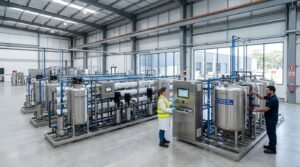
Building the future of energy efficient water treatment systems requires a partner who understands both the technology and the bottom line. As a direct manufacturer, we provide WCT sustainable water solutions designed to modernize your operations without unnecessary costs.
We eliminate the middleman, giving you direct access to cutting-edge, custom-engineered equipment. Our approach ensures that every component works together to lower your facility\’s energy footprint.
The WCT Advantage
| Core Benefit | What We Deliver |
|---|---|
| Manufacturer Direct Access | Custom-engineered equipment straight from our facility to yours, eliminating costly middleman markups. |
| Comprehensive Solutions | Seamless integration of low-energy membranes, VFD pump integration, and advanced heat recovery systems. |
| Proven Reliability & ROI | High-performance builds ensuring rapid returns for industrial applications and municipal water treatment systems. |
Transitioning to net-zero water treatment plants demands precise engineering and high-quality manufacturing. We commit to delivering the exact specifications required to keep your OPEX low while meeting strict environmental standards. Our focus is on providing reliable, long-lasting infrastructure that secures your operational success for decades to come.