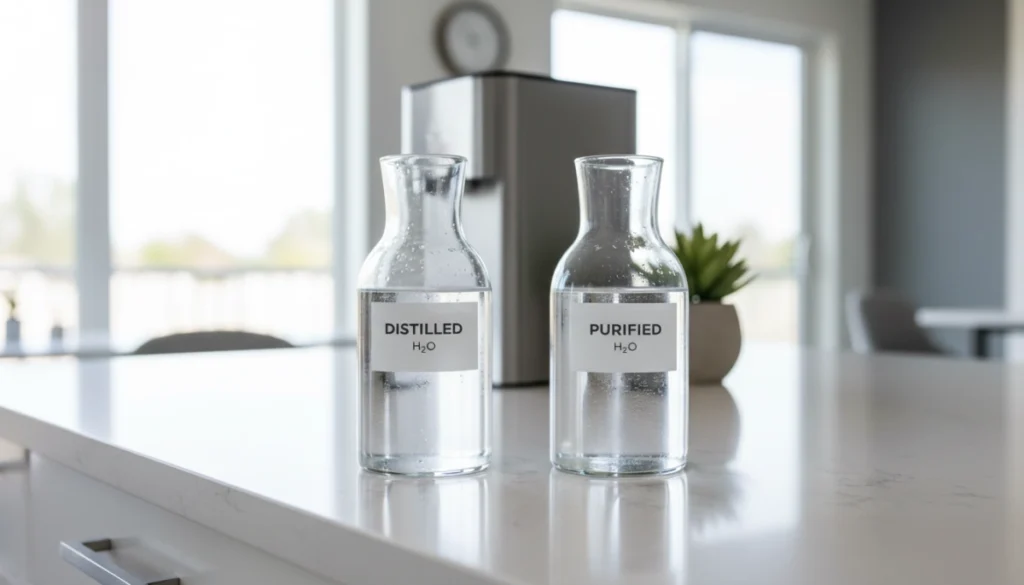
What is Purified Water?
Definition and Purification Process
Purified water is water that has been treated to remove impurities such as bacteria, fungi, parasites, chemicals, and radioactive contaminants. To be legally labeled as \”purified,\” the water must be processed to meet strict pharmaceutical-grade standards, often reducing the concentration of impurities to less than 10 parts per million (PPM).
As a leading water treatment products manufacturer, we utilize several advanced technologies to achieve this level of purity:
| Purification Method | Primary Function |
|---|---|
| Reverse Osmosis (RO) | Uses a semi-permeable membrane to remove ions and large molecules. |
| Carbon Filtration | Absorbs chlorine, pesticides, and volatile organic compounds (VOCs). |
| Deionization | Removes mineral ions like sodium, iron, and copper through ion exchange. |
| UV Sterilization | Uses ultraviolet light to neutralize 99.9% of living microorganisms. |
Health Benefits of Purified Water
Choosing purified water ensures a consistent and safe hydration experience. By eliminating harmful substances found in regular water, it provides several key advantages:
- Removal of Toxins: Effectively filters out heavy metals like lead, arsenic, and mercury.
- Pathogen Protection: Eliminates waterborne bacteria and viruses, reducing the risk of illness.
- Enhanced Flavor: Removing chlorine and metallic residues results in a crisp, clean taste.
- Protection for Vulnerable Groups: Ideal for individuals with weakened immune systems who require the highest safety standards.
Potential Downsides
While purified water is exceptionally clean, there are a few considerations for long-term use:
- Mineral Depletion: The intensive filtration process often removes beneficial minerals like calcium and magnesium.
- System Maintenance: High-quality filtration systems require regular filter replacements to prevent bacterial buildup.
- Cost and Waste: Depending on the method, some systems may produce wastewater or require significant initial investment compared to regular tap water.
What is Distilled Water?
Distilled water is a specific type of purified water that has been processed through a method called distillation. This process mimics the natural water cycle of evaporation and condensation to remove impurities. As a leading water treatment products supplier and manufacturer, we see distillation as one of the most effective ways to achieve high levels of chemical and biological purity.
How the Distillation Process Works
The distillation process is straightforward but highly effective. It involves boiling water into steam and then cooling that steam back into a liquid state in a clean container.
- Evaporation: Water is heated to its boiling point, turning it into vapor.
- Separation: Contaminants like minerals, heavy metals, and bacteria have higher boiling points than water, so they stay behind in the original boiling chamber.
- Condensation: The pure steam travels through cooling coils where it reverts to liquid form.
- Collection: The resulting liquid is collected as distilled water, free from most dissolved solids.
Benefits of Distilled Water
Distilled water is prized for its extreme purity. Because it contains virtually no minerals or contaminants, it is the gold standard for applications where buildup or interference must be avoided.
| Benefit | Description |
|---|---|
| Purity | Removes up to 99.9% of dissolved minerals, bacteria, and chemicals. |
| No Scale Buildup | Ideal for small appliances like steam irons and humidifiers to prevent clogging. |
| Medical Use | Frequently used in CPAP machines and for wound cleansing to ensure no pathogens are introduced. |
| Lab Consistency | Provides a \”blank slate\” for chemical reactions and laboratory experiments. |
Risks of Drinking Distilled Water
While distilled water is safe to drink, it may not be the best choice for long-term daily hydration for everyone. The primary concern is its lack of essential minerals.
- Mineral Deficiency: Distillation removes calcium, magnesium, and potassium, which are naturally found in regular water.
- Flat Taste: Many people find the taste of distilled water to be \”flat\” or \”dead\” because the minerals that provide flavor are gone.
- Acidity: Distilled water can absorb CO2 from the air more easily, which may slightly lower its pH level, making it more acidic than filtered water.
- Electrolyte Balance: Relying solely on distilled water without a mineral-rich diet could potentially lead to electrolyte imbalances over time.
For industrial or large-scale applications where biological purity is paramount, integrating UV water treatment alongside distillation ensures that even the most resilient microorganisms are neutralized before or after the distillation phase.
Distilled Water vs. Purified Water: Key Differences
While both types of water undergo rigorous processing to remove impurities, the methods used and the final composition of the water vary significantly. Understanding these differences helps in choosing the right water for specific household or industrial applications.
Filtration Methods Compared
The primary difference lies in the technology used to clean the water. Purified water is typically produced using mechanical filtration systems, such as reverse osmosis or industrial UV water treatment, which push water through membranes or expose it to light to neutralize bacteria. In contrast, distillation is a thermal process. We boil the water into steam and then condense it back into a liquid in a clean container, leaving heavy metals and solid contaminants behind in the boiling chamber.
Mineral Content and Taste
The removal of minerals directly impacts how the water tastes and how it reacts with other substances.
- Purified Water: Often retains a small amount of minerals or has them added back for flavor. This results in a crisp, refreshing taste that most people prefer for daily hydration.
- Distilled Water: Stripped of all mineral content, including calcium and magnesium. This gives it a flat or \”dead\” taste that many find unappealing for drinking, though it is ideal for preventing scale buildup in appliances.
Purity Levels and Measurement
We use TDS (Total Dissolved Solids) meters to measure the purity of these water types. While both are significantly cleaner than tap water, their profiles differ:
| Feature | Purified Water | Distilled Water |
|---|---|---|
| Primary Process | RO, UV, or Carbon Filtration | Boiling and Condensation |
| Mineral Presence | Trace amounts possible | Virtually zero |
| TDS Level | Typically <10 ppm | Usually 0-1 ppm |
| Best For | Drinking and Cooking | Steam irons and Medical use |
Distilled water achieves a higher level of physical purity regarding inorganic compounds, whereas purified water focuses on removing harmful chemicals and pathogens while maintaining a drinkable quality.
How Do Filtered and Regular Tap Water Compare?
Understanding Filtered Water
Filtered water is the most common middle ground between raw tap water and high-purity options. While the distilled water purified water difference often centers on the total removal of all dissolved solids, filtered water focuses on selectively removing harmful contaminants while often leaving beneficial minerals intact. As a dedicated manufacturer of water treatment solutions, we categorize filtered water by its ability to tackle specific localized issues like chlorine taste or heavy metal presence.
- Targeted Removal: Effectively reduces sediment, volatile organic compounds (VOCs), and lead.
- Taste Improvement: Removes the \”swimming pool\” smell caused by municipal chlorine.
- Cost-Effective: Provides a steady supply of clean water without the energy costs of distillation.
Regular Drinking Water Standards
Regular water, or standard tap water, is treated by municipal plants to meet legal safety requirements. While it is generally safe to drink, it is not \”pure\” in the technical sense. It often contains legal limits of various minerals, fluoride, and chemical residuals from the treatment process itself.
- Safety vs. Purity: Municipal standards ensure water won\’t make you sick, but they don\’t guarantee the removal of all microplastics or trace pharmaceuticals.
- Disinfection Residuals: Most regular water contains chlorine or chloramine to prevent bacterial growth within the pipe network.
- Mineral Content: Unlike the results of the distilled water purified water difference, tap water retains a high mineral profile, which can lead to scale buildup in appliances.
For those looking to bridge the gap between basic tap water and laboratory-grade purity, integrating uv light water treatment into a home filtration setup ensures that biological contaminants are neutralized without stripping the water of its natural character.
Which Water is Better for Your Needs?
Choosing between distilled and purified water depends on whether you are prioritizing human consumption or machine maintenance. While both undergo rigorous processing, their final applications differ significantly based on mineral content and taste.
Best Uses for Purified Water
Purified water is the gold standard for most household and commercial applications. Because it removes harmful contaminants while often retaining a more \”natural\” taste, it is the superior choice for:
- Daily Hydration: Provides clean, crisp-tasting water without the risk of chemicals or pathogens.
- Cooking and Baking: Ensures that no chlorine or heavy metals alter the flavor of your food.
- Coffee and Tea: Most baristas prefer purified water because it allows the true profile of the bean or leaf to shine.
- Aquariums: Offers a controlled environment for sensitive aquatic life.
Best Uses for Distilled Water
Distilled water is best reserved for situations where mineral buildup could cause damage or interfere with chemical reactions. Its lack of conductivity and mineral-free state makes it ideal for:
- Medical Devices: Essential for CPAP machines and neti pots to prevent bacterial growth and mineral scaling.
- Household Appliances: Using it in steam irons and humidifiers extends the life of the heating elements.
- Automotive Care: Perfect for topping off lead-acid batteries and engine cooling systems.
- Laboratory Work: Provides a \”blank slate\” for experiments where precision is mandatory.
Which is Best for Daily Drinking?
For daily drinking, purified water is the clear winner. Distilled water often tastes \”flat\” because it lacks the dissolved oxygen and minerals found in spring or purified sources. Furthermore, long-term consumption of distilled water can lead to minor mineral imbalances since it tends to pull minerals from the body to achieve equilibrium.
Most modern homes and facilities find that a high-quality purification setup provides the best balance of safety and health. Reviewing a professional process flow diagram water treatment plant shows how purification systems are specifically engineered to create water that is both safe and pleasant to drink, making it the most practical choice for long-term use.
How to Get High-Quality Water at Home
Achieving the right balance between convenience and purity depends on the technology you install. As a professional water treatment products supplier and manufacturer, we see firsthand how different systems address the distilled water purified water difference to meet specific household needs.
Reverse Osmosis Systems
Reverse Osmosis (RO) is the most popular method for producing high-quality purified water in a residential setting. These systems use a multi-stage process, including a semi-permeable membrane, to filter out up to 99% of contaminants like lead, arsenic, and fluoride.
- Best for: Daily drinking and cooking.
- Pros: Removes the widest range of impurities; fits under the sink.
- Cons: Produces some wastewater during the filtration process.
Carbon Water Filters
Carbon filtration is a reliable way to upgrade regular water by focusing on taste and odor. These filters use activated carbon to \”stick\” to organic compounds and chlorine. While they don\’t produce the same level of purity as a distiller, they are excellent for basic water treatment solutions that keep essential minerals intact while removing harmful chemicals.
- Best for: Improving the flavor of tap water.
- Pros: Very affordable and easy to maintain.
- Cons: Does not remove dissolved solids or heavy metals as effectively as RO.
Home Water Distillers
For those who require the absolute purity of distilled water, a countertop distiller is the most effective tool. These units boil water into steam and then condense it back into a liquid, leaving all minerals and bacteria behind in the boiling chamber.
- Best for: Medical devices (CPAP machines), irons, and specialized diets.
- Pros: Guarantees a 0 TDS (Total Dissolved Solids) reading.
- Cons: Slow production rate and requires significant electricity.
Choosing the right system ensures your home has a steady supply of filtered water that exceeds standard municipal requirements. Whether you prioritize the mineral-free nature of distilled water or the convenience of purified water, the right equipment makes the difference.