Understanding Distilled Water
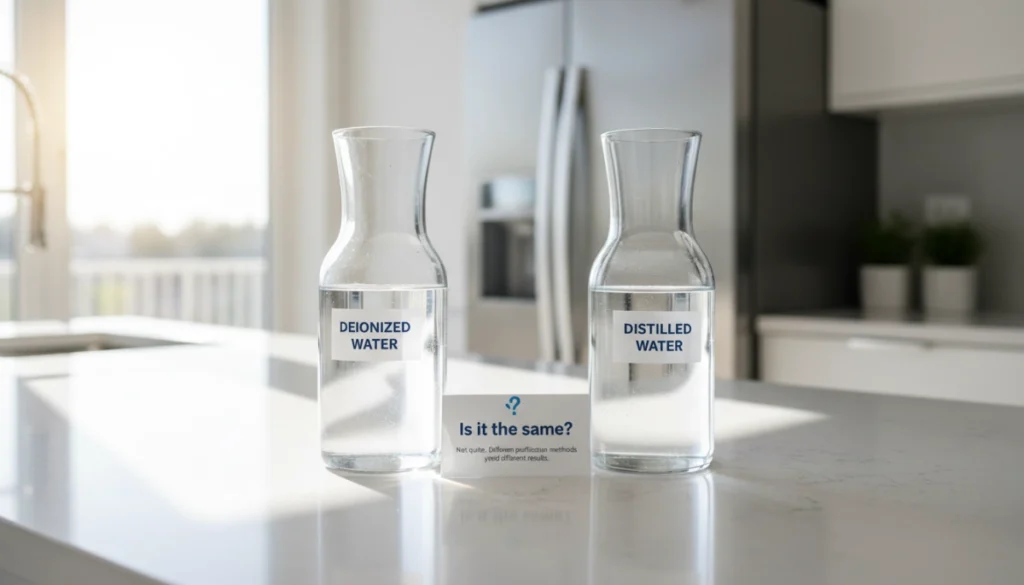
Distilled water is one of the most established forms of purified water, relied upon for its consistency and high level of purity. A common question in the water treatment industry is, is deionized the same as distilled water? While both undergo rigorous purification, distilled water is specifically defined by the thermal process used to remove impurities, ensuring that minerals, salts, and heavy metals are left behind.
The Distillation Process Explained
The distillation process mimics the natural hydrologic cycle to create high-purity water. It involves several critical stages to ensure the final product is free from contaminants:
- Evaporation: Feedwater is heated to its boiling point in a specialized chamber until it transforms into steam.
- Separation: As the water turns to vapor, it leaves behind non-volatile impurities such as minerals, bacteria, viruses, and dissolved solids that cannot evaporate.
- Condensation: The pure steam is channeled into a cooling coil or condenser, where it is chilled back into a liquid state.
- Collection: The resulting liquid is captured in a sterile container, resulting in water that is significantly cleaner than the original source.
Typical Applications and Uses
Because it is virtually free of minerals and biological contaminants, distilled water is the standard choice for applications where buildup or interference must be eliminated:
- Medical Devices: Essential for CPAP machines and autoclaves to prevent mineral scaling and ensure sterile operation.
- Automotive Maintenance: Used in lead-acid batteries and engine cooling systems to avoid internal corrosion and mineral deposits.
- Laboratory Testing: Provides a neutral baseline for chemical solutions and reagent preparation.
- Small Appliances: Ideal for steam irons and humidifiers to extend the lifespan of the heating elements by preventing calcium buildup.
Understanding Deionized Water
Deionized (DI) water is water that has had almost all of its mineral ions removed, such as calcium, iron, copper, and sodium. Many of our clients ask, is deionized water the same as distilled water? While both are types of purified water, the way we produce them is fundamentally different. Deionization focuses specifically on removing charged ions, resulting in water that is chemically pure and has very low electrical conductivity.
How the Deionization Process Works
The deionization process utilizes specialized ion-exchange resins to strip minerals from the water. This is a physical-chemical process rather than a thermal one.
- Cation Exchange: Positively charged ions like calcium, magnesium, and sodium are captured by the resin and replaced with hydrogen (H+) ions.
- Anion Exchange: Negatively charged ions like chloride and sulfate are captured and replaced with hydroxide (OH-) ions.
- Recombination: The hydrogen and hydroxide ions combine to form pure H2O.
Because this process does not require boiling or cooling, it is often faster and more energy-efficient for large-scale industrial operations. However, it is important to note that while it removes minerals effectively, it does not necessarily remove uncharged molecules like viruses or bacteria unless paired with other filtration stages.
Typical Applications and Uses
DI water is essential in environments where even a tiny amount of mineral interference can ruin a process or damage sensitive equipment. We provide solutions for various high-stakes industries:
- Laboratory Research: Used for preparing reagents and rinsing delicate glassware to ensure no mineral residue is left behind.
- Microelectronics: Cleaning semi-conductors and circuit boards where any conductive mineral could cause a short circuit.
- Automotive: Filling lead-acid batteries and cooling systems to prevent scale buildup and corrosion.
- Industrial Manufacturing: Used in finishing processes and high-pressure boilers.
In many of these setups, maintaining the purity of the water stream requires precise chemical control. Integrating an electromagnetic diaphragm metering pump allows for the accurate dosing of chemicals needed to regenerate resins or adjust the pH levels within the water treatment system, ensuring the output remains consistent and ultra-pure.
Deionized vs. Distilled Water: What is the Difference?
Many people ask me, is deionized the same as distilled water? The short answer is no. While both are types of purified water, they are created through entirely different methods and serve different technical needs. Distillation relies on heat and phase changes, while deionization is a chemical process.
Comparing Purification Methods
The primary difference lies in how we remove the \”junk\” from the water.
- Distillation: We boil water into steam and then condense it back into a liquid in a clean container. This leaves behind heavy minerals and many contaminants that don\’t evaporate.
- Deionization (DI): We pass water through ion-exchange resins. These resins act like a chemical magnet, trading H+ and OH- ions for dissolved mineral ions.
While is deionized water the same as distilled in terms of looking clear? Yes. But at a molecular level, the DI process is much more targeted toward removing electrical conductivity.
Differences in Water Purity Levels
When comparing is distilled water the same as deionized in terms of purity, it depends on what you are trying to remove. Distilled water is excellent for removing biological contaminants like bacteria and viruses because the boiling process kills them. However, deionized water is often \”purer\” when it comes to mineral content and electrical resistance.
| Feature | Distilled Water | Deionized Water |
|---|---|---|
| Primary Removal | Minerals, Bacteria, Viruses | Dissolved Ions (Salts/Metals) |
| Method | Thermal (Boiling) | Chemical (Ion Exchange) |
| Conductivity | Low | Extremely Low |
| Organic Matter | Mostly Removed | May remain unless filtered |
Cost and Production Efficiency
In my experience running water treatment operations, cost is a massive factor. Distillation is energy-intensive because you have to heat massive amounts of water. It is also a slow process. Deionization is much faster and generally more cost-effective for high-volume industrial use.
For large-scale facilities, we often integrate pre-treatment steps, such as using a dosing system for wastewater treatment to ensure the incoming water doesn\’t exhaust the DI resins too quickly.
- Distillation: High energy costs, slow production, but no chemicals needed.
- Deionization: Low energy costs, rapid flow rates, but requires resin regeneration or replacement.
So, is distilled water the same as deionized water when it comes to your budget? Definitely not. DI water usually wins on price for industrial applications.
Which Purified Water Should You Choose?
Deciding between these two depends entirely on your specific application. While many people ask is deionized the same as distilled water, the reality is that their production methods make them suitable for different tasks. I always recommend choosing based on the level of ionic purity required for your equipment or process.
Best Scenarios for Distilled Water
Distilled water is the gold standard for most household and medical applications where mineral buildup is the primary concern. Since the distillation process removes heavy metals and large contaminants, it is ideal for:
- CPAP Machines: Prevents bacteria growth and mineral crust in the humidifier.
- Lead-Acid Batteries: Keeps car and boat batteries running longer without plate contamination.
- Steam Irons: Eliminates the risk of \”spitting\” or clogging steam vents with calcium.
- Aquariums: Provides a clean base, though you must add specific minerals back for fish health.
Best Scenarios for Deionized Water
When your project requires \”hungry\” water that is chemically inactive, deionized water is the superior choice. It is the preferred option for high-precision environments because it has almost zero electrical conductivity. We often see it used in:
- Laboratory Experiments: Ensuring no stray ions interfere with chemical reactions.
- Electronics Manufacturing: Cleaning circuit boards without leaving conductive residues.
- Industrial Cooling: Preventing corrosion in high-tech cooling systems.
- Automotive Detailing: Providing a spot-free rinse that doesn\’t leave streaks on paint.
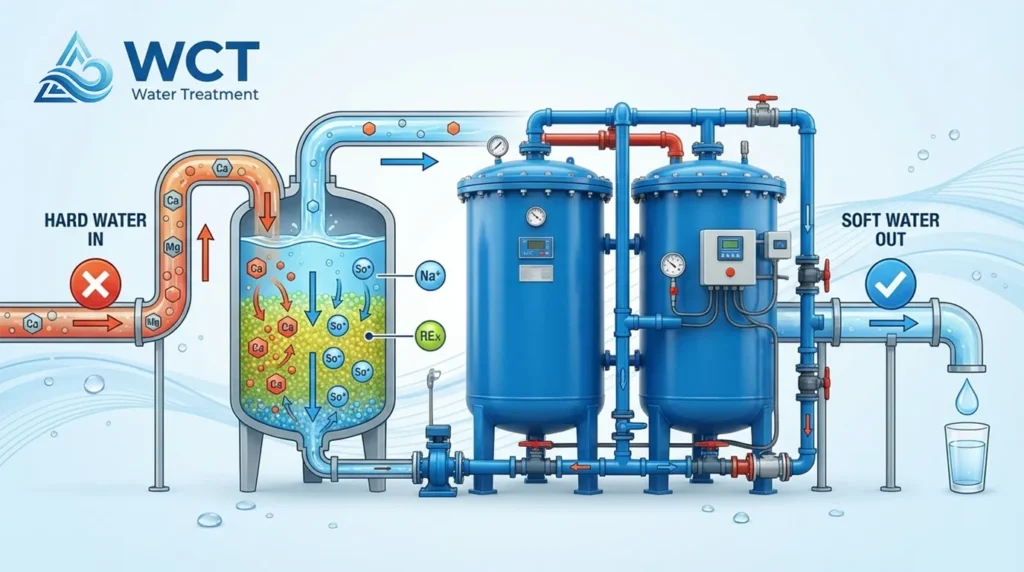
If your source water is particularly mineral-heavy, implementing effective hard water treatment before the purification process can significantly extend the life of your deionization resins.
Substituting Distilled and Deionized Water
In many cases, these two are interchangeable, but there are exceptions. If you are using water for a car radiator or a steam iron, you can use either. However, for high-stakes lab work, you cannot substitute distilled water for deionized water because distillation may still leave behind trace ions that affect conductivity.
| Feature | Use Distilled Water | Use Deionized Water |
|---|---|---|
| Purity Focus | Biological & Mineral | Ionic & Electrical |
| Home Appliances | Best Choice | Overkill, but works |
| Lab/Industrial | Not recommended | Essential |
| Cost | Higher per gallon | Lower for high volume |
While is deionized water the same as distilled remains a common question, the choice comes down to whether you need water that is biologically clean (distilled) or electrically neutral (deionized). For most DIY projects and home maintenance, distilled is the safer, more accessible bet. For specialized industrial tasks, deionized is the industry standard.
Is It Safe to Drink Deionized or Distilled Water?
When people ask if is deionized the same as distilled water for drinking, the short answer is that both are technically \”safe\” in the sense that they lack harmful contaminants. However, neither is ideal for long-term hydration. We produce these high-purity waters primarily for industrial and laboratory use where mineral-free water is a requirement, not for the dinner table. While they won\’t poison you, they lack the essential minerals your body expects from a water source.
Drinking Distilled Water: Pros and Cons
Distilled water is purified through a thermal process that removes almost everything, including bacteria and heavy metals.
- Pros: It is exceptionally clean and free of chlorine, fluoride, and pesticides. It is often used in medical devices like CPAP machines to prevent mineral buildup.
- Cons: The distillation process removes beneficial minerals like calcium and magnesium. This results in a \”flat\” taste that many find unappealing.
- Mineral Deficiency: Relying solely on distilled water can lead to a slight mineral imbalance in the body over time if those minerals aren\’t replaced through diet.
Understanding the water treatment process is key to realizing that while distillation creates high purity, it is often overkill for human consumption compared to standard filtration.
Health Risks of Drinking Deionized Water
We generally recommend against drinking deionized (DI) water. While it might seem like the ultimate \”clean\” water, its chemical properties make it unsuitable for the human body.
- Aggressive Leaching: DI water is ionically \”hungry.\” Because it has been stripped of all ions, it tends to leach minerals from whatever it touches—including your tooth enamel and the tissues in your body—to reach a state of equilibrium.
- Electrolyte Imbalance: Drinking DI water can cause a rapid dilution of electrolytes in the blood, which is vital for heart and muscle function.
- Industrial Risks: DI water is often stored in systems not rated for food-grade consumption. It can also absorb carbon dioxide from the air, making it slightly acidic over time.
Is deionized water the same as distilled water for your health? Not quite. While distilled water is simply \”empty,\” deionized water is chemically active in a way that can be more disruptive to your body\’s mineral balance. Stick to DI water for your lead-acid batteries or laboratory experiments, and use filtered or mineral water for drinking.