What is the Sedimentation Process in Water Treatment?
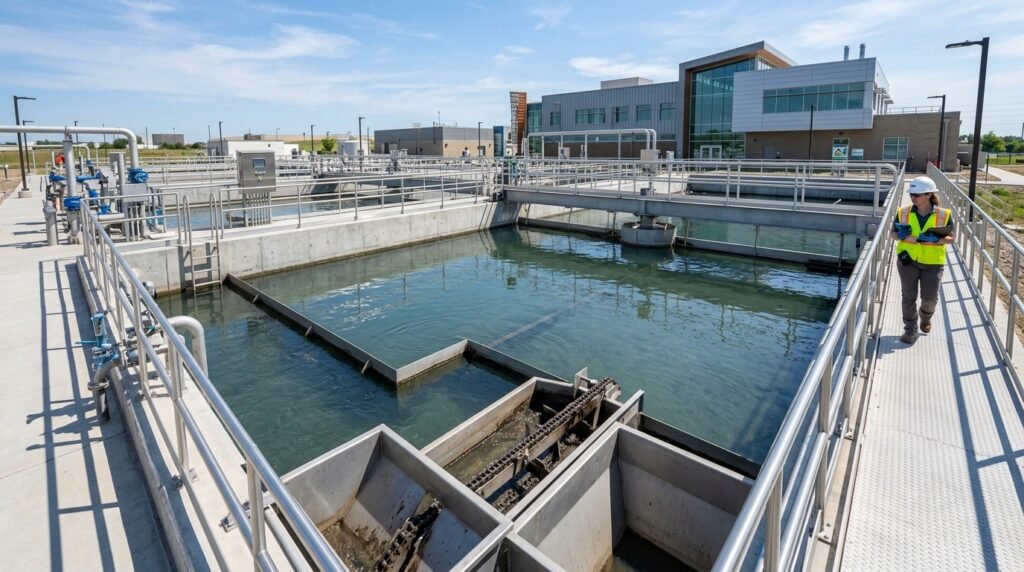
The water treatment sedimentation process is a foundational step in modern water purification and wastewater management. As a highly efficient physical separation method, it leverages the natural force of gravity to separate suspended solids from liquid. By allowing raw or chemically treated water to flow slowly through a carefully engineered basin, heavier particles naturally sink to the bottom. This straightforward yet essential mechanism leaves significantly clearer water at the surface, perfectly prepared for the subsequent stages of purification.
Definition and Core Principles
At its core, the sedimentation process water treatment operates on the fundamental physics of settling. When the velocity of flowing water is drastically reduced inside a clarifier or settling tank, the gravitational pull on solid particles overcomes the fluid\’s natural turbulence and upward buoyancy.
The success of this process relies on a few non-negotiable core principles:
- Flow Velocity Reduction: Designing tanks to create a calm, near-quiescent environment where settling can occur entirely undisturbed.
- Specific Gravity: Relying on the density of the suspended solids—often aggregated and made heavier through upstream coagulation—being greater than the density of the water.
- Continuous Sludge Accumulation: Systematically gathering the settled particulate matter at the bottom of the basin for efficient and regular removal.
The Role of Sedimentation in Clarification
Sedimentation serves as the primary engine of the clarification phase. It acts as the heavy lifter in any commercial or municipal treatment plant, efficiently removing the bulk of particulate matter before the water ever reaches highly sensitive, high-maintenance filtration systems.
The role of sedimentation delivers immediate, measurable impacts on the entire water treatment lifecycle:
- Massive Turbidity Reduction: Instantly drops the cloudiness of the water by eliminating the vast majority of suspended dirt, silt, and organic matter.
- Vital Downstream Protection: Prevents the rapid clogging, fouling, and premature wear of expensive fine filtration media and reverse osmosis membranes.
- Operational Cost Savings: By stripping out heavy organic and inorganic loads early in the cycle, the process drastically reduces the chemical dosing and backwashing energy required for all subsequent treatment stages.
Key Mechanisms and Types of Settling
As a water treatment products supplier and manufacturer, we know that designing an efficient water treatment sedimentation process requires a deep understanding of particle behavior. Depending on the concentration of solids and how particles interact, the settling process falls into four distinct categories.
Discrete Particle Settling (Free Settling)
In this phase, particles settle completely independently.
- Low Concentration: There are very few particles in the water.
- No Interaction: Particles do not stick together or alter each other\’s speed or trajectory.
- Common Use: Removing heavy, distinct materials like sand and grit at the very start of the treatment line.
Flocculent Settling
Particles in this stage collide and bond together as they drop through the water column.
- Clump Formation: Smaller particles merge to form larger, heavier \”flocs.\”
- Increasing Speed: Because the flocs gain mass, they settle faster as they move deeper into the tank.
- Application: We often integrate this mechanism into our commercial water treatment systems, using chemical coagulants to rapidly drop suspended solids out of the water.
Hindered or Zone Settling
When the concentration of particles becomes dense, they begin to interfere with one another\’s downward movement.
- Mass Movement: The particles lock into a fixed position relative to each other, settling down as one massive, connected \”blanket.\”
- Clear Interface: You will easily see a distinct, sharp boundary line between the clear, treated water on top and the dense sludge zone settling below.
Compression Settling
This is the final stage that occurs at the very floor of the sedimentation tank.
- Physical Contact: The particle concentration is so high that particles physically rest on top of one another.
- Water Eviction: The heavy weight of the upper sludge layers physically squeezes trapped water out of the lower layers.
- Sludge Compaction: This compression is critical for minimizing overall waste volume, an essential functional requirement when managing large-scale capacities like a 20-ton underground septic tank used for heavy community applications.
Stages of Sedimentation in Wastewater Treatment
We are a water treatment products supplier and manufacturer, and we know firsthand that the water treatment sedimentation process doesn\’t happen in a single step. To handle municipal or industrial waste effectively, settling is broken down into specific, highly managed phases.
Primary Sedimentation
This is the first major physical step in the sedimentation process water treatment systems use to remove heavy, raw organic matter.
- The Goal: Catch and remove easily settleable solids and floating materials, like oil or grease.
- The Method: Wastewater flows slowly through a primary clarifier. Gravity forces the heavier particles to the bottom, while skimmers clear the surface.
- The Benefit: It immediately protects downstream equipment and drastically reduces the biological load for the next treatment phase.
Secondary Sedimentation
After the biological treatment phase, the water needs to be separated from the microorganisms used to clean it. Secondary clarifiers handle this critical job.
- The Goal: Separate activated sludge and biological floc from the treated water.
- System Integration: This stage works directly with biological reactors. In facilities utilizing comprehensive plants for water treatment, these secondary tanks catch the biomass so it doesn\’t escape into the environment.
- The Result: Produces clear, clean effluent that is ready for final disinfection or safe discharge.
Sludge Thickening
All the solid waste collected in the primary and secondary stages must be managed efficiently before it leaves the facility.
- The Problem: Settled sludge still contains a massive amount of water, making it bulky and expensive to handle.
- The Solution: Thickening tanks slowly stir and concentrate the solids, allowing trapped water to separate and overflow at the top.
- The Next Step: Once thickened, the concentrated waste is prepped for final sludge dewatering and disposal, which significantly cuts down on overall operating costs.
Common Types of Sedimentation Tanks and Clarifiers
To get the best results from your water treatment sedimentation process, you need the right equipment. As a water treatment products supplier and manufacturer, we recommend matching your tank design directly to your specific space and volume needs. Here is a practical breakdown of the standard tanks and water treatment clarifier systems used across the globe.
Horizontal Flow Tanks
- Design: Classic rectangular basins.
- How it works: Water enters one end and slowly flows to the opposite side, giving particles plenty of time to sink to the bottom.
- Best for: Handling massive volumes of water consistently. They are highly reliable and require minimal maintenance.
Radial Flow Tanks
- Design: Circular basins.
- How it works: Water feeds into the center and flows outward toward the edges.
- Best for: Heavy solid removal. As the water spreads outward, its velocity drops, making the settling process highly efficient for municipal applications.
Inclined Tube and Plate Settlers
- Design: Compact tanks fitted with stacked, angled plates or tubes.
- How it works: These inserts drastically increase the internal surface area for particles to land on without needing a larger tank.
- Best for: Facilities with limited physical space. It speeds up the sedimentation process water treatment while taking up a fraction of the footprint.
Ballasted Sedimentation Systems
- Design: High-rate clarifiers using weighted additives.
- How it works: We add a heavy ballast material, like microsand, which binds to suspended particles and forces them to sink instantly.
- Best for: Treating sudden spikes in water turbidity and managing rapidly changing water conditions with minimal delay.
Key Advantages of the Sedimentation Process
As a dedicated water treatment products supplier and manufacturer, we see firsthand how the water treatment sedimentation process upgrades facility operations. It is a fundamental step that brings massive, practical value to any system.
Cost-Effectiveness and Energy Efficiency
The biggest win for the sedimentation process in water treatment is how little energy it requires. It relies almost entirely on natural gravity to pull heavy particles down to the bottom.
- Low Power Demand: Because gravity does the heavy lifting, you drastically cut down your daily electricity costs.
- Simple Maintenance: With fewer moving mechanical parts involved, your team spends less time and money on complex repairs.
- High ROI: Settling equipment is incredibly durable, giving you reliable, hands-off performance year after year.
Improving Downstream Filtration Processes
Getting rid of the bulk of the solids early on makes the rest of your system run much smoother. When you clear the water first, your downstream equipment does not have to work nearly as hard.
- Stops Rapid Clogging: Removing heavy sludge upfront keeps your filters cleaner. When paired with high-quality water treatment filter media, an effective pre-settling stage stretches the lifespan of your filters significantly.
- Boosts Processing Capacity: Upgrading your clarifiers with honeycomb inclined tube packing for sedimentation tanks accelerates particle separation, shielding your downstream systems from unexpected solids overloading.
- Cuts Chemical Costs: Cleaner water reaching the final filtration stages means you need fewer chemical treatments to finish the job.
Crucial Design and Operational Parameters
As a dedicated water treatment products supplier and manufacturer, we know that the efficiency of the water treatment sedimentation process depends entirely on how the system is built and run. You cannot just build a tank and hope it works. You need to control specific physical and chemical factors to ensure clear water output.
Tank Geometry and Flow Rates
The shape of your clarifier and the speed of the water dictate your success. If water flows too fast, it carries solids right out of the tank.
- Optimal Shape: Rectangular and circular tanks are the industry standard. The design must prevent dead zones where water stagnates and solids build up unevenly.
- Surface Overflow Rate (SOR): This measures the volume of water passing through a specific surface area. Keeping the SOR low ensures better, more consistent settling.
- Flow Velocity: Keep inlet and outlet flows perfectly steady. Reviewing a detailed water treatment plant diagram is essential for mapping out exact flow paths to eliminate turbulence.
Detention Time and Temperature Effects
Time and temperature physically alter how water and suspended solids behave inside the clarifier.
| Parameter | Impact on Settling | Operational Adjustment |
|---|---|---|
| Detention Time | The total time water spends in the tank (typically 2 to 4 hours). | Increase time for lighter particles; maintain strict control during flow surges. |
| Cold Water | Increases water density and viscosity, making it harder for particles to drop. | Increase detention time or slightly elevate chemical dosing. |
| Warm Water | Decreases water viscosity, allowing particles to settle rapidly. | Optimize flow rates to handle faster processing efficiently. |
Use of Chemical Coagulants and Flocculants
Many suspended solids are too microscopic to settle naturally. We introduce specific chemistry to force them together, a crucial enhancement for the sedimentation process water treatment.
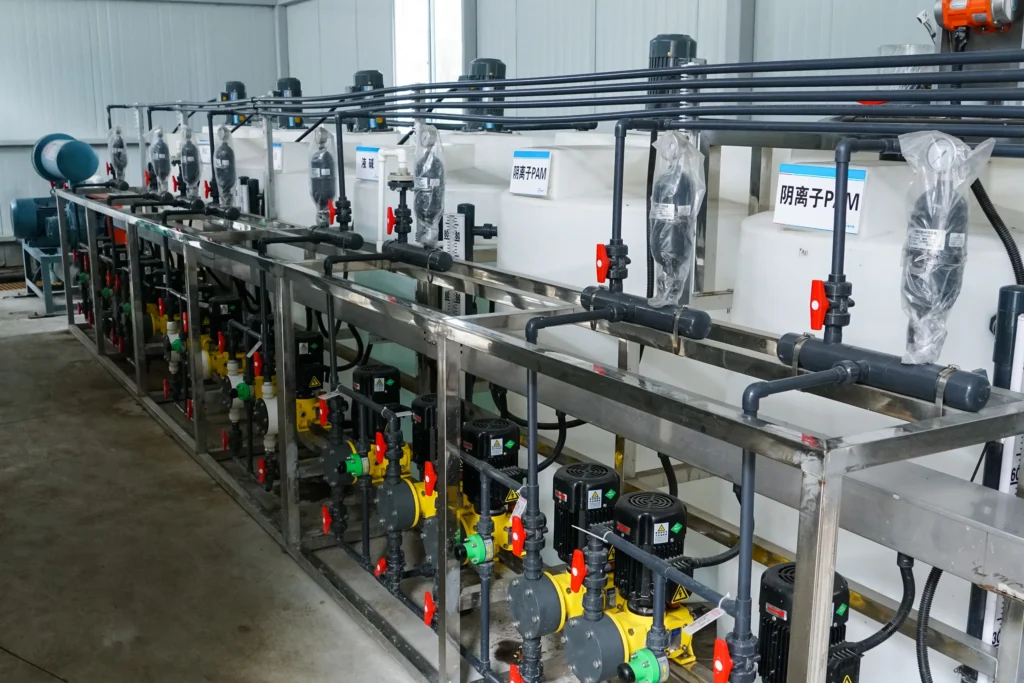
- Coagulants: We add chemicals like aluminum sulfate (alum) or ferric chloride. These neutralize the negative electrical charges on tiny particles so they stop repelling one another.
- Flocculants: We then add polymers that act as a binder. They gather the neutralized particles into large, heavy clumps known as \”floc.\”
- Settling Speed: Because the floc is dense and heavy, it drops to the bottom of the tank rapidly. This slashes required detention times and drastically improves the clarity of the effluent.
Applications in Water and Wastewater Management
As a dedicated water treatment products supplier and manufacturer, we see firsthand how critical the water treatment sedimentation process is across different sectors. It acts as the heavy lifter for purifying water. To see exactly where this step fits into the complete cycle, you can review a typical process flow diagram for a water treatment plant. Below are the primary areas where this technology is put to work.
Potable Water Treatment Facilities
Making raw water safe for human consumption relies heavily on effective settling. Before water ever reaches your tap, sedimentation strips out the bulk of the contaminants.
- Removes Raw Organics: Drops out dirt, clay, and algae early in the process.
- Protects Downstream Filters: By removing heavy particles first, it prevents sand and carbon filters from clogging too quickly.
- Enhances Clarity: Significantly lowers water turbidity, which is a strictly enforced standard for drinking water.
Municipal Wastewater Treatment
Cities produce enormous volumes of sewage every day. The sedimentation process water treatment handles the toughest part of municipal waste management by physically separating solids from liquids.
- Primary Clarification: Rapidly settles out heavy, raw organic sludge right as it enters the plant.
- Secondary Settling: Catches the biological flocs created during the aeration phase, leaving only clear treated water at the top.
- Sludge Collection: Consolidates waste at the bottom of the tanks for easier removal, digestion, or safe disposal.
Industrial Effluent Treatment
Factories and industrial plants generate highly complex wastewater. From chemical runoff to heavy metals, industries use our robust sedimentation setups to avoid heavy fines and protect the environment.
- Precipitation Settling: Drops out heavy metals and toxic compounds after chemical treatment.
- Grit and Oil Separation: Allows heavy grit to sink to the bottom while lighter oils and greases are skimmed off the top.
- Regulatory Compliance: Ensures that discharged effluent meets all strict local and global environmental standards before hitting local waterways.
Future Trends in Sedimentation Technology
As we are a water treatment products supplier and manufacturer, we constantly monitor how the water treatment sedimentation process is evolving. Global demands for clean water and stricter environmental regulations are driving rapid innovation. The focus is shifting toward maximizing efficiency while minimizing physical footprints and energy costs.
Automation and SCADA Integration
Manual oversight is becoming a thing of the past. The modern sedimentation process water treatment relies heavily on smart data and automated controls. Integrating SCADA (Supervisory Control and Data Acquisition) systems offers distinct advantages:
- Real-time Monitoring: Operators can track flow rates, turbidity, and sludge blanket levels instantly from a control room.
- Precision Dosing: Automated sensors adjust chemical feeds on the fly based on incoming water quality.
- Process Synergy: Tying automated controls to high-efficiency prep equipment, like an industrial liquid mixer agitator for chemical liquids, ensures perfect flocculation right before the water enters the settling tank.
- Predictive Maintenance: Smart systems flag potential equipment issues before they cause costly downtime.
Sustainable and Space-Saving Designs
Urban facilities and industrial plants often lack the real estate for massive traditional clarifiers. The future of the water treatment sedimentation process focuses heavily on compact, high-performance geometry.
Key Design Innovations:
- High-Rate Settlers: Utilizing advanced tube and inclined plate (lamella) designs multiplies the effective settling area, allowing for much smaller tank volumes.
- Energy Efficiency: Upgraded internal hydraulics rely more on natural gravity and optimized flow patterns, drastically cutting down the electrical power needed for moving parts.
- Resource Recovery: Newer systems are designed to efficiently thicken sludge on-site, making it easier to recover valuable byproducts or clean water for reuse.
By prioritizing smart technology and compact engineering, modern facilities can treat larger volumes of water efficiently, safely, and sustainably.