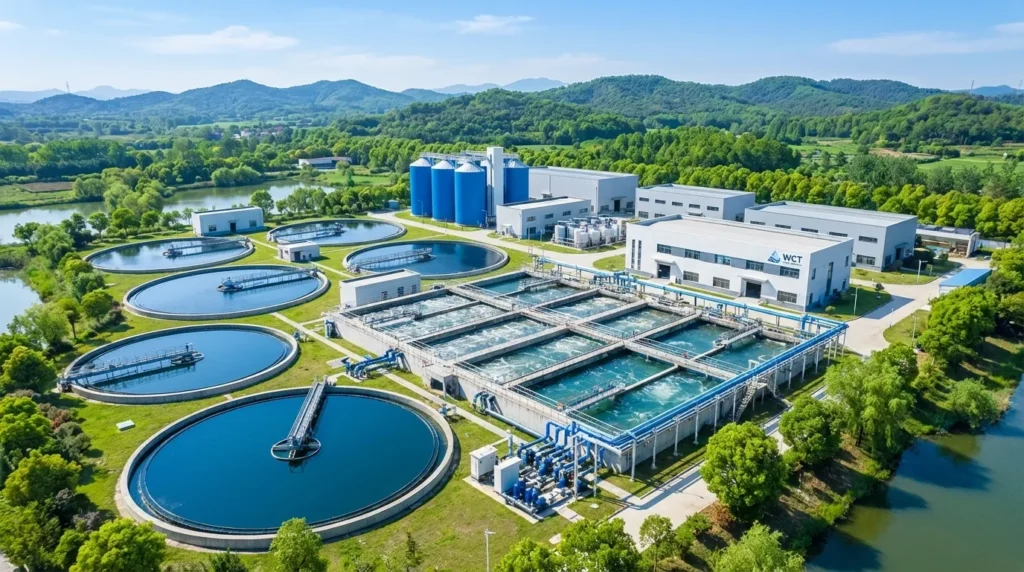
Are you dealing with rising costs in wastewater management and wondering if nature holds a viable solution? I often see facility managers and engineers facing the immense pressure of meeting strict environmental compliance standards while trying to keep operational expenses low. When searching for sustainable, low-energy methods, the conversation naturally turns to utilizing plants for water treatment. Before we dive into complex mechanized systems, let\’s look at how we can leverage biology to do the heavy lifting.
The Botanical Approach: Harnessing Nature\’s Filters
Phytoremediation Water Purification Explained
At its core, phytoremediation is the process of using living plants to clean up contaminated soil, air, and water. When we apply this to liquid waste, aquatic plants for wastewater act as highly efficient natural sponges.
Here is how it works on a biological level:
- Root Zone Filtration: Plant root systems create a thriving, oxygen-rich micro-environment for beneficial bacteria.
- Nutrient Uptake: As effluent flows through, the aquatic flora absorbs dissolved pollutants, trace heavy metals, and excess nutrients like nitrogen and phosphorus.
- Biomass Conversion: The plants convert these hazardous contaminants into harmless plant tissue.
It is essentially a solar-driven pump-and-treat system engineered completely by nature.
Top Biological Plants for Water Purification
Not all greenery is up to the grueling task of commercial-scale cleanup. Based on field performance in constructed wetlands for sewage and runoff management, specific species stand out for their aggressive filtration capabilities.
Here are the most reliable biological filters:
- Duckweed: These tiny, free-floating plants are nutrient-absorbing powerhouses. They double their mass rapidly and are exceptional at pulling high concentrations of ammonia and phosphorus directly from the water column.
- Water Hyacinth: Recognizable by their extensive, fibrous root networks, these floating plants are highly effective at biological oxygen demand (BOD) reduction and trapping suspended solids before they move downstream.
- Reeds (Phragmites): Deep-rooted and incredibly resilient. Reeds pump oxygen deep into the substrate below the water\’s surface, accelerating the bacterial breakdown of organic waste in natural water filtration methods.
- Cattails (Typha): Frequently planted on the margins of constructed wetlands, cattails excel at stabilizing bank soil, absorbing trace heavy metals, and filtering out complex chemical runoff.
The Industrial Limitations of Botanical Solutions
While harnessing natural water filtration methods sounds ideal on paper, relying solely on aquatic plants has strict operational limits. As a business operator, you have to look at the hard realities of scaling these natural systems for high-volume commercial or municipal needs.
- Massive Spatial Footprints: Natural wetlands demand significant acreage. A botanical system requires vastly more land to process the same volume of water that a modern, engineered facility handles in a fraction of the space.
- Strict Climate Dependency: Biological systems slow down or completely stall out in cold weather. If your operation is located in a region with harsh winter freezes, aquatic flora simply cannot provide year-round, 24/7 reliability.
- High-Toxicity Constraints: Plants have a biological breaking point. While they easily handle moderate organic sewage loads, high-concentration industrial effluents, heavy chemical spills, or extreme pH levels will kill a botanical filter instantly.
While the botanical approach is a brilliant baseline, scaling up to handle severe municipal and industrial demands requires moving beyond the pond and integrating these biological principles into robust, engineered infrastructure.
The Industrial Approach: Engineered Plants for Water Treatment
While natural wetlands offer great ecological benefits, scaling up to meet global demands requires robust infrastructure. We transition from nature\’s slow filters to engineered wastewater treatment plants (WWTP) that can handle massive capacities, urban sewage, and harsh industrial runoffs. When evaluating reliable plants for water treatment, these engineered facilities provide the speed, reliability, and precision control that modern cities and factories demand.
Stages of an Industrial Plant
A solid effluent treatment plant design breaks the purification process down into three distinct, aggressive stages:
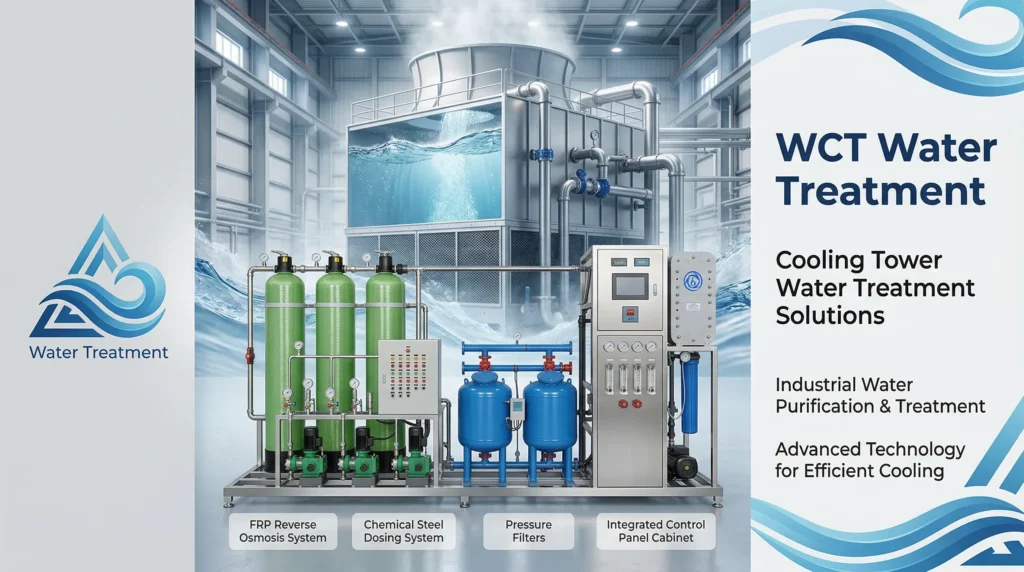
- Primary Stage (Mechanical): This is the heavy lifting phase. We use mechanical screens, skimmers, and durable FRP tanks for water treatment to physically separate and settle out large debris, suspended solids, grit, and oils from the raw influent.
- Secondary Stage (Biological): Here, we replicate natural processes but at warp speed. Engineered biological systems introduce controlled microorganisms to consume dissolved organic waste, driving crucial biological oxygen demand (BOD) reduction.
- Tertiary Stage (Chemical/Physical): The final polish. To achieve high-grade industrial water recovery, we deploy advanced chemical dosing and high-performance precision filters for water treatment to strip out microscopic impurities, heavy metals, and remaining pathogens before safe discharge or reuse.
Core Technologies Powering Modern Treatment Plants
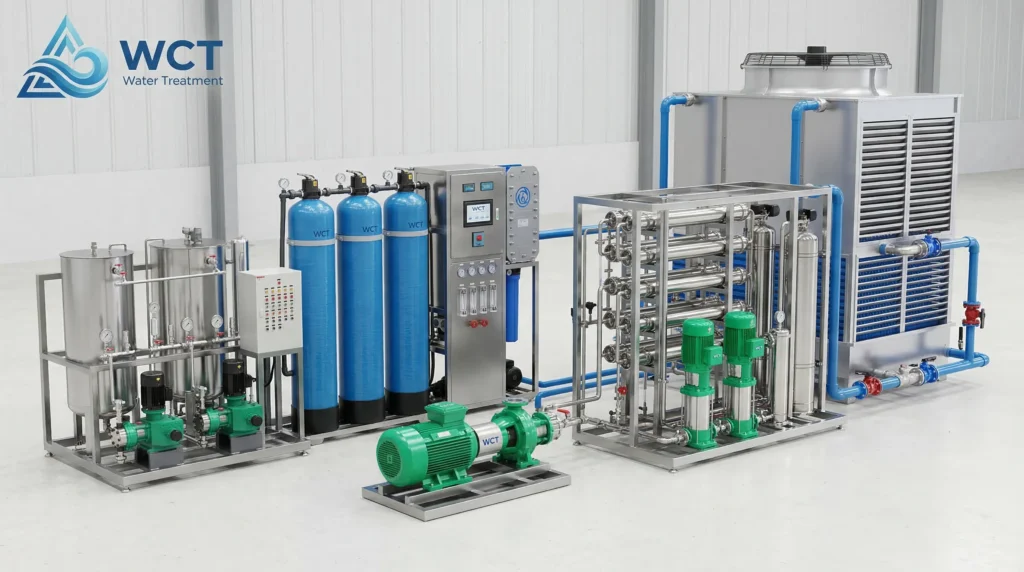
To achieve consistent, industrial-grade results, we move beyond simple biological ponds to sophisticated, engineered infrastructure. At Wuxi Chengxi, our approach to designing plants for water treatment relies on four primary technologies that handle everything from municipal sewage to complex industrial effluents.
Membrane Bioreactors (MBR)
MBR technology is a game-changer for facilities with limited space. By combining biological degradation with membrane filtration, we eliminate the need for large secondary sedimentation tanks. Our WCT MBR Membrane Bioreactor Integrated Equipment for Waste Water Treatment provides a compact footprint while delivering high-quality effluent that often meets reuse standards directly. This integration ensures that the biological treatment and solid-liquid separation happen seamlessly in one unit.
Sequencing Batch Reactors (SBR)
For operations with fluctuating flow rates, SBR systems offer necessary flexibility. Unlike continuous flow systems, SBR treats wastewater in batches within a single reactor. This method simplifies the plant layout by performing equalization, aeration, and sedimentation in the same tank, controlled by precise automation and high-efficiency decanters.
Dissolved Air Flotation (DAF)
When the primary challenge involves suspended solids, oils, or grease, DAF machines are the standard defense. These units introduce microscopic air bubbles into the water, which attach to contaminants and float them to the surface for rapid removal. We utilize various DAF configurations, including shallow and advection types, to suit specific pollutant loads.
Advanced Reverse Osmosis (RO)
For desalination and high-grade industrial water recovery, biological treatment isn\’t enough. We implement Ultra-Low Pressure (ULP) Reverse Osmosis membranes to remove dissolved salts and minute impurities. This process requires significant force to overcome osmotic pressure, which is why we rely on the robust WCT CDLF+CDH High Pressure Pump for Waste Water Treatment to drive the system efficiently and ensure consistent permeate quality.
Designing the Right Plants for Water Treatment Across Industries
There is no one-size-fits-all approach. Designing effective plants for water treatment requires matching the technology directly to the specific waste profile. Here is how we tailor wastewater treatment plants (WWTP) for different sectors:
- Urban Municipal Systems: Managing city sewage demands reliable, high-volume processing. We utilize scalable municipal wastewater treatment equipment to handle daily domestic waste safely. For decentralized areas or rapidly expanding neighborhoods, deploying integrated sewage treatment equipment provides a fast, highly efficient solution without the massive infrastructure footprint of traditional concrete plants.
- Heavy Industrial Facilities: The aerospace, oil & gas, and automotive sectors produce wastewater loaded with oils, heavy metals, and harsh chemical solvents. Standard setups will fail here. Our effluent treatment plant design focuses on aggressive separation and compliance. We build robust industrial water recovery facilities that frequently rely on high-capacity reverse osmosis systems to strip out industrial toxins and reclaim usable water for the factory floor.
- Agricultural Runoff Management: Farming operations face a unique challenge: massive nutrient loads from fertilizers and livestock waste. This runoff demands specialized setups focused on intense biological oxygen demand (BOD) reduction. We implement targeted systems that break down these heavy organic loads quickly, neutralizing the nitrogen and phosphorus before they can damage local ecosystems.
FAQs: Plants for Water Treatment
When evaluating the best solutions for effluent management, our clients often ask about the balance between botanical and industrial systems. Here are the direct answers to the most common questions we hear.
Can natural aquatic plants completely replace industrial water treatment facilities?
The short answer is no. While phytoremediation water purification is an excellent, eco-friendly method for polishing low-toxicity agricultural runoff, natural plants simply cannot handle the massive volume, speed, or harsh chemicals required by modern society. High-density urban areas and heavy industries rely on robust, mechanized wastewater treatment plants (WWTP) to safely and reliably process effluent around the clock.
[Image of industrial wastewater treatment facility]
What are the best natural plants for biological oxygen demand (BOD) reduction?
If you are designing constructed wetlands for sewage management, certain aquatic plants for wastewater stand out for their efficiency:
- Water Hyacinth: Highly aggressive at absorbing organic pollutants from the water column.
- Duckweed: Excellent for surface coverage, blocking algae growth, and nutrient uptake.
- Reeds & Cattails: Their deep root systems create a perfect habitat for beneficial bacteria. These bacteria actively digest organic waste, leading to rapid biological oxygen demand (BOD) reduction.
How does an engineered biological treatment plant work compared to natural wetlands?
A natural wetland relies on gravity, time, and passive root systems to slowly filter water. Engineered biological plants replicate this exact natural process but hit the fast-forward button. We use forced aeration and mechanical mixing to hyper-accelerate bacterial growth and waste breakdown. Unlike the passive, continuous flow of a marsh, our engineered systems actively control the biological cycle, utilizing precise equipment like an SBR water decanter to rapidly separate the clear, treated effluent from the settled biological sludge.
What is the spatial footprint of a packaged sewage treatment plant?
One of the biggest advantages of packaged sewage treatment plants is their incredibly compact size.
- Space-Saving: They typically require up to 70% less land than a traditional natural constructed wetland.
- Modular Design: Many systems are designed to fit entirely within the footprint of standard 20-foot or 40-foot shipping containers.
- Decentralized Power: This minimal footprint makes them the perfect plug-and-play solution for remote mining camps, small housing developments, or decentralized industrial sites where land is expensive or unavailable.