Understanding the Water Treatment Process
What is Water Treatment?
The water treatment process is a systematic and highly engineered method of improving water quality to make it appropriate for a specific end-use. Whether the goal is safe human consumption, efficient industrial applications, or safe environmental discharge, a reliable water treatment system process is designed to remove contaminants, suspended solids, and undesirable chemical components. As a leading water treatment products supplier and manufacturer, we develop and provide the advanced technologies required to ensure every drop meets the highest global safety and performance standards.
The Importance of Water Purification
Effective process water treatment is far more than a basic regulatory requirement; it is a fundamental necessity for global public health, environmental sustainability, and industrial success. Implementing a rigorous purification system protects communities from hazards while optimizing commercial operations.
Key benefits of proper water purification include:
- Health and Safety: Completely eliminates harmful pathogens, heavy metals, and toxic chemicals from drinking supplies.
- Equipment Protection: Prevents mineral scale buildup and severe corrosion in industrial piping, significantly extending machinery lifespan.
- Environmental Compliance: Ensures that discharged water is safely neutralized, protecting natural aquatic ecosystems from irreversible pollution.
- Operational Efficiency: Guarantees that manufacturing facilities have access to the ultra-pure water required for sensitive production lines.
Main Types of Water Treatment Facilities
Different environments demand specific setups to ensure the water treatment process is effective and efficient. As a dedicated water treatment products supplier and manufacturer, we categorize these facilities based on their end-use and the level of purification required.
Municipal Drinking Water Treatment
These large-scale facilities are designed to provide safe, potable water to entire communities. The primary goal is to remove harmful bacteria, viruses, and suspended solids. We focus on high-volume reliability in these systems, ensuring that every drop meets strict health and safety regulations before it reaches your tap.
Industrial Process Water Treatment
In the manufacturing world, water is a critical raw material. Process water treatment in these facilities is highly specialized to prevent equipment damage and ensure product quality.
- Boiler Feed Water: Removing minerals to prevent scaling.
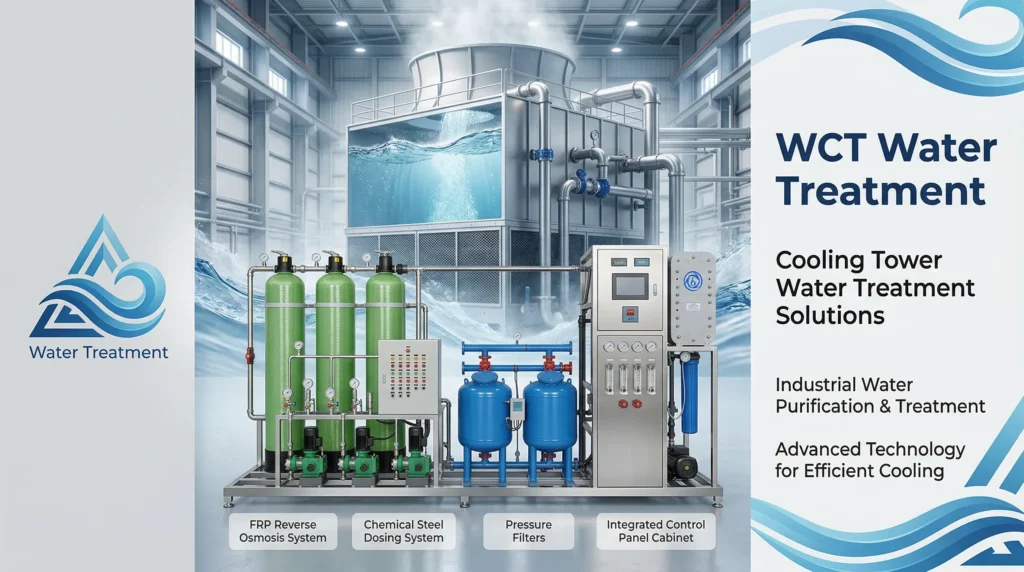
- Cooling Towers: Controlling biological growth and corrosion.
- Manufacturing: Using a precision filter for water treatment to remove micro-particles that could compromise sensitive production lines.
Wastewater Treatment Plants
These plants handle the \”used\” water from homes and factories, cleaning it before it is released back into the environment or reused. This water treatment system process involves complex mechanical and biological stages. To ensure chemical additives are distributed evenly throughout the effluent, many plants integrate an industrial liquid mixer agitator to maintain consistent water quality during the neutralization and flocculation phases.
| Facility Type | Primary Goal | Key Technology Used |
|---|---|---|
| Municipal | Public Health | Large-scale Sand Filtration & Chlorination |
| Industrial | Equipment Protection | Reverse Osmosis & Precision Filtration |
| Wastewater | Environmental Safety | Biological Digestion & Chemical Dosing |
The Core Stages of the Water Treatment Process
As a dedicated water treatment products supplier and manufacturer, we know that turning raw water into safe, usable water requires a highly reliable water treatment system process. While specific setups vary, the core journey of purifying water generally follows four essential steps.
Step 1: Coagulation and Flocculation
This is where the process water treatment begins. We add specific chemicals with a positive charge to the raw water. These chemicals neutralize the negative charge of dirt, clay, and other dissolved particles. Once neutralized, the particles bind together with the chemicals to form larger, heavier clumps known as floc.
Step 2: Sedimentation and Clarification
Once the floc is formed, the water flows into a settling basin. Because the floc is heavy, it naturally sinks to the bottom of the tank. This settling phase is called sedimentation. The heavy particles form a layer of sludge at the bottom, which is later removed, leaving clear water at the top ready for the next phase.
Step 3: Filtration Systems
The clear water then passes through various filters to remove the remaining dissolved particles, such as dust, parasites, and trace chemicals. Depending on the facility\’s requirements, this stage often utilizes industrial sand filters, gravel, or activated carbon. These porous materials trap the microscopic impurities, ensuring the water is physically clean and clear.
Step 4: Disinfection Methods
The final step in the standard water treatment process is disinfection. Even after thorough filtration, microscopic pathogens and viruses might still be present. To eliminate these threats, the water is treated with chemical disinfectants like chlorine, UV light, or targeted biocide treatment. This crucial step kills any remaining bacteria, guaranteeing the water is completely safe before it flows out to communities or industrial plants.
Advanced Water Purification Technologies
Beyond standard filtration, advanced technologies are essential for achieving high-purity standards required in modern facilities. We integrate specialized systems to handle complex contaminants that basic methods often miss.
Water Softening and Pre-treatment
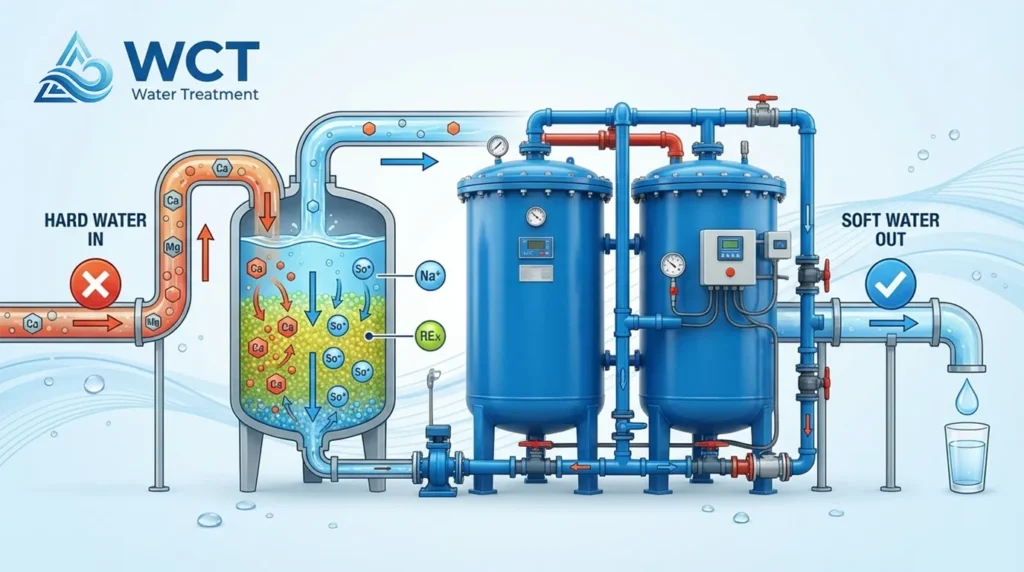
Pre-treatment is the foundation of a reliable water treatment system process. We focus heavily on removing minerals like calcium and magnesium that cause scale buildup. Implementing effective hard water treatment is the first line of defense, protecting downstream equipment from damage and ensuring the entire water treatment process remains efficient and cost-effective.
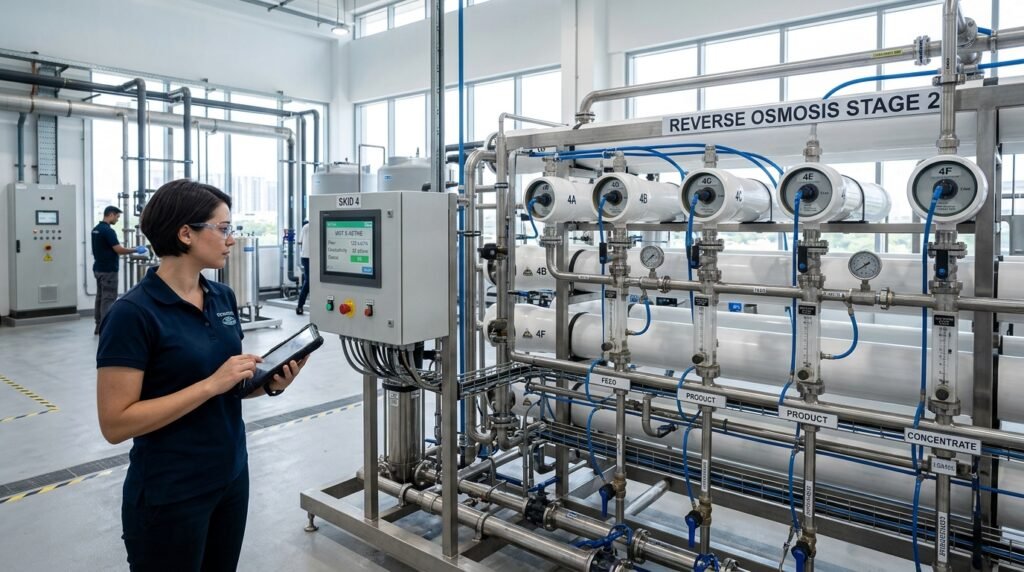
Reverse Osmosis (RO) and Deionization
For industries requiring ultra-pure water, we utilize membrane-based and ion-exchange technologies:
- Reverse Osmosis (RO): Uses high pressure to force water through semi-permeable membranes, stripping away up to 99% of dissolved salts and organic matter.
- Deionization (DI): Employs ion-exchange resins to remove remaining charged ions, producing water with extremely low conductivity.
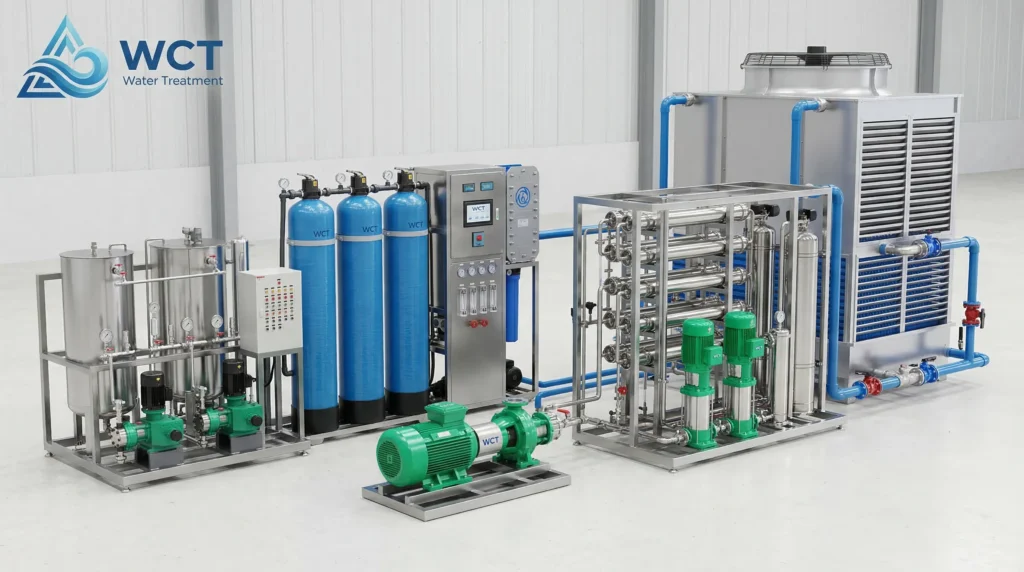
As a leading water treatment products supplier and manufacturer, we customize these setups for rigorous industrial water treatment applications, ensuring the output meets the strictest quality benchmarks.
Corrosion Control and Polishing
The final stage of process water treatment involves fine-tuning the water chemistry. We use \”polishing\” techniques to remove trace impurities and adjust pH levels. This prevents pipe corrosion and protects high-value machinery.
- pH Adjustment: Neutralizes acidity to stop metal leaching.
- Degasification: Removes dissolved gases like oxygen or CO2 that cause oxidation.
- Final Polishing: Uses ultra-fine filters to ensure the water is pristine before it reaches the point of use.
Stages of Wastewater Treatment
Managing wastewater requires a specialized water treatment process to remove contaminants before returning water to the environment. As a leading water treatment products supplier and manufacturer, we focus on efficiency and reliability at every stage of the cycle.
Preliminary and Primary Treatment
The first line of defense involves the physical removal of large solids and grit that could damage downstream equipment.
- Screening: Catching rags, plastics, and large debris.
- Grit Removal: Settling out sand and heavy stones.
- Primary Sedimentation: Allowing heavy organic solids to sink to the bottom of the tank, creating primary sludge for removal.
Secondary Biological Treatment
This stage relies on microorganisms to break down dissolved organic matter. It is a critical part of the process water treatment cycle for both municipal and industrial waste streams.
- Aeration: Pumping oxygen into tanks to stimulate bacterial growth.
- Activated Sludge: Utilizing a concentrated mass of microorganisms to \”eat\” organic pollutants.
- Secondary Clarification: Separating the biological solids from the treated water.
Tertiary Treatment and Sludge Management
The final polishing stage ensures the water meets strict environmental discharge standards. We often implement UV water treatment for bacteria to provide a chemical-free disinfection solution that kills pathogens effectively.
- Advanced Filtration: Removing any remaining fine suspended solids.
- Nutrient Removal: Stripping nitrogen and phosphorus to prevent algae blooms in local waterways.
- Sludge Management: This final part of the water treatment system process involves thickening, dewatering, and treating collected solids for safe disposal or agricultural reuse.
Common Application Scenarios
We are a water treatment products supplier and manufacturer, and over the years, we have seen our technologies adapted to fit almost any environment. The core water treatment process remains consistent, but the scale and specific equipment change drastically depending on where the water is needed. From massive municipal grids to a single kitchen sink, having a reliable process water treatment setup is non-negotiable.
Large-Scale Community Water Systems
Supplying clean water to thousands of residents requires a heavy-duty water treatment system process. These large-scale setups are designed for high volume, continuous flow, and strict safety compliance to protect public health.
Key features of community systems include:
- High-Capacity Filtration: Engineered to handle millions of gallons daily without experiencing significant pressure drops.
- Automated Chemical Dosing: Precise, continuous addition of coagulants and disinfectants to keep the municipal grid safe.
- Centralized Monitoring: Facility operators rely on a clear water treatment plant diagram to track every stage of the infrastructure, ensuring rapid response to any flow or quality issues.
- Heavy-Duty Infrastructure: Built from industrial-grade materials designed to last decades under constant, rigorous demand.
Household Water Treatment Solutions
On the residential side, the water treatment process is scaled down to fit inside garages, basements, or right under the kitchen counter. Homeowners want clean, soft, and safe water without needing an engineering degree to run the equipment.
Popular household setups focus on user-friendly, low-maintenance operation:
- Point-of-Entry (POE) Systems: Whole-house carbon filters and water softeners that treat the water supply before it ever hits the indoor plumbing.
- Smart Controls: Integrating an automatic multiport valve for water pure systems allows the residential unit to backwash, rinse, and regenerate automatically, keeping manual maintenance to a bare minimum.
- Point-of-Use (POU) Reverse Osmosis: Compact, highly efficient units dedicated solely to providing high-purity drinking water at a specific tap or refrigerator line.