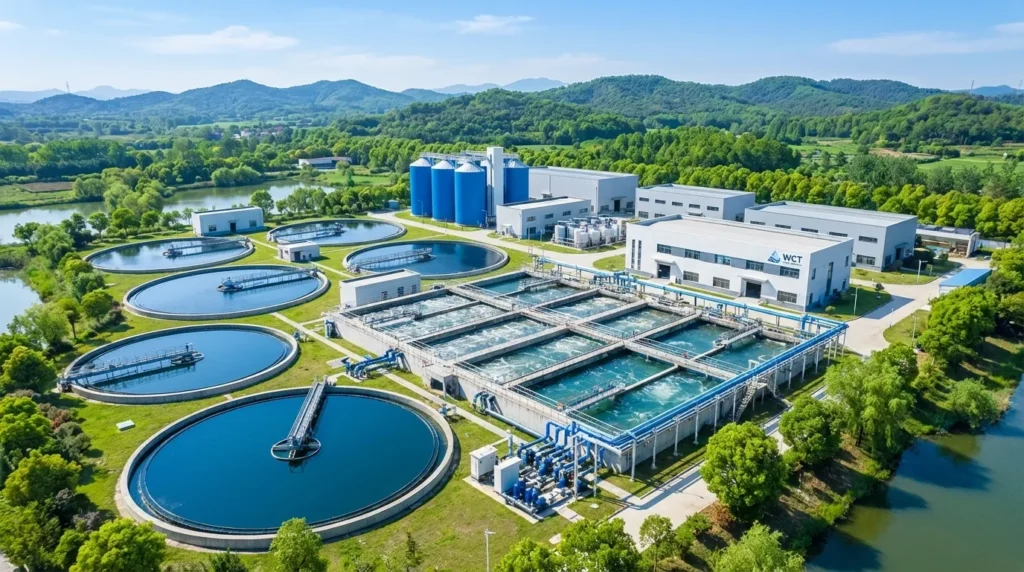
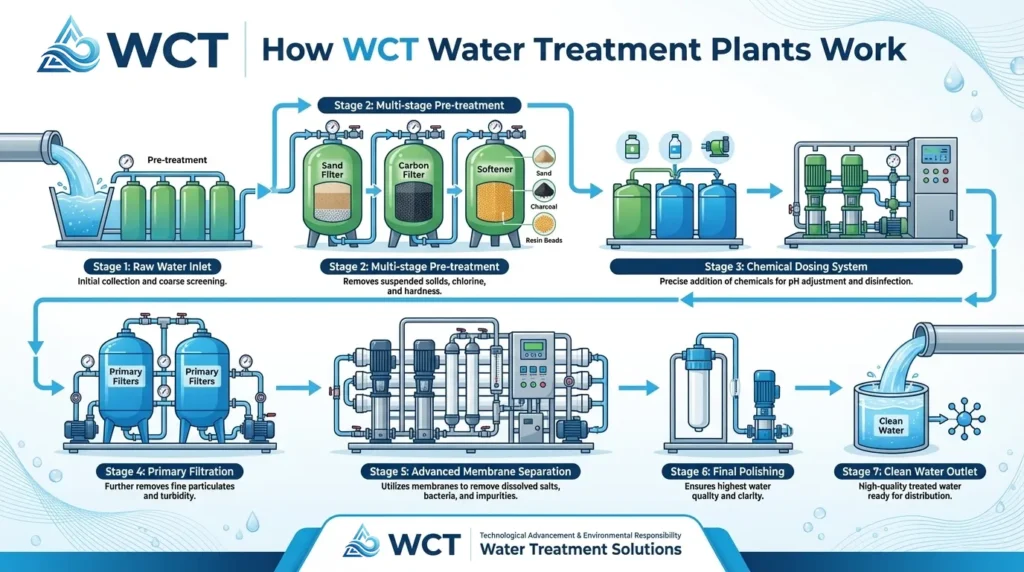
When clients ask me, \”how do water treatment plant work,\” their main concern is usually understanding how we can safely and reliably take hazardous, debris-filled sewage and turn it back into clean water. The core goal of any modern municipal sewage treatment facility or industrial plant is to meticulously extract toxins, suspended solids, and biological hazards to protect both public health and the environment.
To achieve this, the wastewater treatment process steps are broken down into a rigorous, multi-stage mechanical and biological operation. Here is how the water treatment plant mechanics actually function on the ground.
Decoding the Wastewater Treatment Process
We rely on a systematic approach that strips away impurities phase by phase.
Preliminary Treatment: Screening and Grit Removal
Before addressing microscopic hazards, we must remove the obvious physical waste that could clog or destroy our equipment.
- Bar Screening: Incoming raw wastewater flows through heavy-duty metal grates that catch large debris like plastics, rags, and branches.
- Grit Chambers: The water velocity is intentionally slowed down. This allows heavy inorganic materials—like sand, gravel, and glass—to settle to the bottom where they are safely removed.
Primary Water Treatment & Separation
With the large debris gone, we deploy advanced solid-liquid separation technologies relying on gravity and automated skimming.
- Sedimentation Tanks: Water is held in massive primary clarifiers. Heavy organic solids sink to the bottom to form raw sludge, while lighter materials like oils, grease, and fats float to the surface to be skimmed away.
- Dissolved Air Flotation (DAF): For challenging industrial effluent treatment, we introduce DAF systems. These machines inject microscopic air bubbles into the water, attaching to suspended particles and forcing them to the surface for efficient mechanical removal.
Secondary Biological Treatment
This stage utilizes biology to consume the dissolved organic matter that escaped the primary and preliminary stages.
- Aeration Basins: We aggressively pump oxygen into the wastewater to create an ideal environment for helpful bacteria.
- Activated Sludge Biological Treatment: These living microorganisms actively feed on the remaining organic waste and dissolved toxins. As they consume the waste, they clump together into heavy \”flocs\” that easily settle out in a secondary clarifier.
Tertiary Treatment & Advanced Polishing
When strict environmental regulations or specific industrial reuse standards demand the absolute highest water purity, we implement advanced water filtration components.
- Reverse Osmosis (RO) Filtration: We use high-pressure pumps to force the treated water through semi-permeable membranes, effectively stripping out remaining dissolved salts, microscopic chemical remnants, and heavy metals.
- Zero Liquid Discharge (ZLD) Solutions: By integrating RO and advanced thermal evaporators, our ultimate objective is often ZLD. This ensures that every single drop of water is purified and recycled back into the facility, eliminating wastewater discharge entirely.
How Do Water Treatment Plant Work: The Drinking Water Purification System
If you have ever wondered exactly how do water treatment plant work to make raw surface or groundwater safe to drink, it comes down to a highly structured drinking water purification system. We take untreated water directly from nature and push it through several critical stages to ensure the final product coming out of your tap is entirely safe, clear, and healthy.
[Image of drinking water purification plant process]
Here is the exact step-by-step breakdown of how raw water is processed:
- Step 1: The Coagulation and Flocculation Process
Raw water contains microscopic dirt, natural organic matter, and dissolved particles that will not settle on their own. To fix this, we add specific, safe chemicals into the water. These chemicals act like binding agents, pulling the tiny particles together into larger, heavier clumps known as \”floc.\” - Step 2: Sedimentation
Once those heavy flocs are formed, the water flows into massive, quiet settling basins. Because the dirt clumps are now heavier than the water itself, gravity takes over. The floc slowly drops to the bottom of the tank, leaving significantly clearer water resting at the top. - Step 3: Filtration
The clear water at the top then moves into the filtration stage to catch what the settling process missed. We pass this water through deep composition filters made of layered sand, gravel, and charcoal. To maintain peak efficiency and capture the finest remaining impurities, facilities rely on advanced water filtration components. For example, integrating high-quality WCT filter nozzles at the base of the filtration beds ensures an even water flow and stops any rogue particles from slipping through the system. - Step 4: Disinfection
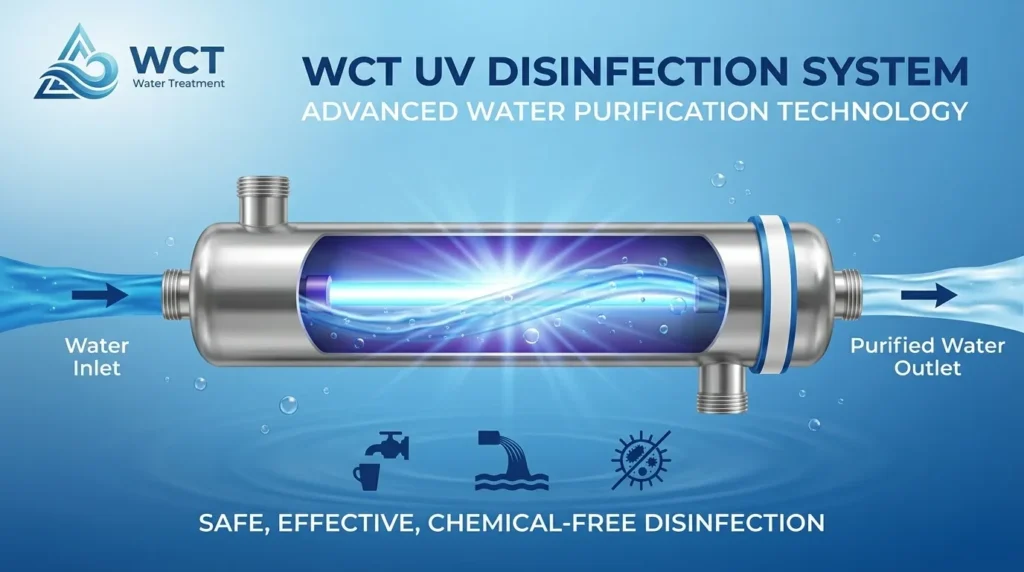
Even after filtration, the water might still harbor invisible bacteria or viruses. In this final polishing step, we apply a safe, controlled amount of chlorine to eliminate biological hazards. Many modern setups also incorporate UV light or ozone application to break down any remaining pathogens. This guarantees the water remains completely sterile and safe as it travels through miles of piping to reach your home.
Handling the Byproducts: Sludge Treatment
When explaining how do water treatment plant work, it is easy to focus strictly on the clean water output. But what exactly happens to the heavy waste and debris removed from the water? Managing this leftover material, known as sludge, is a demanding but essential part of overall water treatment plant mechanics.
Processing this waste involves safely managing thick, volatile, and often corrosive materials, which is particularly challenging in industrial effluent treatment. To do this effectively, we rely on a precise three-step volume reduction process:
- Thickening: The raw sludge is directed into concentration tanks. Gravity forces the heavier solids to settle at the bottom, allowing us to quickly draw off the separated water from the top.
- Digestion: The thickened sludge is then moved into heated, enclosed tanks. In an oxygen-free environment, bacteria break down the complex organic matter, which dramatically reduces the total volume of the sludge and neutralizes harmful biological pathogens.
- Dewatering: ly, we forcefully extract the remaining moisture. Integrating heavy-duty sludge dewatering equipment ensures maximum efficiency in our solid-liquid separation technologies. This machinery presses the wet sludge into a dry, compact \”cake.\”
By aggressively removing the water weight, we transform a hazardous liquid waste into a stable, dry byproduct. From there, the processed cake is safely transported away to be repurposed as agricultural fertilizer or securely deposited in a landfill.
The Future of Water Treatment Technology
If you want to fully grasp how do water treatment plant work today, you have to look toward automation. We are shifting from manual oversight to highly intelligent, self-regulating systems. The focus is no longer just on meeting basic safety standards; it is about absolute efficiency and aggressive environmental protection.
Smart Water Solutions and Automation
Modern facilities operate like tech hubs. We are seeing a massive upgrade in how we monitor and process water on a global scale. Here is what the latest technology looks like:
- Real-Time IoT Sensors: Devices monitor water quality and flow rates 24/7, catching anomalies instantly without human intervention.
- Automated Dosing: AI-driven systems adjust chemical levels on the fly, eliminating human error and reducing chemical waste.
- Advanced Water Filtration Components: Next-generation membranes and smart filters last longer and catch microscopic contaminants with unprecedented accuracy.
Achieving Zero Liquid Discharge (ZLD) Solutions
The ultimate environmental goal for any modern facility is recycling every single drop. Zero liquid discharge (ZLD) solutions are rapidly becoming the gold standard for industrial operations. Instead of discharging treated wastewater into rivers or municipal sewers, plants purify and reuse 100% of it.
- Maximum Water Recovery: We extract clean water while condensing the leftover waste into completely dry, manageable solids.
- Industrial Efficiency: For manufacturing facilities managing heavy thermal loads, applying these recycling principles alongside a modern cooling tower water treatment system drastically cuts down on operational costs and fresh water intake.
- Zero Environmental Impact: By completely eliminating liquid waste leaving the facility, we prevent local pollution and conserve the surrounding groundwater supply.
We are building systems that do more than just clean water—they actively protect the global supply for the future.
FAQs About Water Treatment Plants
What is the exact difference between wastewater and drinking water treatment?
While both facilities aim to clean water, their starting points and end goals are completely different. A drinking water purification system takes raw water from natural sources like rivers or aquifers and treats it to meet strict potability standards for human consumption. The focus here is on removing pathogens and dissolved solids to ensure safety and taste.
In contrast, a wastewater facility handles sewage or industrial effluent treatment. The goal isn\’t necessarily to make the water drinkable immediately, but to clean it enough so it doesn\’t harm the environment when released. Wastewater plants rely heavily on solid-liquid separation technologies and biological processes to break down heavy organic loads that drinking water plants rarely encounter.
Are the chemicals used in the water treatment process safe?
Yes, when managed correctly. The chemical dosing systems used in treatment plants are highly precise. We use coagulants like aluminum sulfate to bind dirt and disinfectants like chlorine to kill bacteria. These are added in controlled amounts that are effective against contaminants but safe for humans by the time the water reaches your tap.
In advanced setups, we are seeing a shift toward physical barriers rather than just chemical ones. For instance, plants for water treatment increasingly utilize membrane technologies and UV light to reduce reliance on chemical additives, ensuring the final output is as pure and chemical-free as possible.
Where does the wastewater go after it has been fully treated?
Once the wastewater treatment process steps are complete, the treated water, now called \”effluent,\” is usually discharged back into the environment—into rivers, lakes, or oceans. Because it has gone through rigorous primary and secondary water treatment, it is clean enough to support aquatic life without causing pollution.
However, in water-scarce regions, we don\’t just dump it. Advanced facilities use MBR membrane bioreactor integrated equipment to refine the water further for reuse in irrigation, industrial cooling, or even groundwater replenishment. This approach turns waste into a valuable resource, closing the loop on the water cycle.