Are you struggling with foul, rotten-egg odors and stubborn rust stains in your water supply?
You might already know that a 7 hydrogen peroxide water treatment is the ultimate, eco-friendly oxidizer for eradicating these contaminants.
But how do you implement it effectively without damaging your plumbing or wasting chemicals?
As an industry expert, I know that simply buying the chemical isn\’t enough. You need the exact right dosing strategy and equipment to make it work flawlessly.
In this guide, you\’re going to learn exactly how this process instantly neutralizes iron, manganese, and odors, step by step.
I\’ll show you why a 7% solution is the absolute sweet spot for safety and potency, and how to build a reliable hydrogen sulfide removal system.
Plus, I’ll break down the exact chemical feed pump setup you need to guarantee precise, automated dosing every single time.
If you\’re ready to fix your water quality for good, this guide is for you.
Let\’s dive right in.
Are you dealing with well water that smells like rotten eggs? Or maybe you are tired of stubborn rust stains ruining your sinks? I see these issues all the time. The good news is that a 7 hydrogen peroxide water treatment system is one of the most reliable ways to solve them.
Here is exactly how this water oxidation process cleans your water supply.
The Water Oxidation Process
When we inject a stabilized peroxide solution into your water, it acts as a highly active oxidizer. It immediately reacts with the hidden dissolved metals in your plumbing.
- Iron removal: Forces clear, dissolved iron to turn into solid particles.
- Manganese reduction: Rapidly oxidizes manganese so your mechanical filters can easily catch it.
Remove Sulfur Odor From Water
That awful rotten egg smell in well water is caused by hydrogen sulfide gas. A proper hydrogen sulfide removal system uses peroxide to destroy this nuisance instantly.
- Direct neutralization: The peroxide reacts with hydrogen sulfide gas on contact.
- Zero smell: The rapid oxidation means the sulfur odor is completely eliminated before the water ever reaches your faucet.
Eco-Friendly Byproducts
My favorite benefit of this treatment is what happens after the chemical reaction. Hydrogen peroxide is incredibly powerful, yet it leaves no toxic residue behind.
- Natural breakdown: The solution decomposes harmlessly into plain water and oxygen.
- No chemical residue: You get fresh, pure water without any harsh chemical aftertaste or negative environmental impact.
7% Hydrogen Peroxide vs. Chlorine Water Treatment
For years, chlorine was the standard for treating well water. Today, we consistently see that modern 7% hydrogen peroxide water treatment systems deliver far superior results. When weighing chlorine vs hydrogen peroxide water treatment, peroxide immediately stands out for its performance, clean finish, and system longevity.
Here is exactly how 7% peroxide outperforms traditional chlorine:
- Faster Sulfur Elimination: If you need to remove sulfur odor from water, peroxide is the clear choice. Its rapid oxidation process destroys hydrogen sulfide gas almost instantly, neutralizing that stubborn rotten egg smell much faster than chlorine can.
- Zero Chemical Taste: Chlorine leaves behind a distinct, lingering chemical taste and residue. Peroxide is completely different; it breaks down into simple water and pure oxygen, leaving your drinking water tasting naturally fresh and clean.
- Reduced Equipment Wear: Heavy chlorine use is notoriously corrosive and damages plumbing over time. A 7% peroxide mix is significantly gentler on your pipes, fixtures, and pumps, saving you money on premature system replacements.
- Easier Maintenance: Utilizing a high-quality stabilized peroxide solution guarantees a reliable shelf life in your dosing tank. You maintain consistent chemical strength without the rapid degradation seen with standard bleach, resulting in fewer adjustments and a truly hands-off setup.
Essential Equipment for 7 Hydrogen Peroxide Water Treatment
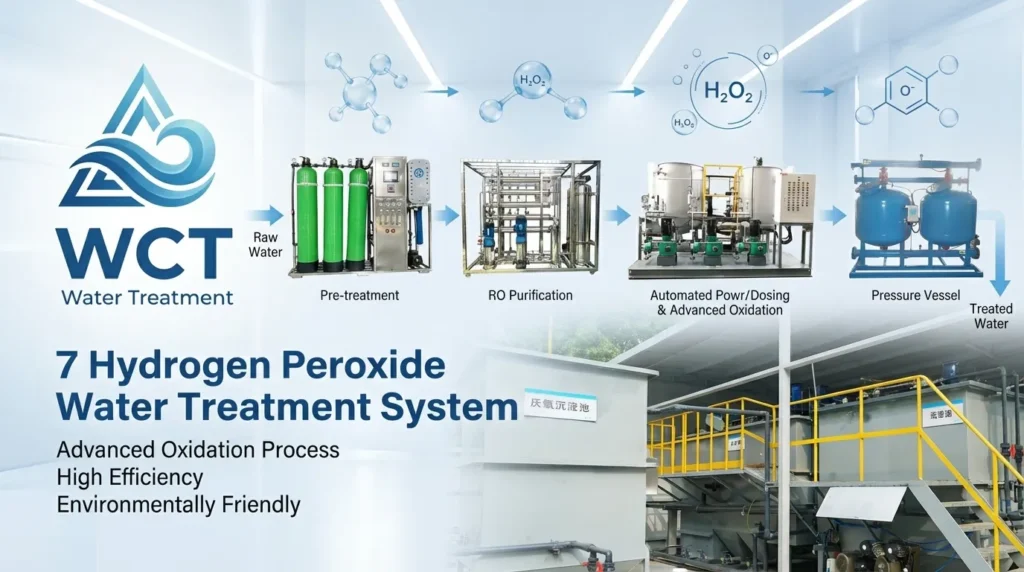
To run a reliable hydrogen peroxide well water treatment system, you need hardware built for accuracy and safety. We use industrial water treatment equipment designed specifically to handle peroxide without degrading the chemical or damaging your plumbing. Here is the core infrastructure required for the job.
Chemical Feed Pump Setup
Accurate dosing is the backbone of the system. You need continuous, precise chemical injection to match your water flow. We rely on a robust mechanical diaphragm metering pump to push the exact dosage of peroxide into the water line, ensuring consistent treatment without chemical waste.
Chemical Dosing Tanks
Because peroxide degrades quickly when exposed to UV light and heat, proper storage is strictly required. Your setup must include safe storage that blocks out light completely. Using a specialized chemical dosing tank PE304 ensures the stabilized peroxide solution remains potent and prevents premature chemical breakdown before injection.
Contact Tanks and Precision Filtration
Once the 7% peroxide enters the water, it neutralizes odors and forces dissolved metals out of the liquid state.
- Contact Tanks: Provide the necessary retention time for the peroxide to fully mix and complete the water oxidation process.
- Precision Filtration: Physically traps and removes the newly precipitated iron and manganese solids, keeping your main water lines clear of debris.
Calculating Dosage Rates and Managing Shelf Life
Getting your 7 hydrogen peroxide water treatment right means dialing in the perfect dosage and keeping your chemicals fresh. Here is how we manage it to ensure maximum efficiency.
Establish Your Water Baseline
You can\’t treat what you haven\’t measured. Before setting your peroxide injection dosage rate, we require a professional water test to establish a clear baseline.
- Identify Contaminants: Pinpoint the exact parts per million (PPM) of dissolved iron and sulfur.
- Target the Source: Knowing your numbers guarantees your chemical feed pump setup is calibrated correctly to permanently remove the rotten egg smell in well water.
Determine Precise Dosage Guidelines
Injecting a 7% peroxide solution is a science, not guesswork. We calculate your exact dosage requirements based on two primary metrics:
- Peak Water Flow Rate: The maximum gallons per minute moving through your pipes.
- Total Contamination Levels: The combined PPM of iron, manganese, and hydrogen sulfide.
Understanding this balance is a critical step in the process of water treatment industrial and domestic applications, guaranteeing you never waste chemicals or under-treat your supply.
Combat Chemical Degradation
Hydrogen peroxide naturally breaks down into water and oxygen over time. To protect your investment and maintain reliable oxidation power, we implement strict storage rules:
- Choose Wisely: Always invest in a stabilized peroxide solution. It locks in the active ingredients and holds its concentration significantly longer than unstabilized alternatives.
- Optimize Storage: House your chemicals in dark, UV-protected chemical dosing tanks. Keeping the solution away from direct sunlight and extreme heat prevents premature degradation and extends shelf life.
Why Choose WCT for Your Chemical Dosing Infrastructure?
When setting up your 7 hydrogen peroxide water treatment, you need equipment you can trust. At WCT, we build dosing infrastructure that simply works. Whether you need a basic chemical feed pump setup or comprehensive industrial water treatment equipment, we have the exact hardware to meet your demands.
Proven Industry Authority
We bring 12 years of hands-on experience to every project. Our manufacturing facility is ISO9001 certified, and we hold 30 distinct patents in water purification technology. We build our equipment to last, ensuring your water oxidation process is safe and compliant.
Custom Water Dosing Systems
No two water sources are exactly alike. We engineer tailored chemical dosing systems designed specifically for your flow rates and contamination levels. From domestic well water setups to heavy-duty industrial applications, we scale our solutions to fit.
Unmatched Equipment Reliability
Downtime is not an option. Our hardware is backed by a dedicated team of over 20 R&D engineers. This ensures your peroxide injection dosage rate remains perfectly accurate day in and day out, guaranteeing flawless operation without the constant need for repairs.
The WCT Advantage
| Core Strength | What It Means For You |
|---|---|
| 12 Years Experience | Deep expertise in 7 hydrogen peroxide water treatment. |
| 30 Patents & ISO9001 | Certified, innovative, and strictly tested equipment. |
| 20+ R&D Engineers | Flawless operation and continuous technical support. |
| Custom Solutions | Tailored configurations from home use to industrial scale. |
FAQs About 7 Hydrogen Peroxide Water Treatment
Is 7% hydrogen peroxide safe for drinking water?
Yes, absolutely. When calculated at the correct peroxide injection dosage rate, a 7 hydrogen peroxide water treatment is entirely safe for daily consumption. During the water oxidation process, the peroxide rapidly breaks down into just two harmless elements: pure water and oxygen. This means you get crisp, clean drinking water without the lingering chemical residue or taste associated with chlorine.
How long does a 7% peroxide solution last in a dosing tank?
Shelf life heavily depends on storage conditions and the type of chemical used. Here is what you need to know:
- Stabilized peroxide solution: Maintains its full strength for about 30 to 60 days.
- Unstabilized solutions: Degrade much faster, often losing potency within a couple of weeks.
- Storage best practices: We always recommend storing your mixture in a durable chemical dosing tank PE304 kept in a cool, well-ventilated area away from direct sunlight.
Can I use hydrogen peroxide with my existing water softener?
Yes, they pair perfectly together. Integrating a hydrogen peroxide well water treatment ahead of your water softener actually protects your plumbing infrastructure. The peroxide works on the front end to eliminate the rotten egg smell and oxidize iron or manganese. This ensures clear, filtered water reaches your softener, which protects the resin bed from fouling and makes the complete process of water treatment far more efficient and reliable.