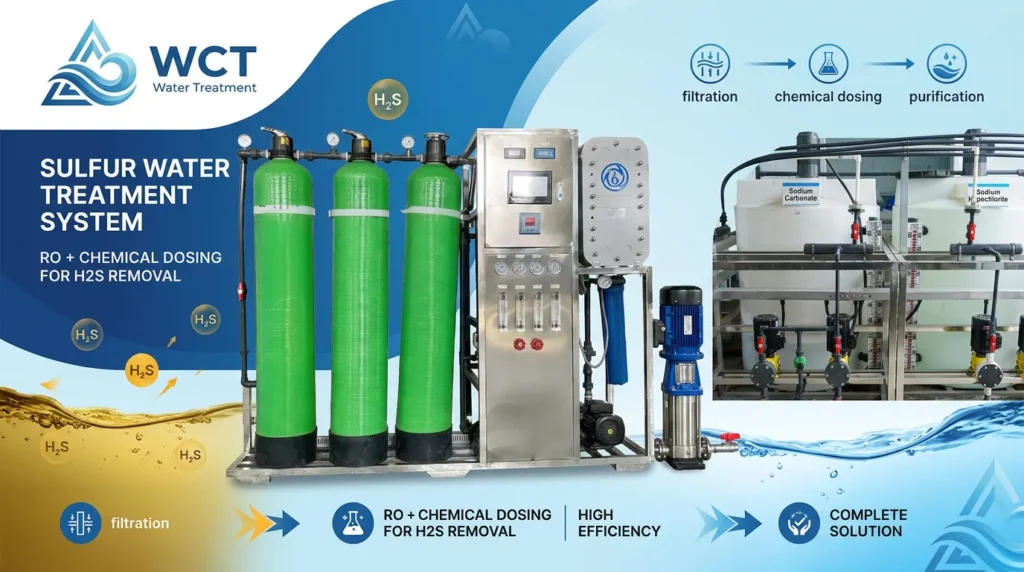
Understanding Sulfur in Your Water
Dealing with foul-smelling tap water is a frustrating experience that disrupts your daily life. If your water carries a distinct, unpleasant odor, you are dealing with a sulfur contamination issue. Addressing this problem at the source requires a reliable sulfur water treatment system to ensure your entire home receives clean, fresh, and odor-free water.
What Causes the Rotten Egg Smell?
That unmistakable rotten egg odor comes directly from hydrogen sulfide gas (H2S) trapped in your water supply. This naturally occurring gas is produced when sulfur-reducing bacteria feed on decaying organic matter in groundwater environments.
While low levels of hydrogen sulfide are generally not considered a severe health hazard, the gas creates immediate, expensive problems for your household. Implementing an effective sulfur treatment for well water is critical because untreated hydrogen sulfide leads to:
- Corrosion: It highly damages copper pipes, brass fittings, and structural plumbing.
- Fixture Staining: Leaves stubborn yellow, brown, or black stains on sinks, toilets, and showers.
- Tarnished Metals: Rapidly tarnishes silverware and metallic kitchen appliances.
- Ruined Meals: Alters the taste and appearance of cooked foods and beverages.
How to Test for Hydrogen Sulfide
Before investing in a sulfur water treatment solution, you must confirm the presence and source of the gas. Because hydrogen sulfide escapes into the air rapidly once water flows from the tap, standard laboratory transit testing is often ineffective.
Here are the most reliable methods to test your water on-site:
- The Cold Water Smell Test: Run your cold water tap for three to five minutes. If the rotten egg smell is instantly noticeable but dissipates quickly, you have hydrogen sulfide in your primary groundwater supply.
- The Hot Water Isolation Check: If the odor only occurs when you run hot water, your water supply is likely fine. The smell is instead caused by a reaction between sulfate in the water and the magnesium anode rod inside your water heater.
- At-Home Testing Strips: Utilize specialized lead acetate test papers. When exposed to water containing hydrogen sulfide, these immediate-read strips will turn brown or black.
- Professional On-Site Analysis: For the most accurate assessment, have a certified water technician perform an on-site evaluation. This determines the exact parts per million (PPM) of sulfur, ensuring you select a properly sized treatment system for your specific needs.
How Sulfur Water Treatment Systems Work
If you are dealing with that awful rotten egg smell, understanding how a sulfur water treatment system fixes the problem is the first step. The goal is straightforward: we turn the dissolved sulfur gas into a solid, and then we filter it out. If your home relies on groundwater, integrating reliable water treatment for well systems is the most effective way to eliminate these odors permanently.
The Oxidation and Filtration Process
The core of effective sulfur water treatment relies on a proven two-step method:
- Oxidation: Hydrogen sulfide naturally exists as a dissolved gas in your water. We introduce an oxidizing agent to force this gas to convert into filterable solid sulfur particles.
- Filtration: Once the sulfur becomes a solid, the water flows through a specialized media bed, typically made of catalytic carbon or greensand. This filter media physically traps the solid particles, delivering clean, fresh water directly to your taps.
Air Injection Technologies
One of the cleanest and most efficient methods we use for sulfur treatment for well water is air injection. This technology is highly popular globally because it is incredibly effective without demanding heavy ongoing costs.
- Chemical-Free Operation: Air injection systems use everyday ambient air instead of harsh, expensive chemicals like chlorine or hydrogen peroxide to oxidize the sulfur.
- The Air Pocket: The system maintains a pocket of compressed air at the top of the treatment tank. As water enters, it sprays directly through this compressed air pocket, instantly oxidizing the hydrogen sulfide gas.
- Self-Sustaining: The trapped sulfur particles are periodically flushed down the drain during an automatic backwash cycle. This backwash process also draws in fresh air to rebuild the oxidation pocket, keeping the system running smoothly with minimal upkeep.
Types of Hydrogen Sulfide Removal Systems
Finding the right setup is crucial for effective sulfur water treatment. I always advise customers that the best choice depends directly on your specific water conditions and household demand. Let’s look at the main systems we use to eliminate that rotten egg smell once and for all.
Backwashing Sulfur Filters
These systems run water through a specialized media bed that traps and holds sulfur. Once the media is full, the unit automatically flushes itself out—this is the “backwash” cycle.
- Self-cleaning: Automatically flushes trapped contaminants down the drain.
- Durable internals: High-quality filter nozzles for water treatment ensure the media bed stays intact while maintaining strong, even water flow during the harsh backwashing process.
- Cost-effective: The internal filter media can last for several years before needing replacement.
Air Sulfur Filters
Air injection systems are incredibly popular and effective for sulfur treatment for well water. Instead of relying on harsh chemicals, they maintain a pocket of compressed air at the top of the filtration tank.
- Natural oxidation: As water passes through the air pocket, the trapped hydrogen sulfide gas instantly turns into solid sulfur flakes.
- Chemical-free operation: Uses everyday air to clean the water, saving you money on chemical pumps and constant liquid refills.
- Low maintenance: Safe for your plumbing lines, septic systems, and the environment.
Whole House Sulfur Filter Systems
If the sulfur problem is severe and affects every tap on your property, a whole house sulfur water treatment system is your ultimate fix. Installed at the point of entry, it stops sulfur before it ever reaches your indoor plumbing.
- Complete coverage: Delivers odor-free water to your showers, laundry, kitchen, and drinking glasses.
- Multi-stage protection: Often combines primary oxidation with fine precision filters for water treatment to catch any leftover micro-particles and grit before the water enters your home.
- Appliance lifespan: Immediately stops black sulfur sludge and stains from ruining your expensive sinks, toilets, and washing machines.
Key Features and Advantages of a Sulfur Water Treatment System
Investing in a reliable **sulfur water treatmentsulfur water treatment setup instantly upgrades your home’s water quality. We design our systems to tackle the toughest odors and contaminants head-on, delivering immediate and lasting results.
High-Capacity Filtration Efficiency
Our units are built to handle heavy, daily usage without breaking a sweat. When you need effective **sulfur treatment for well watersulfur treatment for well water, filtration efficiency is non-negotiable.
- Rapid Oxidation: Instantly converts dissolved hydrogen sulfide gas into solid, filterable particles.
- Continuous Flow: Delivers clean water without noticeable pressure drops, even during peak household usage.
- Heavy-Duty Performance: Built to capture high levels of contaminants, similar to the robust performance you see from industrial sand media filters handling heavy sediment loads.
Low Maintenance Requirements
A premium sulfur water treatment system should run quietly in the background. We eliminated the need for constant tweaking, messy chemical mixing, or frequent service calls.
| System Feature | Traditional Systems | Our Sulfur Filters |
|---|---|---|
| Chemical Refills | Frequent (Chlorine/Hydrogen Peroxide) | None required (Air-injected) |
| Cleaning Cycle | Manual flushing and monitoring | Fully automatic backwashing |
| Media Lifespan | 1 to 2 years | Up to 5+ years |
With automated backwashing valves and long-lasting filtration media, you simply set it and forget it. You get clean, odor-free water without the burden of constant upkeep.
Choosing and Maintaining Your Sulfur Filter System
Finding the right sulfur water treatment system doesn’t have to be complicated. We designed our solutions to be straightforward, effective, and easy to keep running smoothly over the long haul.
How to Know if Your Home Needs a Sulfur Filter
The biggest giveaway is that undeniable rotten egg smell when you turn on the tap. But there are other clear signs to watch out for. If your silverware tarnishes unusually fast or you notice black, slimy stains on your plumbing fixtures and washing machine, hydrogen sulfide is likely the culprit. Getting a quick water test will confirm the exact sulfur levels, allowing you to choose the perfect sulfur treatment for well water to fit your home’s specific demands.
What to Expect: Installation and Components
Setting up a sulfur water treatment system is a clean and efficient process. A standard installation typically includes:
- The Main Filtration Tank: Holds the specialized media that traps the sulfur.
- The Control Valve: Automates the cleaning and backwashing cycles.
- Air Injector or Chemical Feed: Introduces oxygen or oxidizers to convert the sulfur gas into a filterable solid.
Most setups seamlessly connect right to your main water line. If you rely on a private well, integrating a comprehensive well water treatment system ensures that every drop of water entering your house is fresh, clean, and completely odor-free right from the source.
Routine Maintenance for Sulfur Water Systems
We build these systems to be low-hassle, meaning you won’t spend your weekends tinkering with plumbing. To keep your sulfur water treatment running at peak performance, just follow a few basic checks:
- Check the Control Valve: Verify that the digital timer is set correctly and the system is backwashing on its scheduled cycle.
- Inspect Air Injectors: Keep the air intake screen clear of dust or debris so the system can draw in enough oxygen.
- Monitor Media Levels: Depending on your water usage and sulfur levels, the internal filtration media will eventually need a top-off or full replacement every few years.
Sticking to this simple routine guarantees your system will deliver fresh, odor-free water year after year.