You might already know that public awareness surrounding \”forever chemicals\” is at an all-time high—and for good reason.
But when it comes to safeguarding your property or community, a frustrating question remains: Do water filtration systems remove PFAS, or is it all just marketing hype?
The short answer is yes, but standard, off-the-shelf pitchers won\’t cut it. To truly eliminate these stubborn compounds, you need scientifically proven, independent validation.
Whether you are a homeowner shopping for an under-sink reverse osmosis PFAS unit or a facility engineer designing turnkey PFAS filtration systems for water utilities, navigating the sea of technical data can be daunting. You need to know exactly which VOC PFAS filtration technologies actually work, and how to verify them using NSF/ANSI 53 certification and the NSF/ANSI 58 standard.
In this definitive guide, we will cut through the noise and break down the only three engineering methods capable of reliable PFOA and PFOS reduction.
Let’s dive right in.
Understanding PFAS Contamination: Why It’s Hard to Filter
Per- and polyfluoroalkyl substances (PFAS) have become one of the most challenging environmental crises of our time. Commonly known as \”forever chemicals,\” these synthetic compounds are found in everyday consumer goods and industrial waste, eventually leaching into municipal water supplies. Because they do not break down naturally, standard water treatment infrastructure is often unequipped to eliminate them, requiring specialized water filtration systems for PFAS to ensure safe drinking water.
The Carbon-Fluorine Bond
The primary reason PFAS persists in the environment—and resists traditional treatment—comes down to chemical structure. PFAS compounds are built on a chain of carbon atoms completely bonded to fluorine atoms. The carbon-fluorine bond is one of the strongest bonds in organic chemistry. It requires immense energy to break, meaning these chemicals do not biodegrade, dissolve easily, or degrade under normal thermal or chemical conditions. This molecular resilience is why a standard, off-the-shelf home water filtration system PFAS solution requires specific, advanced media rather than basic carbon configurations.
Health and Regulatory Context
Growing clinical research links long-term PFAS exposure to severe health risks, including metabolic disruptions, compromised immune systems, increased cholesterol levels, and elevated risks of certain cancers. As a result, global regulatory bodies are drastically tightening restrictions. The EPA and international environmental agencies have established enforceable Maximum Contaminant Levels (MCLs) for prominent compounds like PFOA and PFOS reduction.
Governments and water utilities are now legally mandated to implement verified VOC PFAS filtration technologies to protect public health. For community suppliers and homeowners alike, deploying targeted water filtration systems that remove PFAS is no longer optional—it is a critical regulatory and health necessity.
Do Water Filtration Systems Remove PFAS?
The short answer is yes, but not all of them. With growing concerns over \”forever chemicals,\” many property owners and facility managers ask: do water filtration systems remove PFAS entirely? The truth is that standard, off-the-shelf pitchers or basic refrigerator filters are completely inadequate for this task.
The Myth of the Standard Filter
Most basic consumer filters rely on thin, low-grade carbon designed purely to improve taste and remove chlorine odors. They are not engineered to capture microscopic, highly resilient chemical compounds like PFOA and PFOS. Relying on a standard, non-certified filter creates a false sense of security while leaving these dangerous contaminants completely untouched in your drinking water. Effective water treatment process engineering requires specialized media depth, precise contact time, and robust system architecture to successfully trap these stubborn molecules.
The Rule of Independent Validation
When selecting a water filtration system for PFAS, you cannot rely on manufacturer promises alone. True forever chemicals removal must be backed by strict independent validation. Look for systems that have undergone rigorous third-party testing and hold verified certifications. Without official performance data proving the system can handle specific contaminant parts-per-trillion (ppt) levels, a filter is just guesswork.
- Look for Certified Performance: Always verify third-party testing data before installation.
- Check the Specific Contaminants: Ensure the media is validated specifically for long-chain and short-chain PFAS.
- Monitor Flow Rates: Validated systems specify the exact flow rate required to maintain effective chemical reduction.
The 3 Core Technologies for Effective PFAS Removal
When it comes to forever chemicals removal, you cannot rely on standard pitch filters. Eliminating these stubborn compounds requires specialized, industrial-grade science. Through our extensive work in municipal water treatment systems, we have refined the three most reliable VOC PFAS filtration technologies used globally today.
1. Granular Activated Carbon (GAC) & Carbon Block Filters
Granular Activated Carbon (GAC) is the industry standard for a dependable PFAS water filtration system. This technology acts like a highly porous sponge, attracting and trapping organic contaminants as water passes through.
- How it works: Uses chemical adsorption to lock away carbon-fluorine chains.
- Best for: Highly effective at PFOA and PFOS reduction.
- Formats: Available as loose GAC granules for high-flow systems or dense carbon blocks for targeted point-of-use filtration.
2. Reverse Osmosis (RO) Systems
For the absolute highest purification standard, an under-sink reverse osmosis PFAS system is the premier choice for residential and light commercial needs.
- The Process: Water is forced under high pressure through a microscopic, semi-permeable membrane.
- Efficiency: It strips away everything from heavy metals to microscopic PFAS chains, sending the clean water to your tap and flushing the contaminants away.
- The Result: This is widely recognized as the best water filtration system for PFAS when multi-stage purification is required.
3. Ion Exchange (IX) Resins
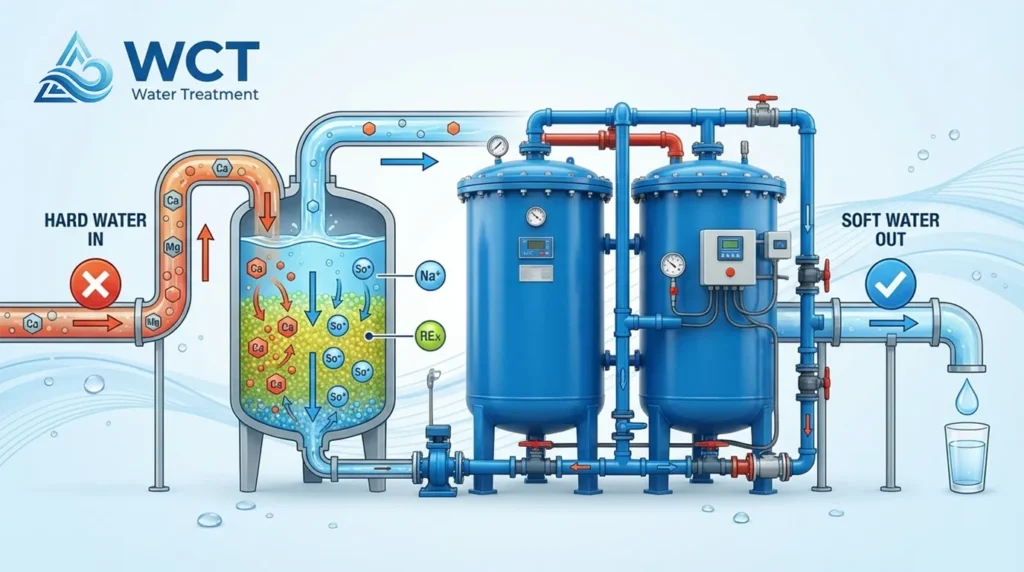
Ion exchange resin for water purification represents the cutting edge of high-capacity, turnkey PFAS filtration systems for water utilities.
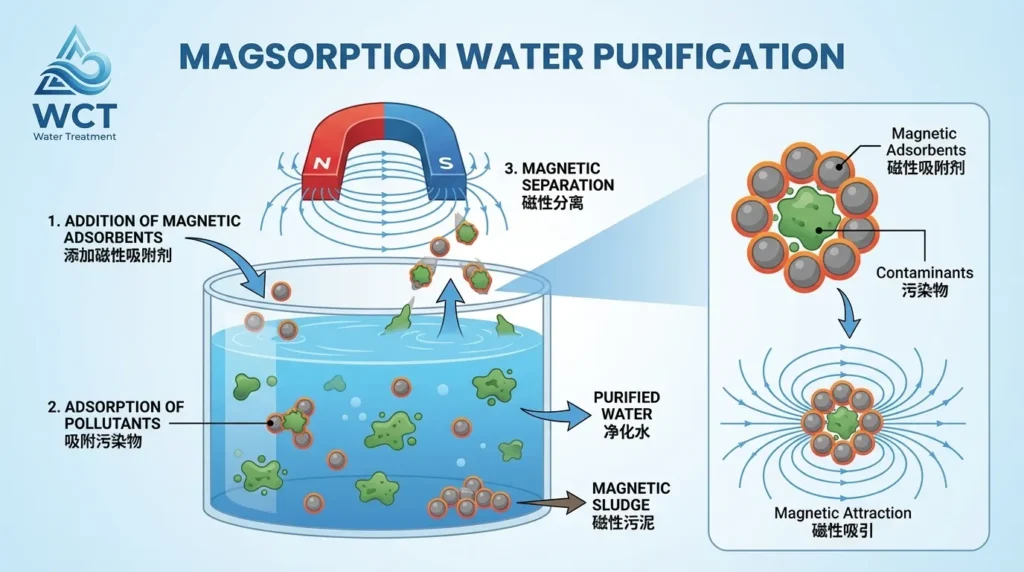
- The Mechanics: These systems utilize specialized, positively charged resin beads. Because PFAS molecules carry a negative charge, they bond tightly to the resin like a magnet.
- Key Advantage: IX resins have an incredibly high capacity for smaller-chain PFAS and work faster than carbon media, making them highly efficient for large-scale municipal water treatment suppliers.

Deciding on the Right System Architecture
Choosing the right system architecture depends entirely on your scale, water volume, and specific application goals. Whether you are protecting a single kitchen tap or managing a large-scale municipal supply, the hardware design must match the demand. We manufacture a versatile range of configurations engineered to intercept forever chemicals before they reach the consumer.
Point-of-Use (POU) Home Systems
For targeted protection, a POU home water filtration system for PFAS is the most practical choice. These compact units install directly at the critical point of consumption—typically under the kitchen sink or connected to dedicated inline appliances.
- Best For: Drinking water, cooking, and ice makers.
- Common Setup: Under-sink reverse osmosis PFAS units paired with carbon blocks.
- Pros: Highly cost-effective, easy to maintain, and provides targeted, ultra-pure water where it matters most.
Point-of-Entry (POE) Whole House Systems
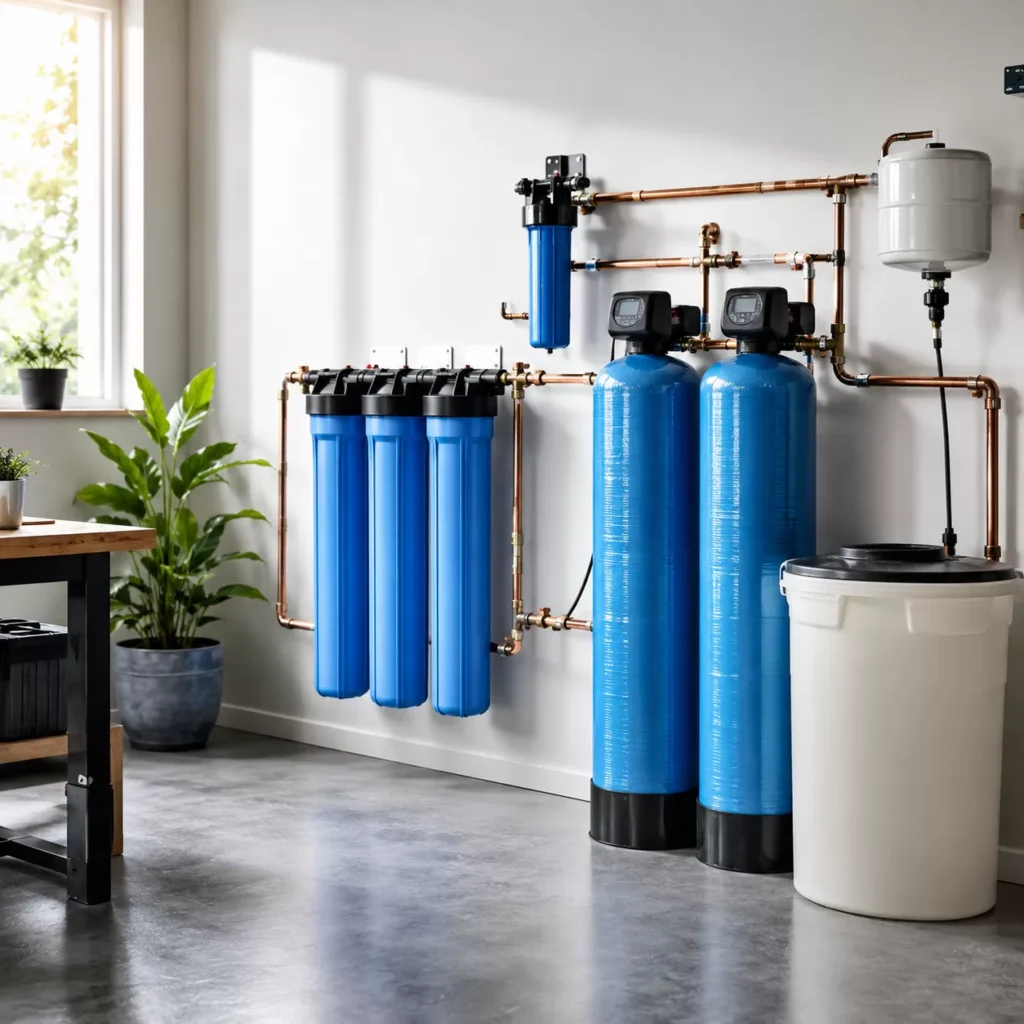
If you need to eliminate exposure from every tap in a residential property, a POE water filtration system for PFAS is necessary. These systems treat all water entering the home, ensuring that water used for showering, washing dishes, and brushing teeth is completely safe.
- Best For: Total residential protection, especially in private well areas high in PFOA and PFOS.
- Common Setup: Dual-tank Granular Activated Carbon (GAC) beds or specialized ion exchange resin tanks.
- Pros: Complete peace of mind; protects plumbing infrastructure and prevents skin absorption or inhalation of vaporized contaminants during hot showers.
Commercial & Industrial Turnkey PFAS Filtration Systems
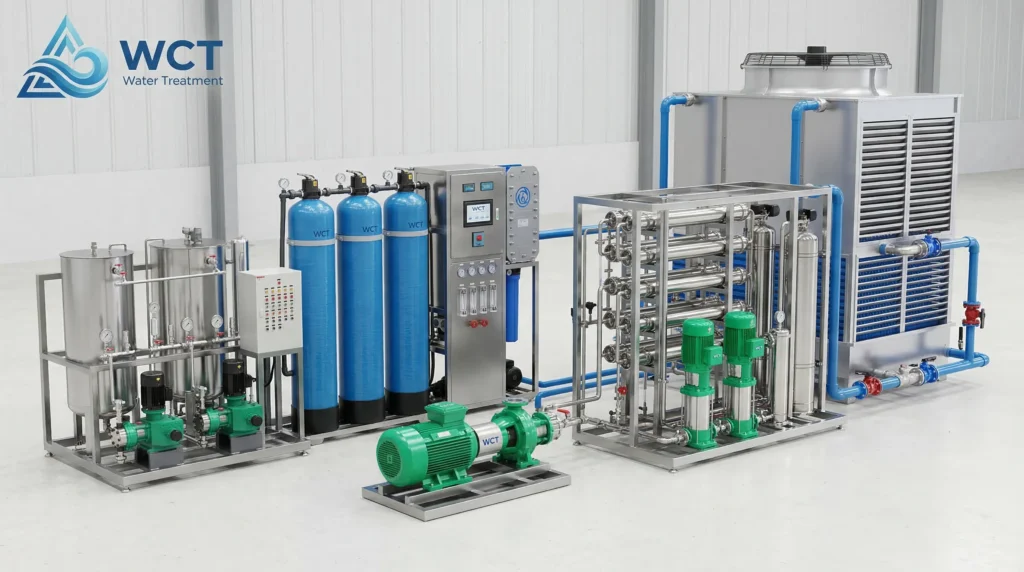
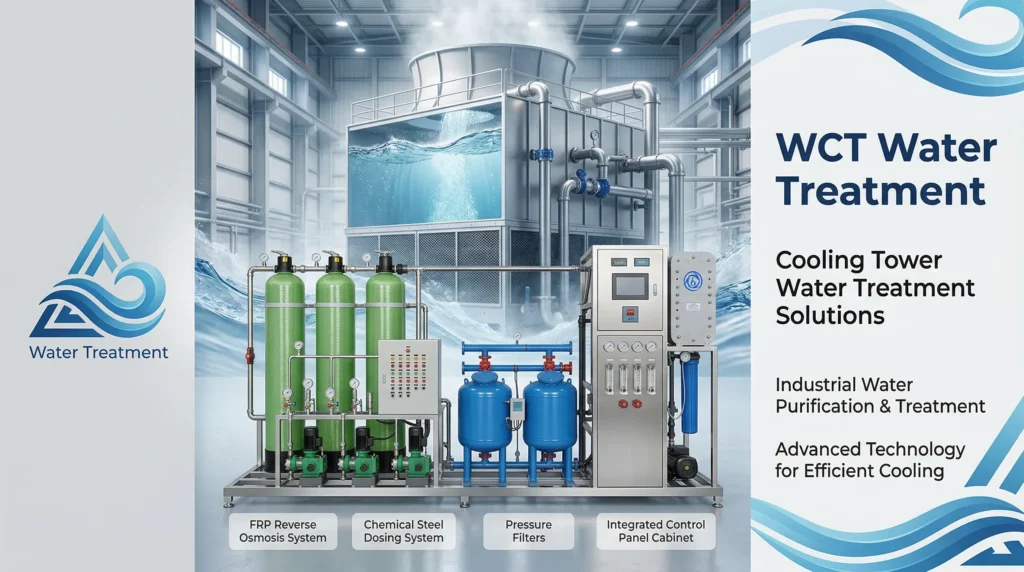
For heavy-duty demands, we engineer large-scale, turnkey PFAS filtration systems for water utilities, manufacturing plants, and commercial facilities. These high-capacity setups handle massive flow rates while meeting strict regulatory compliance limits.
[Raw Water Inlet] —> [Pre-Filtration / VOC Removal] —> [Primary PFAS Treatment (GAC/IX/RO)] —> [Safe Discharge/Supply]
Our commercial builds integrate advanced multi-stage industrial water recycling solution vs traditional treatment comparison methodologies to optimize media lifespan and lower overall operating costs.
- Best For: Municipal water treatment suppliers, factories, data centers, and large agricultural operations.
- Common Setup: Multi-skid VOC PFAS filtration technologies, automated backwashing carbon vessels, and high-recovery membrane systems.
- Pros: Fully automated operation, heavy-duty structural frames, and customizable media configurations tailored to precise laboratory water analyses.
Deciphering Certifications: NSF/ANSI 53 vs. NSF/ANSI 58
When you are researching the best water filtration system for PFAS, navigating industry certifications is critical. These standards act as your assurance that a system has undergone rigorous, independent testing to prove it can actually reduce harmful contaminants.
NSF/ANSI 53 Certification
This standard covers point-of-use systems designed to reduce specific health-related contaminants. When a filter carries NSF/ANSI 53 certification for PFOA and PFOS reduction, it means the unit has been tested to ensure it effectively removes these forever chemicals from drinking water. This is the gold standard for carbon-based filtration systems and indicates that the media has been verified to handle the chemical structure of PFAS.
NSF/ANSI 58 Standard
While NSF/ANSI 53 is for adsorption, NSF/ANSI 58 applies specifically to reverse osmosis systems. This standard evaluates the system\’s ability to reduce contaminants through a semi-permeable membrane. Because reverse osmosis is highly effective at physical separation, this certification confirms that the system not only removes PFAS but also maintains structural integrity and provides safe, purified water under daily usage conditions.
Why Testing Protocols Matter
Understanding these protocols is essential because not all filters are created equal. Independent validation removes the guesswork from your purchase:
- Performance Verification: It confirms that the system meets its claims under real-world pressure and flow rates.
- Material Safety: It ensures that the filter components themselves do not leach harmful substances into your water.
- Structural Integrity: It guarantees the housing and connections are durable enough to prevent leaks or bypasses.
Reliable municipal water treatment systems and residential units alike rely on these certifications to define efficacy. By prioritizing systems that adhere to these NSF/ANSI standards, you ensure that your investment in a water filtration system for PFAS provides genuine health protection rather than just a false sense of security.
The WCT Advantage: Advanced Engineering for Forever Chemical Elimination
As a dedicated water treatment supplier and manufacturer, WCT engineers heavy-duty solutions designed specifically for total forever chemicals removal. We don\’t rely on off-the-shelf, one-size-fits-all fixes. Our advanced engineering tackles the toughest synthetic bonds, ensuring municipal, commercial, and industrial facilities achieve absolute compliance and safety.
Our Manufacturing Pedigree
With decades of hands-on industrial fabrication experience, we control the entire production pipeline. From raw material sourcing to final pressure testing, our facilities output top-tier turnkey PFAS filtration systems for water utilities and industrial plants.
- Precision Engineering: Every system utilizes heavy-duty ASME-rated water treatment tanks to withstand continuous high-flow pressure.
- Robust Shells: Our containment vessels prevent media bypassing, ensuring every drop of water makes optimal contact with the filtration media.
- Global Compliance: We build according to international quality standards, making our setups ready for deployment in any global market.
Customization Capabilities
No two water contamination profiles are identical. We analyze your specific water chemistry—including flow rates, VOC presence, and precise co-contaminant levels—to build a tailormade water filtration system for PFAS.
| Customization Factor | Engineered Solution |
|---|---|
| High Flow Rates | Multi-vessel parallel configurations |
| Complex Organic Loads | Integrated multi-media pre-filtration |
| Footprint Constraints | Skid-mounted, modular mobile units |
Uncompromising Quality
We don\’t cut corners because we know what is at stake. Our quality control protocol guarantees that every PFAS water filtration system leaving our floor is structurally flawless and hydraulically optimized. We use premium internal distribution laterals to prevent channeling, maximizing the lifespan of your adsorption media and ensuring zero leakage. When you partner with WCT, you invest in a permanent, verifiable barrier against forever chemicals.
Maintenance & Upkeep: Preventing \”Breakthrough\” in PFAS Water Filtration Systems
Investing in a high-performing water filtration system for PFAS is only the first step. To ensure continuous, long-term forever chemicals removal, rigorous maintenance is non-negotiable. Without a strict upkeep schedule, a system will eventually fail to protect your water supply.
The Risk of Saturated Media
Every pfas water filtration system relies on active media—whether it is Granular Activated Carbon (GAC), ion exchange resin for water purification, or a reverse osmosis membrane—to trap contaminants. However, this media has a finite capacity.
- Media Saturation: Over time, the binding sites on the carbon or resin become completely filled with target pollutants and other organic matter.
- The \”Breakthrough\” Phenomenon: Once the media reaches total saturation, it can no longer adsorb or exchange ions. PFAS compounds will bleed directly through the filter and enter your effluent water supply.
- Desorption Spikes: In severe cases, previously trapped chemicals can displace or detach from the saturated media, causing a sudden spike where the filtered water temporarily contains higher concentrations of toxic chemicals than the incoming raw water.
Best Practices for Peak Performance
Preventing breakthrough requires a proactive approach to system maintenance. As municipal and industrial water treatment suppliers, we recommend the following operational protocols to guarantee uninterrupted PFOA and PFOS reduction:
- Establish Routine Sampling: Implement a regular water testing schedule ahead of the expected media exhaustion date to monitor for early trace elements of contaminants.
- Utilize Lead-Lag Configurations: For larger setups and turnkey PFAS filtration systems for water utilities, always use a multi-tank \”lead-lag\” design. When the primary (lead) tank experiences breakthrough, the secondary (lag) tank catches the remaining chemicals, allowing you to change out the old media safely without taking the system offline.
- Pre-Treat the Water: Protect your primary PFAS filters from fouling by installing upstream sediment and water treatment chemical distributor solutions to remove suspended solids, iron, and standard VOCs first.
- Strict Calendar Replacement: Do not wait for taste or odor changes, as PFAS is completely tasteless and odorless. Replace your filter elements and media according to calculated gallon throughput or fixed calendar intervals based on your initial water analysis.
Frequently Asked Questions (FAQs)
How often do I need to replace my PFAS filter?
For standard residential home water filtration system PFAS setups, carbon blocks and GAC cartridges typically require replacement every 6 to 12 months. Under-sink reverse osmosis PFAS systems generally need pre-filter changes annually, while the RO membrane itself lasts 2 to 3 years. If you operate commercial turnkey PFAS filtration systems for water utilities or industrial sites, filter replacement schedules must be determined by regular water sampling and breakthrough testing rather than simple timelines.
Can boiling water get rid of PFAS?
No. Boiling water does not remove forever chemicals. Because PFAS compounds are extremely stable and have high boiling points, boiling water actually evaporates a portion of the clean water, which concentrates the remaining chemicals. True forever chemicals removal requires specialized VOC PFAS filtration technologies like activated carbon, reverse osmosis, or ion exchange.
Does a standard refrigerator water filter remove forever chemicals?
Most standard pitcher and refrigerator water filters are designed primarily for aesthetic chlorine taste and odor reduction, not for rigorous PFOA and PFOS reduction. Unless the refrigerator filter explicitly carries an independent NSF/ANSI 53 certification for PFAS reduction, you should assume it does not effectively protect against these contaminants. For reliable protection, a dedicated water filtration system to remove pfas is required.
How do I know if my local water supply has PFAS?
Municipal water treatment suppliers are increasingly required to test for forever chemicals and publish the findings in an annual Consumer Confidence Report (CCR). If you rely on a private well or want to verify your tap water quality independently, you must send a sample to a certified laboratory that utilizes EPA testing methods. If contamination is detected, implementing a certified Point-of-Entry (POE) or point-of-use water filtration system for PFAS is the most reliable way to secure clean drinking water.