What is Wastewater Sludge? Definition and Sources
Wastewater sludge is the concentrated, semi-solid byproduct generated during the various stages of wastewater sludge treatment. As a leading water treatment products supplier and manufacturer, we recognize that managing this residual material is the most critical challenge in modern environmental engineering. It consists of the solids removed from raw sewage or industrial effluent, containing a complex mixture of water, organic debris, and inorganic particles.
Understanding the Origin of Sewage and Industrial Sludge
The source of the sludge dictates its complexity and the required treatment technology. Generally, sludge originates from two primary sectors:
- Municipal Sewage Sludge: Derived from household activities, including toilets, sinks, and baths. It is rich in organic matter and nutrients but contains significant biological pathogens.
- Industrial Sludge: Produced during manufacturing processes such as chemical production, food processing, or textile dyeing. This type of sludge wastewater treatment often requires specialized handling due to the presence of specific chemicals or heavy metals.
Key Characteristics and Chemical Composition
The physical and chemical makeup of sludge determines its handling requirements and disposal options. Most raw sludge is characterized by high water content and a high concentration of suspended solids.
| Characteristic | Description | Impact on Treatment |
|---|---|---|
| Water Content | Typically 95% to 99% in liquid form. | Requires heavy dewatering to reduce volume. |
| Organic Fraction | High levels of volatile solids. | Ideal for anaerobic digestion and energy recovery. |
| Nutrient Profile | Rich in Nitrogen (N) and Phosphorus (P). | High potential for agricultural fertilizer use. |
| Pathogens | Contains bacteria, viruses, and parasites. | Must be stabilized to protect public health. |
| Heavy Metals | Zinc, Copper, Lead, and Cadmium. | Limits the application of industrial sludge on land. |
The Difference Between Raw Sludge and Biosolids
In the industry, we distinguish between the initial waste product and the treated resource.
- Raw Sludge: This is the untreated material collected directly from primary or secondary clarifiers. It is biologically unstable, emits strong odors, and poses significant health risks due to high pathogen levels.
- Biosolids: These are the result of advanced sludge wastewater treatment processes. Biosolids are stabilized, organic-rich materials that have been treated to meet strict environmental standards. Unlike raw sludge, biosolids are safe for beneficial reuse, such as soil conditioning or land reclamation, turning a waste stream into a valuable asset.
The Importance of Effective Sludge Treatment
We believe that wastewater sludge treatment is the backbone of any responsible industrial or municipal operation. It is not just about waste management; it is about protecting the communities we serve and ensuring long-term operational viability.
Environmental Protection and Public Health Safety
Untreated sludge is a concentrated mix of pathogens, heavy metals, and organic pollutants. Without proper sludge wastewater treatment, these contaminants can seep into groundwater or contaminate local soil. We focus on stabilization processes that neutralize biological hazards and eliminate foul odors, making the byproduct safe for handling or secondary use.
Compliance with Legal Regulations and Standards
Regulatory bodies worldwide have strict limits on what can be discharged or landfilled. As a dedicated water treatment products supplier and manufacturer, we emphasize that staying compliant is the only way to avoid heavy fines and operational shutdowns. Understanding your specific water treatment process diagram is the first step in ensuring every stage of your facility meets local and international environmental standards.
Economic Benefits of Sludge Volume Reduction
Handling wet sludge is expensive. The higher the water content, the more you pay for transport and disposal. By prioritizing volume reduction, we help plants significantly lower their overhead.
| Benefit Category | Key Impact of Proper Treatment |
|---|---|
| Safety | Eliminates pathogens and toxic chemical leaching. |
| Legal | Ensures full compliance with EPA, EU, and local discharge permits. |
| Cost | Drastically reduces hauling fees and landfill disposal costs. |
| Efficiency | Optimizes plant footprint and reduces maintenance frequency. |
By investing in high-quality wastewater sludge treatment equipment, we enable facilities to transform a costly liability into a manageable, and sometimes even profitable, resource. Reducing the mass of waste is the most direct way to improve your bottom line while staying green.
Primary Wastewater Sludge Treatment Process Steps
As a leading water treatment products supplier and manufacturer, we focus on streamlining the wastewater sludge treatment cycle to ensure maximum efficiency. The process is designed to reduce the volume of waste while stabilizing the organic material, making it safe for disposal or reuse. By following a structured approach, we help plants lower their operational costs and meet environmental standards.
Thickening and Concentration Methods
The first step in our process is thickening, which aims to increase the solids content by removing a significant portion of the water. We typically use gravity thickening or dissolved air flotation (DAF) to achieve this. This stage is vital for optimizing the performance of municipal water treatment systems, as it reduces the total volume of sludge that needs to be handled in the subsequent, more expensive stages.
Anaerobic and Aerobic Digestion for Stabilization
Stabilization is where we break down the organic matter to eliminate odors and reduce pathogen levels. We utilize two main biological methods:
- Anaerobic Digestion: Performed in the absence of oxygen, this method is highly effective for energy recovery, as it produces methane gas that can be used as fuel.
- Aerobic Digestion: This involves exposing the sludge to oxygen, which is often faster and simpler for smaller sludge wastewater treatment facilities.
Both methods ensure the resulting material is stable and less hazardous to the environment.
Mechanical Dewatering and Liquid-Solid Separation
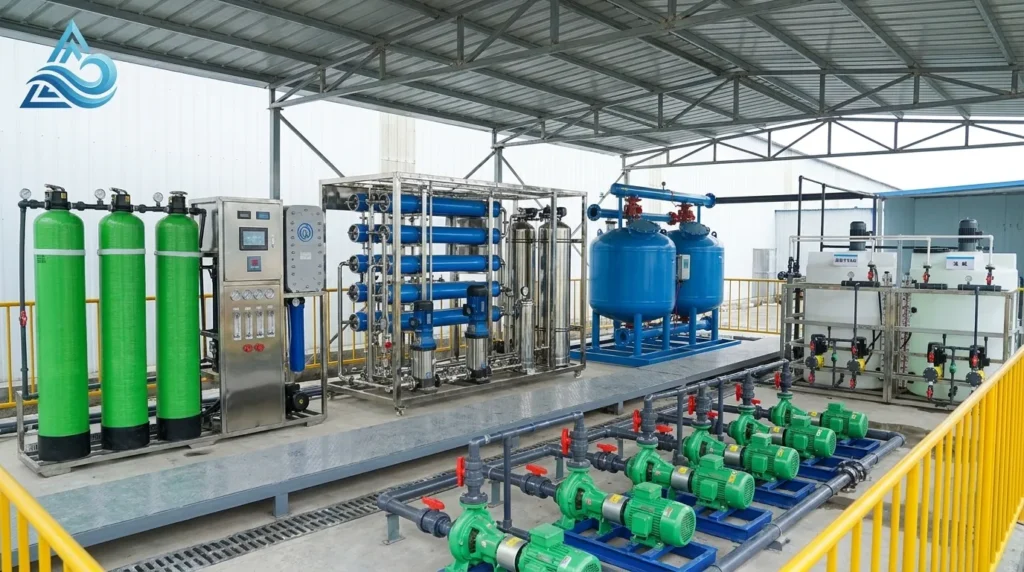
Once stabilized, we move to mechanical dewatering to turn liquid sludge into a \”cake.\” This is a high-pressure process where we use advanced machinery to squeeze out the remaining moisture. Common equipment includes:
- Belt Filter Presses: Ideal for continuous operation and high throughput.
- Centrifuges: Use high-speed rotation to separate solids from liquids based on density.
- Screw Presses: A low-energy solution for consistent dewatering performance.
Properly integrating these tools into the process flow diagram of a water treatment plant ensures that the final waste product is easy to transport and handle.
Thermal Drying and Conditioning Processes
For plants requiring the lowest possible moisture content, we implement thermal drying. By applying heat, we evaporate the remaining water, significantly reducing the weight and volume of the sludge. This conditioning step often involves adding chemicals like polymers or lime to improve the structure of the solids, making the wastewater sludge treatment output suitable for incineration or agricultural applications.
Advanced Sludge Treatment Technologies and Innovation
As a dedicated water treatment products supplier and manufacturer, we focus on cutting-edge solutions that push beyond traditional disposal. Modern wastewater sludge treatment now leverages advanced engineering to maximize efficiency and minimize environmental impact.
Membrane Bioreactors (MBR) and Separation Systems
MBR technology represents a significant leap in sludge wastewater treatment. By combining biological processes with high-efficiency membrane filtration, we achieve superior solid-liquid separation. This process results in high-quality effluent and a more concentrated sludge byproduct. Utilizing integrated sewage treatment equipment allows us to implement these advanced separation systems in a compact footprint, making it ideal for facilities with limited space.
Thermal Hydrolysis and Carbonization Treatment
We utilize thermal hydrolysis to pre-treat sludge before digestion. By applying high temperature and pressure, we break down the cellular structure of the organic matter. This \”pressure cooking\” effect significantly improves the speed of subsequent treatment steps. Furthermore, hydrothermal carbonization (HTC) is an emerging innovation that converts wet sludge into hydrochar, a stable carbon product that can be used as a renewable fuel source or soil amendment.
Energy Recovery and Methane Fermentation
Modern sludge management is increasingly focused on turning waste into a resource. Through advanced methane fermentation, we capture biogas produced during anaerobic digestion to generate green energy. To ensure these systems operate at peak performance, we integrate high-pressure pumps for waste water treatment to handle the demanding flow requirements of energy recovery circuits.
Key Innovations in Modern Sludge Facilities:
- Enhanced Biogas Yield: Advanced digestion techniques increase methane output by up to 50%.
- Pathogen Destruction: High-temperature processes ensure the final product is safe for various reuse applications.
- Smart Automation: AI-driven sensors monitor sludge density and chemical dosing in real-time.
- Carbon Footprint Reduction: On-site energy generation offsets the facility\’s operational costs and emissions.
Sludge Valorization and Resource Recovery
We view wastewater sludge treatment not as a disposal problem, but as a strategic resource recovery opportunity. By shifting from a \”waste\” mindset to a \”circular economy\” approach, we help facilities extract maximum value from every ton of processed material.
Transforming Sludge into Agricultural Fertilizer
High-quality biosolids are a game-changer for sustainable farming. When we process sludge through stabilization and pasteurization, it becomes a nutrient-dense organic fertilizer that significantly improves soil health.
- Soil Conditioning: Enhances soil structure and increases moisture retention.
- Nutrient Density: Provides essential organic carbon that synthetic fertilizers lack.
- Sustainability: Returns organic matter back to the earth, closing the nutrient loop.
Nutrient Recovery: Extracting Phosphorus and Nitrogen
Phosphorus is a finite global resource, and we prioritize its recovery during the sludge wastewater treatment process. Our systems focus on capturing these elements before they become environmental pollutants.
- Struvite Precipitation: We facilitate the crystallization of phosphorus into high-purity fertilizer pellets.
- Nitrogen Capture: Advanced stripping techniques allow us to recover nitrogen for industrial or agricultural use.
- Process Efficiency: Integrating these recovery steps into the overall water treatment plant diagram ensures a streamlined, low-waste operation.
Use in Construction and Raw Materialization
For sludge that isn\’t suitable for land application, we turn to industrial raw materialization. This ensures that even the most difficult waste streams contribute to the economy.
- Eco-Bricks: Sludge ash is an excellent additive for brick and tile manufacturing, reducing the need for virgin clay.
- Cement Kiln Processing: Dried sludge serves as both an alternative fuel source and a raw material in cement production.
- Road Base Aggregates: Treated and vitrified sludge can be used as a durable sub-base for infrastructure projects.
As a dedicated water treatment products supplier and manufacturer, we provide the heavy-duty water treatment tank systems and specialized equipment required to turn these recovery goals into reality. Our focus is on making wastewater sludge treatment a profitable and environmentally responsible part of your operation.
Disposal and Management Strategies
We focus on sustainable end-of-life solutions for treated solids. The goal is to move beyond simple disposal and toward resource recovery, ensuring that wastewater sludge treatment integrates seamlessly into the local environment and economy.
Land Application and Sustainable Landscaping
For many municipal operations, land application is the most efficient route. By converting sludge into nutrient-rich biosolids, we support a circular waste model.
- Soil Enrichment: Adding stabilized organic matter back into depleted soils to improve structure.
- Forestry and Reclamation: Using treated solids to restore old mining sites or support commercial timber growth.
- Nutrient Recycling: Reducing the reliance on synthetic fertilizers by utilizing the natural phosphorus and nitrogen found in sludge.
Incineration and Waste-to-Energy Plants
In regions with limited land availability or strict chemical limits, incineration offers a high-efficiency alternative. This method turns a waste problem into a power source.
- Maximum Volume Reduction: Shrinking the physical footprint of waste by up to 90%, leaving only inert ash.
- Pathogen Destruction: Complete elimination of biological risks through high-temperature thermal processing.
- Energy Generation: Harvesting thermal energy to power the sludge wastewater treatment facility or contribute to the local electrical grid.
Secure Landfilling and Environmental Monitoring
While we aim for recovery, secure landfilling remains a necessary backup for specific industrial residues. To make this process cost-effective and environmentally safe, we emphasize:
- Moisture Control: Implementing advanced sludge dewatering to meet strict landfill intake requirements and significantly reduce hauling fees.
- Leachate Management: Ensuring the waste is chemically stable to prevent toxic runoff into groundwater.
- Compliance Monitoring: Maintaining rigorous testing protocols to ensure all disposed materials meet local environmental safety standards.
Selecting the Right Sludge Treatment Solution
Choosing the most effective wastewater sludge treatment strategy depends on more than just the volume of waste. We focus on finding a balance between environmental compliance, operational ease, and long-term financial viability.
Factors Influencing Treatment Method Selection
Every facility has unique requirements. To get the best results, we evaluate several critical factors:
- Sludge Volume and Type: High-volume municipal plants often require different stabilization methods than specialized industrial sites.
- Chemical Composition: The presence of heavy metals or pathogens dictates whether the sludge can be repurposed or must be incinerated.
- Available Footprint: Some technologies, like large drying beds, require significant space, while mechanical dewatering is more compact.
- Final Disposal Goal: Whether you aim for land application or energy recovery changes the entire process flow.
Operational Challenges and Maintenance Requirements
Reliability is the backbone of any sludge wastewater treatment plant. High-tech systems offer better efficiency but come with specific maintenance needs:
- Energy Consumption: Thermal processes and aeration are energy-intensive and require careful monitoring.
- Equipment Wear: Sludge can be abrasive or corrosive, meaning pumps and centrifuges need high-quality parts to avoid frequent downtime.
- Staff Expertise: Advanced systems like anaerobic digesters require trained operators to manage biological stability.
Cost-Benefit Analysis for Municipal and Industrial Plants
We help clients weigh the initial investment (CAPEX) against the ongoing operational costs (OPEX). While automated systems may cost more upfront, the massive reduction in disposal fees and labor often leads to a faster ROI.
| Feature | Manual/Basic Systems | Automated Advanced Systems |
|---|---|---|
| Initial Cost | Low | High |
| Labor Requirement | High | Low |
| Sludge Volume Reduction | Moderate | High |
| Maintenance Frequency | Frequent | Scheduled/Predictive |
As a dedicated water treatment products supplier and manufacturer, we provide high-performance waste water treatment tank units that integrate seamlessly into modern facilities. For those looking to optimize their entire setup, our comprehensive water treatment guide offers deeper insights into selecting the right components for your specific environment.