What is a Water Treatment Plant Clarifier?
Definition and Fundamental Purpose
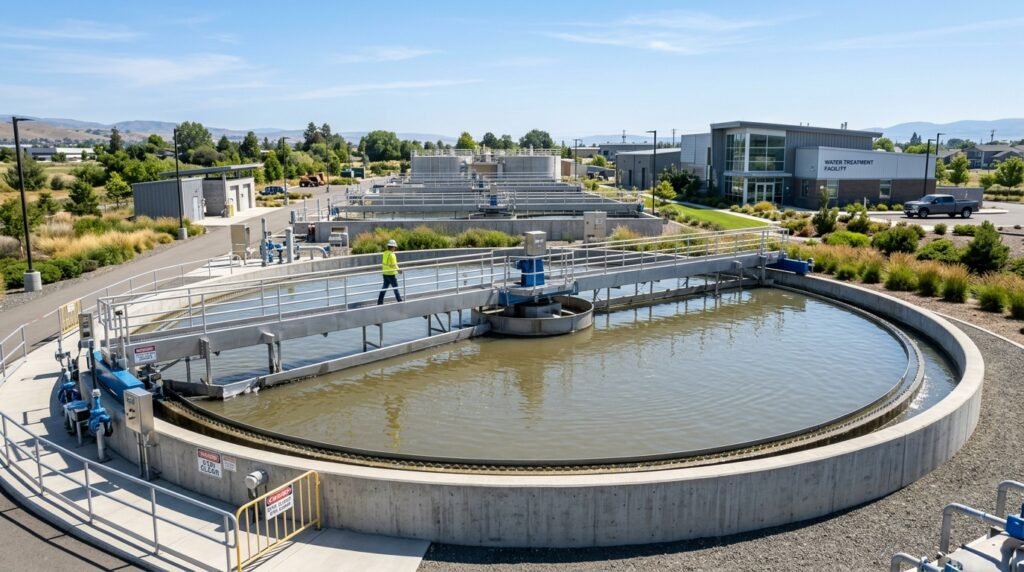
A water treatment plant clarifier is a specialized sedimentation tank designed to remove suspended solids from liquids through gravity settling. As a premier manufacturer and supplier, we engineer these systems to provide a stable, low-velocity environment where heavy particles (floc) sink to the floor while clear water rises to the surface. The fundamental purpose is to produce a high-quality effluent with minimal turbidity, ensuring the water is ready for subsequent filtration or disinfection.
The Role of Clarification in the Treatment Process
Clarification is a critical stage in both municipal and industrial water treatment. It typically follows the coagulation and flocculation phases, where small particles are chemically bound into larger masses. The clarifier serves as the primary separation point, removing the bulk of the solid waste load. By effectively capturing these solids, the clarifier:
- Reduces the burden on downstream sand filters or membrane systems.
- Prevents equipment fouling and clogging.
- Lowers chemical consumption in later treatment stages.
- Ensures consistent water quality despite fluctuations in influent characteristics.
Core Components and Mechanical Construction
Our clarifiers are built with high-grade materials to withstand continuous operation in harsh environments. The mechanical construction consists of several integrated systems:
- Center Feed Well: Dissipates the energy of incoming water to prevent turbulence.
- Rotating Scraper Arms: Heavy-duty arms equipped with blades that continuously move settled sludge toward a central discharge pit.
- Drive Assembly: A high-torque motor and gearbox that provide reliable, low-speed rotation for the scraper system.
- Effluent Weirs and Launders: Precision-leveled V-notch plates that ensure uniform flow distribution and capture the clarified water.
- Scum Skimmer: A surface mechanism designed to remove floating oils, grease, and debris.
How Water Treatment Clarifiers Work
As a dedicated water treatment products supplier and manufacturer, we engineer systems that rely on simple but highly effective physical processes. A water treatment plant clarifier operates by intentionally slowing down the flow of water, allowing gravity to do the heavy lifting of separating liquids from solids.
The Four Functional Zones
Every effective clarifier is divided into four distinct operational areas to ensure maximum efficiency:
* **Inlet Zone:** This area receives the incoming water and immediately reduces its velocity. It distributes the flow evenly and prevents turbulence from disrupting the settling process.
* **Settling Zone:** The largest part of the tank. Here, the water remains calm, giving solid particles the necessary time to sink to the bottom.
* **Sludge Zone:** Located at the very bottom of the tank, this is where the settled solids accumulate for eventual removal.
* **Outlet Zone:** The top section where the clarified, clean water gently flows out over weirs into the next phase of the water plant treatment process.
Sedimentation and Particle Flocculation
The core function of a water treatment plant clarifier relies heavily on sedimentation. Gravity naturally pulls heavier suspended solids down to the tank floor. However, many particles are simply too small and light to settle on their own within a reasonable timeframe.
This is where flocculation plays a vital role. By gently mixing the water with specific coagulants, these tiny particles bind together to form larger, heavier clumps known as \”flocs.\” Once these flocs gain enough mass, they drop rapidly through the settling zone, leaving clear water behind.
Scum Removal and Sludge Collection
Managing the separated waste is just as important as clearing the water itself. Clarifiers utilize dual-action mechanical systems to handle both floating and sinking debris simultaneously:
* **Surface Skimmers:** Rotating arms sweep across the top of the water, collecting lightweight materials like oils, grease, and plastics (scum) into a dedicated trough for disposal.
* **Bottom Scrapers:** Heavy-duty rakes continuously rotate along the floor of the sludge zone. They push the accumulated heavy solids into a central hopper, where pumps safely extract the thick sludge for further processing or disposal.
Types of Clarifier Systems
Choosing the right water treatment plant clarifier depends entirely on the specific solids you need to remove and the space available at your facility. We offer several configurations designed to handle different stages of the purification process.
Primary vs. Secondary Clarifiers
- Primary Clarifiers: These are positioned at the start of the treatment train. Their job is to remove heavy organic solids and floating grease before the water moves to biological treatment.
- Secondary Clarifiers: These follow the aeration process. They are designed to settle out biological \”floc\” or biomass, ensuring the final effluent is clear and the sludge is returned to the system or disposed of properly.
High-Rate Clarifiers and Tube Settlers
When footprint is an issue, high-rate systems are the best solution. By integrating tube settlers or inclined plates, we increase the effective settling area without increasing the tank\’s physical size. This approach is a core component of modern water treatment plant design, allowing for higher flow rates in a much smaller space.
Dissolved Air Flotation (DAF) and Ballasted Flocculation
Not all solids sink. For light materials like oils, grease, or fine fibers, we utilize dissolved air flotation for sewage disposal. This system uses micro-bubbles to float particles to the surface for skimming. Alternatively, ballasted flocculation uses a weighting agent, like micro-sand, to force particles to settle at incredibly high speeds.
Circular vs. Rectangular and Portable Units
- Circular Clarifiers: These are the industry standard for large-scale municipal and industrial plants due to their uniform flow and efficient central sludge collection.
- Rectangular Clarifiers: Ideal for sites with limited land or where multiple units need to be \”nested\” together to save space.
- Portable Units: We provide mobile, skid-mounted clarifiers for remote mining sites, construction dewatering, or emergency temporary capacity.
Key Applications Across Industries
As a dedicated manufacturer and supplier, we provide the water treatment plant clarifier as a versatile solution across multiple sectors. These systems are engineered to handle varying solids loadings, ensuring that water meets specific quality standards whether it is destined for a city tap or an industrial boiler.
Municipal Potable Water Treatment
In municipal settings, the water treatment plant clarifier is the primary defense against turbidity. We design these systems to remove large particles, silt, and organic matter from raw surface water. By reviewing a detailed water treatment plant diagram, operators can see exactly how the clarification stage reduces the burden on downstream sand filters and membrane systems, significantly lowering overall operational costs.
Industrial Wastewater Management
Industrial facilities generate diverse waste streams that require robust liquid-solid separation. Our clarifiers are tailored for:
- Food and Beverage: Removing organic solids and fats to meet strict discharge permits.
- Power Generation: Treating cooling tower blowdown and ash handling water.
- Manufacturing: Capturing metal shavings and chemical precipitates from process lines.
- Refineries: Separating oily sludge and suspended contaminants before secondary treatment.
Mining and Solids Recovery Operations
In the mining industry, we focus on high-density solids recovery and water recycling. The water treatment plant clarifier plays a critical role in \”thickening\” tailings, allowing mines to recover up to 90% of their process water. This is vital for operations in arid regions where water conservation is a financial and environmental necessity. Our heavy-duty rake mechanisms are built to handle the high torque required for moving heavy mineral slurries without mechanical failure.
Benefits of Effective Clarification
Improved Effluent Quality and Turbidity Reduction
The primary goal of our water treatment plant clarifier systems is to produce the clearest water possible. By effectively removing suspended solids and organic matter, we significantly lower turbidity levels. This ensures that the water moving to the next stage is clean, meeting both regulatory standards and operational requirements. High-quality clarification prevents \”carryover,\” where solids accidentally escape into the final effluent.
Optimization of Downstream Biological Treatment
A high-performing clarifier protects the rest of your facility. By removing the bulk of the heavy solids upfront, we reduce the organic load on secondary processes. This is especially important for maintaining the efficiency of a waste water treatment tank, as it prevents the biological system from becoming overloaded or \”sludged out.\”
Key advantages for downstream equipment include:
- Reduced Membrane Fouling: Less debris means filters and membranes last longer.
- Lower Chemical Costs: Cleaner water requires fewer coagulants and disinfectants.
- Energy Savings: Pumps and aerators operate more efficiently when not fighting high solids concentrations.
Efficient Sludge Thickening and Management
We design our clarifiers to do more than just clean water; they are built to manage waste. Through superior settling mechanics, our systems produce a more concentrated sludge. This \”thickening\” process is vital for reducing the total volume of waste that needs to be processed or hauled away.
| Benefit Category | Impact on Operations | Long-term Value |
|---|---|---|
| Water Clarity | Drastic reduction in NTU (turbidity) | Consistent compliance with discharge permits |
| System Longevity | Less wear and tear on pumps and filters | Lowered capital expenditure on replacements |
| Waste Handling | Higher solids concentration in sludge | Significant reduction in disposal and transport costs |
| Process Stability | Better control over hydraulic loading | Minimal downtime due to system upsets |
By focusing on these core benefits, we help facilities achieve a balance between high-performance output and low operational overhead. Efficient clarification isn\’t just a step in the process; it is the foundation of a reliable water treatment strategy.
Operational and Design Considerations
Designing and managing a water treatment plant clarifier requires a deep understanding of hydraulics and solids behavior. We focus on specific engineering metrics to ensure the system doesn\’t just run, but runs efficiently under varying load conditions.
Surface Overflow and Solids Loading Rates
The efficiency of any water treatment plant clarifier is dictated by its Surface Overflow Rate (SOR) and Solids Loading Rate (SLR). These parameters determine the maximum volume of water and weight of solids the tank can process per square foot of surface area.
- Surface Overflow Rate: We calculate this to ensure the upward velocity of the water does not exceed the settling velocity of the particles.
- Solids Loading: This measures the total mass of solids entering the system. If the SLR is too high, the thickening zone becomes overloaded, leading to poor effluent quality.
- Peak Flow Management: Our designs account for hydraulic surges to prevent \”washouts\” where solids are pushed out of the tank during heavy rain or high-demand periods.
Sludge Blanket Depth and Maintenance
The \”sludge blanket\” is the layer of accumulated solids at the bottom of the clarifier. Maintaining the correct depth is critical for both water clarity and sludge thickening. A blanket that is too thin won\’t provide enough contact time for particle agglomeration, while a blanket that is too thick can lead to anaerobic conditions or solids carryover.
Regular maintenance focuses on the mechanical integrity of the rake arms and drive units. We prioritize heavy-duty torque protection to prevent equipment damage if the sludge becomes too dense. Consistent monitoring of the sludge interface ensures that the removal rate matches the accumulation rate.
Flow Distribution and Weir Placement
Proper flow distribution prevents \”short-circuiting,\” where water travels directly from the inlet to the outlet without staying in the settling zone long enough. We utilize precision-engineered baffles and energy-dissipating inlets to calm the incoming water.
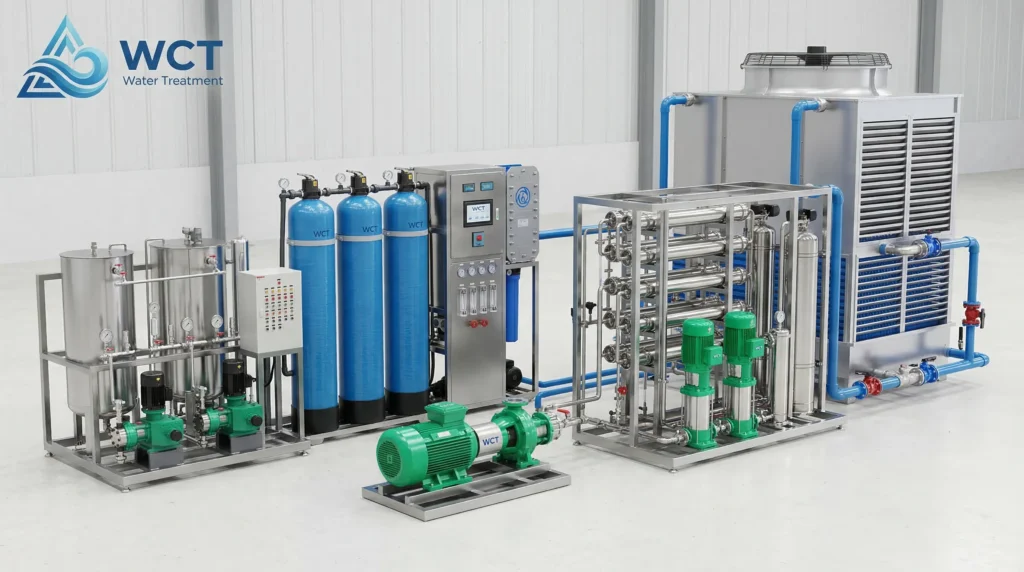
To achieve a uniform discharge, we use V-notch weirs around the perimeter of the tank. These weirs must be perfectly leveled to ensure an even draw of clarified water. For systems requiring enhanced performance, we often integrate a chemical dosing tank to optimize the flocculation process, ensuring that particles are heavy enough to settle quickly before reaching the effluent launders. Proper weir placement and hydraulic balance are the final steps in ensuring the water treatment plant clarifier delivers the lowest possible turbidity.
Choosing the Right Clarifier for Your Facility
As a trusted water treatment products supplier and manufacturer, we know that selecting the ideal water treatment plant clarifier dictates the success of your entire operation. The right choice maximizes efficiency, reduces downtime, and keeps your facility compliant with environmental standards.
Assessing Influent Characteristics and Flow Volume
You must thoroughly analyze your incoming water before making a selection. The nature of the suspended solids, water temperature, and daily flow rates directly impact the clarifier\’s sizing and design. Your system must comfortably handle peak flow volumes without disrupting the delicate settling process or causing solids carryover.
Space Constraints and Footprint Optimization
Available land dictates your equipment choices. When dealing with strict space limitations, traditional large circular tanks might not be viable. Upgrading to high-rate designs that incorporate honeycomb inclined tube packing significantly multiplies the effective settling area. This allows you to achieve massive throughput in a fraction of the physical footprint, optimizing your site layout.
Evaluating Maintenance Requirements and Operational Costs
A true assessment looks beyond the initial purchase price. Long-term operational costs and maintenance demands will ultimately define your return on investment.
Key Cost Factors to Evaluate:
- Energy Consumption: Power required for scraper drives, skimmers, and sludge pumps.
- Chemical Usage: Precise dosing is critical for flocculation. Utilizing a reliable mechanical diaphragm metering pump ensures accurate coagulant delivery, preventing expensive chemical waste.
- Routine Maintenance: Accessibility of moving parts under water and the frequency of required sludge blanket checks.
Clarifier Selection Matrix
| Consideration | Key Action | Impact on Facility |
|---|---|---|
| Influent Data | Test turbidity, temperature, and flow rates | Prevents system overloading and poor effluent |
| Footprint | Measure available site space | Determines clarifier type (standard vs. high-rate) |
| O&M Costs | Calculate energy, labor, and chemical needs | Secures long-term budget viability and profitability |