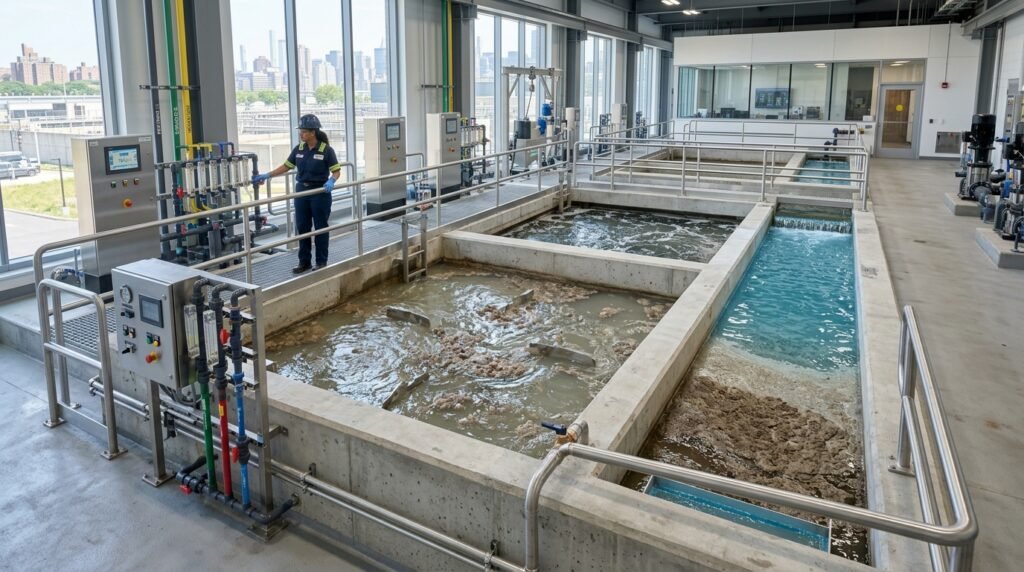
What is Flocculation in Water Treatment?
Flocculation is a crucial physical and chemical phase in water purification. In floc water treatment, suspended microscopic particles are forced to aggregate into larger clusters, allowing them to be efficiently filtered or settled out of the water supply. As a premier water treatment products supplier and manufacturer, we engineer and provide solutions that ensure this clarification process operates at absolute peak performance.
Understanding Floc and Flocculants
To grasp exactly what is floc in water treatment, it is essential to understand the core mechanics of particle binding:
- Floc: The visible, sponge-like masses formed when tiny, suspended solids successfully clump together.
- Flocculants: The specialized chemical agents or polymers introduced into the water to stimulate this aggregation. They function as molecular bridges, gathering isolated debris into heavy, manageable clusters that are easy to extract.
Coagulation vs. Flocculation: Key Differences
While they operate in tandem to clarify water, coagulation and flocculation water treatment are distinctly different stages. Understanding this difference is vital for system optimization.
| Process Characteristic | Coagulation | Flocculation |
|---|---|---|
| Primary Function | Neutralizes the repulsive electrical charges of particles. | Bridges and binds those neutralized particles together. |
| Mixing Speed | Requires rapid, high-energy mixing. | Requires slow, gentle agitation to avoid breaking clusters. |
| End Product | Creates micro-flocs (typically invisible to the naked eye). | Creates macro-flocs (large, visible, and heavy clumps). |
How the Flocculation Process Works
Understanding how particles clump together is the secret to effective floc water treatment. Because we are a water treatment products supplier and manufacturer, we focus heavily on the mechanics of getting murky water clear. To truly grasp what is floc in water treatment, you have to look closely at the chemical and physical reactions happening below the surface.
Charge Neutralization and Polymer Bridging
Dirt, clay, and other suspended particles usually carry a negative electrical charge. Because they have the same charge, they constantly repel each other and stay suspended in the water. Flocculation water treatment fixes this through two main actions:
- Charge Neutralization: First, coagulant chemicals are added to neutralize those negative charges. Once the charges are balanced, the particles stop pushing each other away.
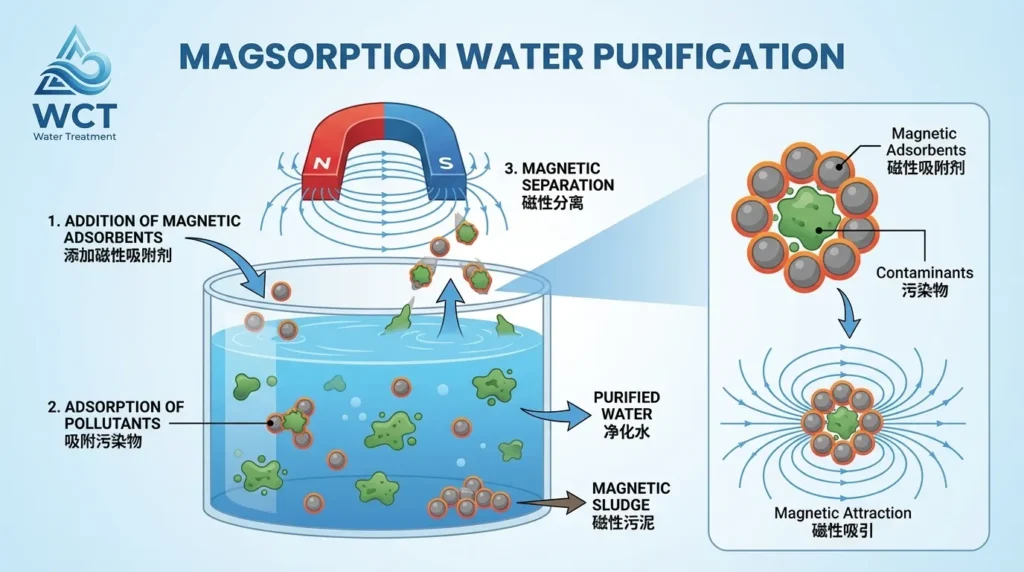
- Polymer Bridging: Next, we add flocculants. These are long-chain polymers that act like a sticky net. They catch the neutralized particles and bind them together into larger, heavier masses.
The Stages of Floc Formation
Flocculation in water treatment is not an instant event; it happens in distinct stages. Getting these stages right is crucial for high-efficiency water plant treatment operations.
- Micro-floc Generation: Right after dosing, tiny, almost invisible clumps begin to form.
- Particle Collision: As the water is gently stirred, these micro-flocs bump into one another.
- Macro-floc Maturation: The particles stick together, growing into large, visible \”flocs\” that are heavy enough to settle to the bottom or be easily filtered out.
The Role of pH and Mixing Rate
A successful floc water treatment system relies heavily on balancing the physical environment. If things are off, the floc simply won\’t form.
- Optimal pH Levels: Flocculant chemicals only activate within specific pH ranges. If the water is too acidic or too alkaline, the chemical bridges fail, and the particles remain suspended.
- Precise Mixing Rates: The physical stirring speed makes or breaks the floc.
- Too fast: Aggressive mixing will shear and tear apart the delicate flocs you just created.
- Too slow: The micro-flocs won\’t collide often enough to grow into heavy macro-flocs.
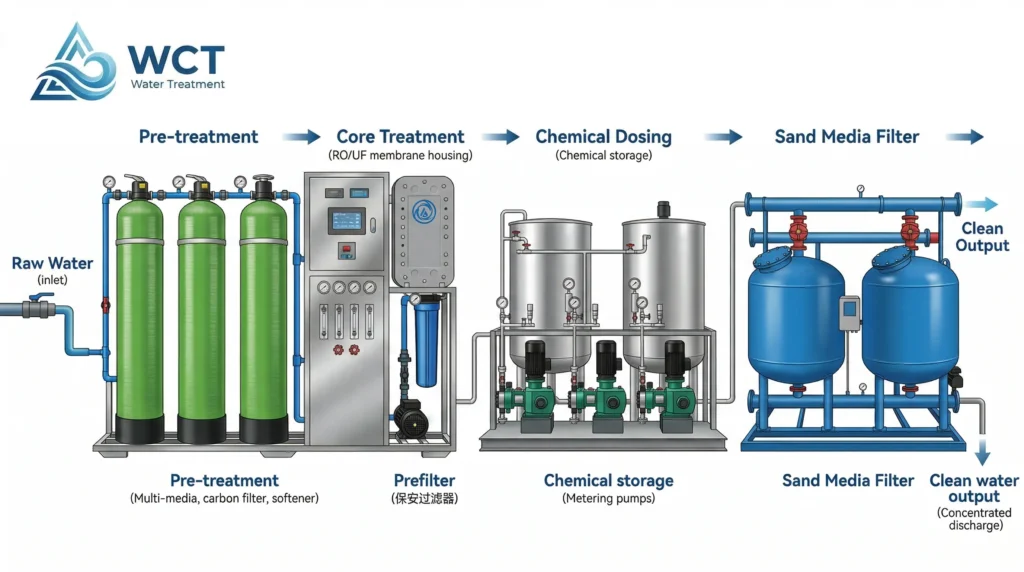
Types of Flocculants for Water Purification
We are a water treatment products supplier and manufacturer, and we know firsthand that picking the exact right chemical is the core of successful floc water treatment. If you are wondering what is floc in water treatment, it is simply the visible, heavy mass of bonded particles that forms and drops out of the liquid. Choosing the optimal chemical directly speeds up your water treatment sedimentation process, ensuring crystal clear water and much easier sludge removal.
Here are the three main categories of chemicals used for flocculation in water treatment:
Inorganic Flocculants
These are the traditional, cost-effective workhorses used globally for basic flocculation water treatment.
- Common Materials: Aluminum sulfate (alum) and iron salts (ferric chloride).
- Best For: Broad-spectrum suspended solids removal in municipal systems.
- Pros: Very affordable, widely available, and highly reliable.
- Cons: They generate a high volume of heavy sludge and require strictly controlled pH levels to work properly.
Organic and Synthetic Polymers
Synthetic polymers are heavy-duty, high-efficiency problem solvers. They create massively strong bridges between particles, pulling them together rapidly.
- Common Materials: Polyacrylamide (PAM).
- Best For: Fast-paced industrial wastewater processing.
- Pros: Requires very low chemical dosing, produces significantly less sludge weight, and operates effectively across a wide pH range.
- Cons: Higher initial product cost than standard inorganic options.
Natural and Plant-Based Flocculants
Eco-friendly biopolymers are taking over the market for modern, sustainable facilities. They are highly effective, biodegradable, and non-toxic.
- Common Materials: Chitosan, starch derivatives, and tannin-based polymers.
- Best For: Food and beverage wastewater, or environmentally sensitive discharge zones.
- Pros: Extremely safe to handle, leaves zero toxic chemical residue, and highly sustainable.
- Cons: Generally more expensive per pound and can have a shorter shelf life during storage.
Benefits and Limitations of Floc Water Treatment
Advantages for Water and Wastewater Systems
Flocculation in water treatment is essential for delivering clean, safe water. As a trusted water treatment products supplier and manufacturer, we see firsthand how this process effectively transforms murky liquid into clear water. It binds microscopic suspended particles together, making them heavy enough to settle quickly or large enough to filter out easily. This drastically reduces turbidity and removes harmful contaminants. Integrating a robust flocculation step within your plants for water treatment ensures high operational efficiency, lowers maintenance costs, and protects delicate downstream filtration equipment.
Potential Challenges and Limitations
While highly effective, understanding exactly what is floc in water treatment also means acknowledging its operational boundaries. Facilities must proactively manage a few inherent challenges:
- High Sludge Volume: The settling process creates a dense layer of sludge that requires ongoing handling, dewatering, and disposal.
- Strict Dosing Requirements: Adding too much or too little flocculant breaks the process. Precision is mandatory.
- Temperature Sensitivity: Cold water naturally slows down chemical reactions, which can delay floc formation and require longer mixing times.
Factors Affecting Floc Quality and Efficiency
Optimizing your flocculation water treatment setup requires monitoring your environment. Several mechanical and chemical factors dictate how well your system performs on a daily basis.
| Key Variable | Impact on Floc Water Treatment |
|---|---|
| pH Levels | Directly controls the solubility of chemicals and the surface charge of suspended particles. |
| Agitation Speed | Rapid mixing quickly disperses chemicals, while gentle mixing is required to actually build the floc structure. |
| Water Temperature | Warmer water accelerates particle collision; colder water demands longer retention times. |
| Flocculant Type | Matching the exact inorganic salt or organic polymer to your specific water profile determines success or failure. |
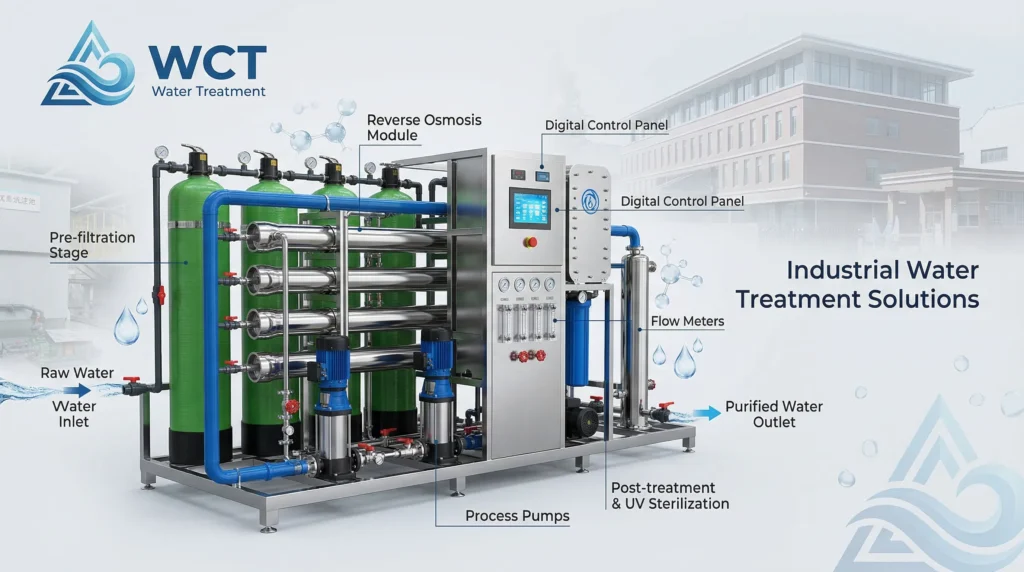
Key Applications of Flocculation
We are a water treatment products supplier and manufacturer, and we see floc water treatment successfully applied across a wide variety of global industries. Understanding exactly what is floc in water treatment helps facility managers deploy these systems to solve specific, daily contamination challenges.
Drinking Water Treatment Plants
Providing safe drinking water to communities relies heavily on reliable flocculation water treatment. This step is non-negotiable for turning raw surface water into clear, potable water.
- Turbidity Removal: Rapidly binds microscopic dirt, clay, and organic matter that cause cloudiness.
- Enhanced Filtration: Creates large, heavy flocs that drop out of the water column, preventing downstream filters from clogging quickly.
- Pathogen Control: Helps trap and settle out harmful microorganisms trapped within the suspended solids.
Industrial Wastewater and Stormwater Management
Heavy industries and municipal storm grids generate complex, high-volume effluents. Optimizing flocculant water treatment is essential for meeting strict environmental discharge regulations.
- Heavy Metal Capture: Aids in coagulating and settling toxic metals out of manufacturing runoff.
- Stormwater Clarification: Quickly drops out dirt, oil, and road debris washed away during heavy rainfall.
- Facility Water Reuse: Cleans industrial wastewater efficiently so it can be safely recycled back into plant cooling or washing systems.
Food, Beverage, and Commercial Applications
Food and beverage processing plants deal with massive amounts of organic waste, fats, and sugars. Relying on flocculation in water treatment streamlines the physical separation of these stubborn byproducts.
- Organic Solid Reduction: Effectively clumps together suspended food particles, spent yeast, and agricultural residues.
- Fats, Oils, and Grease (FOG): Assists in separating and clumping grease so it can be easily skimmed off the surface.
- Discharge Compliance: Reduces the biological oxygen demand (BOD) in the water, avoiding heavy municipal surcharges for commercial facilities.
Choosing and Optimizing Floc Water Treatment Systems
As a reliable water treatment products supplier and manufacturer, we know that success comes down to the right setup. Getting the perfect floc depends heavily on matching your chemicals and equipment to your specific water profile. Whether you run a small plant or a massive commercial water treatment facility, optimizing your system saves both time and money.
How to Select the Right Flocculant
Picking the correct chemical is the foundation of effective flocculation water treatment. You cannot rely on guesswork.
- Run Jar Tests: Always simulate the process on a small scale first to find the most effective formula for your specific wastewater.
- Match the Charge: Use cationic polymers to bind organic particles and anionic polymers for mineral or inorganic waste.
- Target Molecular Weight: Choose higher molecular weights to build larger, heavier flocs that settle rapidly.
Flocculant Metering and Dosing Equipment
Accuracy is everything. Adding too much chemical drains your budget, while too little leads to poor flocculation in water treatment.
- Deploy Precise Pumps: Select pumps specifically engineered to handle thick, viscous polymers without losing pressure or clogging.
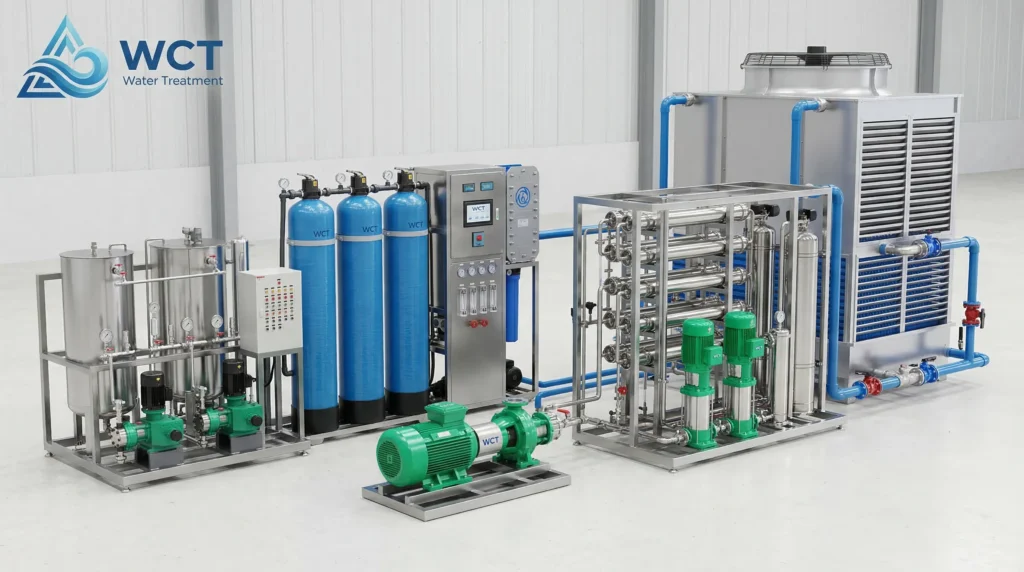
- Automate the Delivery: Installing a reliable chemical dosing system for water treatment ensures you hit the exact, consistent dosage rate around the clock.
- Maintain the Mixers: Keep your dilution and mixing stations clean to prevent polymer build-up and equipment failure.
Monitoring and Controlling Floc Performance
To truly understand what is floc in water treatment doing in your tanks in real-time, you must track performance continuously. Incoming water conditions change, and your system needs to adapt.
| Monitor This | Why It Matters | Quick Fix |
|---|---|---|
| Turbidity | High cloudiness means the flocs aren\’t forming properly. | Adjust polymer dosage up or down. |
| Floc Size | Tiny pin flocs won\’t settle; massive flocs tear apart easily. | Optimize your mixing speed. |
| pH Levels | Flocculants only activate within specific pH ranges. | Add acid or base before dosing. |
Rely on real-time sensors to track these metrics. Automated alerts let you catch water quality shifts early, allowing you to tweak your dosing speeds on the fly to keep the water crystal clear.