Gemini 3 Pro is no longer available. Please switch to Gemini 3.1 Pro in the latest version of Antigravity.
Pros and Cons of UV Water Purification
Deciding on the right disinfection method requires a clear look at what UV technology can and cannot do. As a manufacturer and supplier, we focus on providing systems that offer the highest level of protection without the complexity of chemical dosing. UV water treatment for bacteria is often the preferred choice for those who want a \”set and forget\” solution for biological safety.
Top Advantages of Using UV Filtration
We recommend UV systems because they offer several distinct benefits over traditional chlorination or ozone treatments:
- Chemical-Free Process: UV adds nothing to the water. There are no nasty chemical tastes, odors, or harmful disinfection byproducts like trihalomethanes (THMs).
- Highly Effective: It neutralizes 99.99% of microorganisms, including chlorine-resistant pathogens like Cryptosporidium and Giardia.
- Fast and Efficient: Disinfection happens instantly as water passes through the chamber. There is no need for large contact tanks or long waiting periods.
- Low Maintenance: Beyond an annual lamp change and occasional sleeve cleaning, these systems require very little hands-on work.
- Cost-Effective: When evaluating the total ultraviolet water treatment cost, UV is remarkably affordable compared to the ongoing expense of buying and storing chemicals.
Disadvantages and Limitations of UV Systems
While UV is powerful, it is not a \”silver bullet\” for every water problem. It is a specialized tool designed for biological decontamination.
- No Residual Protection: Unlike chlorine, UV light does not stay in the water. If the water becomes contaminated again further down the plumbing line, the UV system cannot fix it.
- Requires Electricity: The system must be plugged in to work. During a power outage, your water is no longer being disinfected unless you have a backup generator.
- Sensitivity to Water Clarity: UV light must be able to reach the bacteria to kill them. If your water is cloudy or contains high levels of minerals, the \”shadowing\” effect can protect microbes from the light. This is why pond clear water treatment and similar applications always require sediment pre-filtration to ensure the light can penetrate effectively.
- Does Not Remove Chemicals: UV will not remove lead, arsenic, nitrates, or pesticides. It is strictly for biological sterilization.
Are UV Water Purifiers Safe for Drinking Water?
UV water treatment for bacteria is one of the safest methods available for producing potable water. Because it is a physical process rather than a chemical one, it is impossible to \”overdose\” the water. You are essentially using a specific frequency of light to scramble the DNA of germs, making it a clean and environmentally friendly technology.
We ensure our systems meet rigorous safety standards. As long as the UV lamp is functioning and the water is pre-filtered to remove physical debris, the water coming out of the system is biologically safe for consumption. It is a trusted technology used by hospitals, food manufacturers, and homeowners worldwide to ensure every drop from the tap is free from living pathogens.
How a UV Water Treatment System Works
We design our UV systems to be straightforward yet highly effective. The process doesn\’t involve chemicals; instead, it uses physical light to neutralize threats. As a leading manufacturer, we ensure every component is optimized for maximum exposure time, ensuring the uv water treatment for bacteria is thorough and reliable.
Key Components of a UV System
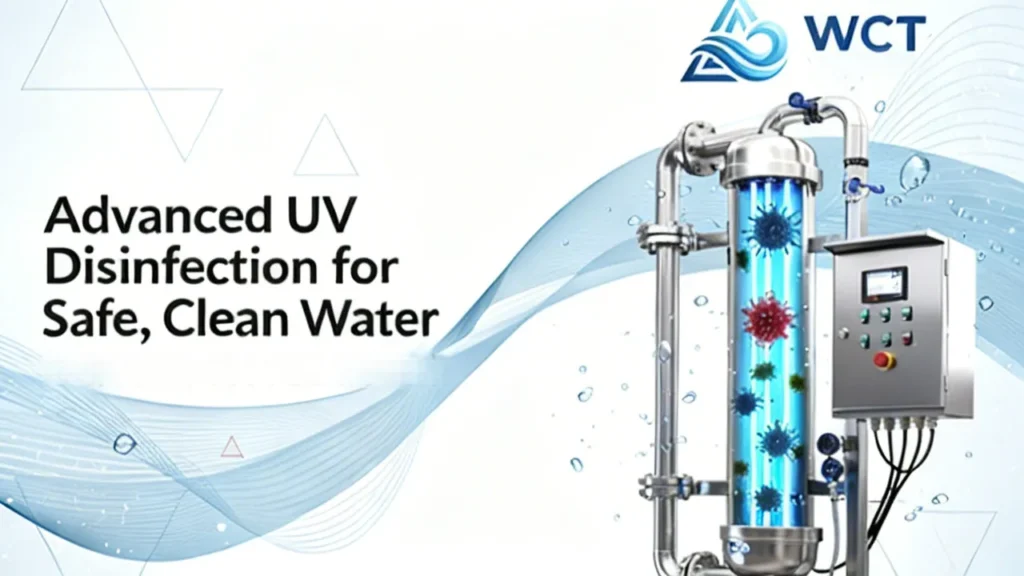
A standard UV setup consists of four primary parts that work together to ensure your water is safe:
- UV Lamp: This is the core of the system, containing mercury vapor that produces germicidal ultraviolet light.
- Quartz Sleeve: A transparent tube that protects the lamp from water contact while allowing UV rays to pass through without interference.
- Stainless Steel Reactor Chamber: The housing where the water flows and is exposed to the UV light.
- Controller/Ballast: This unit manages the electrical output and provides alerts if the lamp fails or needs replacement.
The Importance of Pre-Filtration and Water Clarity
UV light cannot kill what it cannot reach. If your water contains sediment, silt, or debris, these particles can act as \”shields\” for bacteria, a phenomenon known as shadowing. To guarantee the success of uv water treatment for bacteria, we always recommend installing a 5-micron sediment filter before the UV unit.
Our comprehensive range of water treatment products includes high-quality pre-filtration stages designed to clear the path for UV rays, ensuring no pathogens \”hide\” behind physical contaminants.
Does UV Treatment Work in All Water Conditions?
UV technology is incredibly powerful, but its efficiency depends heavily on water quality. For the system to work at peak performance, the water must meet certain \”UV Transmittance\” (UVT) levels. Several factors can interfere with the light\’s ability to penetrate the water:
- Turbidity: Cloudy water scatters light, reducing the dose received by microorganisms.
- Hardness: High calcium levels can cause scale buildup on the quartz sleeve, blocking the light.
- Iron and Manganese: These minerals can stain the sleeve, effectively \”blinding\” the system.
In large-scale or industrial settings, managing these conditions often requires integrated solutions like a waste water treatment tank to settle out solids before the final disinfection stage. If your water is clear and pre-treated, UV is the most reliable way to ensure it stays bacteria-free.
When to Use a UV Water Treatment System
Knowing exactly when to install a UV system can save you from serious health risks. As a trusted water treatment products supplier and manufacturer, we recommend using UV water treatment for bacteria in several specific scenarios to guarantee your water supply remains safe and pathogen-free.
Testing Well Water for Bacterial Contamination
Private wells are completely unregulated, making them highly vulnerable to groundwater runoff and bacterial growth.
- Annual Testing: Always test your well water at least once a year.
- Positive Results: If your test shows total coliform or E. coli, installing a UV system is the most effective, chemical-free solution to neutralize these threats immediately.
Municipal Water and Boil Water Advisories
Even treated city water isn\’t entirely foolproof. Aging infrastructure and water main breaks can introduce dangerous microorganisms into your home\’s supply before you even receive a warning. Having a UV system acts as an automatic, 24/7 safeguard. When a sudden boil water advisory is issued, your UV setup is already working to deactivate harmful pathogens, keeping your drinking water secure.
Residential vs. Commercial UV Applications
The scale of your water usage dictates the type of system you need:
- Residential Systems: Designed for standard household flow rates, these are typically installed at the point of entry to protect every tap in the house.
- Commercial Applications: Businesses, hospitals, and industrial facilities require much higher flow rates and stricter regulatory compliance. For these high-demand environments, a heavy-duty commercial UV water treatment system is engineered to deliver continuous, large-scale disinfection without pressure drops.
Choosing the Right UV Water Filter System
Selecting the correct system is about matching the technology to your specific water usage and quality. As a dedicated water treatment products supplier and manufacturer, we focus on ensuring that every uv water treatment for bacteria setup is optimized for maximum kill rates and long-term reliability.
How to Size Your UV Disinfection System
Sizing is determined by the peak flow rate, measured in Gallons Per Minute (GPM). If the water moves too fast through the chamber, the bacteria won\’t receive a lethal dose of UV radiation.
| Household/Building Size | Recommended Flow Rate | Typical Application |
|---|---|---|
| 1 – 2 Bedrooms | 5 – 8 GPM | Small cabins or apartments |
| 3 – 4 Bedrooms | 9 – 12 GPM | Standard residential homes |
| 5+ Bedrooms / Large Family | 15 – 20 GPM | Large estates or light commercial |
| Commercial Facilities | 30+ GPM | Hotels, factories, and farms |
Do You Need Additional Water Filters Alongside UV?
UV light is not a \”catch-all\” solution. It is a disinfection stage, not a physical filter. For the UV lamp to be effective, the water must be clear. Shadows created by dirt or sediment allow bacteria to \”hide\” from the light.
- Sediment Filtration: A 5-micron pre-filter is mandatory to remove suspended solids.
- Water Softening: High mineral content causes scale buildup on the quartz sleeve. Reviewing a hard water treatment guide can help you determine if you need a softener to prevent \”shading\” of the UV lamp.
- Carbon Filtration: Removes chlorine and organic chemicals that can affect the taste and clarity of the water.
Installation and Maintenance Requirements
Installing a uv water treatment for bacteria system is straightforward but requires precision. The unit should be the last stage of treatment before the water reaches the tap.
- Lamp Replacement: UV lamps lose their germicidal intensity over time. You must replace the lamp every 9,000 hours (approximately once per year), even if it is still glowing.
- Sleeve Cleaning: The quartz sleeve protecting the lamp must be cleaned every 6–12 months to ensure light transparency.
- System Control: Many systems use a manual multiport valve for water pure system in the pre-filtration stage to simplify backwashing and maintenance before the water enters the UV chamber.
How Much Does a UV Water System Cost?
The initial investment for a residential UV system typically ranges from $400 to $1,000, depending on the GPM rating and features like UV intensity sensors or solenoid shut-off valves.
Operating costs are relatively low, consisting mainly of the annual lamp replacement (approx. $80–$150) and the electricity required to run a bulb similar to a standard fluorescent light. For commercial-grade applications, costs scale with the flow rate and the complexity of the monitoring equipment required to meet local health regulations.