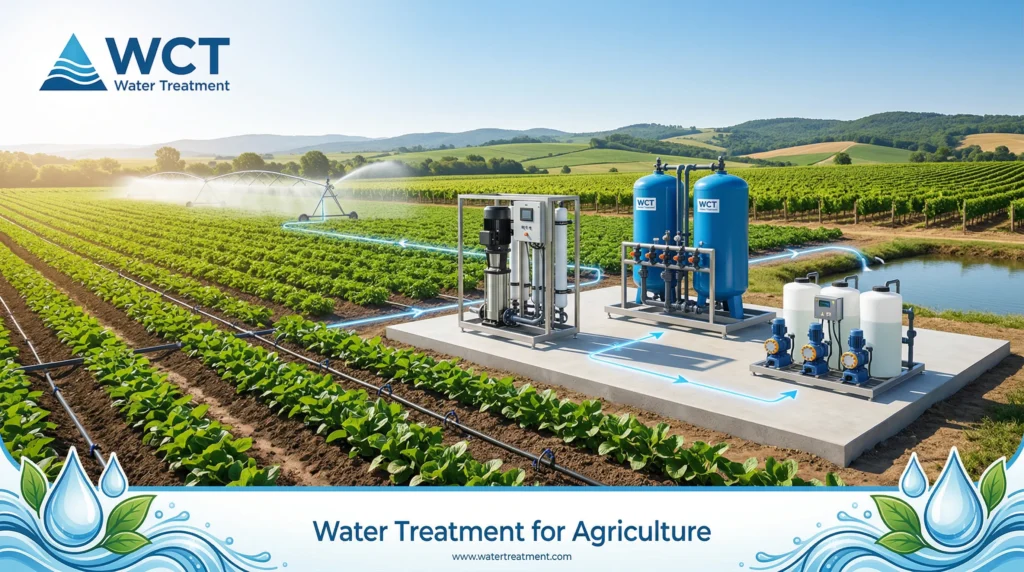
The Vital Role of Water Quality in Farming
Exceptional agriculture starts with exceptional water. For modern farming operations, the purity of your irrigation supply directly dictates the health of your soil and the ultimate success of your harvest. Implementing reliable water treatment for agriculture ensures that crops receive optimal hydration without the burden of harmful chemicals, pathogens, or excessive salts. As a dedicated water treatment products supplier and manufacturer, we recognize that superior water quality is not just an option—it is the foundational requirement for sustainable, high-yield commercial farming. Clean water maximizes fertilizer efficiency, protects delicate root systems, and guarantees safer produce.
Common Source Water Challenges and Contaminants
Agricultural water sources—whether drawn from deep wells, surface rivers, or municipal supplies—are rarely pristine. Untreated source water often harbors hidden threats that can devastate agricultural productivity if left unmanaged.
Understanding what is in your water is the first step toward effective mitigation. Common source water contaminants include:
- High Salinity (TDS): Excessive dissolved salts choke plant roots and prevent water absorption.
- Heavy Metals: Arsenic, lead, and cadmium can accumulate in agricultural soil, posing severe food safety risks.
- Biological Pathogens: Bacteria, viruses, and algae threaten plant health and create massive biosecurity liabilities.
- Chemical Runoff: Herbicide and pesticide residues from neighboring lands disrupt organic growth cycles.
- Hardness Minerals: Calcium and magnesium cause severe scaling in critical farm infrastructure.
How Poor Water Quality Impacts Crop Yields
Ignoring source water chemistry directly damages your bottom line. When crops are continuously irrigated with contaminated or highly saline water, the physical and financial impacts are immediate and severe.
The cascading effects of poor water quality manifest in several critical ways:
- Nutrient Lockout: Toxic elements block essential nutrient uptake, resulting in stunted plant development and delayed harvest cycles.
- Irreversible Soil Degradation: Continuous salt accumulation destroys natural soil structure, gradually rendering fertile land completely barren.
- Widespread Crop Disease: Waterborne pathogens rapidly spread root rot and foliar diseases across entire greenhouses or fields.
- Costly Equipment Failure: Mineral scaling and biological fouling permanently destroy expensive drip emitters and precision irrigation systems.
Deploying professional water treatment for agriculture eliminates these severe risks, transforming a volatile, unpredictable water source into your farm\’s most reliable and profitable asset.
Promoting Sustainable Agriculture and Water Conservation
We all know water resources are getting scarcer globally. Treating and reusing agricultural runoff isn\’t just an eco-friendly trend; it is a strict necessity for modern farming survival. By integrating reliable water treatment for agriculture into your daily operations, we can dramatically cut down on fresh water withdrawal. Understanding the right process of water treatment allows farms to recycle wastewater safely and efficiently. This keeps operations green, drastically reduces water bills, and ensures compliance with tightening environmental regulations.
Preventing Soil Salinization
Using untreated, mineral-heavy water slowly ruins your land. Constant irrigation with hard water leads to salt buildup, which destroys soil structure and blocks plant roots from absorbing essential nutrients. Implementing proper water treatment filters out these harmful dissolved solids before they ever hit the dirt.
Direct benefits to your soil include:
- Preserved Topsoil: Prevents hard surface crusting and reduces runoff.
- Enhanced Root Health: Unlocks the soil, allowing unrestricted water and nutrient uptake.
- Long-Term Fertility: Keeps your acreage productive and viable for future generations.
Boosting Farm Profitability and Efficiency
At the end of the day, farming is a demanding business. Investing in advanced water treatment for agriculture directly protects your bottom line. Clean, balanced water guarantees better crop quality and prevents expensive irrigation systems from failing prematurely.
| Profitability Driver | Direct Impact of Treated Water |
|---|---|
| Crop Yields | Delivers larger, healthier, and more consistent harvests. |
| Equipment Lifespan | Eliminates mineral scale and clogging in drip lines, valves, and pumps. |
| Fertilizer Efficiency | Reduces the need for excess chemical correctors, lowering input costs. |
Reverse Osmosis (RO) Systems for Farming
When it comes to effective water treatment for agriculture, high salt levels and heavy metals are major crop killers. That is exactly where Reverse Osmosis (RO) steps in. We design these systems to push source water through a semi-permeable membrane, effectively stripping away up to 99% of dissolved solids. It is an absolute game-changer for hydroponic setups, sensitive greenhouse crops, and farms battling high soil salinity. Our highly scalable plants for water treatment frequently utilize RO technology to guarantee your irrigation supply is pristine and perfectly balanced for maximum yield.
Precision Filtration and Micron Ratings
Before moving to advanced purification, you have to nail the basics. Precision filtration physically blocks the dirt, sand, and algae that constantly clog up drip irrigation lines and sprinkler heads. We evaluate your water source and look closely at micron ratings to match the exact filter to your farm\’s needs.
- Coarse filters (50+ microns): Catch large, damaging debris like leaves, grit, and coarse sand.
- Fine filters (1-10 microns): Trap fine silt and microscopic organic matter, protecting your delicate downstream pumping equipment.
Ultrafiltration and Membrane Bioreactors
If you want to safely recycle and reuse agricultural run-off, Ultrafiltration (UF) and Membrane Bioreactors (MBR) are your most practical tools. These setups use incredibly fine membranes to block harmful bacteria and viruses while allowing beneficial, soluble nutrients to pass right through to your crops. As a trusted water treatment products supplier and manufacturer, we routinely help global farms adopt MBR tech to turn wastewater into a reliable, safe irrigation source. Visualizing how these components fit together is simple when you review a standard water treatment plant diagram tailored for modern agricultural operations.
Innovative Solutions: Electroporation and Ozone
The farming industry is moving fast toward chemical-free alternatives. We are helping farms stay ahead of the curve by integrating electroporation and ozone systems directly into standard agricultural water treatment routines.
- Ozone Systems: Inject highly reactive oxygen to instantly oxidize pathogens and break down lingering pesticide residues. Best of all, it leaves zero toxic byproducts in your soil.
- Electroporation: Uses targeted electrical pulses to physically destroy bacterial cell walls in the water. It is a highly efficient, low-maintenance way to keep your water lines clean and your crops thriving without relying on harsh chemicals.
Precision Irrigation and Organic Farming Water Treatment
As a dedicated water treatment products supplier and manufacturer, we know that modern farming demands exactness. Precision irrigation systems, like drip lines, easily clog if sediment and organic matter aren\’t actively filtered. For organic farming, strict regulations mean you cannot risk chemical contaminants in your source water. Effective water treatment for agriculture solves both issues. By integrating robust plants for water treatment, we ensure your delicate irrigation lines stay clear and your organic yields remain perfectly compliant.
- Zero Clogs: Extends the working life of drip emitters and micro-sprinklers.
- Pure Baseline: Removes unwanted heavy minerals before they touch your soil.
- Chemical-Free: Keeps organic produce strictly natural and safe.
Livestock Watering and Aquaculture
Clean water is just as critical for animals as it is for crops. The daily health of your livestock and fish directly dictates your farm\’s profitability. Untreated water spreads disease, stresses animals, and slows down growth rates.
- Livestock: Filtering out pathogens, excess salts, and heavy metals drastically improves herd immunity and overall meat or dairy production.
- Aquaculture: Fish and shrimp rely on exact water chemistry to survive. Treating your source water prevents massive die-offs and keeps oxygen and pH levels totally stable.
Vertical Farming and Horticulture
Indoor agriculture runs on tightly controlled environments. In vertical farming and high-end horticulture, you must start with a pure water baseline before mixing any nutrient solutions.
- Total Consistency: Purified water guarantees your expensive nutrient mixes react exactly as planned without mineral lockout.
- Disease Prevention: Closed-loop hydroponic systems are highly vulnerable to rapid pathogen spread if the incoming water is not properly sanitized.
Our commercial systems give indoor growers the exact, unvarying water profile needed to maintain rapid, year-round harvest cycles.
Agricultural Wastewater Reuse and Safe Disposal
Global water scarcity is a reality we all have to manage. Discarding used agricultural water is no longer cost-effective. Smart, modern farms capture, treat, and recycle their daily runoff.
Installing a reliable waste water treatment tank allows you to safely process fertilizer-heavy runoff for reuse in equipment washing or secondary irrigation. This heavily cuts down your fresh water draw and keeps your operation compliant with strict local environmental regulations. We build these systems to handle the heavy organic loads typical in farming, turning expensive waste directly back into a usable resource.
Assessing Farm Size and Water Source Requirements for Water Treatment for Agriculture
When planning water treatment for agriculture, the first step is analyzing your farm size and your specific water source. A small commercial greenhouse operates differently than a massive open-field farm. We evaluate your daily water consumption, peak flow rates, and the raw water quality to design the right setup.
Whether your source is groundwater, a nearby river, or municipal supply, each brings unique contaminants like heavy metals or high salinity. S
Whether your source is groundwater, a nearby river, or municipal supply, each brings unique contaminants like heavy metals or high salinity. Sizing your system accurately prevents irrigation bottlenecks and ensures steady pressure. Storing your treated water securely in a durable water treatment tank.
Whether your source is groundwater, a nearby river, or municipal supply, each brings unique contaminants like heavy metals or high salinity. Sizing your system accurately prevents irrigation bottlenecks and ensures steady pressure. Storing your treated water securely in a durable water treatment tank is essential so you always have a clean, ready supply during peak watering hours.
Custom vs. Modular Purification Systems
Choosing the right equipment architecture dictates how easily your farm can grow. As an experienced water treatment products supplier and manufacturer, we build systems that fit your exact operational footprint. You generally have two paths: modular or custom-built.
| System Type | Best Application | Installation Speed | Future Scalability |
|---|---|---|---|
| Modular Systems | Standard farms needing rapid deployment | Fast (Plug-and-play setup) | High (Easily add more units later) |
| Custom Systems | Farms with complex, severe water contamination | Moderate (Requires tailored engineering) | Specific (Built exactly to current capacity) |
Modular skids are pre-assembled and easy to drop into place, making them a favorite for fast-paced farming operations. Custom systems are engineered from the ground up to tackle highly specific water chemistry challenges.
Evaluating Cost-Effectiveness and Long-Term Performance
Investing in water treatment for agriculture is a strategy for long-term profitability. Upfront costs only tell half the story. We evaluate the total cost of ownership, focusing heavily on daily operational efficiency, membrane lifespan, and energy consumption.
A high-performance system must run efficiently year after year without crippling maintenance costs. A great way to maximize your ROI is by incorporating low-maintenance technologies like UV light water treatment
Whether your source is groundwater, a nearby river, or municipal supply, each brings unique contaminants like heavy metals or high salinity. Sizing your system accurately prevents irrigation bottlenecks and ensures steady pressure. Storing your treated water securely in a durable water treatment tank is essential so you always have a clean, ready supply during peak watering hours.
Custom vs. Modular Purification Systems
Choosing the right equipment architecture dictates how easily your farm can grow. As an experienced water treatment products supplier and manufacturer, we build systems that fit your exact operational footprint. You generally have two paths: modular or custom-built.
| System Type | Best Application | Installation Speed | Future Scalability |
|---|---|---|---|
| Modular Systems | Standard farms needing rapid deployment | Fast (Plug-and-play setup) | High (Easily add more units later) |
| Custom Systems | Farms with complex, severe water contamination | Moderate (Requires tailored engineering) | Specific (Built exactly to current capacity) |
Modular skids are pre-assembled and easy to drop into place, making them a favorite for fast-paced farming operations. Custom systems are engineered from the ground up to tackle highly specific water chemistry challenges.
Evaluating Cost-Effectiveness and Long-Term Performance
Investing in water treatment for agriculture is a strategy for long-term profitability. Upfront costs only tell half the story. We evaluate the total cost of ownership, focusing heavily on daily operational efficiency, membrane lifespan, and energy consumption.
A high-performance system must run efficiently year after year without crippling maintenance costs. A great way to maximize your ROI is by incorporating low-maintenance technologies like UV light water treatment.
Whether your source is groundwater, a nearby river, or municipal supply, each brings unique contaminants like heavy metals or high salinity. Sizing your system accurately prevents irrigation bottlenecks and ensures steady pressure. Storing your treated water securely in a durable water treatment tank is essential so you always have a clean, ready supply during peak watering hours.
Custom vs. Modular Purification Systems
Choosing the right equipment architecture dictates how easily your farm can grow. As an experienced water treatment products supplier and manufacturer, we build systems that fit your exact operational footprint. You generally have two paths: modular or custom-built.
| System Type | Best Application | Installation Speed | Future Scalability |
|---|---|---|---|
| Modular Systems | Standard farms needing rapid deployment | Fast (Plug-and-play setup) | High (Easily add more units later) |
| Custom Systems | Farms with complex, severe water contamination | Moderate (Requires tailored engineering) | Specific (Built exactly to current capacity) |
Modular skids are pre-assembled and easy to drop into place, making them a favorite for fast-paced farming operations. Custom systems are engineered from the ground up to tackle highly specific water chemistry challenges.
Evaluating Cost-Effectiveness and Long-Term Performance
Investing in water treatment for agriculture is a strategy for long-term profitability. Upfront costs only tell half the story. We evaluate the total cost of ownership, focusing heavily on daily operational efficiency, membrane lifespan, and energy consumption.
A high-performance system must run efficiently year after year without crippling maintenance costs. A great way to maximize your ROI is by incorporating low-maintenance technologies like UV light water treatment, which eliminates harmful pathogens without relying on expensive, ongoing chemical additives. This makes your entire operation leaner and more reliable over time.
- Lower Operating Expenses: Utilizing energy-efficient pumps drastically reduces monthly utility bills.
- Reduced Chemical Input: Smart filtration and UV integration cut down on the need for harsh sterilizing chemicals.
- Extended Equipment Lifespan: Regular maintenance routines and automated flushing keep the main filtration membranes running smoothly for years.
Is reverse osmosis worth the cost for agriculture?
Yes, reverse osmosis (RO) is absolutely worth the investment for modern farming, especially when dealing with poor-quality water sources. While the initial setup requires capital, the long-term payoff is significant. As a trusted water treatment products supplier and manufacturer, we see firsthand how RO systems prevent soil degradation and protect sensitive irrigation equipment from mineral buildup.
If your farm relies heavily on groundwater, integrating RO into your water treatment for well systems ensures you remove harmful salts, heavy metals, and toxic minerals before they reach your fields. The result is better soil health, optimized fertilizer uptake, and ultimately, a much higher crop yield that offsets the equipment costs.
Can treated wastewater be used directly for irrigation?
Treated wastewater is an excellent, sustainable resource for agriculture, but it should not be used directly without the right purification steps. To safely reuse wastewater, you must ensure all pathogens, chemical residues, and excess nutrients are neutralized.
A reliable water treatment for agriculture setup will use advanced filtration followed by strong disinfection methods, like UV sterilization, to guarantee crop safety. Evaluating the ultraviolet water treatment cost is a smart move for farm owners looking to securely and affordably recycle wastewater without risking plant health or violating local agricultural regulations.
What crops benefit most from purified water?
Every plant grows better with clean water, but certain high-value and sensitive crops show massive improvements in both yield and quality when irrigated with purified water.
- Berries (Strawberries and Blueberries): Extremely sensitive to high salinity and chlorine. Purified water prevents leaf burn and boosts fruit sweetness.
- Leafy Greens (Lettuce, Spinach, Kale): Because water directly touches the edible parts, using pathogen-free water is critical for food safety and crispness.
- Greenhouse Vegetables (Tomatoes and Cucumbers): Hydroponic and greenhouse environments require precise nutrient dosing. Purified water provides a \”blank slate\” to control exactly what the plants absorb.
- Medical Plants and Hemp: These crops are strictly tested for heavy metals and contaminants. Clean water ensures the final product passes all regulatory quality checks.