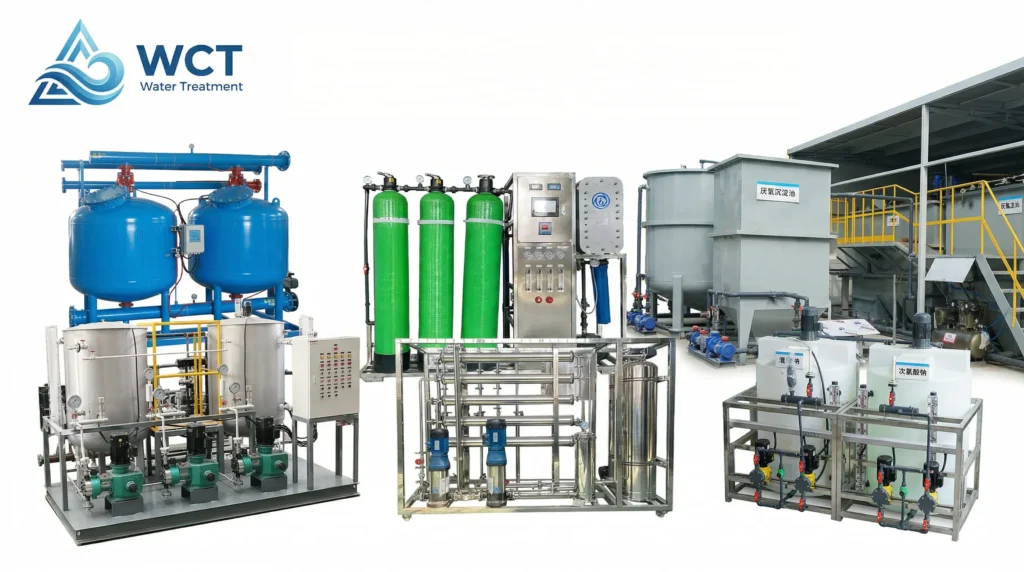
Are you struggling to optimize the efficiency of your water treatment plants? Managing a safe, compliant public water supply is critical for public health, but dealing with aging infrastructure and strict regulations can be a massive headache.
As an industry professional, you know that investing in reliable, high-quality equipment is crucial for your facility\’s success.
In this post, you\’re going to learn exactly how a modern municipal water treatment system operates, step by step.
We\’ll break down the complete journey from raw source water to the final tap, explore how to tackle emerging contaminants, and show you how integrating high-yield, scalable products from WCT can drastically reduce your operational downtime.
So if you\’re looking to upgrade your treatment processes and guarantee top-tier water quality for your community, this guide is for you.
Let\’s dive right in.
What is Municipal Water Treatment?
Municipal water treatment is the large-scale, centralized process of purifying raw water to provide safe, potable water for entire communities. Unlike residential point-of-use filtration, which only handles single-home volumes, or industrial water treatment, which targets highly specific manufacturing byproducts, a municipal water treatment system is engineered to process massive daily capacities. It serves as the backbone of a safe public water supply, ensuring that every drop delivered through the water distribution network is fit for human consumption.
Primary Treatment Goals
The core objective of modern water treatment plants is to transform compromised raw water into clean drinking water. This is achieved through three non-negotiable goals:
- Pathogen Removal: Eradicating dangerous bacteria, viruses, and parasites to prevent the outbreak of waterborne diseases.
- Chemical Balance: Removing toxic heavy metals and adjusting pH levels so the water is safe to ingest and non-corrosive to municipal pipes.
- Aesthetic Improvement: Filtering out suspended solids, organic matter, and dissolved minerals to eliminate unpleasant colors, odors, and tastes.
Water Quality Standards
To protect public health, drinking water purification is heavily regulated. A compliant municipal water treatment process must adhere to strict, scientifically backed frameworks.
Organizations such as the Environmental Protection Agency (EPA) and the World Health Organization (WHO) establish precise water quality standards. These regulatory guidelines set the maximum allowable limits for microorganisms, disinfectants, and organic chemicals. Meeting these standards is not optional; it is the absolute baseline for legal operation and public trust in any municipal water treatment project.
The Step-by-Step Municipal Water Treatment Process
Turning raw water into a safe public water supply doesn\’t happen by chance. As a dedicated supplier and manufacturer, we know that a reliable municipal water treatment system relies on a strict, multi-stage approach. Here is exactly how the municipal water treatment process works from start to finish.
1. Collection and Screening
Everything starts at the raw water intake. Water is drawn directly from natural sources like lakes, rivers, or underground aquifers. Before it enters the main facility, it passes through large, heavy-duty screens. This initial step blocks out immediate hazards like wood, leaves, and plastic debris, effectively protecting downstream pumps and machinery from physical damage.
2. Coagulation and Flocculation
Even after screening, the water carries microscopic dirt and dissolved organic matter. During coagulation and flocculation, we introduce specific neutralizing chemicals into the water. These additives cause the tiny, freely suspended particles to stick together into larger, heavier clumps known as \”floc.\”
3. Sedimentation
Once the floc is formed, the water is guided into a clarifier and sedimentation basin. Because the floc is heavy, gravity simply takes over. The solid particles settle down at the bottom of the large tanks as sludge, which is then safely scraped away and removed. Meanwhile, the visually clear water at the top is skimmed off to move forward.
4. Filtration
The clear water still hides microscopic impurities that need to be removed. We push it through extensive water filtration systems made up of deep beds of sand, gravel, and active charcoal. In more advanced setups, high-pressure membrane technology is used. To keep these demanding filtration cycles running continuously without manual intervention, modern plants rely on precise hardware like automatic multiport valves to seamlessly manage water flow and backwashing routines.
5. Disinfection
The final, crucial step is the disinfection process. Before the water leaves the plant, we introduce standard disinfectants like chlorine or utilize UV light and ozone to completely destroy any surviving pathogens, bacteria, or viruses. This treatment guarantees that the water stays sterile and perfectly safe for consumption as it travels through miles of piping across the entire water distribution network to reach local homes and businesses.
Modernizing the Municipal Water Treatment System
As a dedicated supplier and manufacturer in the industry, we know that modernizing a municipal water treatment system is no longer just an option—it is a necessity. Aging infrastructure is a massive hurdle globally. Outdated pipes, failing equipment, and older clarifier and sedimentation basins directly threaten drinking water purification efforts, often leading to reduced flow rates and compromised water quality.
To fix these structural issues, treatment facilities must adopt next-generation technologies. Upgrading the municipal water treatment process boosts efficiency, lowers operational costs, and keeps plants fully compliant with strict water quality standards.
Here is how we are pushing water treatment plants into the future:
- Reverse Osmosis Technology: Integrating high-capacity RO membranes provides a far superior level of purification compared to legacy filtration methods.
- Smart Automation: Relying on manual controls leads to inconsistencies. Implementing a WCT automated powder liquid dosing system guarantees precise chemical application for coagulation and flocculation, cutting down on waste and labor.
- Energy-Efficient Hardware: Modernizing raw water intakes and distribution networks with variable frequency drive (VFD) pumps drastically reduces a plant\’s energy footprint.
- Advanced Disinfection: Supplementing traditional chlorine with an ultraviolet water treatment system offers a highly effective, chemical-free safeguard during the final effluent treatment stages.
Tackling Emerging Contaminants
The threats to our public water supply are evolving. Standard setups built decades ago simply cannot catch today’s complex microscopic threats. We focus heavily on upgrading water filtration systems to specifically target:
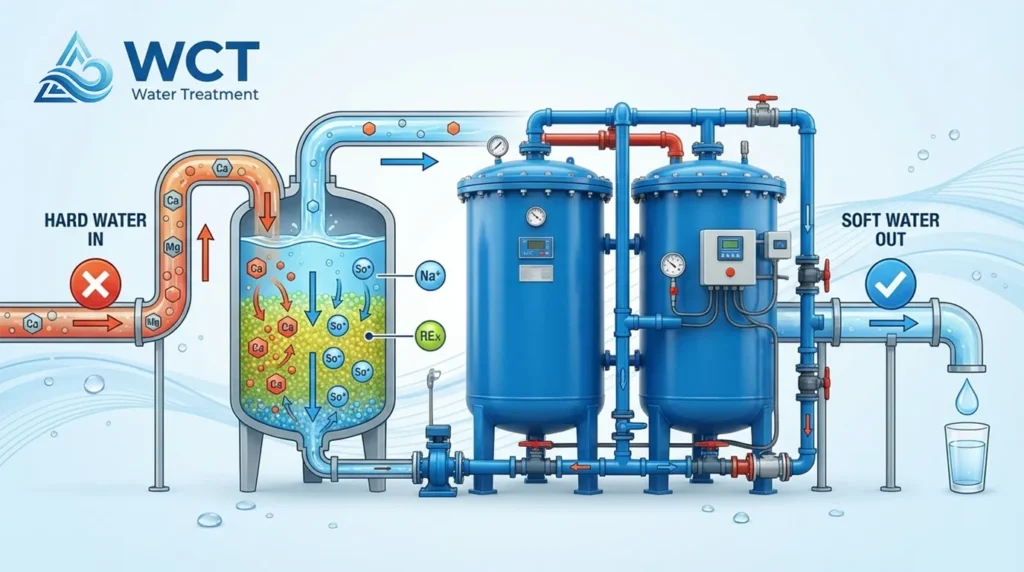
- PFAS (Forever Chemicals): We deploy advanced oxidation processes and specialized ion-exchange resins to effectively strip these resilient chemicals from the water.
- Microplastics: We utilize ultra-filtration membrane tech to block synthetic particles from entering the public distribution network.
- Pharmaceuticals: Active drug compounds are neutralized and removed through high-grade activated carbon and multi-stage treatment protocols.
Securing the future of municipal water treatment means investing in the right upgrades today to handle the contaminants of tomorrow.
Sourcing Equipment for Municipal Water Treatment
Running a reliable municipal water treatment system takes more than just a solid layout; it demands heavy-duty hardware. Low-quality parts inevitably lead to rapid wear, leaks, and a drop in overall drinking water purification standards. When optimizing your water treatment plant design, selecting top-tier components from day one is the smartest way to boost plant efficiency and prevent costly, unplanned shutdowns.
Key Hardware for Treatment Plants
To keep a facility operating at peak performance, you need to invest in the right core gear:
- Filtration Media: The frontline defense for trapping sediment, dirt, and unwanted organic debris.
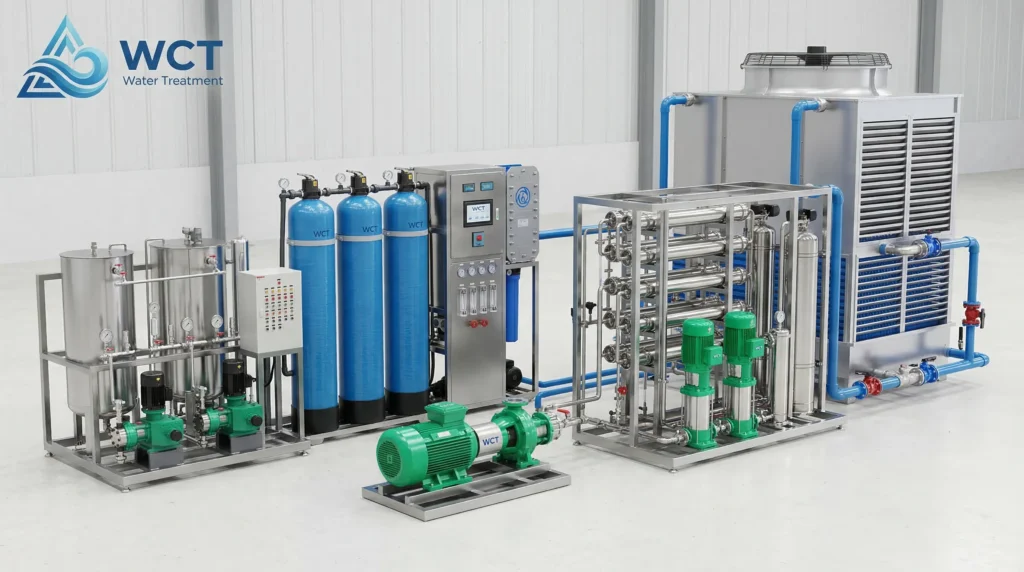
- Membrane Systems: Crucial for advanced purification, including industrial-grade reverse osmosis technology.
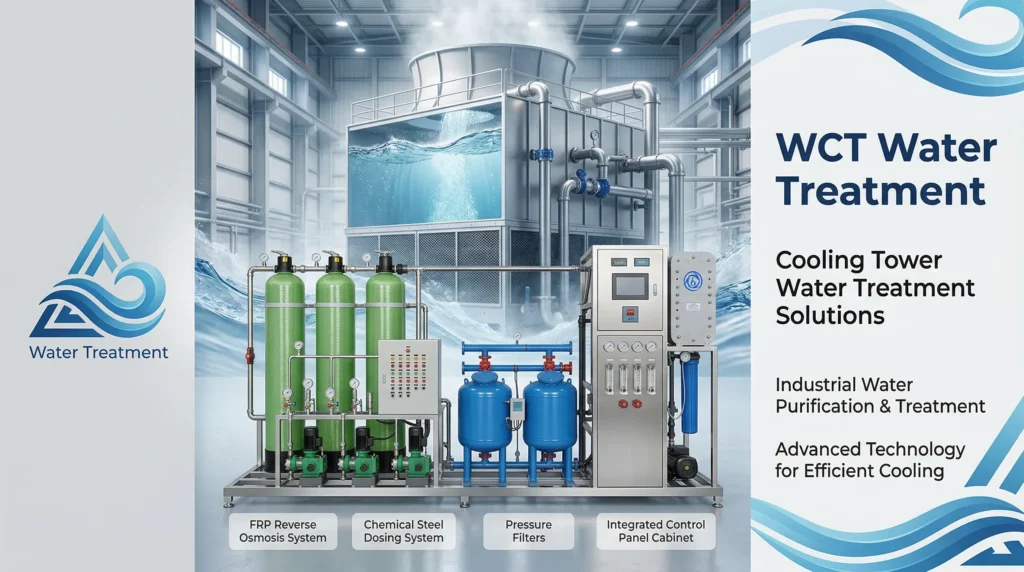
- Dosing Pumps: Precision tools designed to inject the exact amount of chemicals needed during the municipal water treatment process.
- Industrial Valves: The rugged backbone that safely manages and directs high-volume water flow across the entire plant.
The WCT Advantage
When managing the public water supply, operational downtime simply isn\’t an option. At WCT, we manufacture and supply durable, fully compliant water treatment products built for real-world demands. Our hardware is engineered to withstand the relentless daily grind of municipal water treatment, helping you dramatically reduce maintenance hours, avoid operational headaches, and ensure clean water keeps flowing to your community without interruption.
FAQs on Municipal Water Treatment
What are the main stages of the municipal water treatment process?
The standard municipal water treatment process breaks down into five essential stages:
- Collection and Screening: Removing large debris from the raw water intake.
- Coagulation and Flocculation: Binding small particles together.
- Sedimentation: Allowing heavy flocs to settle in a clarifier and sedimentation basin.
- Filtration: Passing water through media to catch remaining impurities.
- Disinfection: Neutralizing pathogens before distribution.
How does disinfection protect the public water supply?
Disinfection is the final defense line in drinking water purification. By applying chlorine, UV light, or ozone, this step destroys harmful bacteria and viruses, keeping the entire water distribution network safe and ensuring the water stays clean until it reaches the tap.
What new technologies improve municipal treatment efficiency?
Upgrading a municipal water treatment system today means adopting smarter, highly efficient methods. Water treatment plants are increasingly relying on reverse osmosis technology and the advanced oxidation process to filter out emerging contaminants like PFAS and pharmaceuticals, while automated sensors optimize daily energy use.
Why is equipment quality crucial for treatment plants?
Subpar equipment leads to costly downtime and compliance failures. Reliable hardware ensures continuous operation and strict adherence to global water quality standards. For example, utilizing a highly accurate WCT chemical dosing system guarantees exact chemical measurements during coagulation and disinfection, maximizing both safety and plant efficiency.
How does WCT support upgrading municipal water systems?
As an experienced water treatment products supplier and manufacturer, we build the reliable infrastructure municipalities need to modernize. From supplying robust WCT disc diffusers that enhance aeration in wastewater management to providing durable filtration components, we deliver practical, compliant hardware that reduces operational headaches and future-proofs your municipal water treatment facilities.