What is Municipal Water Treatment?
How do cities ensure a safe, continuous water supply for millions of people every single day? At its core, municipal water treatment is the large-scale industrial process of purifying water to meet the demands of an entire community. As WCT, a leading water treatment products supplier and manufacturer, we engineer the critical components that keep these massive facilities running seamlessly around the clock.
Drinking Water vs. Wastewater Management Solutions
Many people confuse the different stages of city water management. A complete municipal water treatment system handles both incoming supply and outgoing waste, but they require entirely different facilities:
- Drinking Water Purification Plant: This facility takes raw water from lakes, rivers, or underground aquifers and rigorously filters and sanitizes it for safe public consumption.
- Municipal Wastewater Treatment: This process manages sewage and stormwater runoff. Facilities utilize primary and secondary treatment phases to strip pollutants from the water before initiating safe municipal effluent discharge back into the natural environment.
Meeting Strict Water Quality Standards
The overarching goal of any public water supply system is protecting human health and local ecosystems. Facilities must meet rigorous, non-negotiable federal and local water quality standards. Whether a municipality is building a new facility or upgrading an aging one, achieving total Safe Drinking Water Act compliance is the primary driver. We design our equipment specifically to help municipalities hit these strict regulatory benchmarks efficiently and cost-effectively.
The 5-Step Municipal Water Treatment Process Explained
When we build or upgrade public water supply systems, we rely on a proven, multi-stage approach. A reliable municipal water treatment process guarantees that the water meets rigorous safety standards before it ever reaches a tap. Here is how the core 5-step process breaks down:
1. Coagulation and Flocculation
The first step involves targeting suspended dirt and dissolved particles. We add positively charged chemicals to the water, which neutralizes the negative charges on the dirt. As these particles bind together, they form larger, heavier clumps known as \”floc.\” Utilizing high-quality flocculant water treatment solutions is critical to ensure these particles clump together efficiently for removal.
2. Sedimentation (Clarification)
Once the floc forms, the water flows into water clarifier equipment and settling basins. Because the floc is heavy, it naturally sinks to the bottom of the water supply due to its weight. This sedimentation process leaves heavy sludge at the bottom while separating the clear water at the top so it can move to the next stage.
3. Filtration
The clear water then passes through specialized filtration infrastructure. Depending on the specific municipal water treatment system, this involves flowing the water through layers of varying pore sizes—typically sand, gravel, and charcoal, or advanced reverse osmosis membranes. This step physically traps and strips away any stubborn dissolved particles, dust, parasites, and chemical residues.
4. Disinfection
Even after extensive filtration, microscopic threats can remain. We dose the water with disinfectants like chlorine or chloramine, or utilize targeted UV water disinfection to eliminate remaining bacteria, viruses, and parasites. This guarantees Safe Drinking Water Act compliance and ensures the water stays safe as it travels through local pipe networks to homes and businesses.
5. Storage and Distribution
The final step is holding the treated water in a secure environment. We pump the purified water into closed water treatment tanks and sealed reservoirs. This essential holding time allows the disinfection process to fully complete and ensures the local community has a steady, reliable reserve to handle peak daily demand.
Core Components of a Municipal Water Treatment System
A reliable municipal water treatment process runs on heavy-duty, continuous-duty machinery. As a dedicated water treatment products supplier and manufacturer, we know that building a high-efficiency plant requires equipment that can handle massive, non-stop volume without missing a beat.
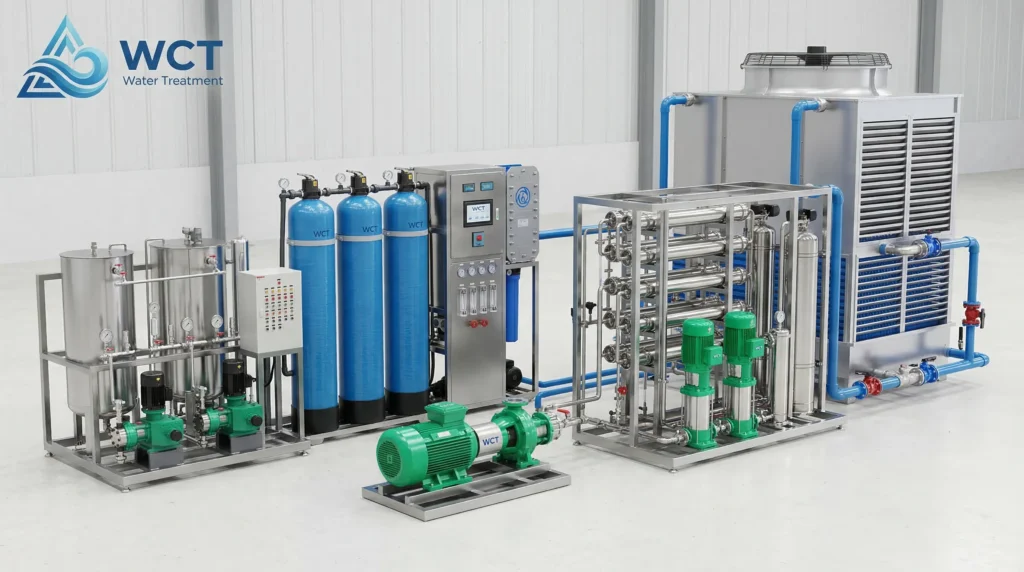
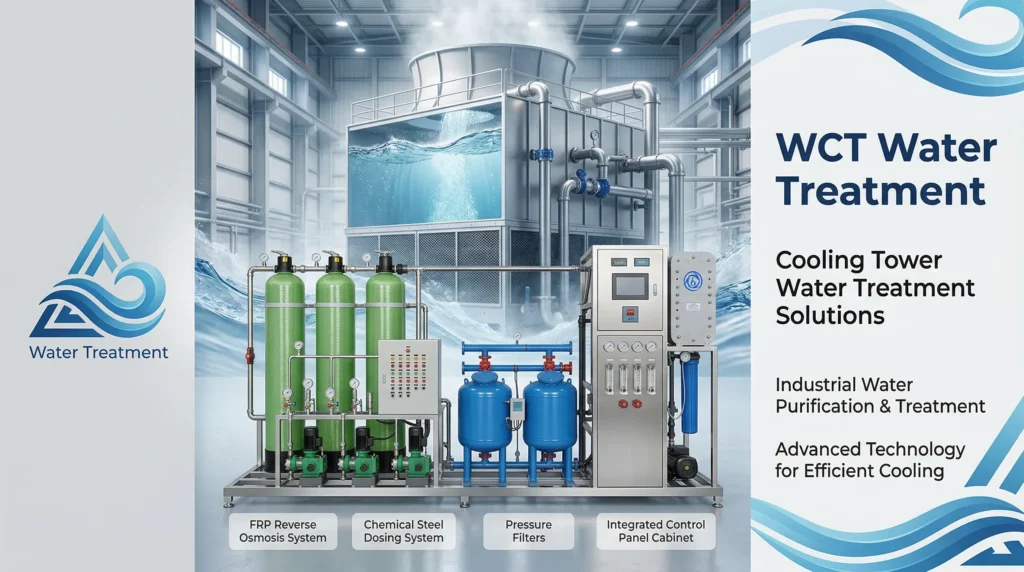
Here is the essential water filtration infrastructure that keeps a modern facility running smoothly:
- High-Volume Pumps: The muscle of the operation, moving millions of gallons of water daily from initial intake to final distribution.
- Automated Valves: Smart flow controls that manage water pressure and allow operators to isolate sections for maintenance without shutting down the entire grid.
- Membrane Filtration Units: Advanced reverse osmosis membranes and physical filters designed to strip out microscopic contaminants and dissolved solids.
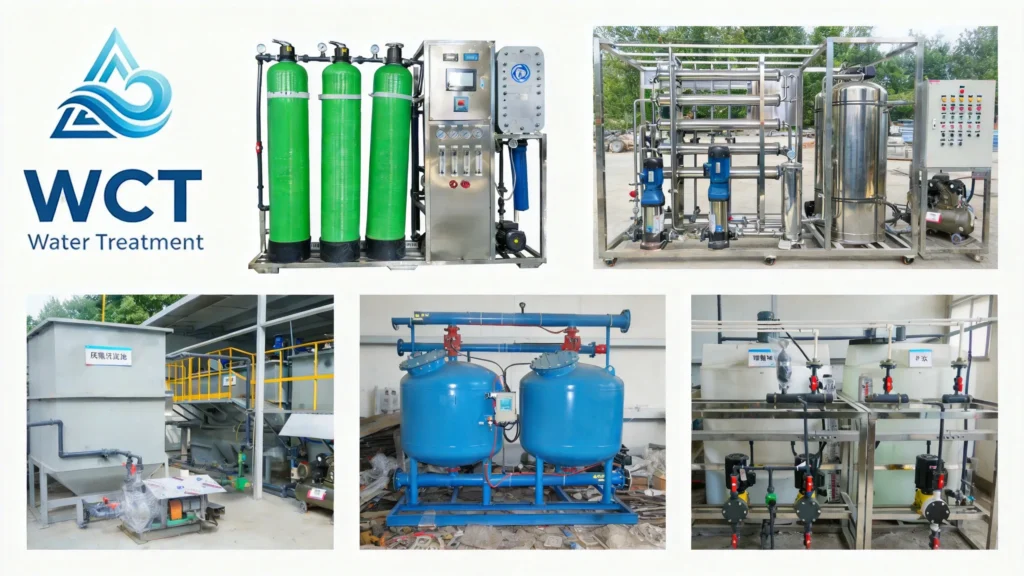
- Chemical Dosing Systems: Precision is critical for public safety. Integrating advanced chemical dosing equipment for municipal water treatment ensures the exact amount of coagulants, flocculants, and disinfectants are added consistently.
The Importance of Corrosion-Resistant Materials
You cannot cut corners on construction materials in a municipal water treatment system. Constant exposure to moisture, harsh chemicals, and raw sludge will quickly destroy inferior equipment. We prioritize industrial-grade durability for three main reasons:
- Minimizes Downtime: High-quality stainless steel and specialized industrial polymers prevent the unexpected breakdowns that cause facility-wide delays.
- Lowers Maintenance Costs: Heavy-duty components built to resist chemical wear require fewer repairs and replacements, saving taxpayer dollars.
- Protects Water Quality: Utilizing non-corrosive materials ensures that no rust or degraded metal ever leaches back into the public water supply systems.
Investing in top-tier, resilient components is the only way to ensure a treatment plant remains operational, compliant, and highly efficient for decades.
Current Challenges Facing Public Water Systems
Operating a reliable municipal water treatment system today means navigating a complex landscape of new and historical hurdles. As a dedicated water treatment products supplier and manufacturer, we constantly see these specific issues pushing the limits of global public water supply systems:
- Emerging Contaminants: It is no longer just about removing basic sediment and bacteria. Facilities are under intense pressure to filter out PFAS (forever chemicals), microplastics, and pharmaceutical runoff. Adapting an existing water plant treatment setup to catch these microscopic threats requires integrating advanced technologies like reverse osmosis membranes and highly precise chemical dosing.
- Aging Infrastructure: Countless municipalities are operating on borrowed time with outdated facilities. The financial and operational toll of legacy piping and aging equipment makes maintaining Safe Drinking Water Act compliance a daily struggle. To prevent catastrophic system failures, a comprehensive water treatment plant upgrade is often required to modernize the core water filtration infrastructure.
- Sustainability Demands: Processing industrial and public utility water is incredibly energy-intensive. Facilities are now tasked with reducing the energy footprint of the entire municipal water treatment process, forcing operators to balance environmental responsibility with the relentless demand for clean, safe water.
How WCT Powers the Future of Municipal Water Treatment
As a leading water treatment products supplier and manufacturer, we know exactly what it takes to keep public utilities running smoothly. Upgrading your infrastructure shouldn\’t mean tearing down the whole plant. That’s why we design every municipal water treatment system to integrate seamlessly into your current operations.
Whether you manage a drinking water purification plant or handle large-scale wastewater management solutions, our custom-engineered gear drops in with minimal downtime. We build our equipment to handle the heavy daily load of the municipal water treatment process, ensuring you stay compliant with the Safe Drinking Water Act and local regulations globally.
Why Choose WCT for Your Plant Upgrade?
We focus on three core areas to keep your water filtration infrastructure efficient and reliable:
- Built to Last: Our equipment is built with high-grade, corrosion-resistant materials. This means fewer breakdowns and much lower maintenance costs for your public water supply systems.
- Advanced Engineering: From heavy-duty chemical dosing systems to highly efficient WCT precision filters, we manufacture components designed to seamlessly catch the most elusive contaminants without slowing down your flow rate.
- Strict Safety Compliance: Every piece of equipment we supply is tested to meet rigorous global safety and municipal effluent discharge standards, giving you total operational peace of mind.
We don\’t just supply parts; we provide the backbone for reliable, clean water networks that communities depend on. By plugging advanced technology right into standard water clarifier equipment and filtration setups, we make sure your facility is fully equipped to handle the demands of modern municipal water treatment.
Frequently Asked Questions (FAQs)
Common Chemicals in Municipal Water Treatment
Through our work engineering advanced chemical dosing systems, we see a standard set of chemicals used across most facilities to ensure clean water:
- Coagulants: Aluminum sulfate (alum) or iron salts are added to clump suspended dirt and particles together.
- Disinfectants: Chlorine and chloramines are the standard choices to kill bacteria and keep water safe as it travels to homes.
- pH Adjusters: Lime or sodium hydroxide is used to balance the water\’s acidity, preventing costly pipe corrosion within public water supply systems.
Duration of the Municipal Water Treatment Process
Typically, a complete municipal water treatment process takes anywhere from 2 to 12 hours from intake to storage. The exact timeline depends heavily on the raw water quality, the size of the facility, and the specific technology used in the drinking water purification plant. At WCT, we build high-efficiency clarifiers and filtration units designed to keep this timeline as short as possible without ever compromising on safety.
Municipal vs. Industrial Water Treatment
The core difference between the two comes down to the end goal and the user. A municipal water treatment system is built exclusively to provide safe, clean drinking water for everyday community use and strictly follows public health guidelines.
Conversely, the process of water treatment for industrial applications is highly customized for specific manufacturing tasks. Industrial systems are built to handle things like high-purity boiler feed water, cooling tower management, or neutralizing harsh factory runoff. While both sectors rely on heavy-duty infrastructure, their purification targets are entirely different.