What is Biocide Water Treatment?
At WCT, your trusted water treatment products supplier and manufacturer, we know that maintaining pristine infrastructure is non-negotiable. Biocide water treatment is the strategic application of specialized chemical agents formulated to control, neutralize, or eradicate harmful biological growth within industrial and commercial water networks. This specialized treatment acts as the ultimate defense mechanism against destructive bacteria, algae, fungi, and biofilms that threaten system efficiency and longevity.
How Biocides Work in Water Systems
A high-quality biocide for water treatment operates through precise, targeted chemical disruption. Upon entering the water matrix, these active agents aggressively dismantle microscopic threats through several key mechanisms:
- Cell Wall Destruction: The chemicals actively breach and dissolve the protective outer membranes of harmful microbes.
- Metabolic Interference: The biocide neutralizes critical cellular enzymes, instantly starving the organisms of necessary nutrients.
- Reproductive Termination: Active compounds alter microbial DNA and RNA, completely halting the multiplication and spreading process.
The Importance of Biological Control
Deploying a rigorous biocide treatment water protocol is a core operational requirement, not an optional upgrade. Allowing biological growth to spread unchecked guarantees rapid equipment degradation and severe financial hemorrhaging.
- Optimizes Thermal Efficiency: Eliminates insulating biofilm layers, ensuring heat exchangers and cooling systems run at absolute peak capacity.
- Stops Severe Corrosion: Actively prevents Microbiologically Induced Corrosion (MIC) from permanently destroying costly metal piping, valves, and storage tanks.
- Guarantees Facility Safety: Eradicates dangerous, waterborne pathogens, directly safeguarding the health of facility personnel and the surrounding community.
Types of Water Treatment Biocides
When setting up a strong defense against biological growth, choosing the right chemicals is critical. As an experienced WCT(water treatment products supplier and manufacturer), we categorize biocide water treatment into two main functional groups.
Oxidizing Biocides
These are aggressive, fast-acting chemicals that physically destroy the cell walls of microorganisms.
- Common types: Chlorine, bromine, and ozone.
- How it works: Literally burns through bacteria and algae on contact.
- Best application: Ideal for continuous dosing in large volumes where constant control is needed, such as managing the steady biological load within a waste water treatment tank.
Non-Oxidizing Biocides
Instead of burning the cell wall, these chemicals penetrate the organism to disrupt its metabolism or halt its reproduction.
- Targeted action: Highly effective at penetrating thick biofilms and stubborn slime layers.
- Stability: Remains active in the system\’s water for a much longer period.
- Dosing method: Typically added in large, periodic \”slug doses\” to thoroughly shock the system.
Combining Oxidizing and Non-Oxidizing Treatments
Microbes are highly adaptable and can build resistance if you only use one method. To run a truly effective biocide treatment water program, we always recommend a dual approach.
- The strategy: Maintain a continuous, low-level baseline of oxidizing chemicals, then periodically hit the system with a non-oxidizing biocide for water treatment.
- The benefit: This one-two punch prevents bacterial resistance, completely eradicates hidden biofilms, and guarantees your equipment runs smoothly without biological fouling.
Key Applications in Industrial Settings
As a trusted WCT (water treatment products supplier and manufacturer), we supply solutions for a wide range of industrial challenges. Implementing effective biocide water treatment is critical for keeping large-scale operations running smoothly without unexpected and costly downtime.
Cooling Towers and Chiller Water Treatment
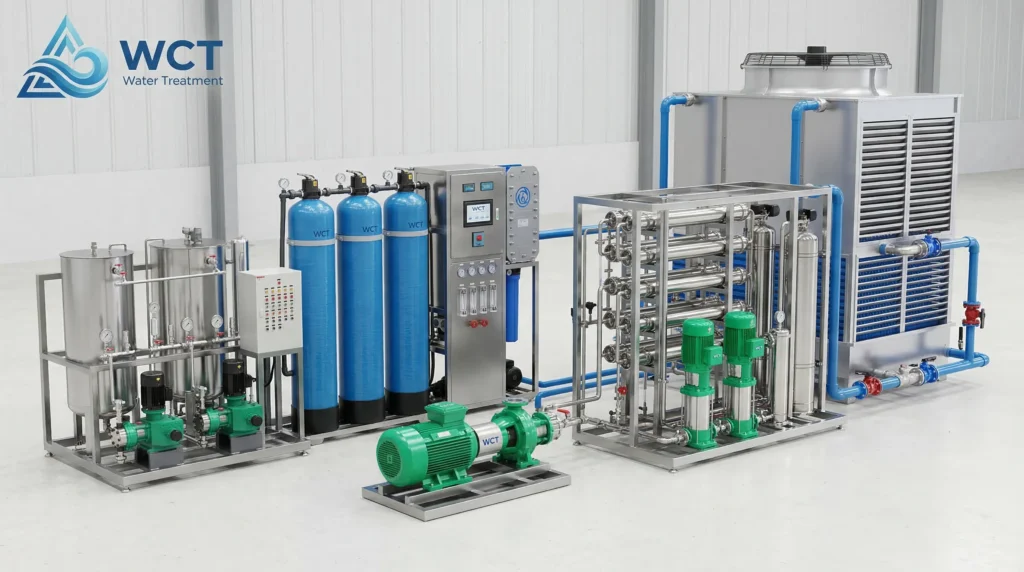
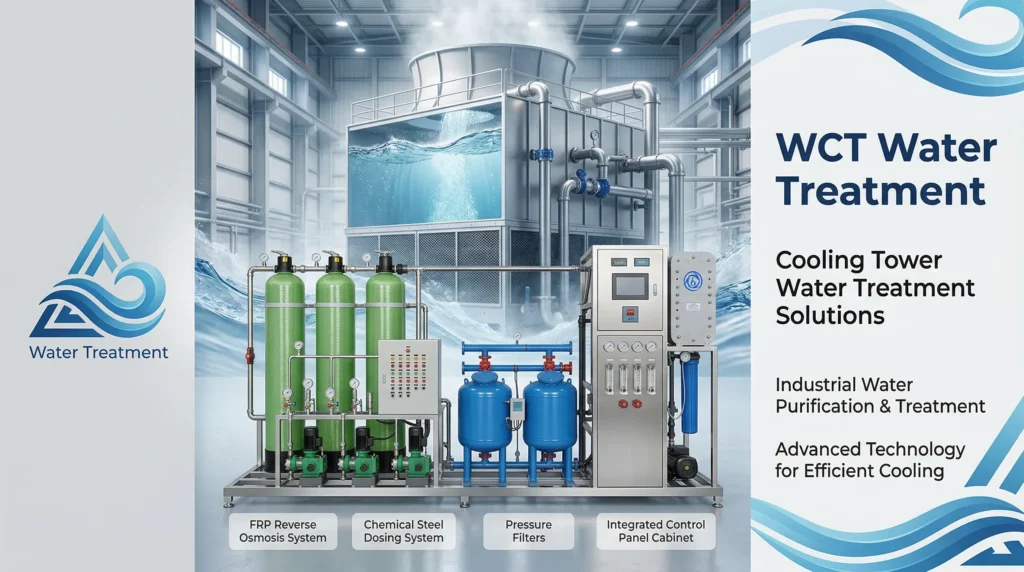
Cooling towers constantly pull in air, catching dust, organic matter, and airborne microbes. This warm, wet environment is the perfect incubator for bacterial growth. Routinely applying the right biocide for water treatment prevents thick slime and biofilm from choking your heat exchangers. This approach maintains high energy efficiency and stops destructive system scaling.
Wastewater and Municipal Treatment
Managing biological loads in municipal setups is a demanding but necessary task. Strict biocide treatment water protocols are used to sanitize effluent, ensuring the water meets local environmental discharge regulations. By neutralizing harmful pathogens, biocides protect downstream public health. In many modern facilities, this chemical approach is seamlessly paired with an ultraviolet water treatment system to guarantee comprehensive sterilization.
Closed-Loop Systems and Oil Production
It is a common misconception that sealed systems are safe from contamination. In reality, oxygen-starved environments are prime breeding grounds for anaerobic bacteria that aggressively attack metal. We use specialized biocides in oilfields and industrial closed loops to eradicate these microbes, preventing rapid and dangerous pipe degradation.
Core benefits across industrial applications:
- Maintains heat transfer: Keeps chiller and cooling tower pipes clean and efficient.
- Extends equipment lifespan: Stops severe microbial corrosion in vulnerable oil pipelines.
- Ensures legal compliance: Easily meets strict municipal and environmental wastewater standards.
Biological Threats Addressed by Biocides
Unchecked biological growth in industrial systems leads to expensive damage and forced downtime. As WCT, a global water treatment products supplier and manufacturer, we see firsthand how applying the right biocide water treatment effectively neutralizes these persistent threats before they ruin your equipment.
Preventing Microbiologically Induced Corrosion (MIC)
Microbiologically Induced Corrosion (MIC) happens when aggressive bacteria eat away at metal surfaces from the inside out. These microbes create localized acidic zones that rapidly degrade steel and iron. Proper biocide treatment water protocols stop this bacterial growth dead in its tracks.
Here is how biocides protect your system from MIC:
- Neutralizes acid-producing bacteria: Destroys the specific microbes that secrete metal-dissolving acids.
- Protects structural integrity: Prolongs the physical lifespan of your piping and heavy equipment, including your facility\’s primary water treatment tank.
- Lowers maintenance costs: Prevents unexpected pinhole leaks and catastrophic structural failures.
Algae Control and Slime Prevention
Warm water and exposure to sunlight create the perfect breeding ground for algae and bacterial slime. These sticky biological masses insulate heat exchangers, restrict water flow, and harbor dangerous pathogens.
Using a targeted biocide for water treatment actively strips away these stubborn bio-films:
- Breaks down slime layers: Penetrates and dissolves thick, sticky bio-films so water can flow freely again.
- Stops algae blooms: Eliminates green and brown algae buildup in cooling towers and open-air systems.
- Restores thermal efficiency: Keeps heat transfer surfaces completely bare and clean, instantly lowering your system\’s energy consumption.
Choosing and Applying the Right Biocide
Selecting the perfect biocide water treatment solution can make or break your system\’s efficiency. As a trusted WCT (water treatment products supplier and manufacturer), we know that throwing random chemicals at a biological problem wastes money and risks equipment damage. You need a targeted approach.
Factors for Selecting the Proper Biocide
There is no one-size-fits-all answer for biocide treatment water. To pick the right product, you have to look at your specific setup. Here is what we always evaluate first:
- Water pH Levels: Many biocides lose their punch if the water is too acidic or too alkaline.
- Operating Temperatures: High-heat systems can rapidly degrade certain chemicals before they do their job.
- Target Contaminants: Are you fighting a tough biofilm, free-floating algae, or specific bacteria?
- System Materials: You need a biocide for water treatment that kills bugs, not your pipes. Material compatibility is non-negotiable.
Recommended Dosage and Application Frequency
Hitting the right dosage is a balancing act. Too little, and the bacteria build an immunity. Too much, and you are pouring money down the drain while accelerating corrosion.
- Continuous Dosing: Best for systems under constant threat of contamination. It maintains a steady, low level of biocide in the water.
- Shock Dosing (Slug Feeding): Dropping a high concentration of biocide into the system all at once. This is highly effective for knocking out established biofilms and preventing immunity buildup.
To get the dosage right, the chemicals must be perfectly blended before application. Using a reliable WCT industrial liquid mixer agitator for chemical liquids ensures your biocides are thoroughly mixed, guaranteeing an even distribution throughout your system and preventing localized chemical burns in your pipes.
Safety Precautions for Handling Chemicals
Industrial biocides are powerful chemicals that demand respect. Mishandling them is a major safety hazard. Always follow these non-negotiable safety rules:
- Personal Protective Equipment (PPE): Never handle these chemicals without chemical-resistant gloves, splash goggles, and a protective apron.
- Proper Storage: Store oxidizing and non-oxidizing biocides in completely separate, well-ventilated areas. Mixing them accidentally can cause dangerous reactions.
- Spill Protocols: Keep spill kits readily available and ensure your team knows the immediate cleanup procedures for the specific biocide water treatment products you use on-site.
Frequently Asked Questions
What is the difference between oxidizing and non-oxidizing biocides?
Oxidizing biocides physically attack microbes by burning through their cell walls, acting fast to sanitize the system. Non-oxidizing biocides work from the inside out, disrupting the organism\’s metabolism or reproduction over a longer period. For effective biocide water treatment, we usually alternate between both types so bacteria cannot build up a resistance.
What are the signs my water system needs biocide treatment?
Your water infrastructure will show clear warning signs when biological growth gets out of control. Watch for these red flags:
- Visible slime or green algae buildup on surfaces.
- Foul odors similar to sulfur or rotten eggs coming from the water.
- Reduced heat transfer efficiency in chillers or cooling units.
- Unexplained localized corrosion on metal piping and tanks.
To prevent these issues from happening in the first place, integrating an automated powder-liquid dosing system for waste water treatment ensures your biocide for water treatment remains at a consistent, effective concentration.
Are biocides safe for drinking water systems?
Only very specific types. Common oxidizing agents like chlorine or ozone are standard and safe for municipal drinking water. However, the heavy-duty industrial chemicals used for cooling towers or wastewater are strictly prohibited in potable systems. Always source the correct chemical grade directly from WCT(water treatment products supplier and manufacturer) to ensure your biocide treatment water program fully complies with health and safety regulations.