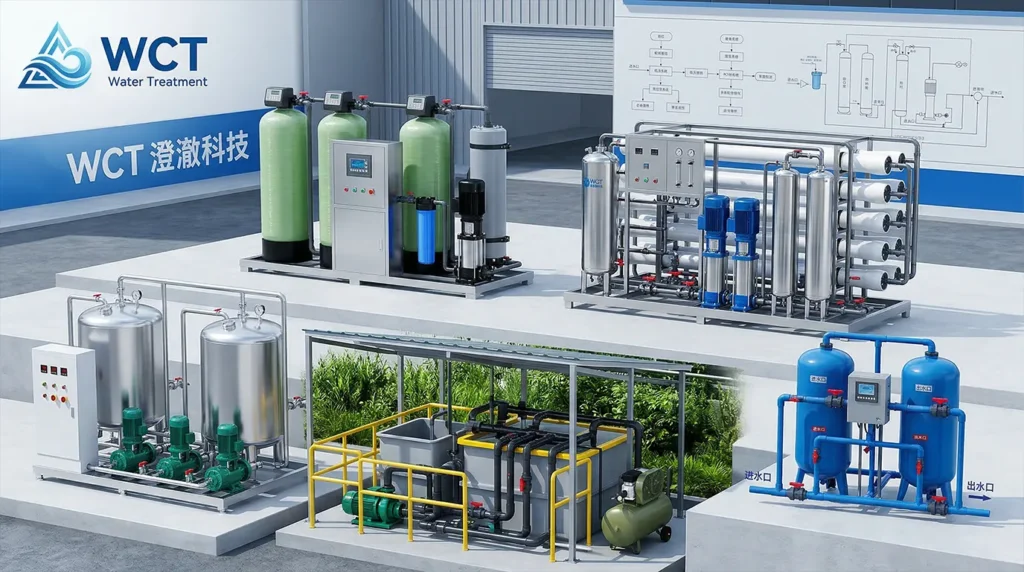
Water Treatment Plant Design: Preliminary Planning
When taking on a new design of water treatment plant project, the most common worry I hear from facility managers is, \”Will this system actually meet our long-term demands without constant downtime?\” The answer always comes down to the groundwork. You cannot simply select equipment and hope for the best; a successful water treatment design demands rigorous preliminary planning.
Raw Water Quality Assessment
Before drawing up a single schematic, we must know exactly what we are dealing with. Treating stable municipal sources is vastly different from navigating complex industrial wastewater treatment solutions.
- Characterize the Influent: We run comprehensive profiles on the source water to identify suspended solids, Total Dissolved Solids (TDS), biological loads, and trace contaminants.
- Account for Variability: Source water quality constantly fluctuates. We map out seasonal spikes and worst-case scenarios to ensure the plant doesn\’t fail under sudden load shifts.
Water Treatment Pilot Testing
You wouldn\’t scale a process without proving it works first. We use targeted water treatment pilot testing to validate our theoretical chemistry and mechanical assumptions in the real world.
- Determine Plant Capacity: Through rigorous pilot runs, we lock in precise mass balances and flow rate calculations.
- Prevent Oversizing: Accurately mapping peak versus average flow rates ensures we hit the exact sweet spot for plant capacity—preventing overworked pumps and avoiding wasted capital on unnecessarily massive infrastructure.
Effluent Discharge Limits and Reuse Goals
ly, we define the finish line before we start the race. What is the ultimate destination for the treated water?
- Hit Regulatory Targets: We establish strict design parameters based on local environmental regulations and specific effluent discharge limits to ensure absolute compliance.
- Aim for Sustainability: Modern facilities require forward-thinking water recovery. We design around aggressive reuse goals, often engineering the plant to achieve Zero Liquid Discharge (ZLD). This approach eliminates wastewater disposal liabilities while securing a sustainable, closed-loop water supply for the operation.
Core Unit Processes in Water Treatment Plant Design
When we execute a water treatment plant design, selecting and sequencing the right core processes is critical. We don\’t just bolt equipment together; we engineer a flow that progressively removes contaminants—from large suspended solids to microscopic dissolved ions. A robust design typically integrates four distinct processing stages to ensure the final effluent meets strict regulatory or reuse standards.
Coagulation and Flocculation
The first major step in many industrial wastewater treatment solutions is destabilizing suspended particles. We utilize coagulation and flocculation processes to force fine particles to clump together into larger \”flocs.\”
- Coagulation: Rapid mixing of chemicals (like PAC) to neutralize particle charges.
- Flocculation: Gentle mixing with polymers (PAM) to bridge particles into settleable masses.
Solid-Liquid Separation
Once flocs are formed, they must be physically separated from the water. The choice of equipment here depends heavily on the density of the waste:
- Sedimentation Tanks: Ideal for heavy sludge that settles easily to the bottom.
- Dissolved Air Flotation (DAF): We often specify DAF systems for oily wastewater or light suspended solids. Micro-bubbles attach to the solids, floating them to the surface for skimming.
Filtration Stages
After bulk solids are removed, the water enters the filtration phase to capture residual particulates. This protects sensitive downstream equipment. We typically arrange multi-media filters followed by high-efficiency WCT precision filters to ensure the feed water is free of micron-sized contaminants that could cause fouling.
Advanced Purification (RO and UF)
For projects requiring high-purity water or zero liquid discharge (ZLD), simple filtration isn\’t enough. We integrate membrane technologies to handle high Total Dissolved Solids (TDS).
- Ultrafiltration (UF): Removes viruses, colloids, and silt.
- Reverse Osmosis (RO): The gold standard for desalination and deep purification. In our reverse osmosis system design, we utilize ULP series RO membranes to strip out salts and dissolved organics efficiently.
To visualize how these units interconnect, reviewing a standard process flow diagram for a water treatment plant can help clarify the hydraulic profile and equipment layout.
Phase 3: Water Treatment Equipment Sizing and Selection
When tackling a water treatment plant design, getting the equipment sizing right from day one is non-negotiable. We start by calculating and matching the equipment capabilities directly to your specific flow rates and chemical demands. Oversizing wastes money, while undersizing leads to rapid system failure.
High-Pressure Pumps in RO
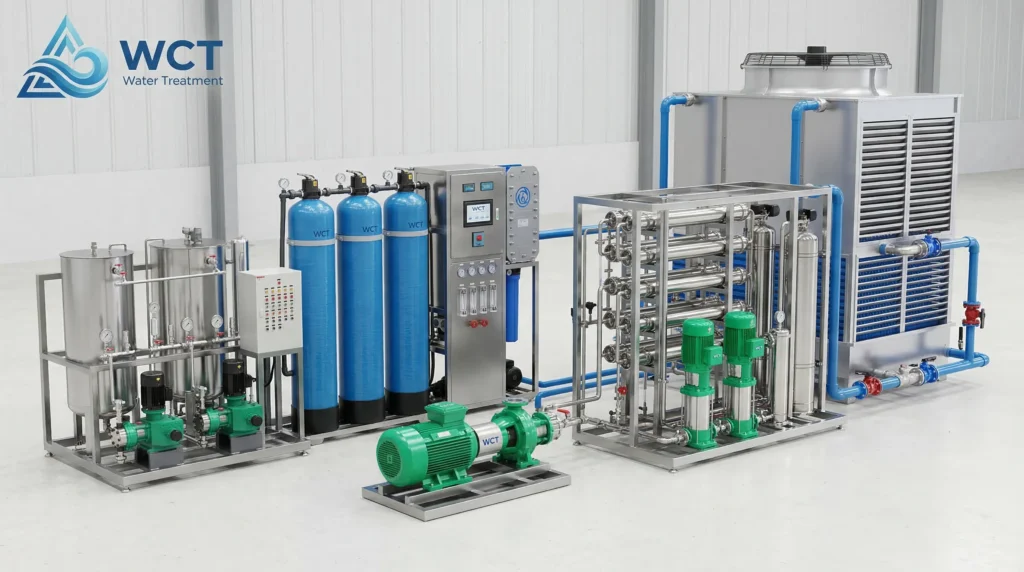
Reliable high-pressure pumps are the backbone of any reverse osmosis system design. They do the heavy lifting in industrial wastewater treatment, maintaining the constant, intense pressure needed to push water through the filtration membranes without interruption.
Smart Dosing and Durable Tanks
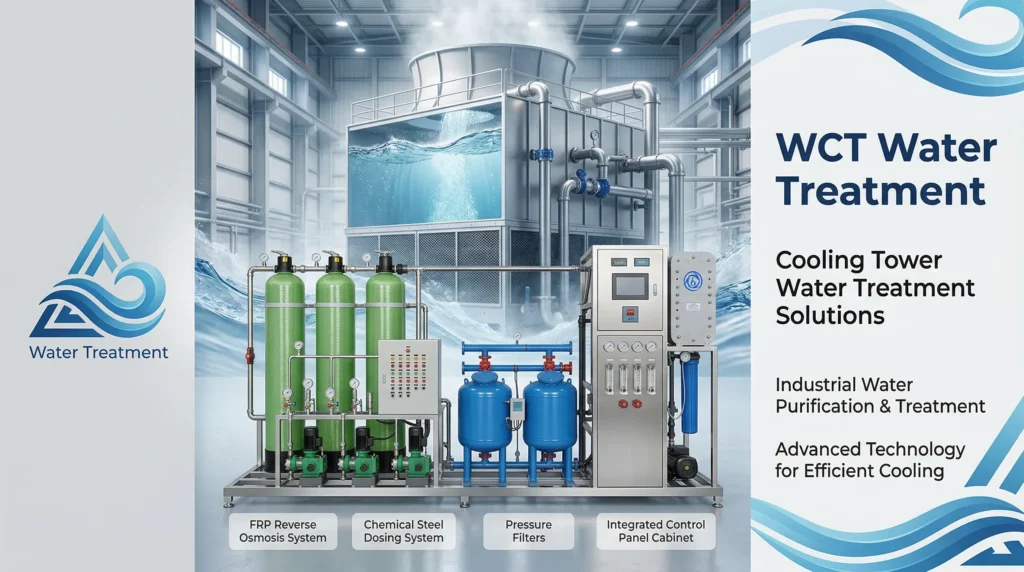
Manual chemical handling is outdated and inefficient. We integrate automatic chemical dosing systems to deliver precise chemical amounts exactly when needed, cutting down on waste and operational costs. For maximum durability in harsh environments, pairing these smart systems with rugged stainless steel dosing tanks prevents corrosion and drastically extends the lifespan of your setup.
Modular and Scalable Setup
Flexibility is key for global projects. We prioritize modular designs so your facility can adapt quickly.
| Equipment Type | Key Advantage for Plant Design |
|---|---|
| Containerized water treatment systems | Faster global deployment, minimal footprint, and easy plug-and-play installation. |
| Solid-liquid separation equipment | Modular units allow for seamless scaling as your processing capacity grows. |
| Standardized skids | Lowers on-site construction time and minimizes local labor costs. |
By locking in the right component sizing and selecting adaptable equipment up front, we ensure your facility is built to handle today\’s capacity and tomorrow\’s growth.
Integrating Smart Automation in Water Treatment Plant Design
When we approach the design of a water treatment plant project, the industry-wide shift toward smart technology is a top priority. Modern facilities rely heavily on automated monitoring and smart control systems to manage daily operations efficiently.
We build these plants to take the guesswork out of the equation. For example, installing an automatic multiport valve for water pure systems ensures seamless flow control and automatic backwashing without needing an operator constantly on standby. Likewise, integrating automatic chemical dosing systems allows us to maintain precise chemical ratios around the clock, perfectly matching the plant\’s flow rate and eliminating hands-on mixing.
Here is how smart automation transforms standard water treatment design:
- Lowers Operational Costs: Automated systems optimize energy consumption and prevent chemical waste, significantly cutting down long-term overhead.
- Improves Process Reliability: 24/7 smart monitoring means the facility adapts instantly to shifts in raw water quality, maintaining steady and compliant output.
- Reduces Manual Errors: Taking human intervention out of repetitive tasks eliminates the risk of costly, preventable mistakes.
Ultimately, a well-executed water treatment plant design does more than just process water—it creates an intelligent, self-regulating ecosystem that protects your bottom line.
Navigating Regulatory Compliance and Environmental Standards
Compliance is often the most challenging aspect of any water treatment plant design project. If a facility cannot reliably meet local environmental protection agency guidelines, the best technology in the world won\’t matter. We approach every project by first understanding the specific regulatory landscape of the client\’s region, ensuring that the final design is not just operational, but legally sound.
Meeting Local and International Guidelines
Different regions and industries face vastly different restrictions. A textile factory in Southeast Asia faces different effluent discharge limits than an automotive plant in Europe. Our engineering team, backed by over 12 years of experience, customizes the process flow to align with these specific targets.
We don\’t just aim for the bare minimum. Regulations tend to become stricter over time, so we design systems with a safety margin. This involves selecting the right combination of industrial wastewater treatment solutions—from advanced oxidation to membrane separation—to ensure the water leaving your pipe is cleaner than the law requires.
Strategies for Consistent Compliance
To ensure your facility passes every inspection, we implement specific design strategies that prioritize stability and adaptability:
- Zero Liquid Discharge (ZLD): For areas with strict bans on liquid waste, we design systems that recycle 100% of the wastewater, leaving only solid waste for disposal.
- Real-Time Monitoring Integration: We incorporate smart monitoring points into the design, allowing operators to catch fluctuations in water quality before they become a violation.
- Robust Component Selection: We use high-grade materials, such as PE304 stainless steel tanks and precision dosing units, to prevent equipment failure that could lead to accidental untreated discharge.
- ISO9001 Standards: As an ISO9001 certified manufacturer, our internal quality controls ensure that the equipment we build performs consistently, reducing the risk of non-compliance due to mechanical failure.
By integrating reliable industrial water treatment solutions directly into the initial design phase, we help clients avoid costly fines and shutdowns. Compliance isn\’t an afterthought; it is the foundation of our engineering process.
Common Pitfalls in Water Treatment Plant Design
When we execute a design of water treatment plant project, it is easy to overlook critical operational details that cause massive headaches down the line. Avoiding these traps early saves both time and capital.
Here are the most frequent mistakes we see in the field:
- Underestimating Sludge Volume: Failing to calculate the exact solid waste output leads to severe system backups and inflated disposal costs. Integrating reliable sludge dewatering systems into the initial layout prevents these bottlenecks entirely.
- Improper Pump Sizing: If you spec the wrong pumps, the entire facility suffers from flow issues. Selecting the appropriate high-pressure pumps for waste water treatment ensures your system handles peak pressure demands without constant mechanical breakdowns.
- Neglecting Seasonal Variations: Temperature shifts and heavy rains drastically alter raw water quality and influent flow rates. Your system must remain flexible enough to handle these natural swings.
Future-Proofing the Facility
To keep your water treatment design resilient for decades, build these actionable strategies directly into your blueprint:
- Build in buffer capacity: Always design with a minimum 20% safety margin above your expected maximum flow rate to handle unexpected surges.
- Prioritize modular equipment: Rely on containerized or modular solid-liquid separation units. This allows you to scale up capacity later without tearing down existing infrastructure.
Frequently Asked Questions (FAQs) About Water Treatment Plant Design
We often field questions from clients looking to build or upgrade their facilities. Here are the most common questions regarding the design of a water treatment plant project and our straightforward answers.
What are the crucial first steps in water treatment design?
The foundation of any successful project starts with accurate data.
- Raw Water Quality Assessment: We must thoroughly characterize the influent water. You cannot effectively treat what you do not accurately measure.
- Pilot Testing: Running small-scale flow tests helps us pinpoint the exact chemistry and physical processes needed before scaling up.
- Setting Clear Goals: We define strict effluent discharge limits right from the start, deciding early on if the facility aims for standard compliance or complete zero liquid discharge (ZLD).
How do you determine the correct equipment sizing for a new plant?
Proper water treatment equipment sizing comes down to precise math and flow rate calculations. We look at peak flow demands and the necessary chemical dosing rates to prevent under-sizing. Understanding the foundational basics of how water treatment plants work makes it easier to perfectly match specific unit processes—like solid-liquid separation equipment or advanced reverse osmosis systems—to the facility\’s actual footprint and daily output needs.
What is the role of automation in modern water treatment facilities?
Automation is no longer an optional upgrade; it is the baseline standard for reliable industrial wastewater treatment solutions.
- Lower Operating Costs: Automated systems optimize power usage and significantly reduce wasted chemicals.
- Process Reliability: Integrating automatic chemical dosing systems ensures precise, consistent chemical application 24/7 without manual guesswork.
- Reduced Human Error: Smart sensors react to sudden changes in water chemistry instantly, keeping the plant stable and safe.
How can design choices impact regulatory compliance?
Your initial engineering decisions directly dictate whether you easily meet environmental standards or struggle with heavy fines. By properly sizing tanks to handle unexpected sludge volumes and implementing reliable, scalable plants for water treatment, we build a buffer against shifting local regulations. Smart water treatment plant design choices future-proof your facility, ensuring you consistently stay well under local discharge limits and maintain continuous, legal operation.