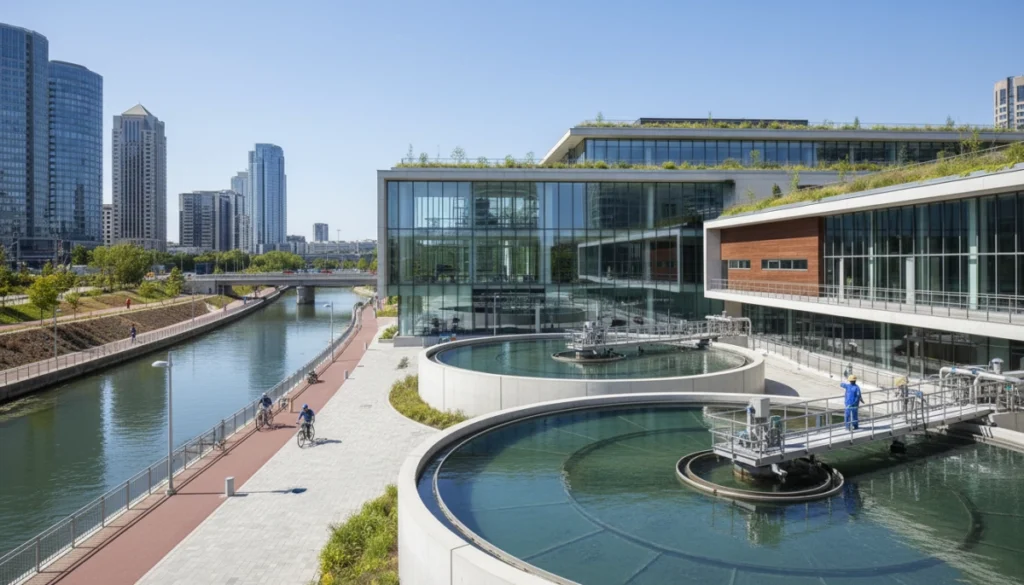
What Is a Water Treatment Plant?
A water treatment plant is a specialized industrial facility designed to improve the quality of water to make it appropriate for a specific end-use. These facilities serve as the backbone of modern infrastructure, ensuring that the water entering our homes, factories, and ecosystems meets rigorous safety and environmental standards. As a leading water treatment products supplier and manufacturer, we recognize that these plants are essential for public health, industrial efficiency, and ecological preservation.
The Purpose of Water Treatment Facilities
The primary objective of any water treatment facility is to remove contaminants from raw water sources. Whether sourcing from rivers, lakes, or groundwater, these plants utilize advanced mechanical, chemical, and biological processes to eliminate:
- Suspended Solids: Silt, clay, and organic matter.
- Pathogens: Harmful bacteria, viruses, and parasites.
- Chemical Pollutants: Heavy metals, pesticides, and industrial runoff.
- Dissolved Minerals: Excess iron, manganese, or calcium that affects water hardness.
By neutralizing these threats, water utilities can provide a reliable supply that prevents disease and protects expensive machinery from corrosion and scaling.
Drinking Water vs. Wastewater Systems
Understanding which water treatment plant is required depends entirely on the source and the intended destination of the water. While both systems utilize similar engineering principles, their goals are distinct:
| Feature | Drinking Water Treatment | Wastewater Treatment (WRRF) |
|---|---|---|
| Primary Goal | Produce potable water for human consumption. | Clean used water before environmental discharge. |
| Input Source | Raw surface water or groundwater. | Domestic sewage and industrial effluent. |
| Output Destination | Municipal distribution networks. | Rivers, oceans, or irrigation systems. |
| Key Focus | Sterilization and mineral balance. | Nutrient removal and organic load reduction. |
A water resource recovery facility (WRRF) focuses on reclaiming value from waste, whereas drinking water plants focus on absolute purity. Both are vital components of a sustainable water cycle, requiring high-quality chemicals and filtration media to operate at peak efficiency.
Types of Water Treatment Plants
When figuring out which water treatment plant fits a specific project, you have to look at the source water and the end goal. We are a water treatment products supplier and manufacturer, and we partner with facilities worldwide to optimize their processes. Here is a breakdown of the primary systems operating today.
Municipal Sewage Treatment Plants
These facilities process the daily sewage from homes, schools, and commercial buildings.
- Core Function: Removing organic waste, pathogens, and solids from city sewage.
- Modern Approach: Many are now designed as a water resource recovery facility, capturing valuable nutrients and generating biogas alongside clean water.
Industrial Wastewater Treatment Plants
Factories and manufacturing hubs produce complex runoff that standard municipal systems simply cannot process.
- Target Contaminants: Heavy metals, harsh chemicals, toxins, and oils.
- Custom Solutions: Industrial wastewater treatment plants are heavily customized to neutralize specific toxic byproducts before the water is safely discharged or reused on the factory floor.
Agricultural Water Treatment Facilities
Large-scale farming operations generate runoff packed with fertilizers, pesticides, and animal waste.
- Nutrient Control: These facilities focus on stripping excess nitrogen and phosphorus from the water.
- Environmental Protection: Proper treatment prevents harmful algae blooms and protects local lakes, rivers, and groundwater sources.
Drinking Water Treatment Plants
Water utilities run these facilities to turn raw water from rivers, lakes, or aquifers into safe, clean drinking water for the public.
- Strict Standards: The process requires intense filtration, coagulation, and disinfection to remove microscopic pathogens.
- System Reliability: Using high-quality equipment for water plant treatment guarantees that the water flowing into homes meets all strict public health and safety regulations.
How Do Drinking Water Treatment Plants Work?
As a leading water treatment products supplier and manufacturer, we often get asked exactly which water treatment plant setup is the most effective for creating safe, clean drinking water. The journey from a raw water source to the tap involves a highly controlled, multi-step system utilized by major water utilities across the globe.
Coagulation and Flocculation
The initial stage in the process of water treatment is all about grabbing hold of the dirt and impurities suspended in the water.
- Coagulation: We add specialized chemicals with a positive charge to the raw water. This instantly neutralizes the negative charges of dissolved dirt, debris, and organic matter.
- Flocculation: The water is gently mixed, encouraging those neutralized particles to collide and bind together into larger, heavier clumps known as \”floc.\”
Sedimentation and Filtration
Once the particles form heavy clumps, the plant\’s infrastructure physically separates them from the clean water.
- Sedimentation: The water flows into massive settling tanks. Because the floc is heavy, it naturally sinks to the bottom, allowing the clearer water to stay at the top.
- Filtration: This clear top layer passes through multi-media filters—typically composed of sand, gravel, and activated carbon. This tightly packed barrier physically traps the remaining microscopic dust, parasites, and chemical residues.
Disinfection and pH Adjustment
The final polishing phase guarantees the water is biologically safe and perfectly balanced before it leaves the facility.
- Disinfection: A precise dose of disinfectant, such as chlorine or chloramine, is introduced. This vital step destroys any lingering viruses or bacteria and keeps the water sterile as it travels through miles of distribution pipes.
- pH Adjustment: We carefully balance the water\’s acidity. Keeping the pH stable is crucial; it prevents the water from turning corrosive, ensuring lead and copper from older community pipe systems do not leach into the drinking supply.
Core Processes in Wastewater Treatment Plants
When evaluating which water treatment plant design is right for a specific community or industrial site, understanding the internal mechanics is crucial. Modern wastewater treatment plants are no longer just disposal sites; they operate as advanced water resource recovery facilities designed to reclaim valuable resources and protect the environment. As we are water treatment products supplier and manufacturer, we focus on optimizing these core stages to ensure maximum efficiency and compliance.
Primary Treatment and Phase Separation
The journey begins with primary treatment, where the main goal is removing physical debris. Large screens catch items like plastics and rags, preventing damage to downstream equipment. After screening, the wastewater enters large tanks for phase separation.
During this stage, gravity does the heavy lifting. Heavy organic solids sink to the bottom as sludge, while lighter materials like oils and grease float to the top to be skimmed off. Integrating a high-quality clarifier for water treatment significantly accelerates this settling process, ensuring the effluent moving to the next phase is as clear of suspended solids as possible.
Biological and Chemical Processes
Once the heavy solids are removed, the water undergoes secondary treatment. This phase relies on biological and chemical reactions to break down dissolved organic matter that escaped primary separation.
- Aeration: We introduce oxygen into the tanks to create an ideal environment for naturally occurring microorganisms. These bacteria consume the organic pollutants in the water.
- Chemical Dosing: For industrial applications or strict municipal standards, chemicals are added to precipitate stubborn contaminants like phosphorus or heavy metals.
- Sludge Management: The biological process creates excess microorganisms, forming secondary sludge. Water utilities rely on efficient sludge dewatering systems to extract water from this byproduct, drastically reducing waste volume and cutting down on hauling costs.
Polishing and Safe Discharge
The final stage is polishing the treated water to ensure it is completely safe for the environment. Even after biological treatment, microscopic pathogens and fine particles can remain.
This phase utilizes advanced filtration methods, such as sand filters or microfiltration membranes, to catch the last remaining impurities. Finally, the water is disinfected using ultraviolet (UV) light, ozone, or chlorine. This rigorous polishing process guarantees that the final discharge meets or exceeds local environmental regulations, allowing the water to be safely returned to rivers, lakes, or oceans.
Which Water Treatment Plant Meets Your Needs?
As a water treatment products supplier and manufacturer, we regularly help clients answer the vital question of which water treatment plant is the right investment. Finding the perfect fit requires a hard look at your specific application, daily volume, and local discharge laws.
Assessing Community and Industrial Requirements
The first step is identifying exactly who and what the water is for. Local water utilities have completely different operational goals compared to a food processing factory.
- Municipal Focus: Requires highly stable systems to deliver safe, continuous drinking water for residential zones.
- Industrial Focus: Requires heavy-duty wastewater treatment plants designed to neutralize harsh chemicals, heavy metals, and manufacturing runoff.
When selecting the right equipment, evaluating your unique commercial water treatment demands will dictate the core technology you need to deploy.
Determining Infrastructure Size and Capacity
Sizing your facility correctly prevents system overloads and wasted capital. You must calculate your average daily flow alongside potential peak usage spikes. Visualizing your entire system layout with an accurate process flow diagram ensures that your pumps, tanks, and filters can handle the expected volume without creating bottlenecks.
Capacity Sizing Guide:
| Project Scope | Daily Water Volume | Recommended Setup |
|---|---|---|
| Small Community / Rural | Under 50,000 Gallons | Packaged modular units |
| Mid-Size Industrial | 50,000 – 500,000 Gallons | Custom multi-stage facilities |
| Large Municipality | 1M+ Gallons | Full-scale water resource recovery facility |
Environmental Considerations and Nutrient Pollution
You must account for where your treated water ends up. Global discharge regulations are incredibly strict. If your facility releases water back into rivers or lakes, stripping out excess nitrogen and phosphorus is non-negotiable to prevent severe nutrient pollution and toxic algae blooms. Modern infrastructure doesn\’t just dispose of waste; it actively protects the surrounding ecosystem and keeps you compliant with environmental laws.