Understanding UV Water Treatment Systems
Clean, safe water is a non-negotiable standard for any modern property. Before evaluating your ultraviolet water treatment cost, it is crucial to understand the foundational mechanics of these systems. UV technology provides a seamless, chemical-free safeguard against invisible biological threats lurking in your water supply, delivering peace of mind without altering the taste or odor of your water.
How UV Water Purification Works
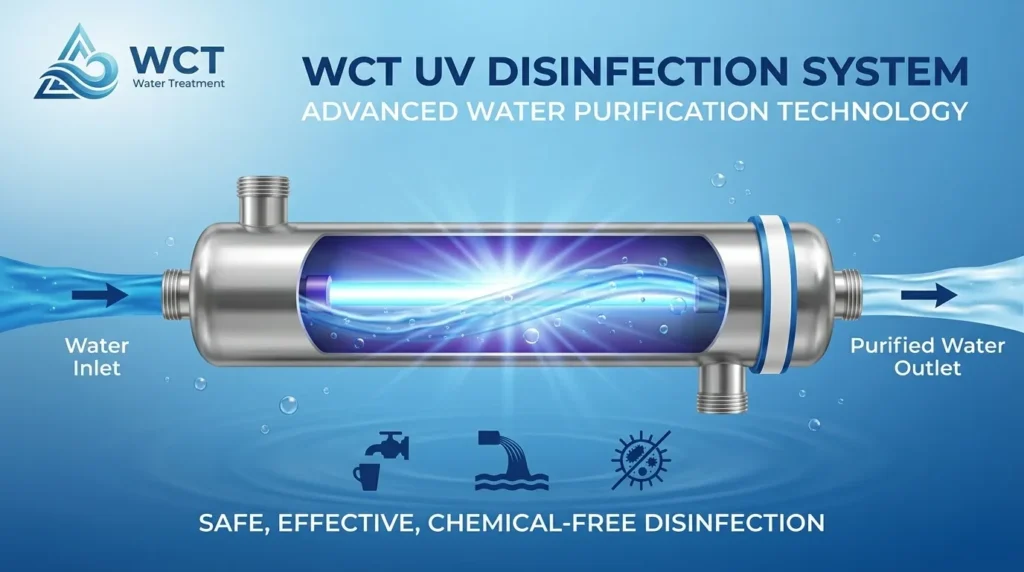
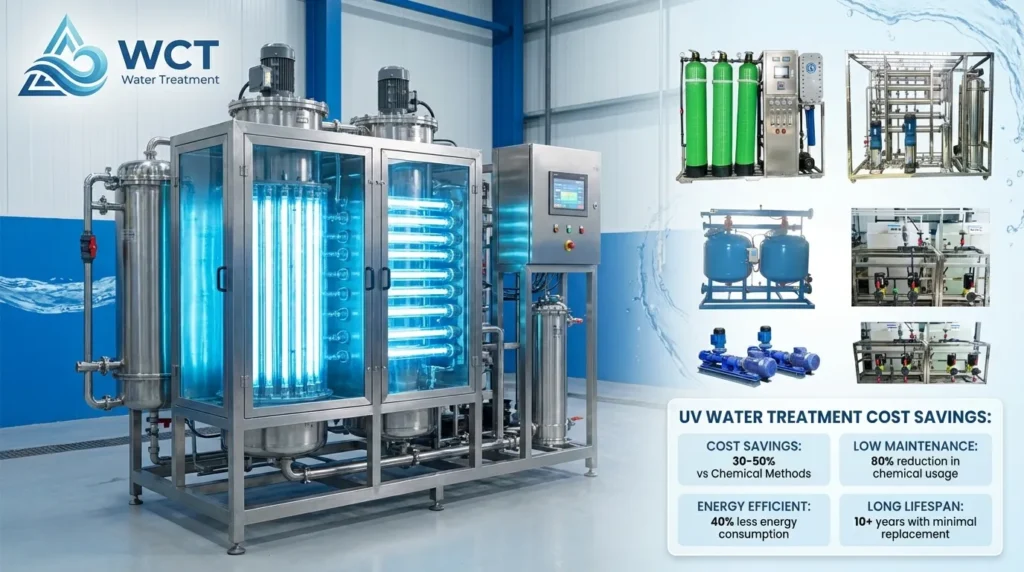
UV water purification operates on rapid, physical disinfection rather than chemical alteration. The process is engineered for maximum efficiency and minimal maintenance:
- Targeted Exposure: Water flows through a specialized stainless steel reactor chamber containing a high-intensity UV lamp encased in a protective quartz sleeve.
- Genetic Disruption: The system emits concentrated UV-C light (specifically at the 254-nanometer wavelength), which directly penetrates the cellular walls of microorganisms.
- Total Inactivation: The ultraviolet energy irreversibly scrambles the DNA of pathogens, instantly destroying their ability to function, reproduce, and cause infection.
What Contaminants Does UV Light Destroy?
UV systems act as an uncompromising defense line against living microorganisms. While they are not designed to filter out heavy metals, sediment, or chemical pollutants, they excel at neutralizing dangerous biological contaminants that traditional chemical treatments often miss.
Contaminants eradicated by UV light include:
- Bacteria: E. coli, Coliform, Salmonella, and Legionella.
- Viruses: Hepatitis A, Norovirus, and Rotavirus.
- Cysts and Parasites: Highly resilient pathogens like Giardia and Cryptosporidium (which are notably resistant to standard chlorine treatments).
- Fungi and Algae: Effectively neutralizing organic biological growth within your water infrastructure.
How Much Does a UV Water Filtration System Cost?
I always remind my clients that understanding your ultraviolet water treatment cost comes down to the scale of protection you need. Prices vary significantly based on whether you want to treat a single faucet or safeguard your entire property.
Average Cost of Under-Sink UV Systems
If you only need purified drinking water at your kitchen sink, point-of-use under-sink systems are the most economical choice.
- Equipment Price: $150 to $400.
- Best For: City water users wanting a final defense barrier for drinking and cooking.
- Installation: Simple enough that many homeowners handle it themselves, eliminating labor fees.
Average Cost of Whole-House UV Systems
For comprehensive protection at every tap, you need a point-of-entry system. If your property relies on private groundwater, integrating UV into a reliable well water treatment system is essentially a requirement to neutralize harmful bacteria and viruses before they enter your plumbing.
- Equipment Price: $400 to $1,500+.
- Best For: Private well owners, rural properties, and larger households.
- Pricing Variables: Costs scale up based on the gallons per minute (GPM) capacity required to handle your home\’s peak water usage.
Total Installed Cost Expectations
Buying the hardware is only part of the equation. When calculating your final ultraviolet water treatment cost, you must factor in labor. Unless you have solid plumbing experience, hiring a professional is the smart move to prevent leaks and ensure the system is properly integrated with your water line. Plumbers typically charge $75 to $150 per hour, and a standard whole-house installation takes about 2 to 4 hours.
Here is a quick breakdown of what you can expect to pay from start to finish:
| System Type | Equipment Cost | Professional Labor | Total Estimated Cost |
|---|---|---|---|
| Under-Sink (Point-of-Use) | $150 – $400 | $150 – $300 | $300 – $700 |
| Whole-House (Point-of-Entry) | $400 – $1,500 | $300 – $600 | $700 – $2,100+ |
Key Factors Impacting UV System Prices
When calculating your final ultraviolet water treatment cost, several variables come into play. I always remind our customers that there isn\’t a one-size-fits-all price tag because every property has unique water demands and plumbing layouts.
Flow Rate and Capacity (GPM)
The baseline price of your unit is dictated by its size. We measure water flow capacity in Gallons Per Minute (GPM).
- Small Households (1-2 bathrooms): Generally require 6-9 GPM systems.
- Large Households (3+ bathrooms): Need 10-15+ GPM systems to prevent drops in water pressure.
Higher flow rates demand larger stainless steel chambers and more powerful UV lamps, which directly increases the upfront equipment cost.
System Brand and Features
Basic UV purifiers simply stay on continuously, but premium models come with smart add-ons that push the price higher. You pay more for convenience and safety features.
- UV Intensity Monitors: Constantly checks the water clarity and light strength.
- Digital Timers: Visually tracks the 365-day lifespan of your UV bulb.
- Emergency Solenoid Valves: Automatically cuts off the water supply if the UV light fails, guaranteeing no untreated water passes through.
Installation Complexity and Labor
Your existing plumbing setup makes a massive difference in labor fees. Integrating a UV purifier into an easily accessible, pre-existing well water treatment system usually takes a professional just a couple of hours. However, if your main water line is buried in a tight crawlspace, or if older pipes require extensive rerouting and soldering, installation costs will climb quickly due to the extra labor involved.
Cost Impact
| Price Factor | Standard Setup | Premium / Complex Setup |
|---|---|---|
| Flow Rate | 6 to 9 GPM | 15+ GPM |
| System Features | Basic ballast, no sensors | LCD displays, intensity sensors, auto-shutoff |
| Installation | Accessible pipes, simple cut-and-paste | Tight spaces, custom plumbing required |
Ongoing Maintenance and Operating Costs
When I help customers calculate their true ultraviolet water treatment cost, I always remind them to look past the initial purchase tag. Keeping a UV system running smoothly requires regular upkeep, but the ongoing expenses are highly affordable and straightforward.
Annual UV Bulb and Sleeve Replacements
The core components of your UV purifier need annual attention to stay effective and keep your water safe.
- UV Bulbs: The lamp loses its germ-killing intensity after about 9,000 hours of continuous use (exactly one year). Even if it still lights up, it isn\’t destroying bacteria. A replacement bulb usually runs between $50 and $100.
- Quartz Sleeves: The glass tube protecting the bulb can get cloudy over time due to mineral buildup, which blocks the UV light. I recommend cleaning it regularly and replacing it every 1 to 2 years. A new sleeve costs around $30 to $50.
Electricity and Cost of Operation
One of the biggest advantages of UV purification is how cheap it is to power. The system stays on 24/7 so your water is protected the second you turn on the tap, but it draws very little electricity.
- Low Energy Draw: It uses about the same energy as a standard 40 to 60-watt light bulb.
- Annual Cost: This constant operation typically adds only $25 to $40 to your yearly electric bill.
Pre-Filtration Needs (Sediment and Carbon Filters)
UV light only works if it can actually strike the bacteria. If your water has floating dirt, rust, or debris, those particles create microscopic shadows that hide contaminants from the light. Because of this, pre-filtration is a mandatory part of your overall ultraviolet water treatment cost.
- Standard Cartridges: You will need to replace basic sediment and carbon filter cartridges every 6 to 12 months, costing roughly $40 to $100 annually depending on your local water quality.
- Advanced Clarity: For setups dealing with heavier particulate loads, integrating a reliable precision filter for water treatment ensures the water entering the UV chamber is crystal clear. This maximizes the system\’s sterilization power and ensures your UV bulb functions at peak efficiency.
Is a UV Water Purifier Worth the Investment?
When evaluating the ultraviolet water treatment cost, you have to weigh the upfront price against the peace of mind it provides. For me, ensuring that the water flowing into a home or business is completely safe from harmful microorganisms makes the investment an easy and practical choice.
Benefits for Private Well Water vs. City Water
The exact value you get from a UV system depends heavily on your primary water source:
- Private Wells: If you rely on well water, a UV purifier is practically mandatory. Wells are highly vulnerable to groundwater contamination, seasonal runoff, and agricultural bacteria like E. coli.
- City Water: Municipal water is chemically treated, but contamination can still occur during distribution. Understanding how a water treatment plant works shows that while city water is generally safe when it leaves the facility, aging underground pipes can introduce pathogens. A UV system acts as your ultimate backup defense against boil-water advisories.
Pros and Cons of UV Water Treatment
Here is a quick breakdown to help you decide if the investment aligns with your water quality goals:
| Pros of UV Treatment | Cons of UV Treatment |
|---|---|
| Chemical-Free: Purifies without adding chlorine, altering taste, or creating byproducts. | Needs Electricity: The system will not operate during a power outage. |
| Highly Effective: Neutralizes 99.99% of harmful bacteria, cysts, and viruses. | Requires Clear Water: Needs pre-filters; UV light cannot penetrate cloudy water. |
| Simple Maintenance: Only requires an annual bulb replacement and sleeve cleaning. | No Chemical Removal: Does not extract heavy metals, lead, or VOCs. |
DIY vs. Professional Installation Considerations
Factoring labor into your total ultraviolet water treatment cost is critical before purchasing a unit.
- DIY Installation: If you have solid plumbing experience, installing a basic whole-house unit yourself saves you hundreds of dollars. You just need to know how to cut pipes, install bypass valves, and safely connect the power supply.
- Professional Installation: Hiring a certified plumber increases your initial costs but guarantees the system is installed to local codes. It prevents expensive leak damage and ensures you do not accidentally void the manufacturer’s warranty. For complex well-water setups that require multiple pre-filters, I always recommend going with a pro.