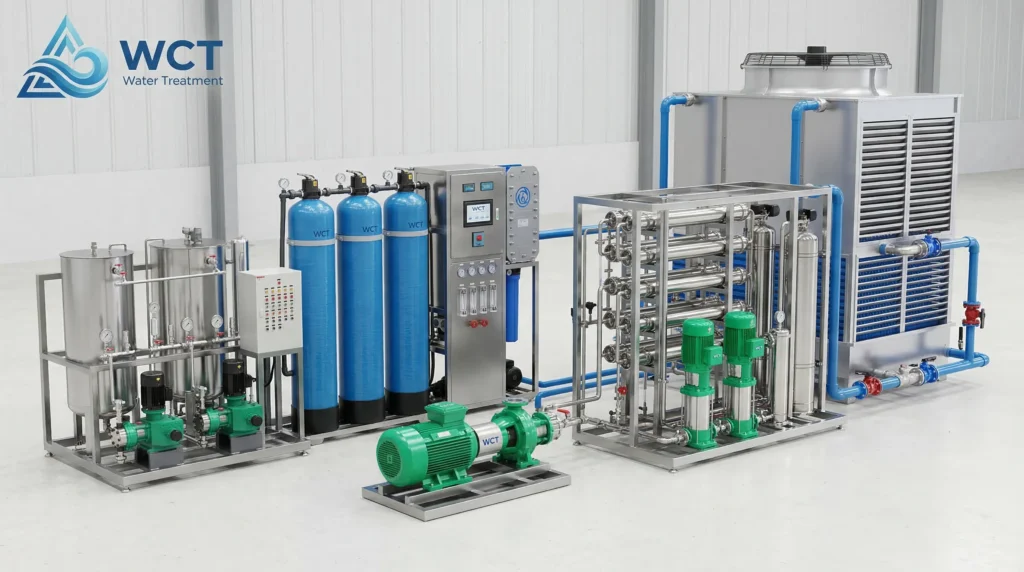
The Big Three Threats to Cooling Tower Performance
If you manage an industrial facility, you know that a cooling tower is only as reliable as the water flowing through it. Neglecting cooling tower water treatment isn\’t just a maintenance oversight; it’s a direct hit to your operational budget. Without proper management, water chemistry quickly spirals out of control, leading to three primary threats that compromise system integrity and efficiency.
Scaling (The Efficiency Killer)
When water evaporates, dissolved minerals like calcium and magnesium are left behind. As the cycles of concentration increase, these minerals precipitate out of the water and form hard deposits on heat exchange surfaces.
- The Impact: Scale acts as an insulator. Even a thin layer of scale drastically reduces heat exchange efficiency, forcing your system to work harder and consume significantly more energy.
- The Fix: We utilize precise chemical management and industrial water treatment systems to keep minerals soluble and prevent deposition.
Corrosion (The Equipment Killer)
Corrosion is the silent destroyer of cooling loops. It occurs when aggressive water chemistry attacks metal components, leading to pitting and eventual failure of piping and heat exchangers.
- The Causes: Low pH, high dissolved oxygen, or galvanic reactions between dissimilar metals.
- The Cost: Unchecked corrosion leads to expensive emergency repairs, leaks, and premature equipment replacement. Effective cooling tower water treatment balances pH and utilizes corrosion inhibitors to form a protective film over metal surfaces.
Biological Contamination (The Safety Threat)
Cooling towers are warm, wet, and exposed to sunlight—the perfect breeding ground for algae, bacteria, and fungi.
- Biofouling: Slime layers (biofilm) can block flow and insulate heat transfer surfaces up to 4x more effectively than mineral scale.
- Health Risks: The most critical concern is Legionella pneumophila prevention. Poorly treated water can aerosolize dangerous bacteria, posing severe health risks to personnel and the community.
- Our Approach: We combat this with automated dosing of biocides and robust filtration to remove the nutrients that allow biology to thrive.
The Anatomy of an Effective Treatment System
A reliable cooling tower water treatment system isn\’t just one machine; it\’s a combination of technologies working together to keep your heat transfer surfaces clean. We design our systems to tackle the specific challenges of industrial cooling loops, ensuring your facility runs efficiently without unexpected downtime.
Filtration (The First Line of Defense)
Cooling towers act like giant air scrubbers, pulling in dust, pollen, and debris from the environment. If these solids aren\’t removed, they settle in your basin or clog your heat exchangers. We utilize side-stream filtration and precision filters to continuously remove suspended solids. By filtering a portion of the recirculating cooling water, we reduce the load on your chemicals and prevent the buildup of sludge that promotes biological fouling.
Chemical Dosing (The Heart of the System)
Consistent water chemistry is non-negotiable. Manual dosing is often inaccurate and dangerous, leading to spikes and drops in protection. We recommend an automated chemical dosing system to inject the exact amount of scale and corrosion inhibitors required.
Our systems are built with PE304 stainless steel tanks and robust AXB series mechanical diaphragm metering pumps. These components ensure precise delivery of biocides and inhibitors, maintaining the delicate balance of your water chemistry around the clock.
Monitoring & Blowdown
You cannot manage what you do not measure. As pure water evaporates, dissolved minerals remain behind, increasing the Total Dissolved Solids (TDS). To prevent scaling, the system must perform a cooling tower blowdown—draining a portion of the concentrated water and replacing it with fresh makeup water.
Effective control relies on:
- Conductivity Monitoring: Automatically triggers blowdown valves when mineral concentration hits a set limit.
- Cycles of Concentration: Optimizing this ratio to save water while preventing scale precipitation.
- Real-time Feedback: Ensuring your dosing pumps adjust based on actual water makeup quality.
Advanced Strategies for Cooling Tower Water Treatment
The Shift to Sustainability
We are seeing a massive shift toward zero liquid discharge and water recycling across industrial water treatment systems. Global facilities are under pressure to cut operational costs and meet strict environmental regulations. The ultimate goal is sustainability—reusing every drop of your recirculating cooling water.
By safely pushing your cycles of concentration higher, you drastically reduce the volume of fresh makeup water your facility demands. It is smart business and responsible resource management.
WCT Technology for Cooling Tower Blowdown
Handling cooling tower blowdown is usually the biggest roadblock to achieving zero discharge. As water evaporates, Total Dissolved Solids (TDS) spike, turning the remaining water into a highly concentrated, problematic fluid. You cannot afford to simply dump this wastewater.
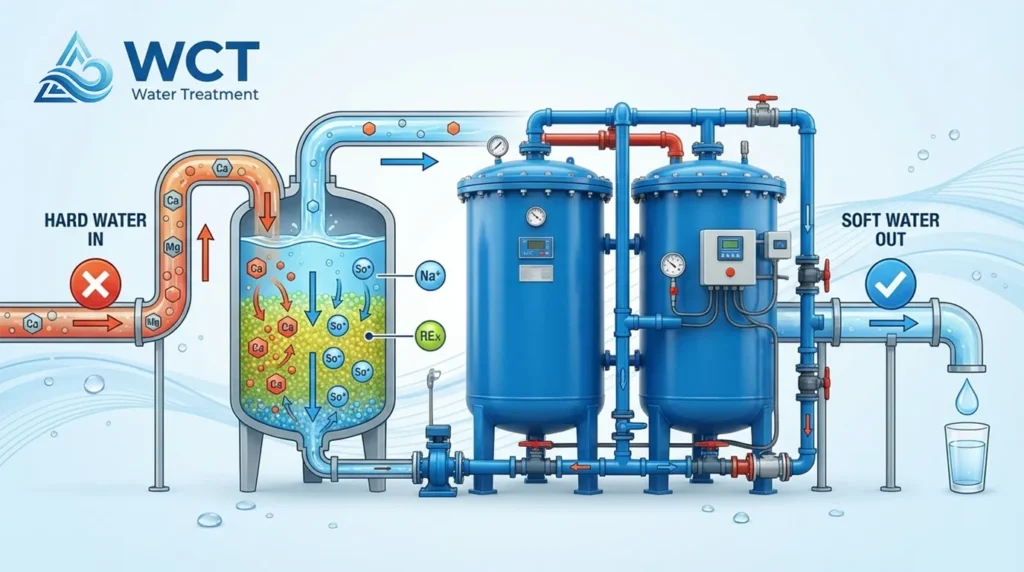
At WCT, we engineer our water treatment cooling tower technology to process and reclaim this blowdown directly. Because high mineral content ruins equipment, integrating reliable hard water treatment directly into your recycling loop is a game-changer. It strips out the heavy minerals before they can cause damage, allowing you to safely recycle the water back into the tower.
Why implement WCT blowdown recycling?
- Maximize Chemical ROI: Stop flushing valuable scale and corrosion inhibitors down the drain prematurely.
- Boost Heat Exchange Efficiency: Clean, recycled water prevents stubborn scale buildup on critical heat transfer surfaces.
- Lower Utility Bills: Dramatically improve your makeup water quality while pulling far less volume from the municipal supply.
Upgrading your chemical cooling tower water treatment to include advanced blowdown recovery isn\’t just an environmental upgrade; it is a direct boost to your bottom line.
Selecting the Right Equipment Partner
Finding the right supplier for cooling tower water treatment is about more than just buying parts; it\’s about securing the long-term reliability of your facility. A generic approach rarely works because water quality, heat load, and local environmental regulations vary wildly from one site to another.
Customization is Key
Your cooling system requires a setup that matches your specific operational reality. Off-the-shelf solutions often fail to address unique water chemistry challenges, leading to inefficient chemical usage or unexpected downtime. We don\’t believe in \”one size fits all.\” instead, we engineer solutions that fit your exact specifications.
For example, handling aggressive inhibitors requires robust materials. We utilize PE304 stainless steel dosing tanks to ensure your equipment withstands harsh chemical environments without corroding. Whether you need a compact skid for a small facility or a complex system for heavy industry, the equipment must be tailored to handle your specific cycles of concentration and makeup water quality.
The WCT Advantage
When you work with us, you are partnering with a manufacturer that has spent over 12 years refining industrial water treatment systems. We don\’t just assemble components; we innovate. Our commitment to quality is backed by ISO9001 certification and a portfolio of over 30 patents, including 20 core technologies that drive efficiency.
Here is what sets our approach apart:
- Expert R&D: Our team of 20+ R&D engineers designs systems that optimize performance and reduce waste.
- Precision Control: We integrate advanced technology into every automated chemical dosing system, ensuring precise injection rates that prevent scaling while minimizing chemical costs.
- Proven Components: From our AXB series mechanical diaphragm metering pumps to our high-pressure CDLF pumps, we use components built for longevity.
We are dedicated to bringing clean, efficient water solutions to the world, ensuring your cooling towers run smoothly so you can focus on production.
Cooling Tower Water Treatment Maintenance Checklist
As facility managers, staying on top of your cooling tower water treatment isn\’t just about saving water; it\’s about protecting your equipment from failure. A solid routine keeps heat exchange efficiency high and prevents unplanned downtime. Here is the straightforward maintenance checklist I recommend to keep your industrial water treatment systems running smoothly.
Daily Checks
Catching small issues daily prevents massive headaches later.
- Visual Walkaround: Look for obvious leaks, unusual noises, or foaming in the recirculating cooling water.
- Pump Operation: Verify that your automated chemical dosing system is active. If you rely on precision equipment like our WCT-AX Series mechanical diaphragm metering pump, ensure it is operating smoothly at the correct stroke rate without any signs of vapor lock or fluid leaks.
- Conductivity Monitoring: Check the daily controller readings to ensure Total Dissolved Solids (TDS) and your cycles of concentration are holding steady within your target range.
Weekly Tests
Weekly checks ensure your chemical balances are actually where the sensors say they are.
- Water Chemistry: Manually test pH, alkalinity, and biocide levels to verify sensor accuracy.
- Chemical Inventory: Check the tank levels for your scale and corrosion inhibitors to ensure you won\’t run dry mid-week.
- Blowdown Verification: Confirm that the cooling tower blowdown valve is opening and closing correctly to bleed off concentrated water.
Monthly Inspections
This is when we look closer at the physical components of the cooling tower.
- Biological Fouling (Biofouling): Inspect the tower basin, fill material, and distribution pans for algae or slime. Staying ahead of biofilm is your most critical step for Legionella pneumophila prevention.
- Component Check: Examine the drift eliminators for mineral scale buildup, brittleness, or physical damage.
- Filtration System: Check the pressure gauges on your side-stream filtration unit. Backwash the system or replace filter media if the pressure differential is too high.
Quarterly Calibrations
Every three months, a deeper dive is necessary to maintain precise control over your makeup water quality and chemical dosing.
| Maintenance Task | Description |
|---|---|
| Sensor Calibration | Deep clean and recalibrate pH, ORP, and conductivity sensors to keep automated dosing accurate. |
| Pump Maintenance | Inspect diaphragms, clean injection quills, and replace worn check valves on all diaphragm metering pumps. |
| Efficiency Review | Analyze heat exchange efficiency trends to see if chemical dosages or blowdown setpoints need adjustment based on seasonal changes. |
Cooling Tower Water Treatment FAQs
How often should cooling tower water be tested?
We recommend a tiered testing schedule to keep your cooling tower water treatment system running perfectly:
- Continuous: Rely on automated conductivity monitoring to track Total Dissolved Solids (TDS) and manage your cycles of concentration.
- Daily: Basic sensor checks and visual inspections of the basin.
- Weekly to Monthly: Comprehensive chemical analysis by a water treatment professional to adjust your baseline targets.
What is the best way to prevent Legionella?
Effective Legionella pneumophila prevention comes down to aggressive sanitation and consistent water flow. You must run a strict biocide program to stop biological fouling before it starts. Keeping your system clean strips away the nutrients and stagnant habitats these bacteria require to multiply, ensuring site safety.
How do automated dosing systems save money?
An automated chemical dosing system directly protects your bottom line by removing human error from the equation.
- Stops Chemical Waste: It injects scale and corrosion inhibitors exactly when needed, eliminating costly over-dosing.
- Protects Assets: Prevents severe scaling that rapidly destroys heat exchange efficiency.
- Maintains Optimal Flow: When integrated with durable infrastructure—like a high pressure pump for waste water treatment to handle heavy blowdown or side-stream loads—automated systems ensure your chemicals circulate flawlessly without burning out your equipment.