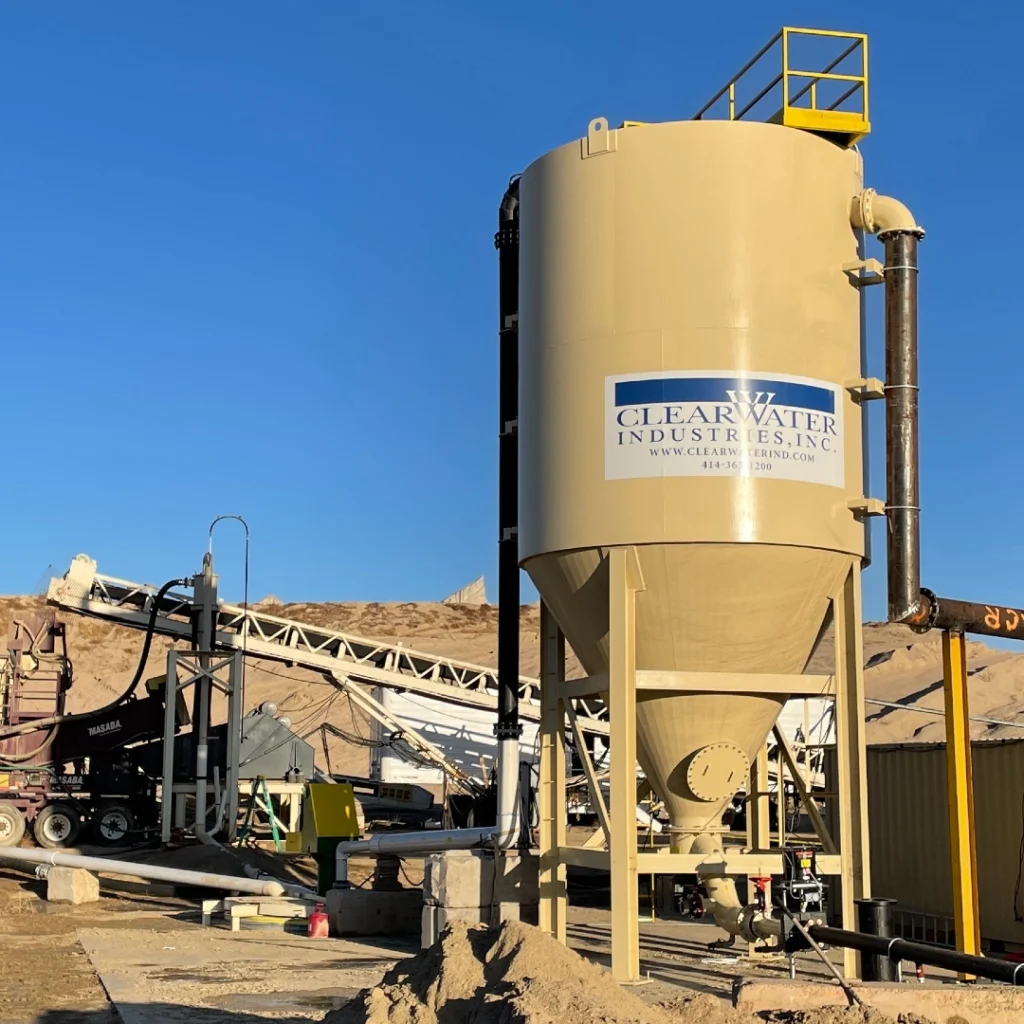
Are you struggling to meet strict municipal discharge regulations or optimize your facility\’s operational footprint?
Selecting the right clarifier water treatment system makes a massive difference in your plant\’s overall solid-liquid separation efficiency.
As industrial engineering experts with over 12 years in the field, we know that relying on outdated or undersized settling tanks is a fast track to bottlenecked production and compliance failures.
In this post, you are going to learn exactly how to evaluate and integrate high-performance clarifiers into your wastewater process, step by step.
We will break down the core mechanics of gravity sedimentation, compare traditional circular tanks with high-efficiency lamella plate clarifier designs, and show you how to seamlessly integrate automated chemical dosing systems.
So if you are looking to maximize effluent water clarity and build a resilient, zero-discharge treatment ecosystem for your plant, this guide is for you.
Are suspended solids bottlenecking your plant’s throughput or driving up your discharge compliance costs? When managing industrial wastewater sedimentation, understanding the exact mechanics of your primary separation phase is critical to maintaining operational efficiency.
How Does a Clarifier Work in Water Treatment?
[Image of a clarifier water treatment system diagram]
At its core, a clarifier in water treatment relies on a highly controlled environment to execute suspended solids removal. We engineer these systems to systematically slow down incoming water, allowing heavy particles to sink while clean water rises to the surface. To achieve optimal performance, the entire operation is broken down into four distinct, highly optimized stages.
The Core Principle of Gravity Sedimentation
Gravity is the driving force behind all reliable solid liquid separation equipment. By expanding the volume of the holding basin, the clarifier rapidly drops the incoming water\’s flow velocity. This deliberate loss of momentum allows gravity to overpower the water\’s current, pulling suspended particles downward and clearing the upper layers of the water column.
Step 1: Coagulation & Flocculation Process
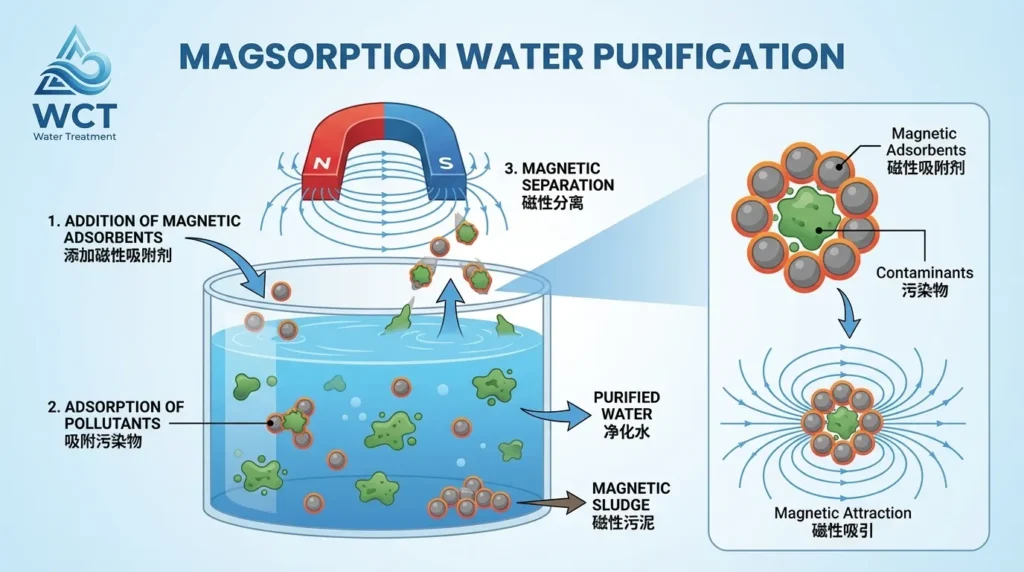
Raw wastewater rarely settles efficiently on its own. We utilize integrated chemical dosing systems to introduce coagulants and flocculants (such as PAC and PAM) directly into the feed stream. These chemicals neutralize particle charges, forcing microscopic solids to collide and bind together into larger, denser clumps known as flocs.
[Image of coagulation and flocculation process in water treatment]
Step 2: The Settling Zone and Flow Velocity Reduction
Once the heavy flocs are formed, the water enters the primary settling zone. Here, the system is designed to reduce the flow velocity by up to 80% to 90% compared to the inlet pipe. This dramatic reduction in turbulence provides the necessary retention time for the flocs to sink to the floor without being sheared or kicked back up by turbulent currents.
Step 3: Effluent Discharge Over Surface Weirs
As the solids drop out of suspension, the clarified liquid naturally rises. This clean water flows evenly over a series of precisely leveled v-notch surface weirs positioned at the top perimeter of the tank. Proper weir design ensures consistent effluent water clarity and prevents localized upward flow channels from pulling settled sludge back to the surface.
Step 4: Sludge Collection for Removal and Processing
The settled solids accumulate at the bottom of the clarifier basin, creating a dense sludge blanket. Slow-moving mechanical rake arms or scraper blades continuously push this settled material into a central collection hopper. From there, the concentrated waste is pumped out of the water treatment settling tank and sent to downstream sludge dewatering systems for pressing and final disposal.
Primary vs. Secondary Clarifiers: Understanding the Difference
When we build out a clarifier water treatment system, we generally divide the heavy lifting into two stages: primary and secondary. While they might look like identical water treatment settling tanks from the outside, their jobs within the facility are completely different. Getting the balance right between primary and secondary clarifiers is a foundational step in effective <a href=\”https://id.wxwaterhttps://id.wxwatertech.com/water-treatment-plant-design/\”>water treatment plant design.
Primary Clarifiers: Tackling Raw Wastewater
The primary clarifier is your first line of defense. It receives the raw wastewater right after basic screening.
- Main Job: Rapid suspended solids removal.
- The Process: It slows down the raw, turbulent water. Heavy, bulk solids drop to the floor, while grease and oils float to the surface for skimming.
- The Impact: It drops the total organic load significantly, making the downstream biological processes much easier and cheaper to run.
Secondary Clarifiers: Managing Activated Sludge
The secondary clarifier steps in post-biological treatment. After bacteria in the aeration basins consume the dissolved waste, that bacteria needs to be removed from the water.
- Main Job: Separating activated sludge from the treated liquid.
- The Process: This tank provides a completely calm environment where biological \”floc\” (clusters of helpful bacteria) can gently settle to the bottom.
- The Impact: Clear, polished effluent flows over the top weirs, while the settled sludge is gathered to be recycled or processed.
Quick Comparison Table
| Feature | Primary Clarifiers | Secondary Clarifiers |
|---|---|---|
| Plant Location | Upfront, right after initial screening | Downstream, after biological aeration |
| What it Removes | Raw suspended solids, grit, and surface scum | Activated sludge (living biological floc) |
| Core Purpose | Reduce the initial organic and solid load | separation to ensure effluent clarity |
| Output | Partially treated water | Clean water ready for disinfection or discharge |
As a manufacturer of solid liquid separation equipment, we engineer both tank types to handle everything from municipal loads to heavy industrial wastewater sedimentation.
Common Types of Industrial Clarifiers
As a dedicated clarifier water treatment manufacturer, we design and build solid liquid separation equipment tailored to specific site demands. Choosing the right setup depends entirely on your flow rate, available space, and the nature of your wastewater.
Lamella Plate Vertical Clarifiers
When space is tight, an optimized lamella plate clarifier design is your best option. These vertical units use a series of inclined plates to multiply the effective settling area within a very small physical footprint.
- Massive space savings: Achieves significant clarifier footprint reduction.
- Ideal applications: Indoor industrial facilities or crowded manufacturing floors.
- Performance: Maintains excellent effluent water clarity despite the compact size.
Circular Sedimentation Tanks
For large-scale, high-volume operations, traditional circular water treatment settling tanks remain the heavy-duty standard. We build these robust units to handle massive continuous flows.
- Primary use: The backbone of reliable municipal water treatment solutions.
- Functionality: Provides steady, long-term gravity sedimentation.
- Target: Exceptional at bulk suspended solids removal over large surface areas.
High-Rate Ballasted Clarifiers
If you manage a high-flow environment but lack the real estate for a giant circular tank, high rate clarifier systems bridge the gap.
- Speed and efficiency: These units often pair with specialized flocculant water treatment processes to rapidly bind and weigh down particles.
- Space-constrained environments: They force materials to settle much faster than standard gravity allows.
- Result: Delivers rapid industrial wastewater sedimentation without eating up valuable plant space.
Key Industrial Applications for Water Clarification
As a dedicated manufacturer, we know that reliable clarifier water treatment is the backbone of efficient suspended solids removal. Different industries present unique challenges, and our systems are built to tackle heavy contaminant loads across the board.
Oil & Gas and Aerospace
Complex runoff treatment in these heavy industries demands robust industrial wastewater sedimentation. Our clarifier systems effectively separate out hydrocarbons, heavy metals, and tough particulate matter to keep operations compliant and safe.
Automotive Manufacturing
Process water and thick paint sludge require precision solid liquid separation equipment. By deploying a highly efficient water treatment clarifier, automotive plants can rapidly settle out paint residues. This directly supports industrial water recycling and zero discharge initiatives.
Municipal & Domestic Water
For drinking water and large-scale wastewater management, achieving optimal effluent water clarity is non-negotiable. We routinely supply our clarifiers as core components within complete municipal plants for water treatment to handle massive daily community volumes safely and consistently.
Desalination Pre-treatment
Reverse osmosis (RO) membranes are extremely sensitive to fouling. Using a clarifier in water treatment prior to the desalination stage removes raw debris and fine solids. This essential pre-treatment step acts as a shield, drastically extending the lifespan and performance of expensive RO membranes.
Integrating Clarifier Water Treatment Systems
A single settling tank is just one piece of the puzzle. As a manufacturer and supplier, we design our units to connect smoothly with your entire facility. Here is how a clarifier fits into a complete, high-performance water treatment ecosystem.
Upstream: Chemical Dosing
Before raw water enters the clarifier, it needs preparation for effective solid-liquid separation.
- Automated Integration: We link our clarifiers directly with smart chemical dosing systems (PAC/PAM).
- Optimal Flocculation: This guarantees the exact chemical mix is applied to bind suspended solids together, making them heavy enough to settle quickly once they reach the tank.
Parallel: Dissolved Air Flotation (DAF)
Not all contaminants sink to the bottom.
- Tackling Oils: For wastewater heavy in oils and light grease, we utilize Dissolved Air Flotation (DAF) integration running parallel to your clarifier.
- Total Separation: The clarifier catches the heavy, sinking solids, while the DAF unit handles the floating scum. This dual approach is a cornerstone for any highly efficient process of water treatment industrial setup, ensuring zero blind spots in your treatment line.
Downstream: Sludge Dewatering
What happens to the waste collected at the bottom of the clarifier water treatment process?
- Volume Reduction: We pipe the concentrated waste directly into downstream sludge dewatering systems, such as filter presses or centrifuges.
- Cost Savings: By squeezing the remaining water out of the sludge, you dramatically reduce hauling and disposal costs while maximizing your final effluent water clarity.
Frequently Asked Questions About Clarifier Water Treatment
What is the primary function of a clarifier?
The main job of a clarifier in water treatment is simple: it acts as essential solid-liquid separation equipment. By functioning as a massive water treatment settling tank, it intentionally slows down the incoming water velocity. This drop in speed allows gravity to take over—heavy suspended solids sink to the bottom as sludge, while clear water rises to the top. As a manufacturer, we design these systems with one primary goal: maximizing effluent water clarity for downstream processes.
How do I choose between a lamella and circular clarifier?
Choosing the right design comes down to your facility\’s footprint and daily flow volume.
- Lamella Plate Clarifiers: If space is tight, this is your solution. The lamella plate clarifier design utilizes angled plates to maximize the settling area within a very small vertical footprint, offering massive clarifier footprint reduction for industrial plants.
- Circular Clarifiers: These are built for high-volume, heavy-duty applications. You will typically see these large, open tanks deployed as primary and secondary clarifiers in large-scale municipal water treatment systems.
What chemicals are necessary for the clarification process?
Gravity needs help to remove microscopic particles. To achieve rapid settling, we rely on the coagulation and flocculation process using two main types of chemicals:
- Coagulants (e.g., PAC): These neutralize the negative charges on tiny particles so they stop repelling each other.
- Flocculants (e.g., PAM): These bind the neutralized particles together into heavy, visible clumps (flocs) that drop to the bottom quickly.
To ensure this chemistry works perfectly, operators use automated chemical dosing systems upstream of the clarifier water treatment unit to inject exact amounts of PAC and PAM directly into the feed line.