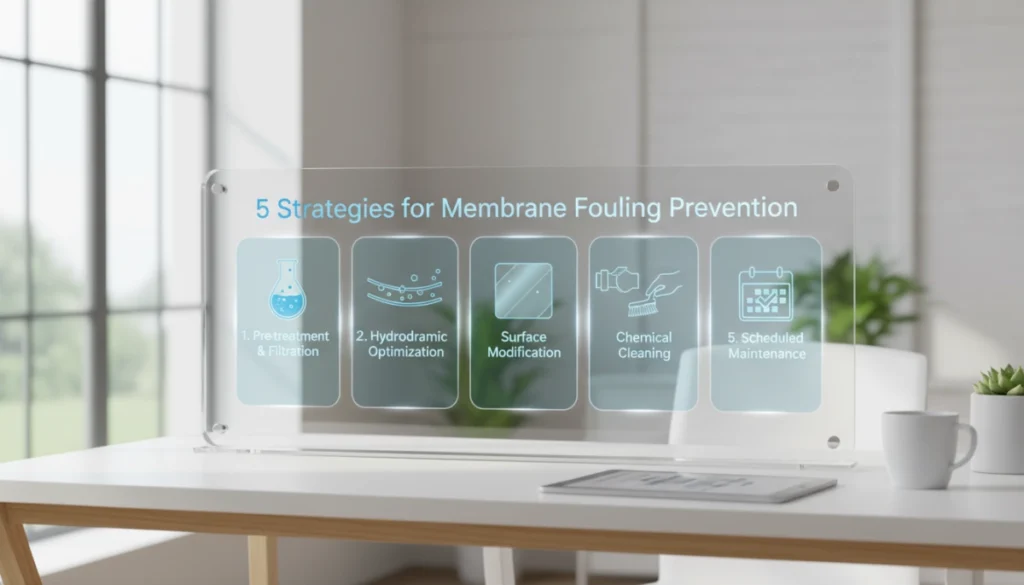
Strategy 1: Advanced Pre-treatment Optimization
Membrane fouling is the most significant operational challenge in reverse osmosis systems, leading to increased energy consumption and premature membrane failure. As a manufacturer and supplier, we emphasize that the most effective membrane fouling prevention begins long before water hits the RO elements. A robust pre-treatment stage acts as the first line of defense, ensuring the longevity and efficiency of your investment.
Customizing Feed Water Analysis
We believe that you cannot manage what you do not measure. A comprehensive feed water characterization is the foundation of any successful system. By identifying specific concentrations of silica, iron, manganese, and total organic carbon (TOC), we can tailor the pre-treatment sequence to neutralize the exact foulants present in your source water.
Leveraging Multi-Stage Physical Barriers
To maintain high reverse osmosis maintenance standards, we utilize a combination of physical filtration technologies:
- Multi-Media Filters (MMF): These remove larger suspended solids and reduce the initial particulate load.
- Ultrafiltration (UF) Pre-treatment: We recommend UF as a superior barrier against colloids, bacteria, and viruses. It provides a consistent effluent quality regardless of fluctuations in raw water turbidity.
Chemical Conditioning and Antiscalant Dosing
Effective chemical conditioning prevents dissolved minerals from precipitating on the membrane surface.
- High-Quality Antiscalants: Our specialized formulas inhibit scale formation by interfering with crystal growth.
- Dispersants: These keep organic and inorganic particles in suspension so they can be flushed out in the concentrate stream rather than settling on the membrane.
Critical Monitoring: SDI and Turbidity
To validate the effectiveness of your pre-treatment, we track two primary indicators of water quality:
| Parameter | Target Level | Importance |
|---|---|---|
| Silt Density Index (SDI) | < 3.0 | Measures the fouling potential of suspended particles. |
| Turbidity | < 0.1 NTU | Indicates the clarity of water and effectiveness of filtration. |
By maintaining these parameters within strict limits, we significantly reduce the rate of concentration polarization and extend the intervals between necessary chemical cleanings. Consistent monitoring of these values allows for real-time adjustments to chemical dosing and filter backwash cycles, keeping the system in peak condition.
Strategy 2: Precise Foulant Identification and Monitoring
To stop fouling, we first have to know exactly what we are fighting. Treating biofouling with an acid cleaner meant for scale is a waste of time and money. We focus on differentiating between biological growth, inorganic scale, and organic matter to ensure our membrane fouling prevention efforts are targeted and effective.
Identifying the Enemy
Different foulants show up in different parts of the system. We use the following table to quickly diagnose the issue based on system behavior:
| Foulant Type | Key Indicators | Primary Impact Area |
|---|---|---|
| Biofouling | Slime formation, high pressure drop | Lead end elements |
| Inorganic Scaling | Hard mineral deposits, high salt passage | Tail end elements |
| Organic Fouling | Rapid flux decline, discolored effluent | All membrane stages |
Deep Diagnostics and Real-Time Tracking
We don\’t guess; we measure. By monitoring Differential Pressure (ΔP) and Normalized Permeate Flow, we spot early warning signs before the damage becomes irreversible. If we see a 15% increase in ΔP or a 10% drop in normalized flow, we know the system is struggling.
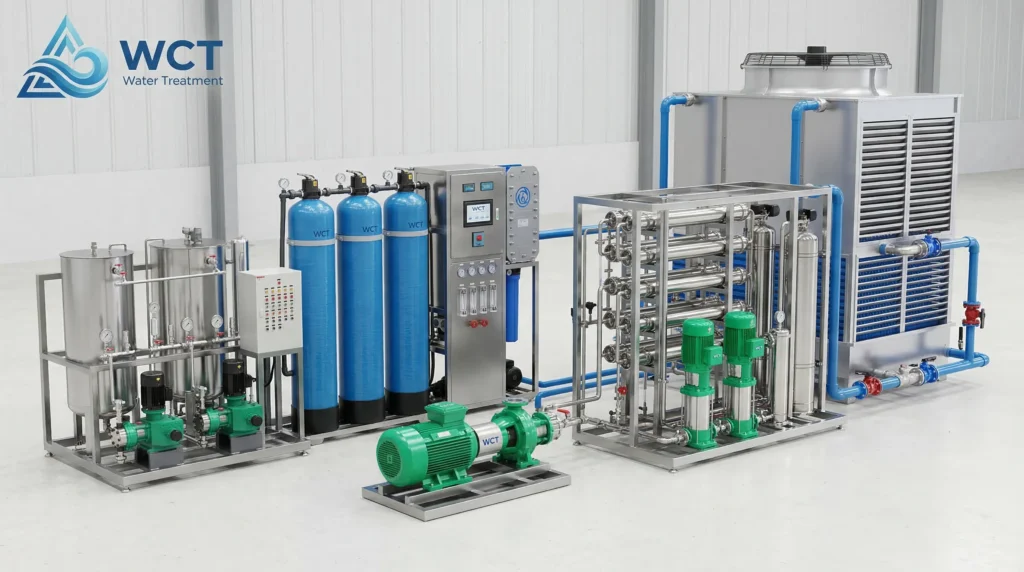
For precise chemical intervention, we rely on a mechanical diaphragm metering pump to deliver exact dosages of biocides or cleaners based on our monitoring data. When standard cleaning doesn\’t yield results, we perform a membrane autopsy. This involves a physical and chemical analysis of the membrane surface to identify the specific \”fingerprint\” of the foulant, allowing us to adjust our chemistry for maximum flux recovery.
- Differential Pressure (ΔP): The best indicator of physical blockage.
- Normalized Flow: Accounts for temperature and pressure changes to show true membrane health.
- Visual Inspection: Checking the lead filter and membrane scrolls for slime or crystals.
Strategy 3: Optimizing Operational Parameters for Membrane Fouling Prevention
We focus on fine-tuning the daily operation of the system to ensure that the membranes are not overworked. Even with the best pre-treatment, poor operational settings can lead to rapid performance decline. By balancing flux and flow, we significantly extend the intervals between cleanings.
Balancing Flux and Cross-Flow Velocity
Maintaining a conservative permeate flux is the most effective way to prevent \”compacting\” foulants against the membrane surface. When flux is too high, it drives particles into the membrane pores faster than they can be removed. We counter this by ensuring high cross-flow velocity, which creates the necessary turbulence to sweep away accumulated salts and solids.
This mechanical \”sweeping\” effect prevents concentration polarization, a condition where the salt concentration at the membrane surface is much higher than in the bulk feed water. For comprehensive system design, exploring our tailored water treatment solutions can help ensure your hardware matches these specific operational demands.
Recovery Rates and Environmental Control
Finding the ideal recovery rate is a balancing act between water efficiency and reverse osmosis maintenance costs. Pushing for a recovery rate that is too high concentrates sparingly soluble salts beyond their saturation point, leading to immediate inorganic scaling.
| Parameter | Impact on Fouling | Optimization Goal |
|---|---|---|
| Permeate Flux | High flux increases particle deposition | Keep within design limits to prevent compaction |
| Cross-flow | Low velocity allows foulant buildup | Maintain turbulence to \”sweep\” the surface |
| Recovery % | High recovery increases salt concentration | Balance water savings against scaling risk |
| Temperature | Affects viscosity and salt solubility | Adjust pressure to maintain steady flux |
- Temperature Management: As water temperature rises, its viscosity decreases, which can increase flux but also accelerate biological growth. We monitor these shifts to adjust feed pressures accordingly.
- pH Stability: Fluctuations in pH can trigger the precipitation of minerals like calcium carbonate or silica. Keeping pH within a stable, slightly acidic range is often a core tactic for membrane fouling prevention in high-scaling environments.
- Pressure Monitoring: We track the feed-to-concentrate pressure drop to ensure that the flow remains unobstructed, allowing for early intervention before flux recovery becomes impossible.
Strategy 4: Implementing Proactive CIP Protocols for Flux Recovery
We rely on a proactive Clean-in-Place (CIP) strategy as a cornerstone of membrane fouling prevention. Waiting for a total system shutdown is not an option; we act before the foulants become compacted and irreversible.
The 10% Rule for Cleaning Frequency
We initiate cleaning protocols immediately when the system hits these critical thresholds:
- Normalized Permeate Flux decreases by 10%.
- Differential Pressure (ΔP) increases by 15%.
- Salt Passage increases by 10%.
Optimized Cleaning Recipes
Effective reverse osmosis maintenance requires a balance of chemistry and temperature. We develop customized recipes that target the specific foulants identified in your feed water.
- Low pH Cleaning: Specifically targets and dissolves inorganic scaling and metal oxides.
- High pH Cleaning: Essential for removing organic matter, oils, and biological growth.
- Soak & Recirculation: We optimize soak times to ensure the chemicals fully penetrate the foulant layer without degrading the membrane material.
To ensure the precise delivery of cleaning chemicals during these cycles, we integrate high-performance mechanical diaphragm metering pumps into the CIP skid. This precision prevents chemical waste and protects the membrane from over-exposure.
Measuring Cleaning Effectiveness
Success is defined by permeate flux recovery. We log all data post-CIP to confirm that the differential pressure has returned to baseline levels. If the recovery is insufficient, we immediately re-evaluate the chemical concentration or soak duration to prevent future performance dips and extend the overall life of the membrane elements.
Strategy 5: Smart Automation and Data Logging
We believe the most effective way to stay ahead of performance declines is through digital oversight. Relying on manual logs often leads to missed early warning signs. By integrating Industry 4.0 sensors into your system, we enable real-time fouling detection that identifies shifts in resistance long before they become visible to the naked eye.
- Real-Time Sensor Integration: We use high-precision instruments to monitor differential pressure (ΔP) and normalized flow continuously.
- Automated Permeate Flushing: Our systems are programmed to perform automated permeate flushing sequences during every shutdown. This replaces concentrated brine with high-quality water, preventing salt precipitation and biofouling during idle periods.
- Predictive Maintenance Windows: By analyzing historical trends, we can predict exactly when a system will need attention. This shift from reactive to proactive reverse osmosis maintenance extends the total lifespan of your membrane elements.
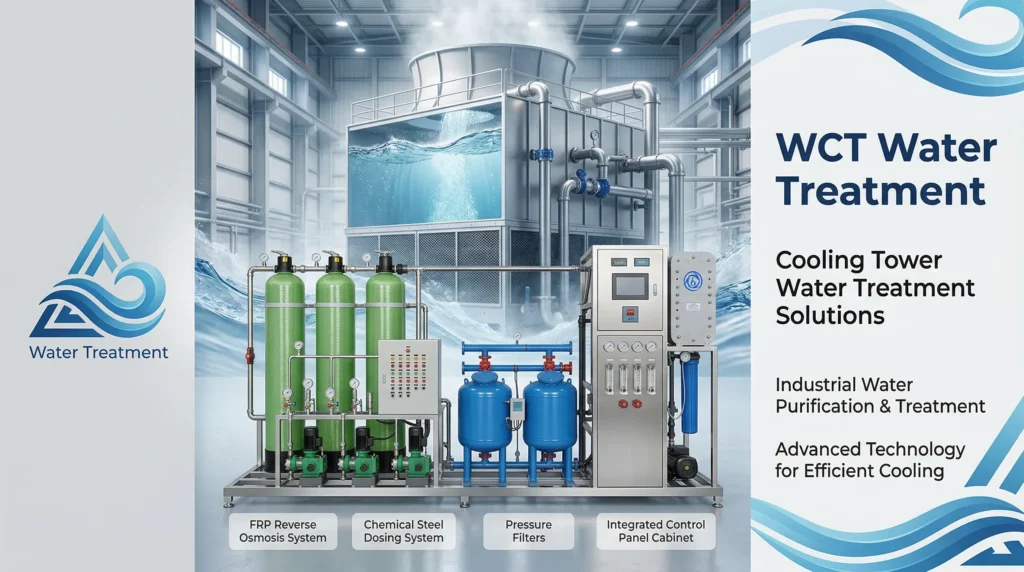
Smart automation isn\’t just for the RO unit itself; it is a standard we apply across all industrial processes. For example, similar logic is used in cooling water treatment to ensure chemical levels remain optimal without manual intervention. Utilizing data logging ensures that your membrane fouling prevention strategy is backed by hard evidence, not guesswork, keeping your flux recovery rates high and your operational costs low.
FAQs: Common Questions on Membrane Fouling Prevention
How often should I clean my RO membranes?
I recommend following the \”10% rule\” for Reverse Osmosis Maintenance. You should initiate a CIP (Clean-in-Place) protocol when the normalized permeate flow drops by 10%, the Differential Pressure (ΔP) increases by 15%, or salt passage rises by 10%. Delaying cleaning beyond these points often results in irreversible fouling that no chemical wash can fix.
What is the most common cause of membrane fouling?
While it depends on your source water, Biofouling Control and Inorganic Scaling are the two most frequent challenges. Biofouling is particularly aggressive in surface water applications. Integrating an ultraviolet water treatment system into your pre-treatment line is an effective way to neutralize microorganisms before they attach to the membrane surface.
Can I reverse severe membrane fouling once it starts?
Partial Permeate Flux Recovery is possible if the fouling is caught early. However, if the foulants have compacted due to high pressure or long-term neglect, the damage to the membrane structure may be permanent. In cases of chronic performance loss, I suggest a Membrane Autopsy to identify the exact foulant and determine if the system can be salvaged or if the elements require full replacement.
How do I choose the right antiscalant for my water chemistry?
Effective prevention starts with a detailed Feed Water Characterization. Once you identify the scaling minerals—like calcium carbonate or silica—you must match them with a compatible chemical. For precise application, I use a mechanical diaphragm metering pump to ensure consistent Antiscalant Dosing. This prevents the localized oversaturation that leads to scale formation on the tail-end elements.